WHEN CITIES LOSE THEIR SOUL ARCHITECTURE BETWEEN MODERNITY AND IDENTITY

While I was reviewing urban maps of various cities—from East Asia to Central Europe—something caught my attention…
The buildings looked oddly similar. Glass facades, sleek towers, and repetitive housing units. I couldn’t tell if I was looking at Tokyo, New York, or Istanbul. Have cities really lost their unique architectural character? Do buildings today reflect who we are—or simply what we’ve learned to imitate?
These questions pulled me deep into the debate around architecture and identity. Are we living in a flat architectural world that ignores diversity and culture in favor of uniformity?

Architecture and History: A Deeper Reflection
Architecture has always been a reflection of society’s values. It’s not just about construction—it’s a silent language that speaks volumes about economic, social, and cultural structures. Historically, civilizations didn’t enforce a single architectural formula. They offered principles that allowed each region to shape its own response, based on local climate, materials, and social habits.
But with the rise of modernity in the 20th century, that flexibility began to vanish. Efficiency and functionality replaced symbolism and emotional connection. Buildings started being produced like cars—on a uniform assembly line, with little room for cultural identity.
The Loss of Urban Character
As global political and economic changes took root, a new wave of global architecture emerged. One-size-fits-all buildings became the norm—from Manhattan to Kuala Lumpur. These international styles, while functionally sound, stripped cities of their local flavor.
| Criterion | Traditional Architecture | Unified Modern Architecture |
|---|---|---|
| Materials | Local, eco-friendly | Industrial, high-cost |
| Climate Adaptation | High | Often poor |
| External Appearance | Diverse, symbolic | Minimal, repetitive |
| Role in Society | Embedded in lifestyle | Purely functional |

Was Modernism Inevitable?
Modernist architecture grew out of industrial revolutions and philosophical shifts. But rather than evolving from tradition, it often aimed to replace it. The Bauhaus school, for instance, adopted the famous motto “form follows function”—a principle that made sense practically but overlooked the emotional and cultural dimensions of design.
When these ideologies were imported without adaptation, they created an architectural vacuum—spaces that lacked symbolic depth or cultural connection.
Attempts to Reclaim Identity
Fortunately, not all architectural paths followed the same trajectory. A few visionary efforts stood out:
- Hassan Fathy, the Egyptian architect, revived traditional building techniques using natural materials like adobe and mud brick. His work was grounded in social responsibility and environmental awareness, not nostalgia.
- In Latin America, experimental projects emerged that balanced modern needs with local identity—without falling into decorative clichés.
- Contemporary architects have started advocating for a “dynamic identity,” seeing architecture as an evolving expression rather than a frozen image of the past.

What’s the Real Issue? Identity or Method?
The misunderstanding often lies in how identity is interpreted. It’s not about copying old arches or ornaments. True architectural identity is built on a deep understanding of place, people, and time. It lives in the small decisions: orientation, scale, material, usability.
So, the issue isn’t with modernity itself—it’s with the uncritical way it was adopted. Many designs disregard climate, history, and social patterns, in favor of sleek surfaces and foreign trends.
Can Modernity and Identity Coexist?
The future lies in hybrid, conscious approaches that reject extremes. Not clinging blindly to the past, and not blindly copying the new. Imagine models that:
- Use local, sustainable materials in new ways
- Reflect cultural habits without being ornamental
- Respect local climates
- Serve present needs while remembering where we came from
| Approach | Strengths | Weaknesses |
|---|---|---|
| Fully Traditional | Strong sense of belonging, eco-adaptive | May lack performance or innovation |
| Fully Modernist | Functional, fast to build | Often culturally disconnected |
| Conscious Hybrid | Balanced, creative | Requires deep knowledge and awareness |
Final Thoughts: Architecture Is a Vision, Not Decoration
Identity in architecture is not a stylistic choice—it’s a question of vision and responsibility. Modernity is not the enemy; it’s a tool. What matters is how we use it and why.
In a world where cities are becoming mirror images of one another, architecture remains our chance to speak differently—to shape places that not only serve, but belong to us.
And we must never forget that architecture is not just a form—it is a reflection of our values and a key to understanding our future.
✦ ArchUp Editorial Insight
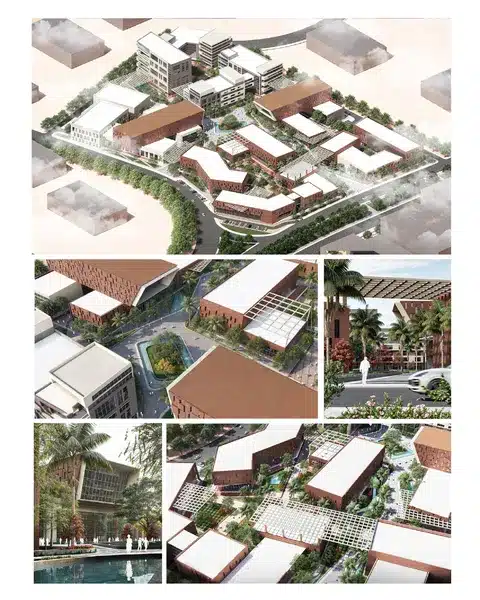
This article offers a reflective critique on the tension between architectural identity and modernity, highlighting the growing visual sameness across global cities. The imagery reveals urban landscapes dominated by glass, rigid lines, and repetitive masses—suggesting a gradual erosion of local character. While the thematic framing is clear, the analysis would benefit from deeper engagement with the socio-economic dynamics behind such trends. Still, the article’s call for hybrid approaches—blending authenticity with experimentation—presents a constructive path forward for context-aware design strategies.
Explore the Latest Architecture Exhibitions & Conferences
ArchUp offers daily updates on top global architectural exhibitions, design conferences, and professional art and design forums.
Follow key architecture competitions, check official results, and stay informed through the latest architectural news worldwide.
ArchUp is your encyclopedic hub for discovering events and design-driven opportunities across the globe.