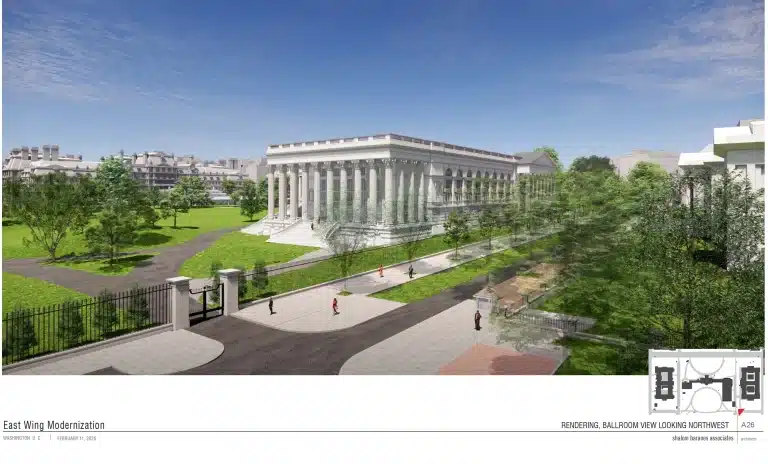
White House Ballroom Renderings Reveal Massive East Wing Transformation

Administration Unveils Plans for 90,000-Square-Foot Event Space
New renderings have surfaced showing detailed plans for a controversial White House ballroom addition. The images appeared in official planning documents submitted for regulatory review. They offer the first comprehensive look at the proposed 90,000-square-foot structure.
The detailed drawings showcase a massive expansion on the former East Wing site. Demolition of the original wing concluded in late 2025. The new architecture replaces it entirely with a significantly larger venue. According to planning documents, the White House ballroom will accommodate large state dinners and official ceremonies. The current East Room holds only 200 guests.
Regulatory Review Process Moves Forward
A 31-page report containing the renderings was submitted to the Commission of Fine Arts and the National Capital Planning Commission. Both bodies will review the proposal during hearings scheduled for early March. The commission, established by Congress, evaluates major building projects in Washington.
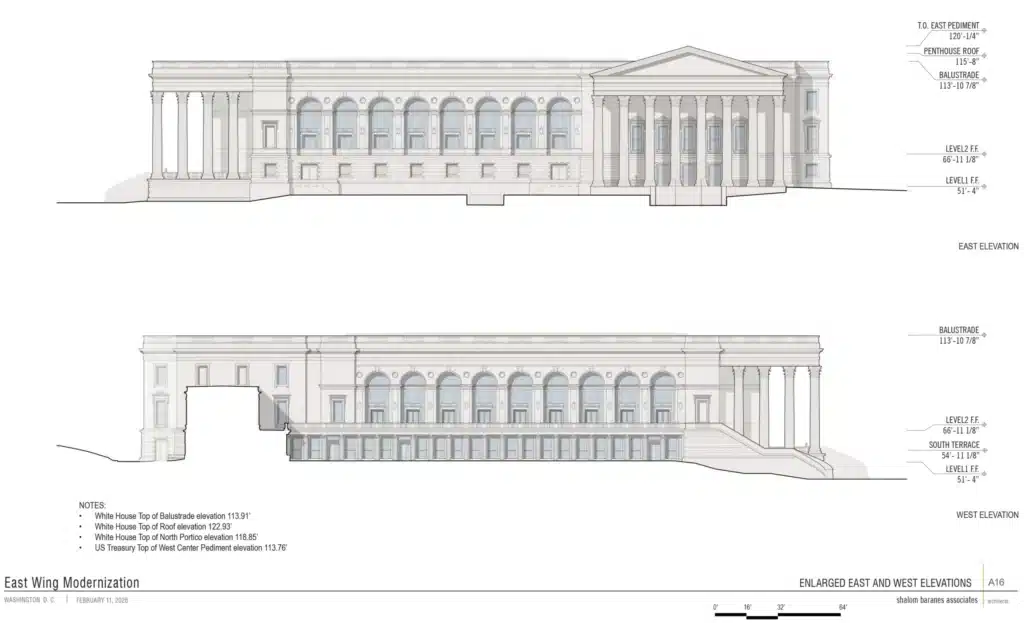
The renderings briefly appeared on the National Capital Planning Commission website before removal. However, the images reveal significant scale. The proposed structure extends nearly a full city block. Moreover, it stretches longer than the West Wing and reaches over half the length of the neighboring Treasury Building.
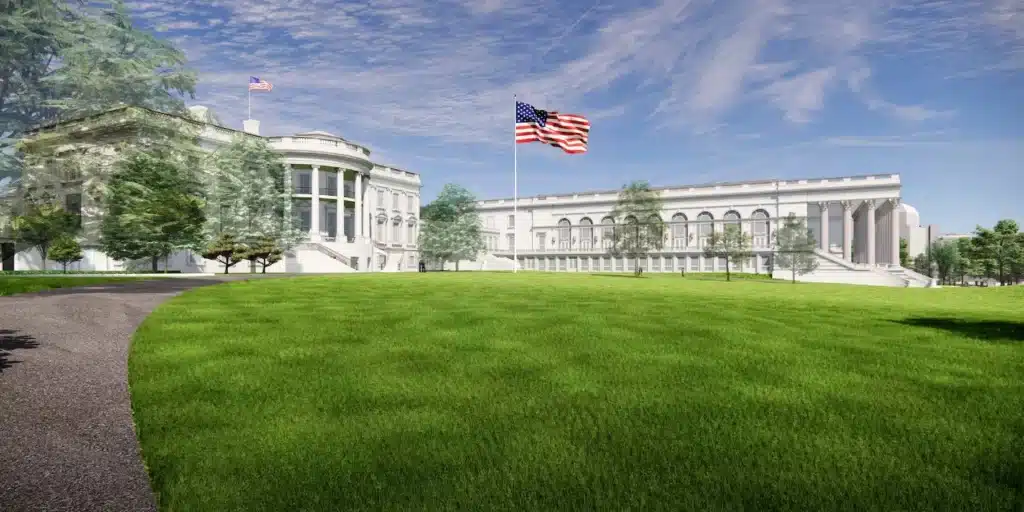
Design and Function Details Emerge
The design documents show exterior views from Pennsylvania Avenue and multiple vantage points. These perspectives illustrate how the addition will sit alongside the historic mansion. Officials claim the White House ballroom addresses a longstanding need for expanded formal event space. Funding comes primarily from private sources. Construction reportedly remains on schedule.
Preservation Concerns Mount
Nevertheless, critics have raised substantial objections regarding the project. The National Trust for Historic Preservation filed a federal lawsuit after demolition began before detailed plans reached oversight bodies. Preservation advocates argue that standard review processes were circumvented.
Architectural experts and preservation groups express additional concerns. They worry the structure’s size and height may overshadow the historic mansion. Furthermore, established sight lines could face disruption. These issues represent core challenges in balancing historic character with contemporary needs.
March Hearings Will Determine Next Steps
Planning commission officials will convene in March to discuss the proposal. Meanwhile, public reaction continues as stakeholders examine the newly released images. The hearings will address both legal questions and urban planning considerations. Additionally, commissioners must weigh preservation standards against functional requirements.
The controversy highlights ongoing tensions between modernization and heritage conservation in significant civic buildings. Public input during the review process may influence final decisions.
What role should historic preservation play when expanding iconic government structures?
A Quick Architectural Snapshot
The proposed White House ballroom spans 90,000 square feet and replaces the demolished East Wing. The structure extends nearly one city block in length, surpassing the West Wing dimensions. It will accommodate large-scale state functions and ceremonial events, representing a substantial expansion of executive venue capacity.
✦ ArchUp Editorial Insight
A 90,000-square-foot ceremonial structure does not emerge from architectural ambition. It emerges from a convergence of political signaling requirements, privatized funding mechanisms that bypass legislative oversight, and an institutional vacuum in real-time heritage enforcement.
The sequence is traceable. First, oversight bodies receive appointments aligned with executive intent. Second, demolition precedes submission of detailed plans, collapsing the regulatory timeline. Third, private donor financing removes budgetary friction, eliminating the congressional negotiation that historically constrained scale. The architectural outcome, a structure exceeding the West Wing in length, is not a design decision. It is the spatial residue of unchecked procurement logic meeting ceremonial ambition.
The repeated pattern across past projects of institutional expansion is consistent: when review processes follow construction rather than precede it, scale becomes the default expression of authority. The building confirms the system. The system was never designed to prevent it.