
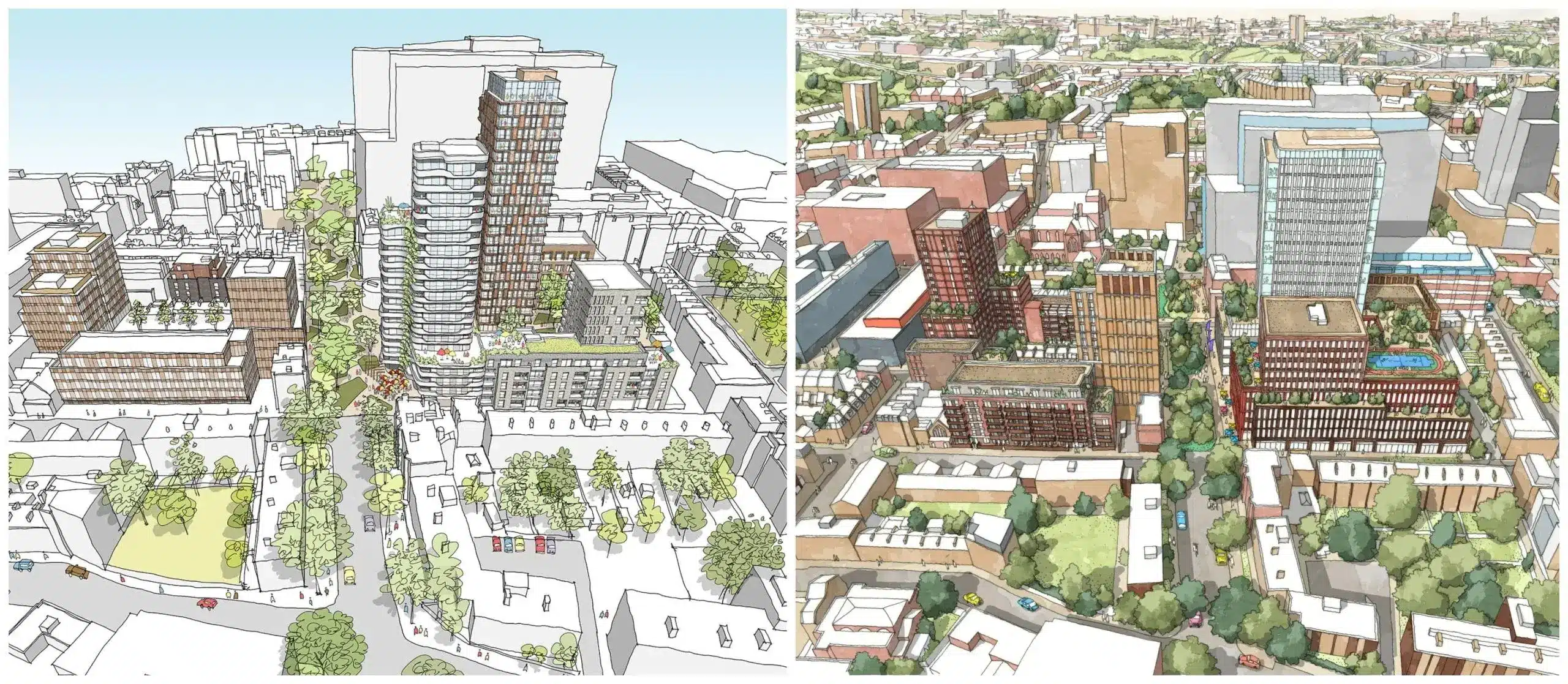
Whitechapel Life Sciences Project to Transform East London with £750M Investment

A major £750 million project will redefine Whitechapel’s landscape. The development creates a massive hub for the Whitechapel Life Sciences initiative. It also includes new healthcare facilities and hundreds of homes. This project is a key part of the Barts Life Sciences Cluster. Consequently, it aims to boost the UK economy and local community well-being. This is a significant announcement for the global architecture platform.
A New Hub for Innovation and Housing
The Whitechapel Life Sciences project is ambitious. It covers nearly 1 million square feet. Moreover, it is expected to generate an estimated £1 billion for the UK’s GDP. The development also promises 1,325 new jobs for the community. The masterplan involves demolishing old buildings to make way for modern facilities. These new structures will support clinical research and outpatient services. Therefore, it will attract top life sciences firms to east London.

Design and Community-Centric Living
The architectural design is a collaborative effort. Three leading firms are designing a mix of modern buildings and refurbished homes. The project will deliver over 500 new residences. Significantly, 53% of this housing will be affordable for residents. This includes dedicated homes for NHS staff and local families. The plan also introduces new green spaces and gardens. As a result, it will improve public access and promote environmental sustainability.

Timeline and Economic Impact
Plans for the Whitechapel Life Sciences project were recently submitted for approval. If accepted, construction could start in 2027. The work will unfold in phases over a ten-year period. This long-term investment shows strong confidence in the area’s future. Additionally, it supports medical innovation and mixed-community living. The project is a major development for London’s future. It will become a significant part of the city’s architectural archive. This editorial decision highlights its importance.
How will this project reshape the future of urban development in London?

A Quick Architectural Snapshot
This major urban project spans approximately 93,000 square meters in Whitechapel, east London. The development integrates clinical research facilities, outpatient services, and flexible workspaces. It features five new residential blocks and refurbished terraced houses, creating a mixed-use community hub designed for innovation and modern living.
✦ ArchUp Editorial Insight
The project’s physical form as a multi-building campus is the logical outcome of its financial and political structure. A £750 million Public-Private Partnership, phased over a decade, requires extreme risk mitigation. This institutional framework prioritizes diversified, predictable revenue streams over a singular architectural vision.
Consequently, the program is partitioned into discrete, marketable assets: clinical facilities for an anchor tenant (NHS), specialist housing for a defined workforce, and private residential units for the open market. The use of multiple architectural firms is not a design choice but a symptom of this partitioned approach, where each firm optimizes a specific asset class. The resulting collection of buildings is the physical evidence of a development model engineered to balance long-term investment security with municipal housing mandates.

★ ArchUp Technical Analysis
Technical Analysis of the Whitechapel Life Sciences Project in East London:
This article provides a technical analysis of the Whitechapel Life Sciences project, serving as a case study in multi-use urban development.
Scale and Investment:
The project covers a total area of 93,000 square meters, with a total investment of 750 million British pounds. The program includes the creation of clinical research facilities and outpatient clinic services occupying nearly one million square feet, in addition to over 500 new residential units.
Development Structure and Economic Impact:
The development structure consists of five new residential complexes and renovated townhouses, with the proportion of affordable housing units reaching 53%. The project is expected to contribute around one billion pounds to the UK’s Gross Domestic Product, while providing 1,325 new jobs. Construction is scheduled to begin in 2027 in phases over ten years.
Related Insight: Please review this article for an in-depth exploration of integrated urban development:
Multi-Use Development Models in Dense Urban Areas




✅ Official ArchUp Technical Review completed for this article.