
Textured Concrete and Translucent Glass Glow After Dark

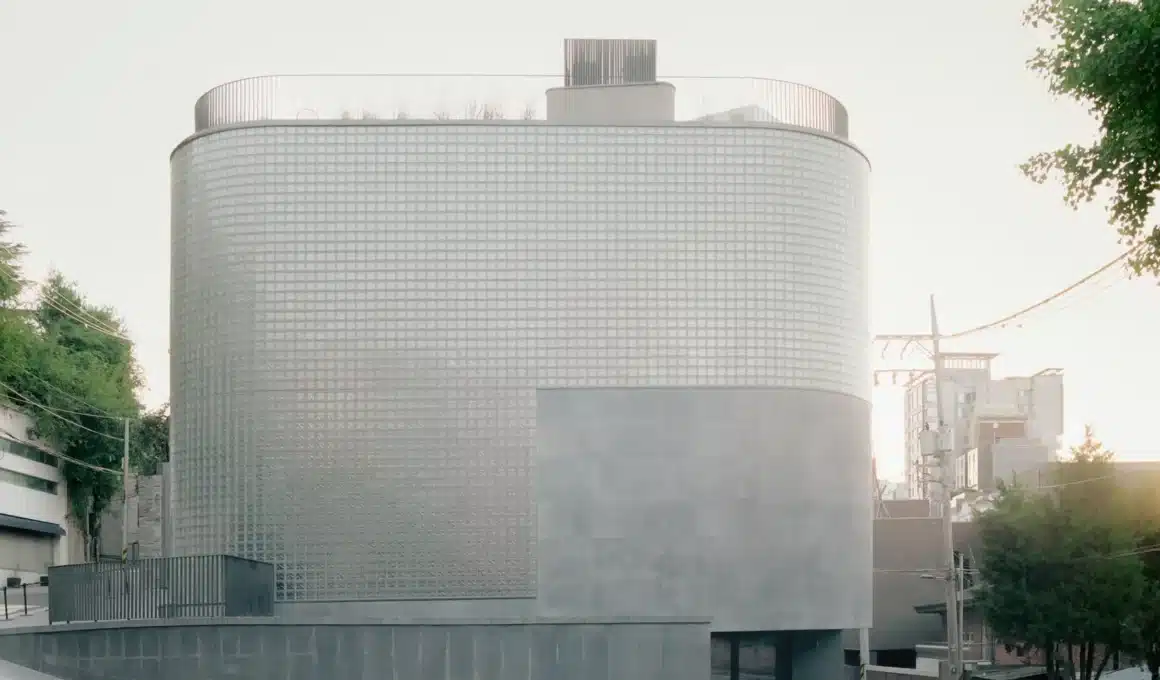
Wooyoungmi Seoul flagship features textured concrete and translucent glass that glow after dark. The building occupies a narrow, sloping plot in Itaewon. Its form follows the curve of the street. Material restraint replaces retail spectacle.

Design Concept
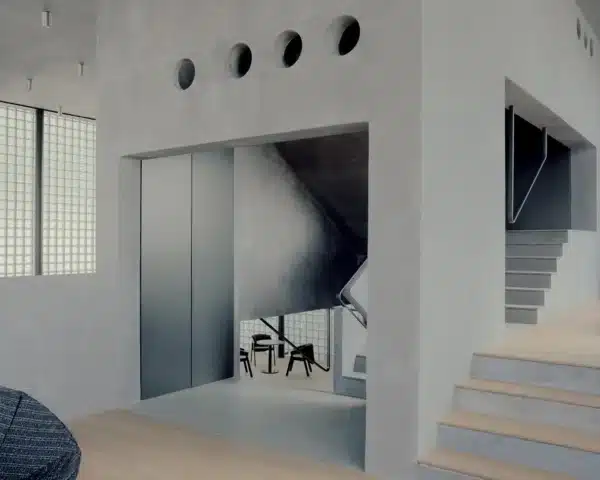
The three-story volume mirrors its urban edge. A central core connects staggered mezzanines. This creates a rhythmic spatial sequence. Ceiling heights shift to modulate atmosphere. The approach questions typical retail typologies in architectural design. Here, textured concrete and translucent glass glow after dark guide both facade and circulation.
Materials & Construction
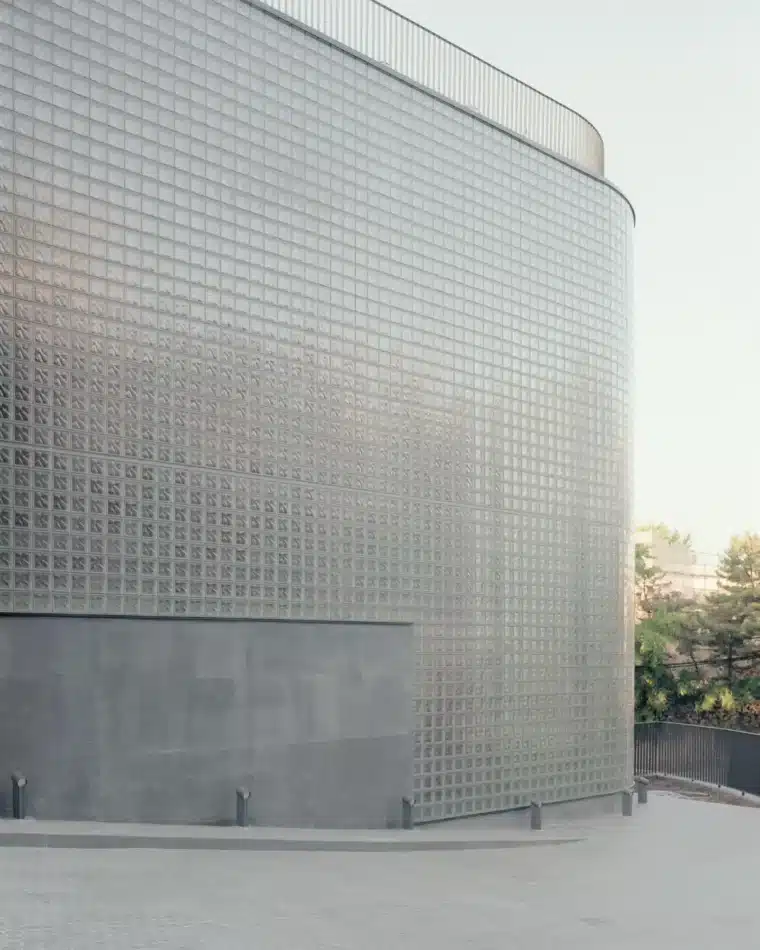
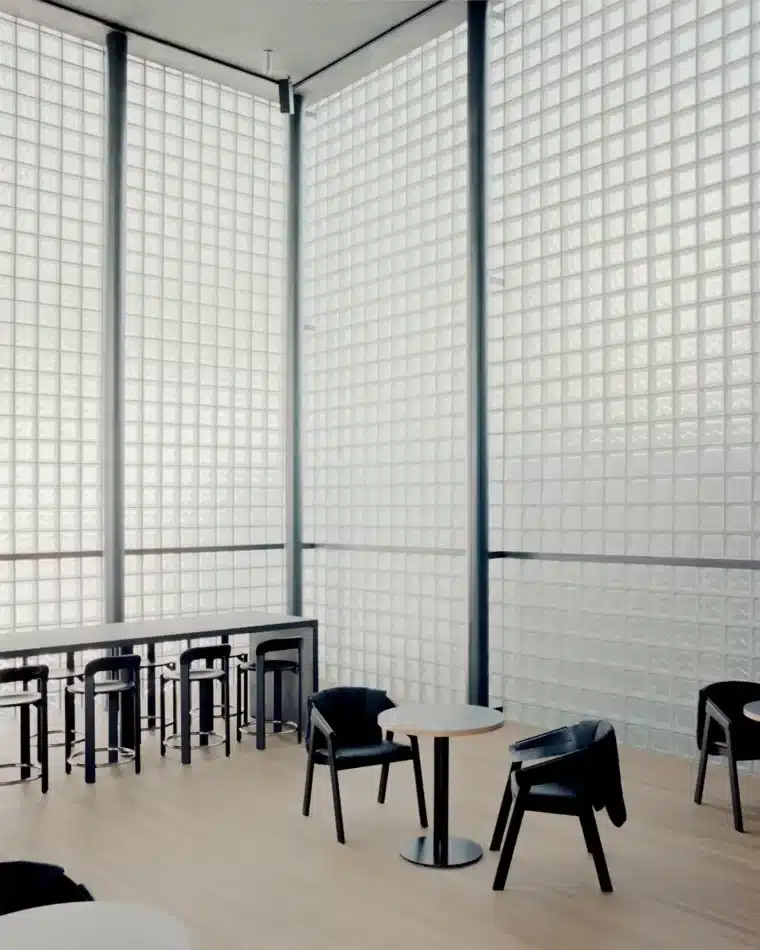
Concrete was cast against OSB formwork. This left a rough, textile-like imprint. A mineral glaze enhances its patina. Above, curved glass blocks diffuse daylight. At night, they emit soft luminescence. This aligns with research in building materials. The balance of mass and light reinforces the project’s motif: textured concrete and translucent glass glow after dark.
Urban Impact
The store avoids visual noise in Itaewon’s dense strip. It offers quiet material presence instead. Daylight clarity shifts to nocturnal glow. This contributes to street-level rhythm without dominance. Such strategies matter in debates about cities. They also reflect evolving norms in construction. Interior sequencing echoes minimal approaches in interior design. Similar cases appear in the archive. Global events continue to explore this restraint.
Conclusion
Can subtlety outperform spectacle in retail architecture? The persistence of textured concrete and translucent glass glow after dark suggests a long-term answer.
Architectural Snapshot:
A three-story Seoul retail structure wrapped in OSB imprinted concrete and crowned with a curved, luminous glass-block facade, designed by Stocker Lee Architetti for Wooyoungmi.
ArchUp Editorial Insight
The Wooyoungmi Seoul flagship is framed as a materially restrained response to commercial excess, anchored in OSB-imprinted concrete and translucent glass blocks. It effectively documents the site’s slope as a formal generator while avoiding promotional phrasing. However, it sidesteps critical scrutiny of concrete’s environmental cost or the project’s spatial exclusivity beneath its minimalist veneer. Credit is due for factual clarity and refusal to aestheticize retail. The unspoken question lingers: will this piece endure as architectural critique, or fade as a footnote to an era of subdued branding disguised as neutrality?




ArchUp: Technical Analysis of the Wooyoungmi Store in Seoul
This article provides a technical analysis of the Wooyoungmi store in Seoul as a case study in restrained commercial architecture that relies on material quality and quiet spatial presence. To enhance archival value, we present the following key technical and design data:
The building comprises three levels following the slope of a narrow site in the Itaewon district. The structure features a base of concrete cast in OSB (Oriented Strand Board) formwork, creating a textured surface with a distinctive wooden imprint. Above the base rests a curved facade made of transparent glass blocks, which diffuses daylight softly and glows with subdued interior lighting at night, achieving a visual balance between mass (concrete) and transparency (glass).
The interior design is characterized by a vertical spatial sequence through mezzanine floors (stepped levels) connected by a central column. Circular openings in the concrete walls create varying visual frames that link the different levels. The ambiance of the interior spaces relies on natural light filtered through the glass blocks and meticulously calculated artificial lighting, creating a gradient of atmospheres between daytime calm and evening glow.
In terms of urban performance, the building avoids the loud visual spectacle common in commercial streets. Instead, it presents a quiet material presence that transitions from daytime clarity to a subtle nighttime beacon, contributing to the street’s fabric without dominating it. This approach reflects a shift in luxury retail architecture toward creating value through spatial and material quality rather than oversized branding. Situated on a narrow, sloping plot, the design successfully adapts to its specific urban context, representing a significant engineering and design achievement.
Related Link: Please refer to this article for a comparison of other commercial architectural projects redefining the relationship between facade and urban context:
The Dior Petals Store Opens in Beijing
https://archup.net/petal-flagship-dior-beijing-portzamparc/