World’s Longest Outdoor Escalator Opens in China’s Mountain City

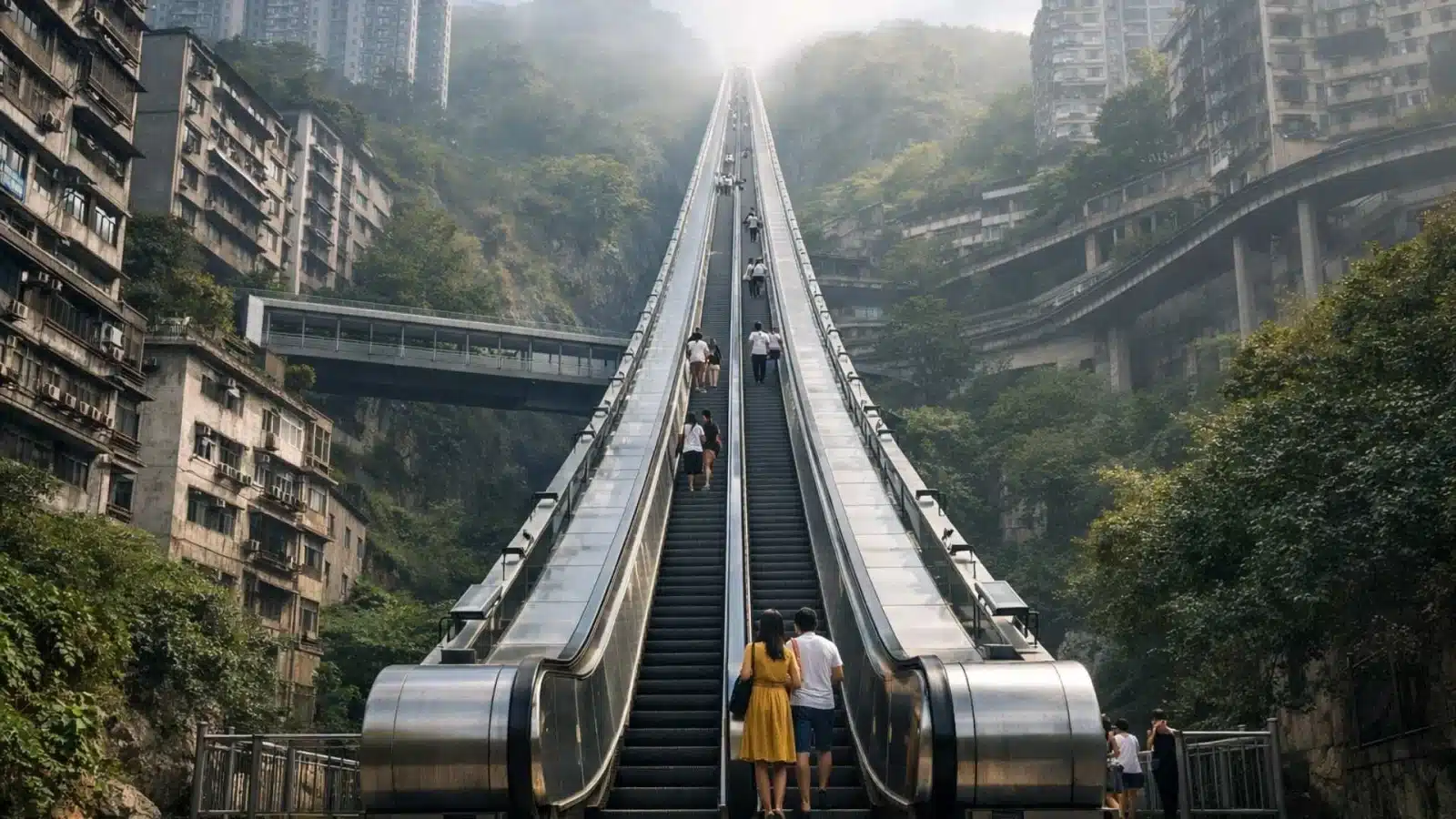
Chongqing has unveiled the Wushan Goddess Escalator, the world’s longest outdoor escalator system. The nearly one-kilometer structure tackles extreme terrain in one of China’s most vertically complex cities. This infrastructure project transforms how residents navigate mountainous urban planning challenges.
Vertical Transit Redefines Urban Mobility
The escalator system spans 905 meters and climbs 242 meters vertically. This height equals an 80-story building, creating unprecedented vertical transit corridors. Moreover, the project addresses Wushan’s extreme topography, where slopes average 35 percent and reach nearly 60 percent at their steepest.
Planners first conceived the project in 2002 following urban expansion. However, construction only resumed in 2022 to combat congestion and connect fragmented elevations. The system now links previously isolated neighborhoods across dramatic elevation changes. Therefore, residents can traverse distances that once required exhausting climbs in minutes.

Modular Engineering Tackles Mountain Terrain
The construction integrates 21 individual escalator segments into a continuous transit loop. This modular approach allows maintenance teams to isolate specific sections without shutting down the entire system. Meanwhile, variable-speed motors equipped with sensor arrays adjust operation based on real-time passenger loads.
The project incorporates regenerative braking technology that converts kinetic energy into electrical power. Descending passengers actually generate electricity, reflecting a shift toward environmentally responsive infrastructure. Furthermore, prefabricated modules minimized hillside excavation during assembly. This building materials strategy reduced slope instability risks in the challenging karst landscape.
Transparent Design Creates Scenic Experience
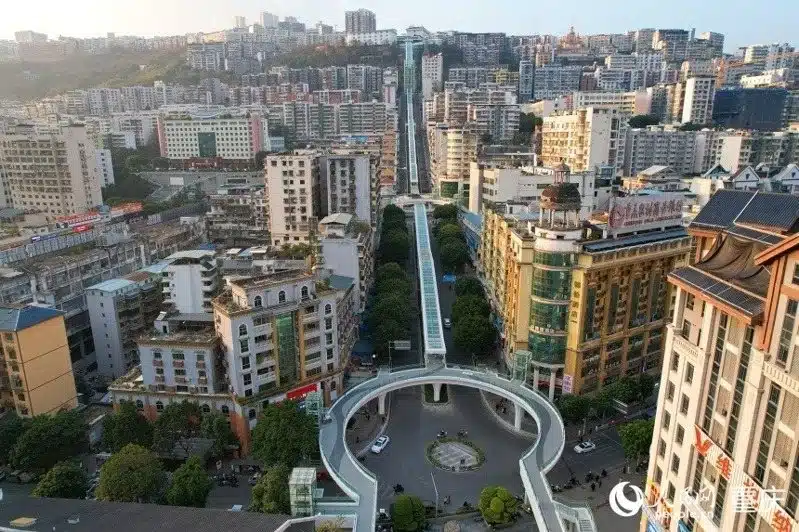
Transparent glass facades reduce the structure’s visual bulk against the mountain backdrop. The design intentionally preserves views of the Yangtze River and Wu Gorge throughout the ascent. Additionally, sky balconies and a 360-degree lookout platform at the summit transform commuting into sightseeing.
The escalator has evolved beyond pure functionality into a destination. Tourists now visit specifically to experience the vertical journey and panoramic vistas. However, the primary function remains serving residents who previously faced grueling daily climbs. The project demonstrates how sustainable urban planning can address geographic constraints while enhancing quality of life.
A Quick Architectural Snapshot
The Wushan Goddess Escalator spans 905 meters horizontally and rises 242 meters vertically through 21 connected segments. Regenerative braking technology converts passenger movement into electricity. Transparent facades preserve mountain views while creating China’s newest vertical transit landmark in challenging terrain.
✦ ArchUp Editorial Insight
Vertical transit infrastructure emerges when horizontal expansion becomes economically unfeasible. Wushan’s extreme topography created isolated neighborhoods where property values stagnated and commercial activity declined. Residents faced daily physical barriers that limited employment options and social mobility. The escalator system responds to these economic pressures rather than aesthetic ambitions.
China’s rapid urbanization pushed development into previously uninhabitable terrain. Mountain cities like Chongqing must now retrofit connectivity solutions into existing dense fabric. The 20-year delay between initial conception and construction reflects shifting municipal priorities and funding availability. Regenerative braking technology signals infrastructure’s new mandate to offset operational costs through energy recovery.
The modular construction approach reveals lessons learned from slope failures in similar karst regions. Prefabrication minimizes site disturbance while enabling faster deployment across challenging terrain.
This project is the logical outcome of geographic constraints plus urban economic pressure plus two decades of deferred infrastructure investment.