
Perforated Brick Screens Define Windowless Courtyard House in Brasília

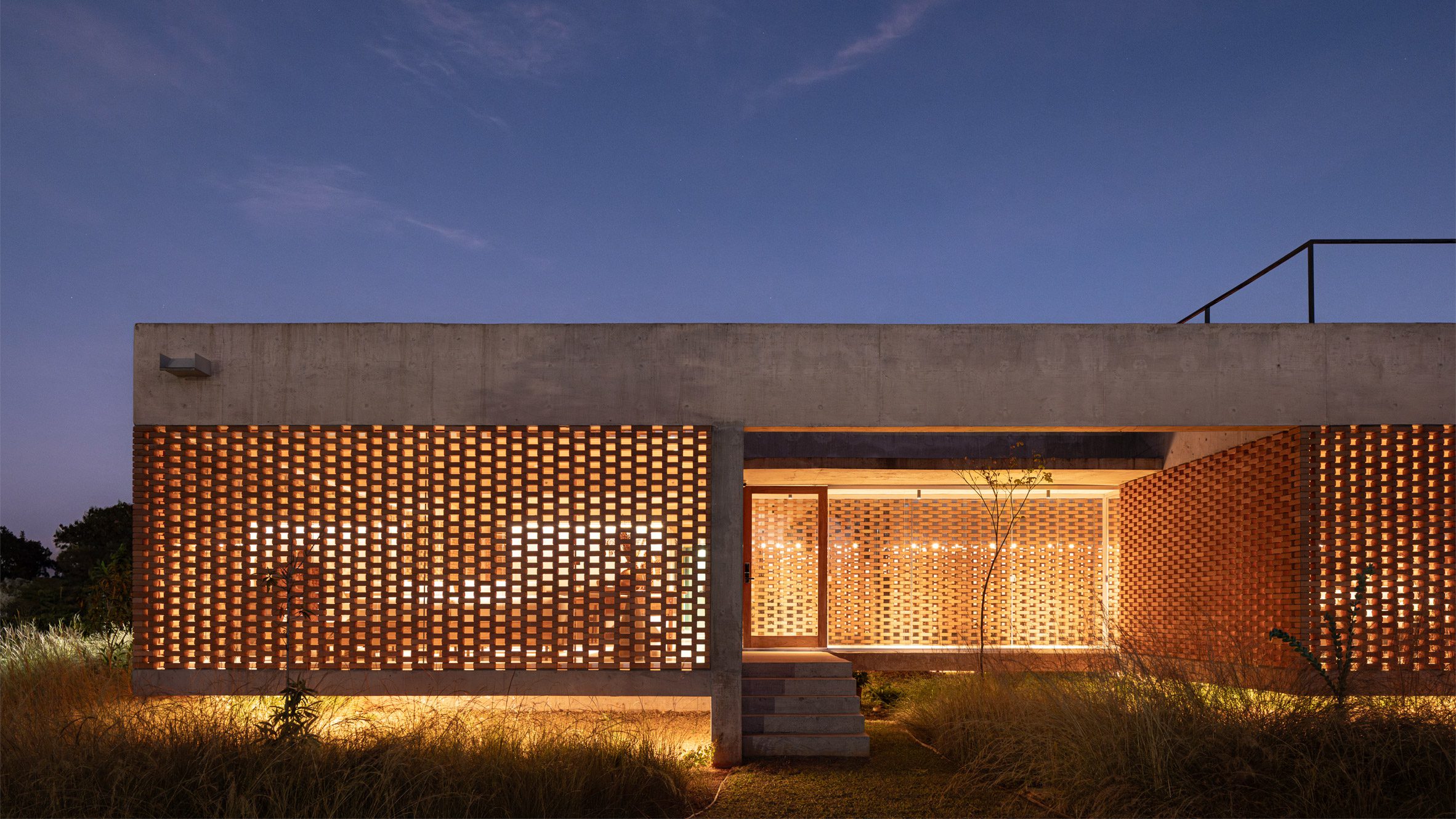
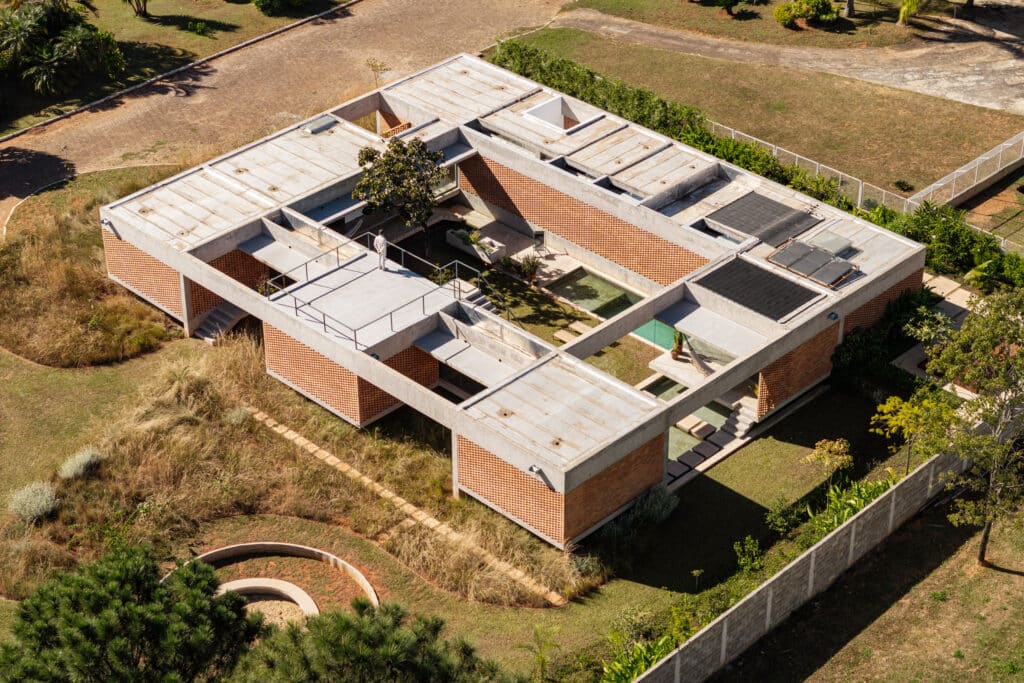
Bloco Arquitetos has completed Casa Tupin, a 420-square-metre residence in Brasília that replaces traditional windows with coral-colored brick screens. The 2025 house sits in a gated community 20 kilometres from the city center and features a large central courtyard as its main organizing element.
Porous Facade Replaces Conventional Glazing
The architecture challenges typical residential design by eliminating large glass windows. Instead, perforated brick walls wrap the rectangular structure between a raised concrete slab and deep roof. The coral-colored building materials create a breeze block-like screen that filters light and air throughout the home.
The studio described the approach as transforming the entire building into a mediator between interior life and landscape. This strategy prioritizes environmental performance over transparency. The brick selection focused on durability and compositional consistency. Moreover, the limited material palette allows light, shadow, and time to shape the architectural experience.
Climate-Responsive Design Strategy
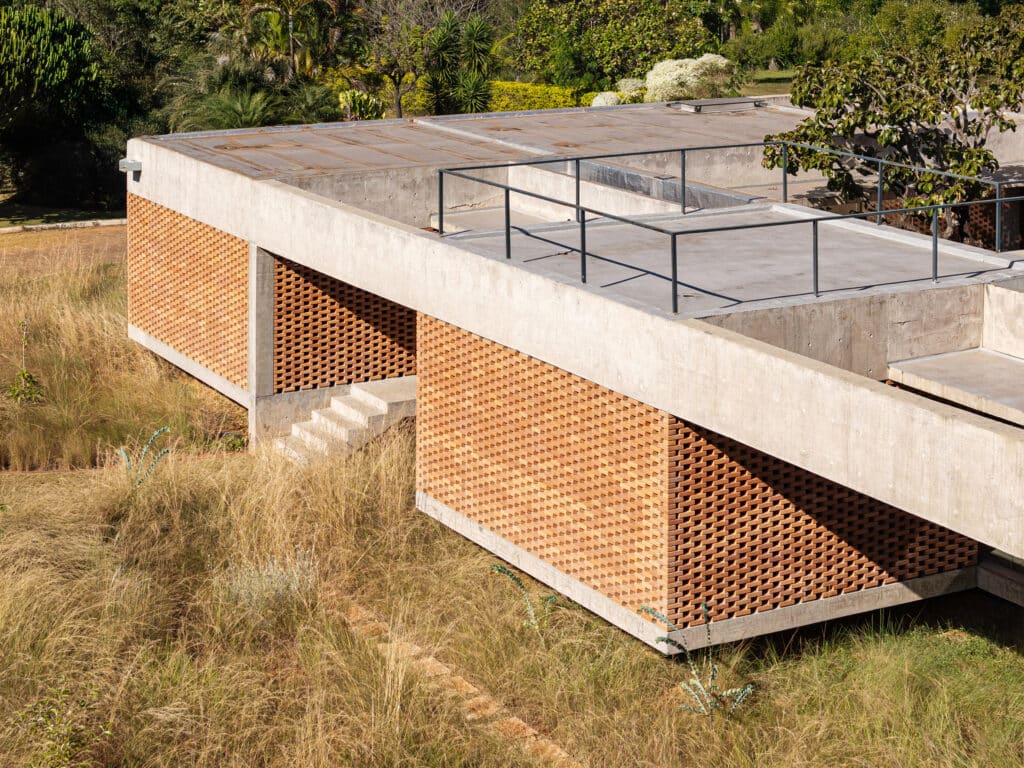
The porous facade serves multiple functions simultaneously. It provides solar protection while enabling continuous ventilation throughout the residence. Air flows in all directions through the screened walls. Therefore, all spaces relate directly to this integrated system of structure and climate control.
The construction method elevates three-quarters of the plan on 12 pillars. This raises the home above ground level to maximize cross ventilation beneath the structure. Furthermore, the elevation preserves existing topography and allows native Cerrado savanna plants to grow underneath. Local wildlife, including lizards and burrowing owls, can move freely between exterior gardens and the central courtyard.
Inverted Transparency Concept
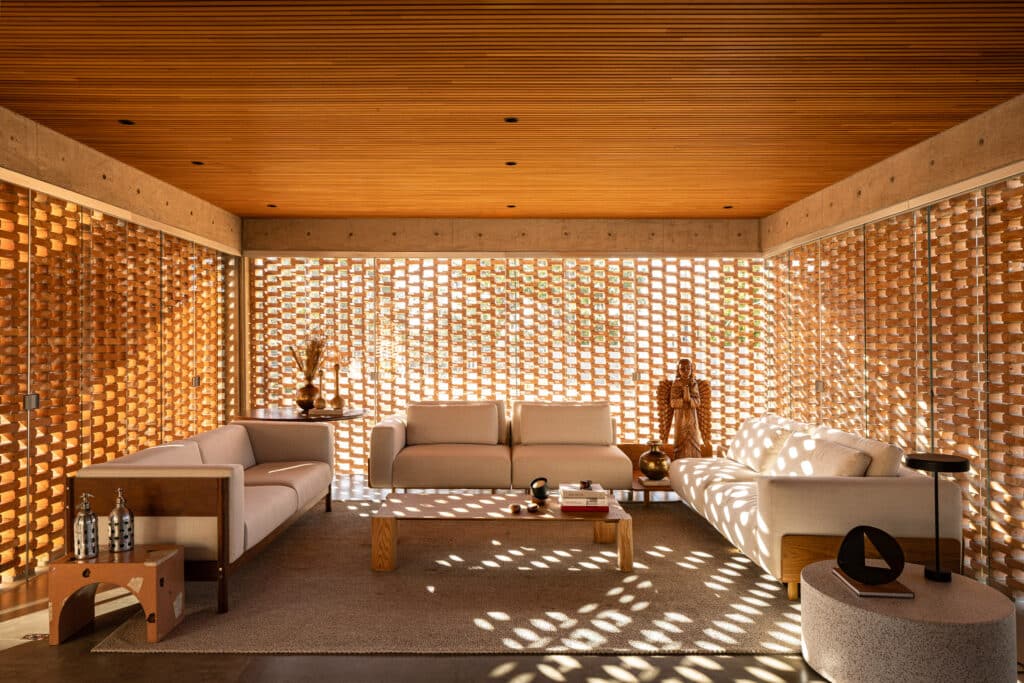
The design reverses conventional notions of openness in residential buildings. From the exterior, the house appears closed and opaque. However, interior design spaces remain open, fluid, and visually expansive. The brick screens create dynamic patterns of filtered light inside while maintaining privacy.
The structural clarity reinforces elevation as both an architectural gesture and environmental strategy. Wide entry portals open the courtyard to surrounding landscapes. Meanwhile, the central void functions as both leisure space and connective core. The layout also preserved an existing tree at the courtyard’s center.
Similar approaches to ventilation appear in recent residential news, including a renovated Puerto Rican home and a woven timber residence in Goa, India. These projects demonstrate growing interest in passive cooling strategies within contemporary cities and sustainability practices.
A Quick Architectural Snapshot
Casa Tupin demonstrates how traditional materials can create climate-responsive architecture. The 420-square-metre house uses perforated brick screens instead of windows, creating filtered light and natural ventilation. Elevated on pillars, the design preserves native landscape while maintaining spatial fluidity through a central courtyard.
✦ ArchUp Editorial Insight
The emergence of windowless architecture in Brazilian gated communities reflects deeper shifts in residential priorities. Security concerns drive homeowners toward enclosed designs that minimize visual access from exterior spaces. Meanwhile, rising energy costs make passive cooling strategies economically attractive rather than merely ideological. The elevation of structures above ground responds to increasingly strict environmental regulations that mandate minimal site disruption. Perforated brick screens represent a cost-effective alternative to sophisticated climate control systems while satisfying aesthetic expectations for natural materials. The central courtyard typology resurfaces as developers recognize its efficiency in maximizing private outdoor space within compact lots. This project is the logical outcome of security-driven enclosure demands, energy cost pressures, and environmental compliance requirements converging in suburban Brazilian development.

★ ArchUp Technical Analysis
Technical and Documentary Analysis of Casa Tupin – Brasília, Brazil:
This article presents an architectural analysis of Casa Tupin as a case study in replacing traditional windows with perforated brick screens. To enhance its archival value, we would like to present the following key technical and design data.
The project spans 420 square meters, was completed in 2025, and is located in a gated residential community 20 kilometers from downtown Brasília. The design relies on coral-colored brick screens that wrap around a rectangular core between a raised concrete slab and a deep roof, where the porous façade performs multiple functions including solar protection and continuous ventilation throughout the house.
The construction method lifts three-quarters of the floor plan on 12 columns, elevating the house above ground level to maximize cross-ventilation beneath the structure, while preserving the natural savanna (Cerrado) terrain, its native vegetation, and wildlife including lizards and burrowing owls.
The house features a large central courtyard as the main organizing element, preserving an existing tree at the courtyard’s center, with wide gates that open the courtyard to the surrounding landscape. From the outside, the house appears closed and opaque, while the interior spaces remain open and fluid with dynamic light patterns filtered through the brick screens.
Related Insight: Please refer to this article to understand the context of modern architectural preservation:
Passive Cooling Strategies in Contemporary Residential Architecture.




✅ Official ArchUp Technical Review completed for this article.