Turin Metro Line 2 Competition Won with Public Space-Focused Urban Design

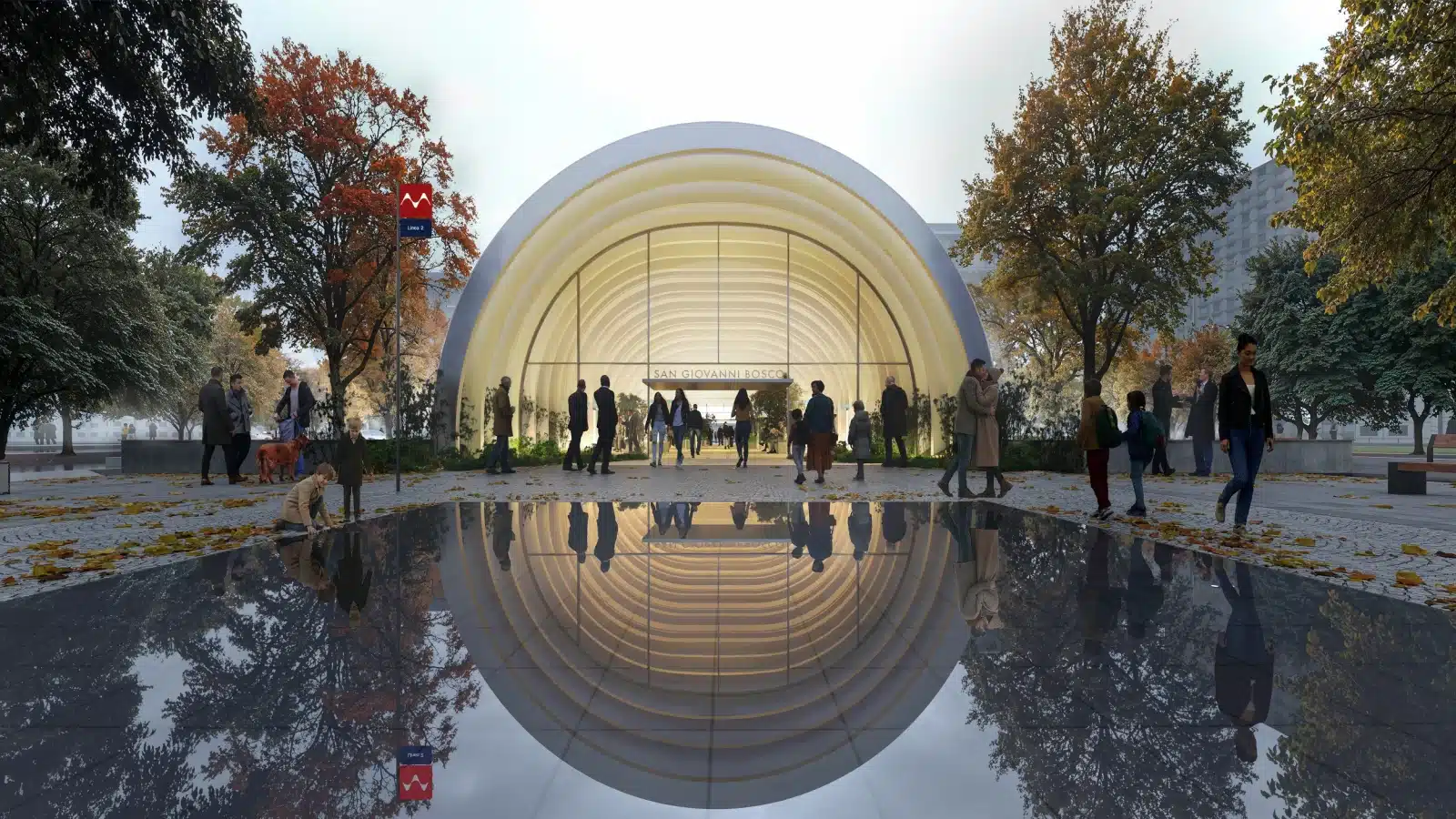
An international consortium has won the competition to design Turin’s Metro Line 2. The project reimagines transit infrastructure as urban public space rather than simple transportation.
Metro Becomes New Urban River for Turin
An international jury chaired by Dominique Perrault selected the proposal developed by UNS alongside Settanta7, Mijksenaar, Frigorosso, 3BA, and WSP. The jury recognized how the design strengthens connections between mobility, public space, and the broader urban fabric. Moreover, the panel highlighted the project’s potential to influence how residents move through and experience the city.
The design treats the metro as an act of city-making rather than standalone construction. Turin’s existing urban planning features, including 18 kilometers of continuous arcaded porticoes and two major rivers, directly informed the approach. Therefore, Line 2 functions as a new urban river, linking neighborhoods, histories, and generations across the Italian city.
Design Responds to Turin’s Architectural Identity
The proposal draws inspiration from Turin’s evolution from industrial hub to cultural center. This transition shaped the main design concept, which moves from arch to portico and curve to square. The architecture responds to Turin’s characteristic contrast between restrained exteriors and expressive interior design spaces.
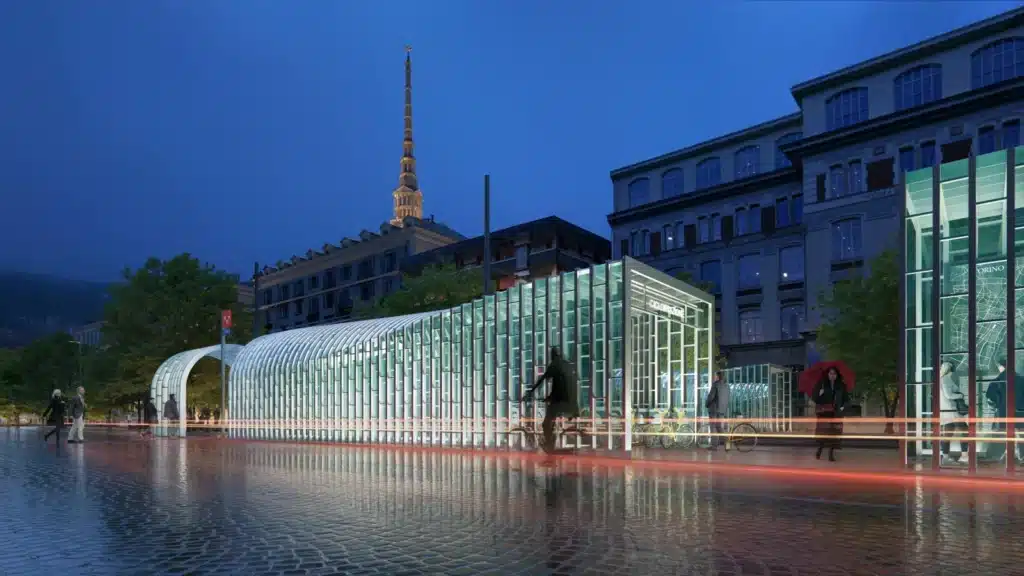
Three complementary pillars structure the design approach: branding principles, transit experience, and layered identities. These elements position the metro as public space that enhances wayfinding and strengthens neighborhood identity. However, the system maintains consistency across the network while allowing for local differences at individual stations.
Modular System Adapts to 32 Planned Stations
The design adopts a flexible, modular approach to accommodate 32 planned stations. The first phase covers 10 locations. This system allows scaling and programming to adapt to different sites while maintaining unified network identity.
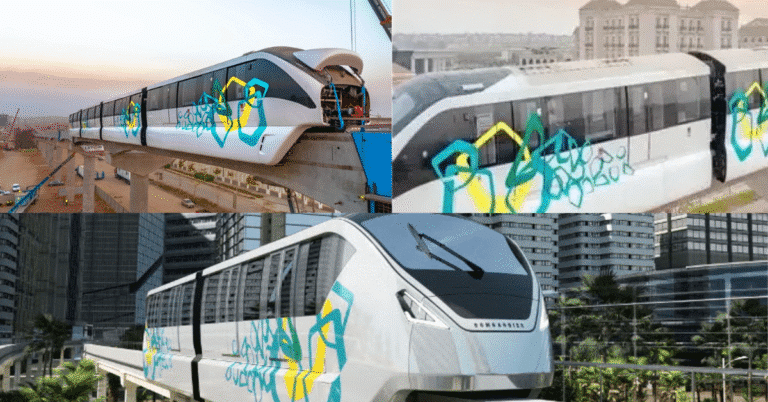
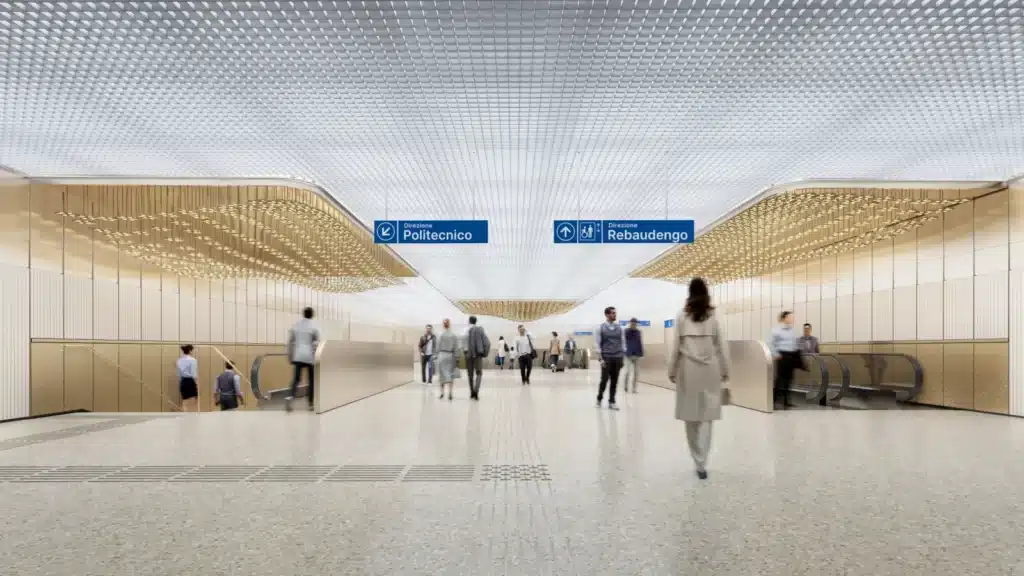
The brand language translates Turin’s mountains, porticoes, and water flows into visual systems. Meanwhile, a palette shifting from warm ochres to greens and blues extends across signage, digital platforms, and building materials. Above ground, stations establish clear urban presence. Below ground, they become atmospheric interior design environments designed as spatial experiences.
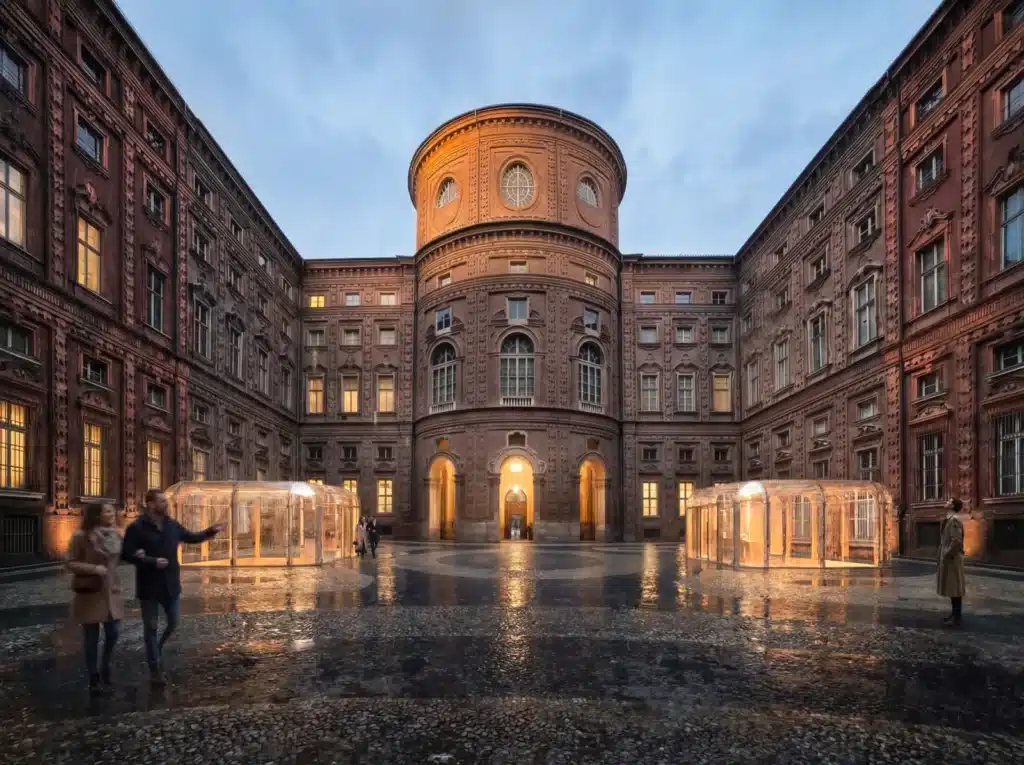
Local references, durable materials, and soft lighting support orientation and comfort throughout the transit system. Wayfinding and flooring systems connect historical memory with contemporary buildings. The design considers the full passenger journey from digital planning to boarding.
A Quick Architectural Snapshot
Turin Metro Line 2 reimagines transit infrastructure as public urban space. The winning design draws on the city’s porticoes, rivers, and architectural history. A modular system accommodates 32 stations while maintaining network identity. The project positions metro construction as civic connection rather than simple transportation.

ArchUp Editorial Insight
Turin Metro Line 2 reflects a fundamental shift in how European cities view transport infrastructure. Turin has faced declining traditional industry for decades. Therefore the city seeks to reposition itself as a cultural and tourist destination.
Italian local governments press to attract European Union investments in sustainable mobility projects. Meanwhile residents demand public spaces that transcend purely utilitarian functions. Municipalities also seek to justify massive infrastructure spending by linking it to quality of life improvements.
The modular systems approach emerges as a response to budget pressures and economic uncertainty. Cities need flexibility to expand based on available funding. The integration of local identity into the design reflects competition among Italian cities for tourism and investment.
This project is the logical outcome of traditional industry decline plus European funding pressures plus cities competing to redefine their identity.