4×4 House, Kobe: Spatial Intensification and Coastal Dwelling

Site Location and Context Conditions
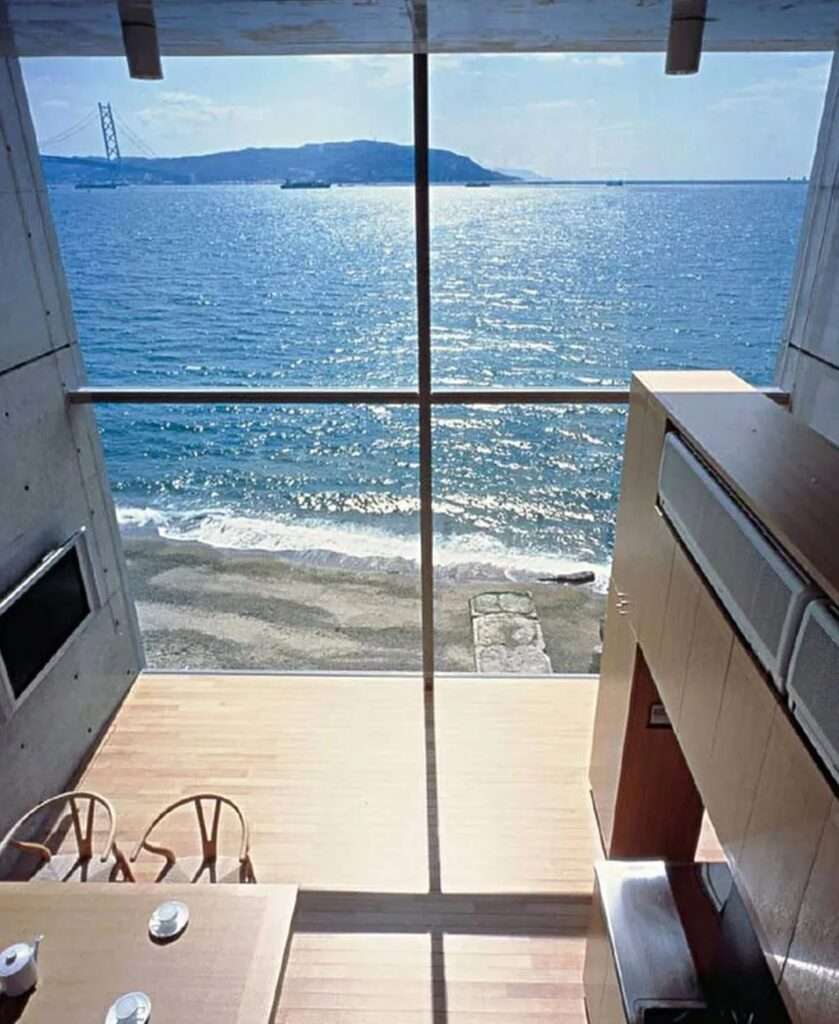
The 4×4 House is located on the coastline overlooking the Seto Inland Sea in the Tarumi-ku district of Kobe, within a narrow coastal strip that Japanese authorities had previously not classified as suitable for construction. This condition of the site was a fundamental factor in the decision to intervene architecturally in this location.
Seismic Context and Architectural Response
The project was completed in 2003, in the aftermath of the Great Hanshin Earthquake, which reshaped the urban fabric and collective awareness of the region. Within this context, the architectural response did not rely on expansion or on reinforcing conventional notions of safety, but instead moved toward an approach based on precision and spatial intensification.
Volumetric Organization and Structural System
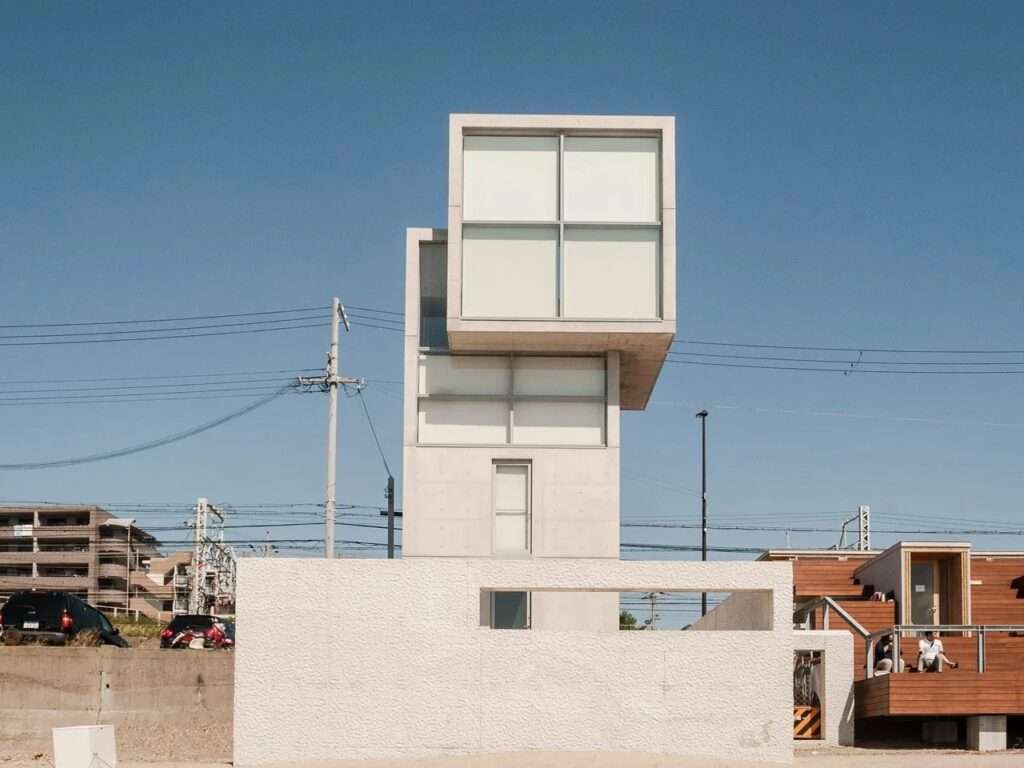
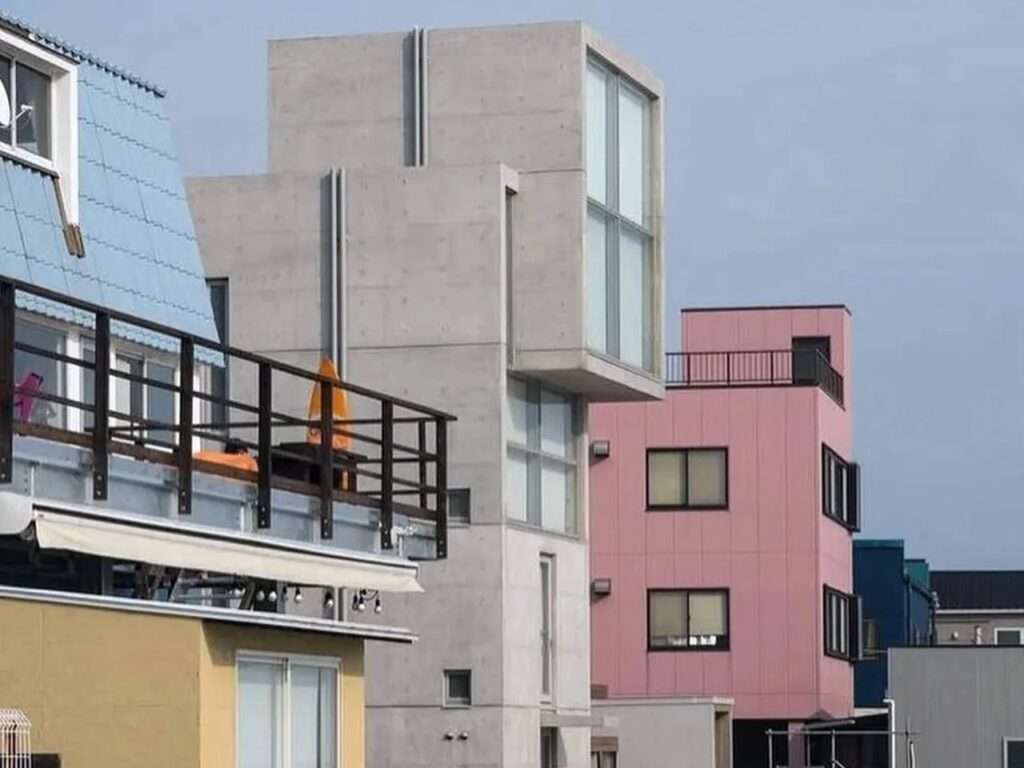
The building consists of a reinforced concrete tower composed of four floors, with a ground footprint of no more than 4 meters by 4 meters. This 16-square-meter area is repeated vertically upward, making the name a direct reflection of the building’s plan and geometric configuration.
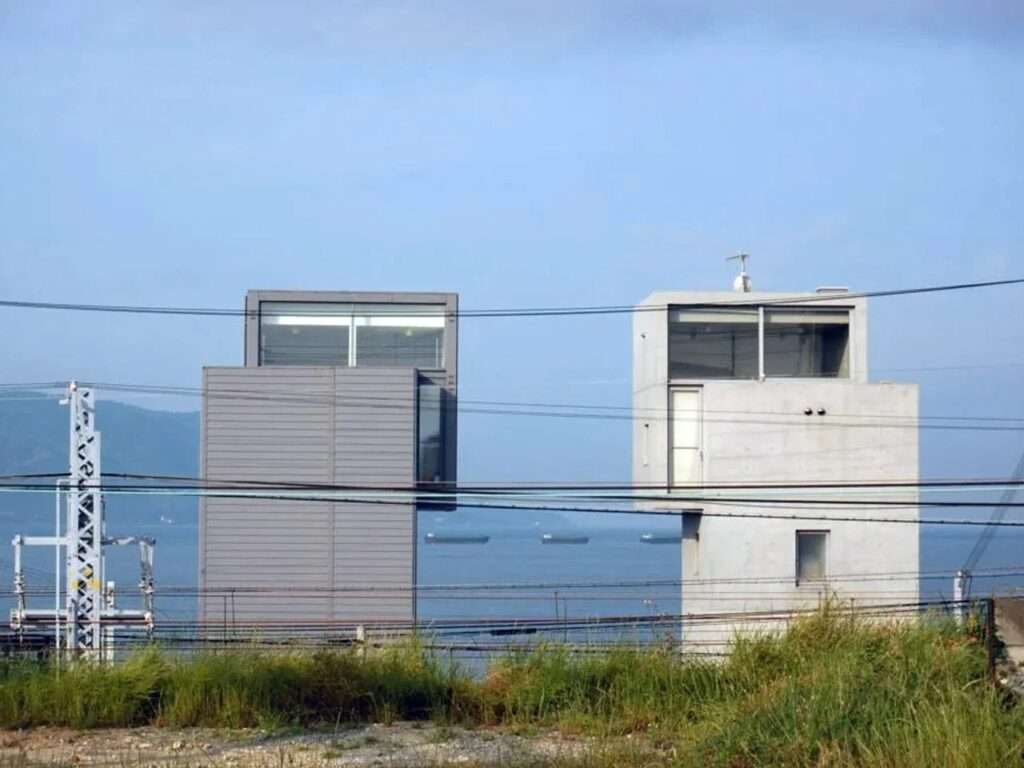
Vertical Mass and Site Interaction
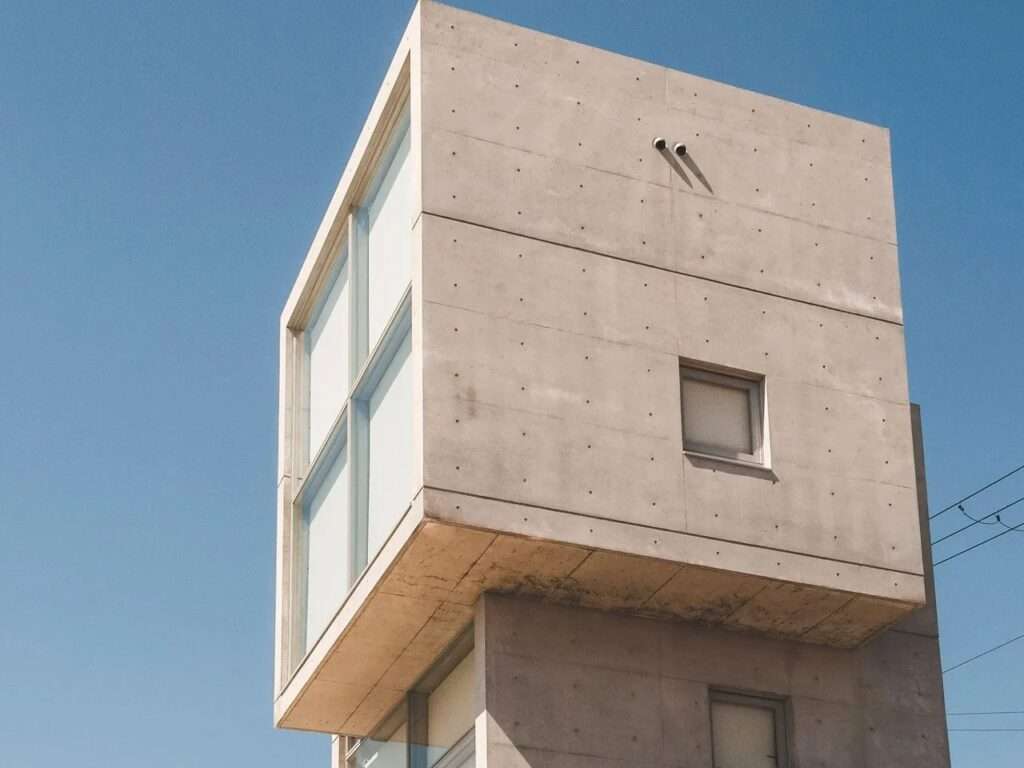
Rising to a height of 13.4 meters, the building appears as a vertical mass closer to a watchtower than a conventional residence. The design engages directly with the coastal site, with foundations deeply anchored into the ground to resist lateral forces. At the base, the concrete courtyard merges with a level influenced by tidal variation, producing a clear dissolution of boundaries between the building and the sea.
Interior Organization and Spatial Sequence
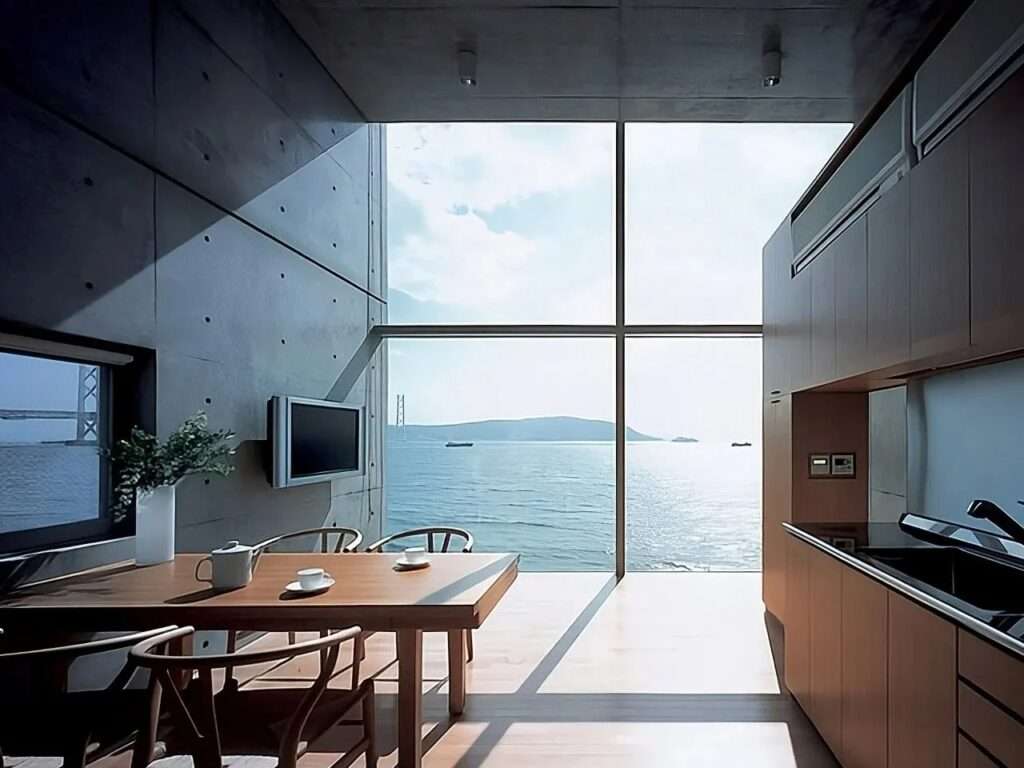
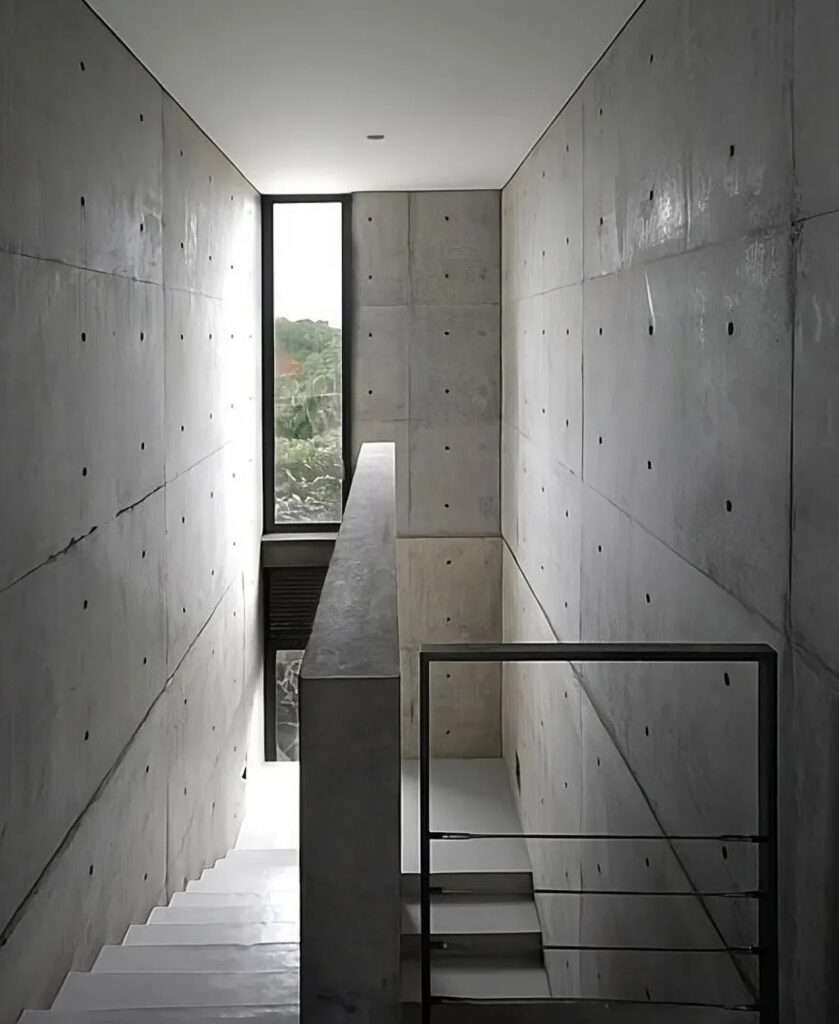
The interior space is organized through a clear vertical sequence, where floors are stacked in a strict, orderly formation resembling rigid vertical compositions. This sequencing reinforces the idea of density within a constrained volume, while maintaining a clear relationship between each level and the overall structure.
Volumetric Shift and Light
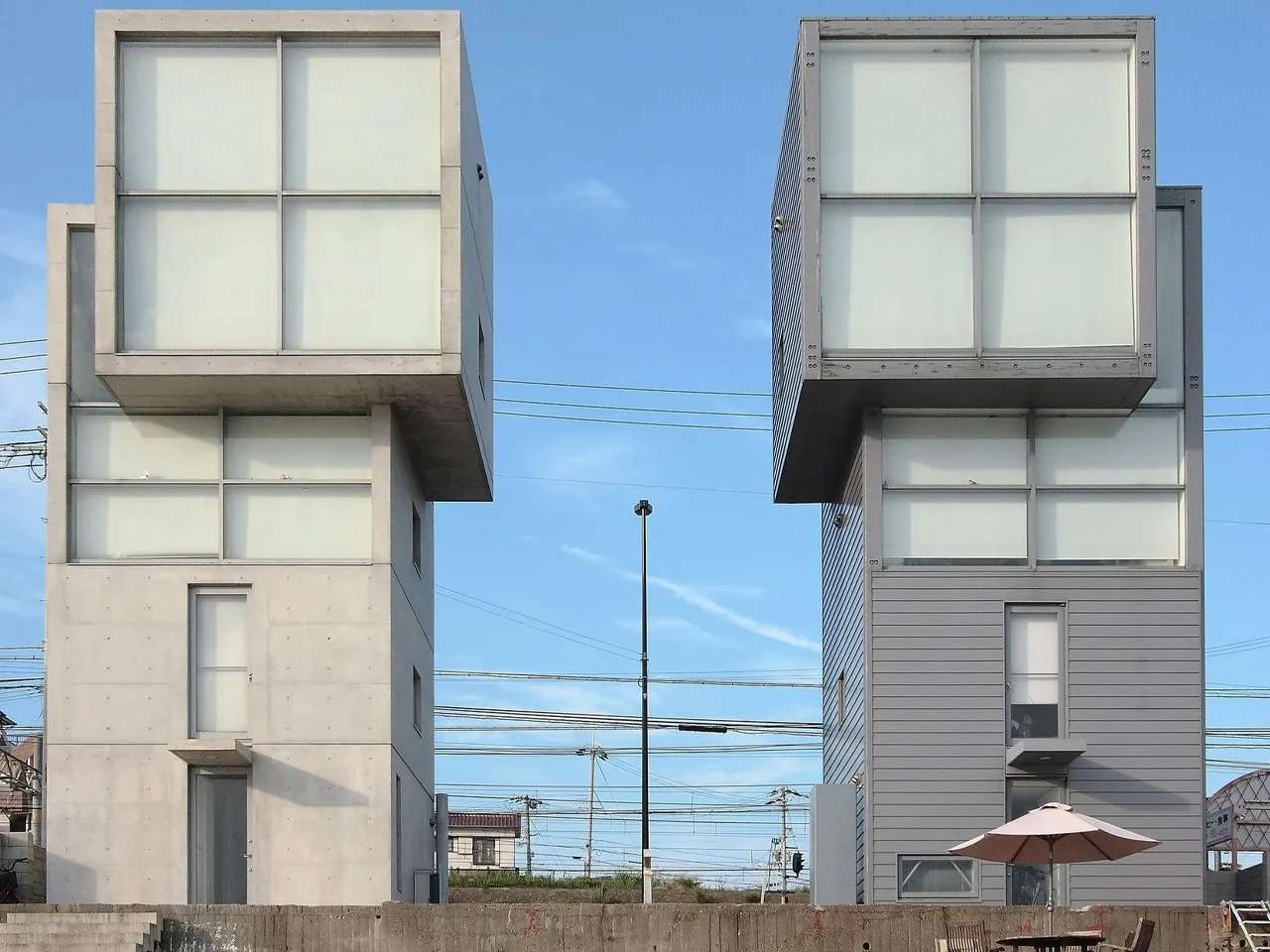
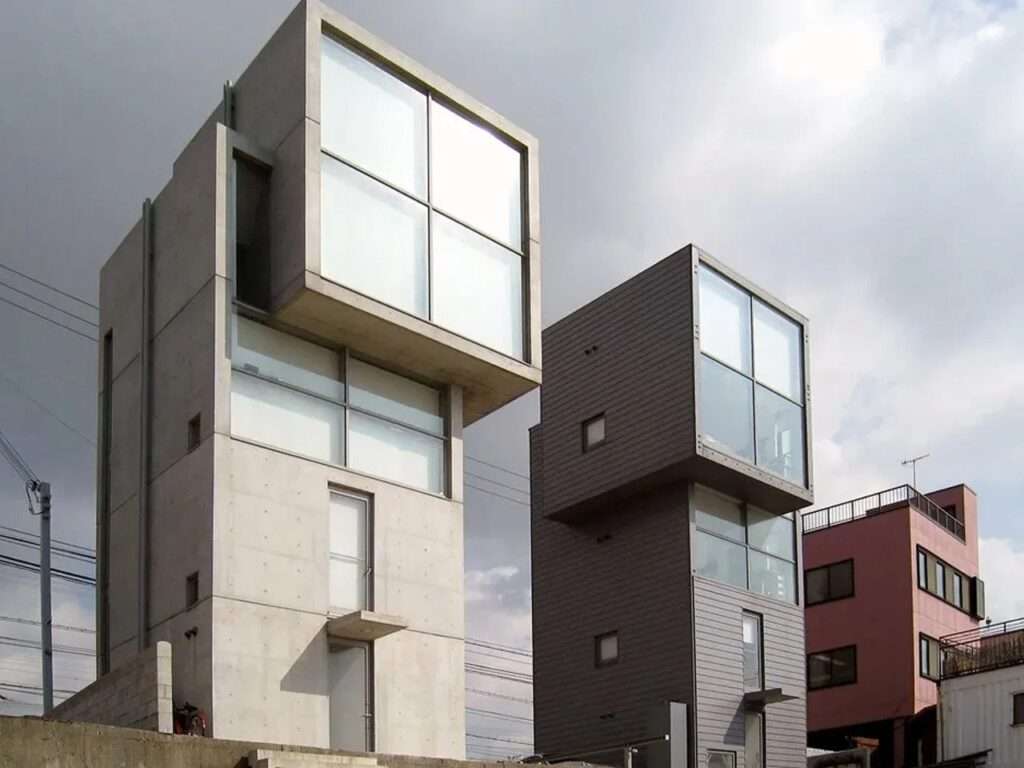
The upper floor is characterized by a slight displacement from the vertical axis compared to the lower levels, an adjustment that affects the perception of the entire mass. This configuration allows controlled natural light to enter the interior while framing views in a directed manner, treating each visual opening as part of a carefully composed visual system. The design allows controlled natural light to enter the interior while framing views in a directed manner.
Dual Repetition and Spatial Relationship
Shortly after the completion of the first house, Tadao Ando was commissioned to construct an identical tower on the adjacent plot. This resulted in a pair of concrete towers standing side by side along the coastline, similar in form but different in material. There is no physical connection between the two buildings, yet their opposing placement establishes a direct visual relationship with the sea.
Conceptual Framework and Constraints
The 4×4 House does not present a conventional model of residential comfort, but instead explores an approach that tests the limits of spatial constraints. Within this framework, limited space becomes a structuring element of architectural thought rather than a functional obstacle.
Reframing the Residential Site
The project is based on the reuse of a narrow coastal strip that had been largely excluded from urban development, transforming it into a dense, compact residential structure. The organization based on a 16-square-meter footprint is repeated, making repetition itself part of the project’s structural logic.
✦ ArchUp Editorial Insight
The project emerges within the context of post-Hanshin Earthquake regulatory restructuring in Kobe, where narrow coastal strips were classified as low-value or non-developable land within a fragmented zoning system. The driving force is not an independent design decision, but a direct response to the collapse of land investment value and inconsistencies in regulatory enforcement. The key pressure factors include seismic liability standards, insurance costs, and strict footprint limitations that force vertical intensification within a land unit not exceeding 16 square meters. The spatial solution emerges as a stacked configuration above this constraint, where scarcity is transformed into a vertical organization of programs. The repetition of the building on an adjacent plot reflects a logic of asset replication under identical conditions, without structural integration between the two units. The outcome is not a formal expression, but a material settlement between regulatory constraints, financial pressures, and the logic of urban risk management.