Compact Sports Complex Reorganization Through Sections

Reusing the Existing Structure and Reorganizing the Site
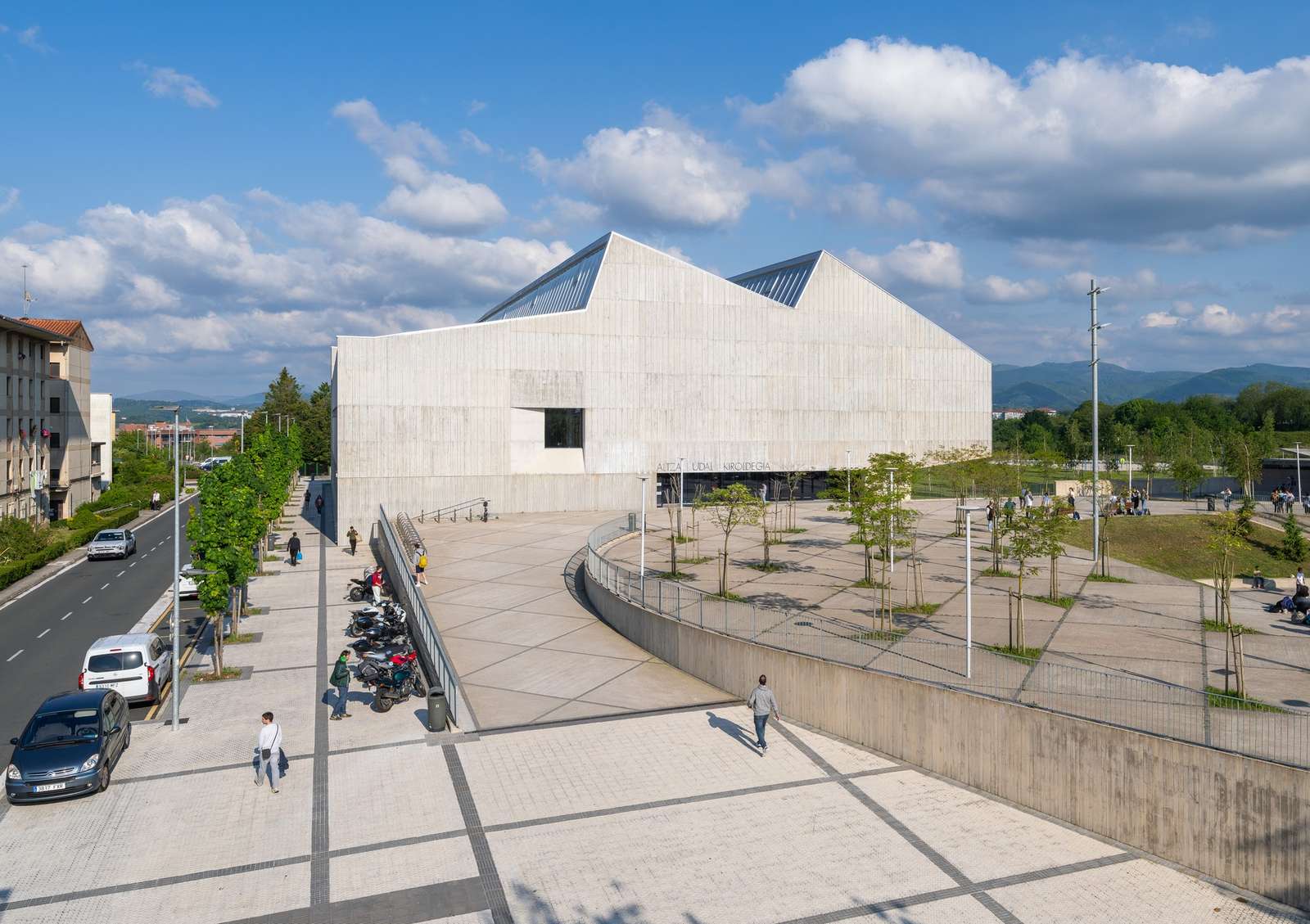
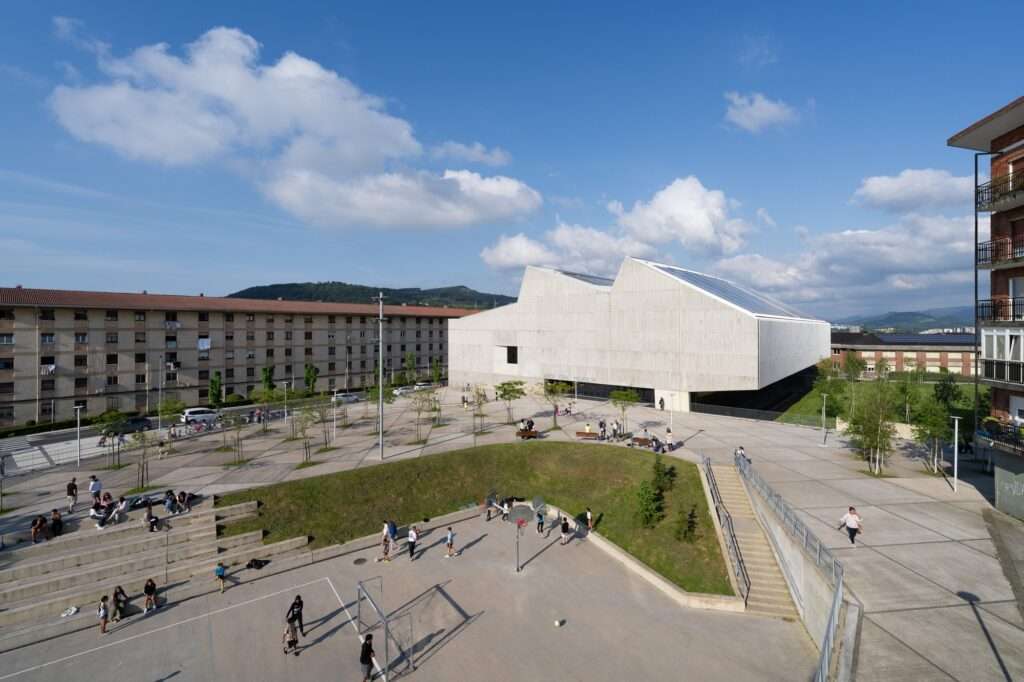
The project is based on a site that previously hosted a sports complex with a similar functional program; however, structural issues led to its demolition. Nevertheless, some existing elements were preserved, such as retaining walls and parts of the foundations, and were reintegrated into the new composition. The relationship between external elements and the site was also reconfigured, as the sports field was relocated to sit above the indoor swimming pools. This allowed the creation of a western access plaza that includes outdoor courts and additional activity spaces.
Distribution of External Functions
On the southern side, an open activity zone was designated, including an outdoor swimming pool and water play areas for children, along with small service units dedicated to changing rooms and storage. This arrangement reflects a clear separation between sports and recreational uses while maintaining their spatial interconnection within the site.
Organization of Services and Internal Flexibility
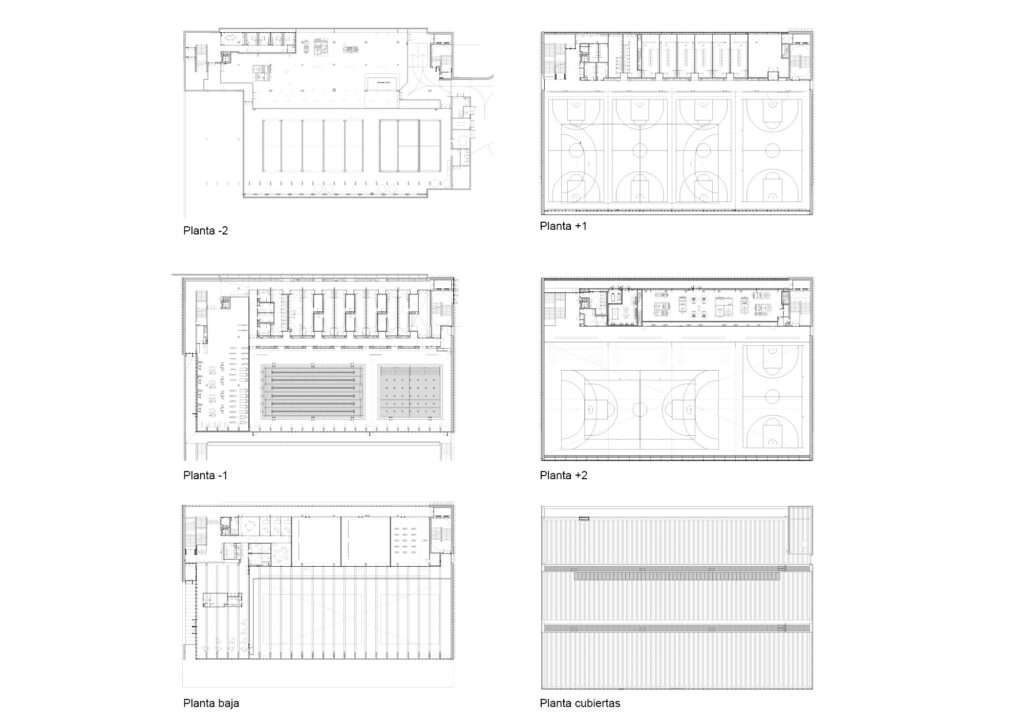
Inside the building, support functions are consolidated into a longitudinal strip on the northern side, including changing rooms, activity halls, offices, and various facilities. At the same time, the extended concrete structural system with lateral cantilevers provides flexibility in internal spatial distribution. Main vertical circulation and service cores are positioned at both ends of this strip to improve accessibility and organize internal movement.
Compression of the Functional Program into a Compact Volume
The project consolidates multiple sports functions with relatively complex movement requirements into a compact mass that corresponds to the scale of the surrounding area. To achieve this, a simple and clear organizational strategy was adopted, aiming to reduce spatial complexity and improve operational efficiency.
The Role of Sections in Shaping the Site Relationship
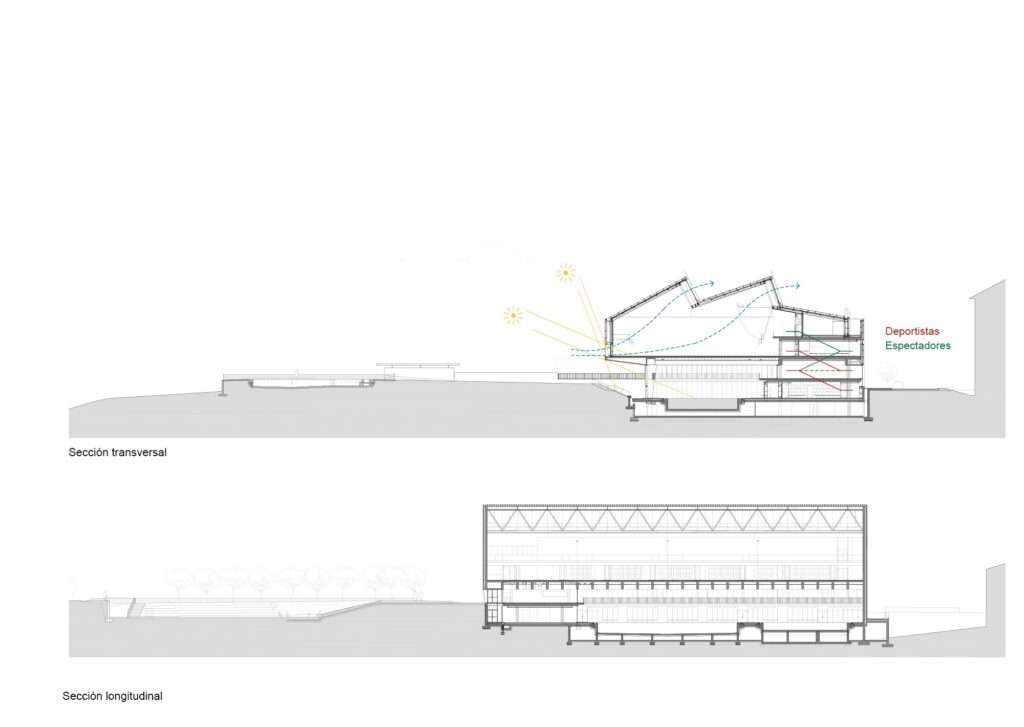
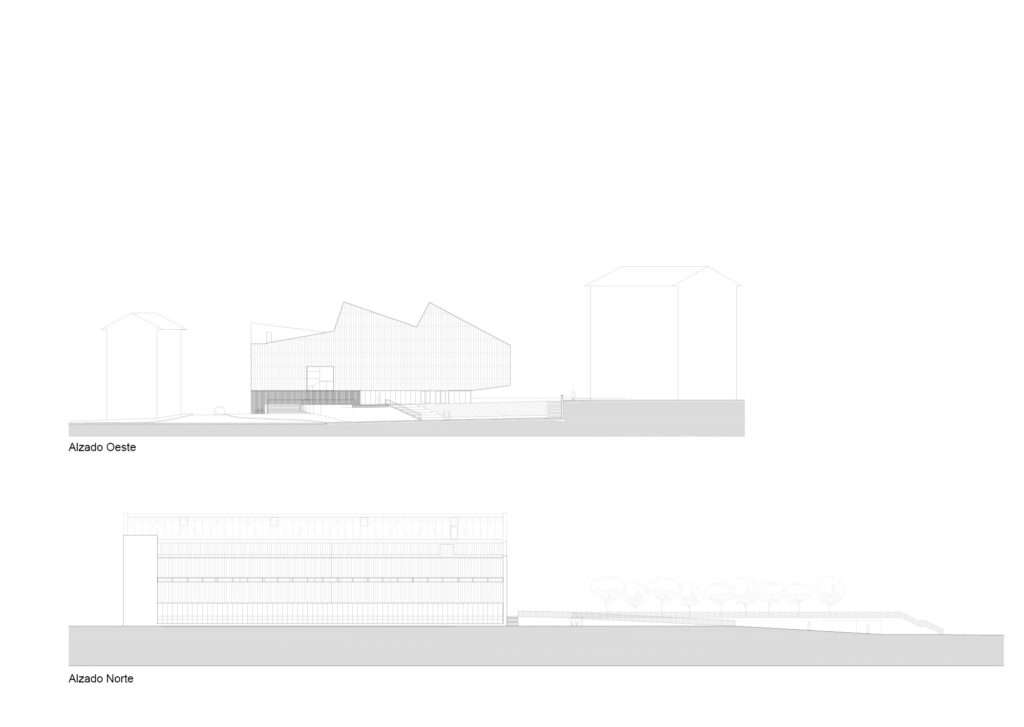
Section studies played a fundamental role in organizing the relationship between the building and the surrounding topography. In the longitudinal section, the shaping of the ground at the arrival plaza, accessed via a ramp, allowed the outdoor courts to be surrounded by natural and terraced elements. This helped define spatial boundaries without relying on conventional fencing systems.
Internal Circulation and Access Organization
The main entrance lobby is positioned at an intermediate level to reduce vertical travel distances within the building. As a result, accessing either the sports hall or the swimming pool requires only one level of ascent or descent. Functions such as the café and activity rooms are integrated at the same entry level to improve the connectivity between different uses.
Vertical Circulation and Functional Separation
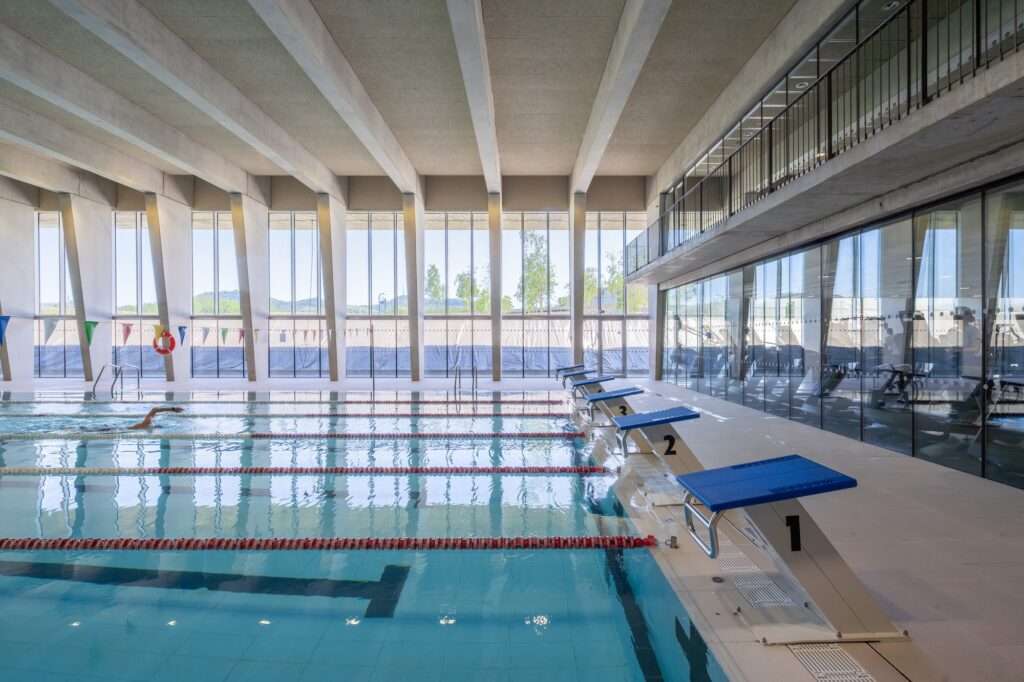
Vertical circulation is handled through a single stair core located directly adjacent to the main lobby. Overlapping sectional arrangements allow differentiation between pool users and sports facility users through a controlled access system using turnstiles. At the same time, the weight-training hall is functionally linked to the indoor swimming pool, placing it directly below the café level, while both spaces maintain visual connections to the pool area. Public access to the sports arena and swimming pool stands is preserved directly from the lobby without disrupting athlete circulation.
Structural Requirements and Roof Formation
The sports hall required a clear height of 10 meters to accommodate rhythmic gymnastics activities, while complying with municipal height restrictions. Consequently, an unconventional structural organization was adopted for the main roof, arranged longitudinally using two large 66-meter Warren trusses. These elements also function as top lighting openings oriented toward the north, supported by reinforced concrete walls at the eastern and western ends.
Sectional Treatment and Environmental Response
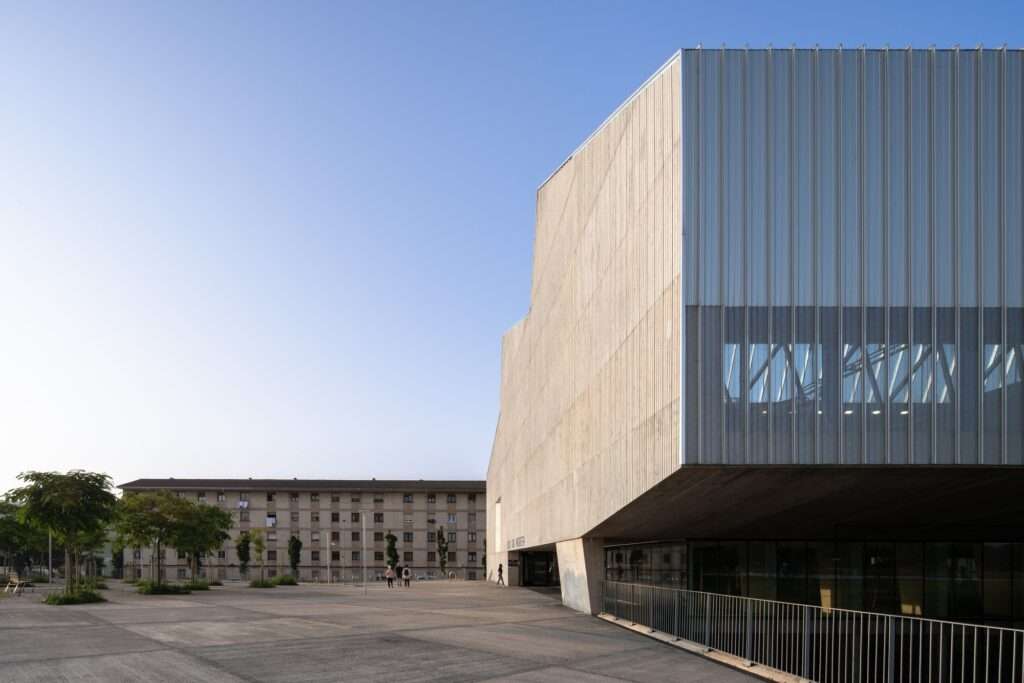
This configuration results in a stepped cross-section that reduces the visual impact of the sports complex’s volume. Facade heights facing Darieta Street and the sun-exposed area were lowered to match the surrounding scale. The indoor swimming pool mass was set back toward the southern façade to reduce the volume of the thermally conditioned space facing outdoor green areas. In addition, the large concrete cantilever balances the wide openings of the precast beam system, providing summer solar protection and winter thermal gains. maintenance corridors on the southern façade support night-time natural ventilation, while also providing southern views and introducing filtered oblique daylight through perforated metal cladding.
Movement Organization and Natural Lighting
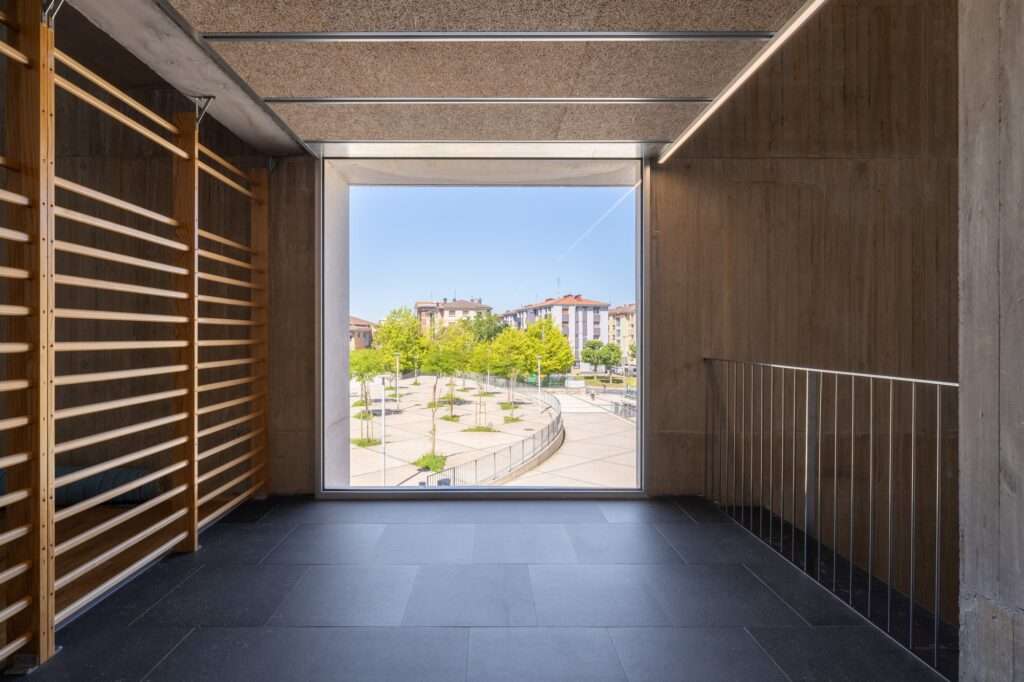
Access corridors are located on the northern side of the building, benefiting from natural light coming through the façade. Internal glazing, whether transparent or semi-transparent, enhances visual openness across transverse spaces toward the sports areas, strengthening the spatial relationship between different functions.
Finishes and Phased Implementation
Some equipment and finishing elements did not fully meet the initial expectations of the project. Due to economic constraints during construction under the supervision of municipal engineers, maintenance corridors and acoustic suspended ceilings made of compressed wood panels, intended for the sloped roof surfaces of the indoor sports hall, were omitted.
Future Improvements to the Interior Space
These elements are planned for a later phase to enhance the acoustic and thermal performance of the space. They are also expected to improve the distribution of light entering from the upper openings, while concealing structural elements, service routes, and mechanical systems within the ceiling.
✦ ArchUp Editorial Insight
The project originates from a municipal decision to rehabilitate a former sports complex after structural deterioration, where demolition was not a design choice but a direct consequence of infrastructure risk management within a public governance framework. The retention of retaining walls and foundation elements reflects a logic of cost minimization and the recycling of structural capital under public budget constraints and the continued use of the land for sports activities. The spatial organization emerges from a balance between circulation efficiency and the separation of user flows through control systems regulating access between different functions. Furthermore, financial pressures during construction led to the omission of technical elements such as acoustic treatments and maintenance corridors, revealing a deferred layer of building systems postponed to future investment phases. In this context, architecture becomes an expression of administrative and economic compromises rather than a fully realized and finalized product.