Tree Village: Memory and Rural Transformation

Repositioning the Village Between Identity and New Programs
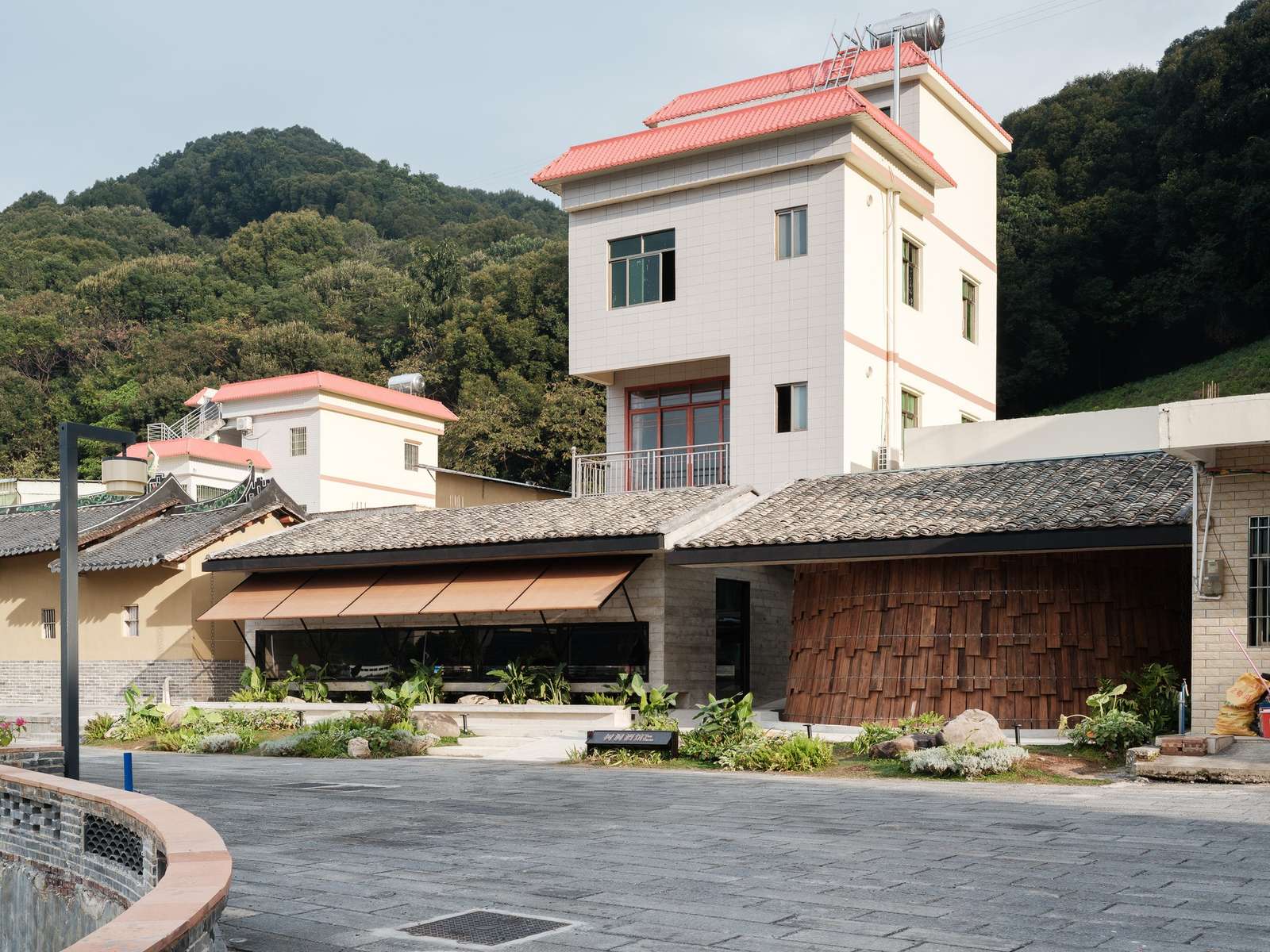
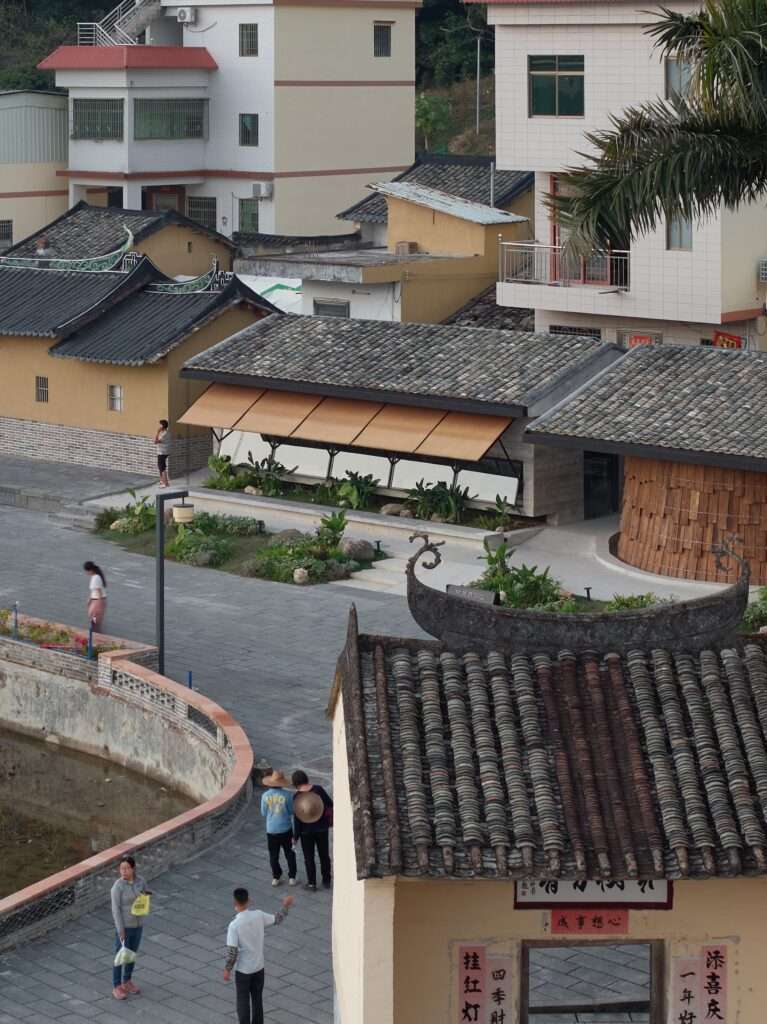
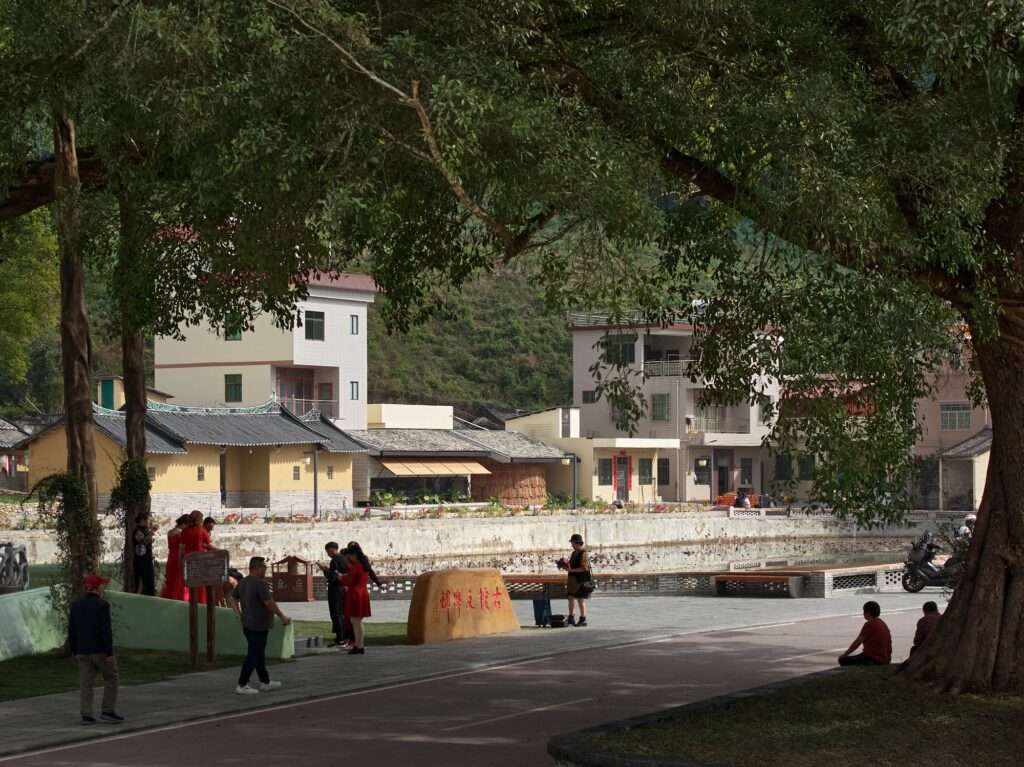
The process of repositioning the village came within a broader framework aimed at granting the site a renewed identity connected to its cultural context. In this sense, the intervention was not limited to the Architecture aspect alone, but was also tied to an attempt to achieve a balance between the new directions of the project, the requirements of use, and the existing memory of the place.
Preserving Existing Spatial Relationships
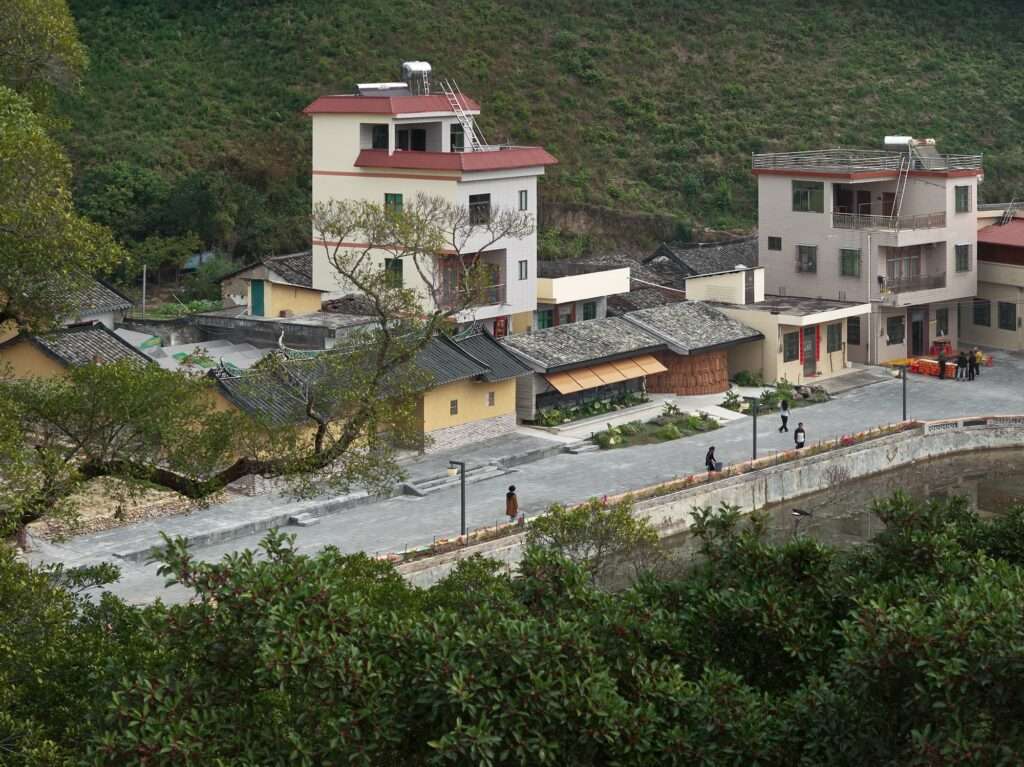
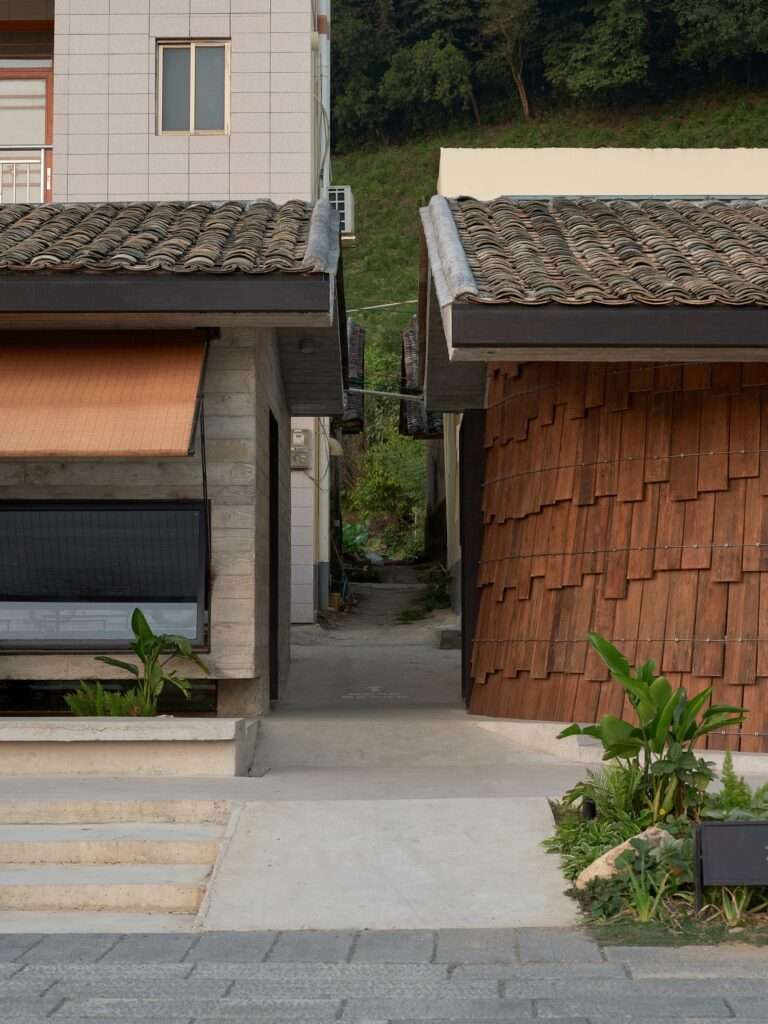
From the outset, the architectural intervention was approached with caution due to the continued quiet spatial relationship between the two houses and the ancestral hall. The original identity of the old Buildings was also considered an element worth preserving, despite the surrounding village fabric having undergone changes due to the emergence of modern buildings, in addition to the limited capacity of the old houses to accommodate new functions such as the bar and the tea room.
Reinterpreting Local Elements
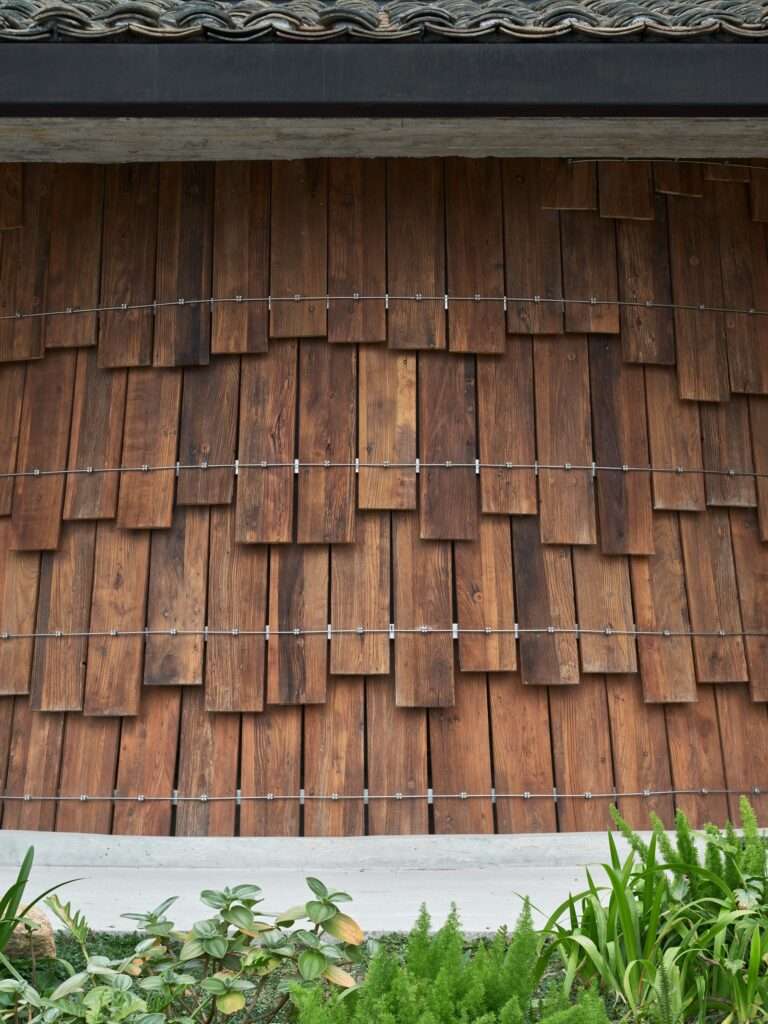
The architectural approach was based on re-reading the site’s characteristics rather than replacing them. The wood-textured concrete preserved the original house layouts while reusing old roof tiles, while bamboo curtains introduced visual elements associated with neighboring buildings. Reclaimed elm wood from the same rural environment was also used, creating a condition that combines familiar elements with new formulations that reflect the tension between rural reality and transformations linked to cultural tourism. For more references on material selection, you can explore our Building Materials resources.
| Field | Details |
|---|---|
| Architects | ARC Z Architects, Practice on Earth |
| Area | 85 m² |
| Year | 2025 |
| Photographs | Runzi Zhu, Qingyan Zhu, Ziyan Zhang |
| Lighting Consultant | ELA |
| Category | Coffee Shop |
| Design Team | Zi Meng, Yinuo Qiu, Hanrui Jiang, Guanming Huang, Yifei Feng, Jialin Dai, Cloe Yun Wang, Haotian Wu, Wenze Zhang, Baolin Liu, Yuyang Tong |
| On Site Architect | Yinuo Qiu |
| Furniture Design | Cloe Yun Wang |
| Client | Mazha Town Government, Longmen County, Huizhou |
| Facade Consultant | Shenzhen Qichuang Facade Design Consulting Co., Ltd. |
| City | Huizhou |
| Country | China |
Introducing a New Function into the Rural Context
The bar represented the first new function added within the renovation process, yet it emerged as an unfamiliar element within the rural environment, which had not previously known this type of use. Therefore, the architectural treatment was tied to an attempt to find a local reference capable of integrating the new function into the existing context rather than presenting it as a separate element.
Employing the Symbolism of the Tree as an Architectural Envelope
The concept was inspired by the ancient banyan tree located at the village entrance, imagining an architectural extension evolving from the traditional house while preserving a sense of familiarity with the surrounding environment. The image of the tree was also used as a visual envelope that conceals the bar’s function during daytime hours, in harmony with the idea that such spaces are more associated with nighttime use than daily activity. Similar innovative approaches can be found in various Projects.
Expressing Function Through Material Details
References to the building’s function appeared through its detailed elements rather than direct expression. Exterior details revealed structural components such as steel cables and metal fasteners used to bind wooden barrels, creating an indirect relationship between the material used and the function embedded within the building. You can also view technical specifications in our Material Datasheets section.
Internal Composition as a Growing Structure
The interior space of the Tree Bar is extremely limited, designed to accommodate only a single bar counter. Accordingly, the architectural composition follows a structural logic similar to organic growth, where the space is formed as if it were the result of biological development rather than conventional spatial organization. This approach to spatial arrangement is frequently discussed in Design articles.
The organization relies on a large main gable that carries the interior space and contains services, while opening a structural slit that allows natural light to enter. From this slit, secondary structural elements branch outward, supported by slender columns touching the ground, forming a tectonic relationship that resembles the structure of veins and fibers within a tree trunk. For more on construction techniques, visit our Construction page.
The luminous ring above the bar area also plays a spatial organizational role, separating the user from the service provider while simultaneously extending visually through its reflection in mirrors, adding another perceptual layer to the interior without altering its physical composition.
Functional Contrast Between the Bar and the Tea House
After the emergence of the “Tree Bar” model, a parallel effort was made to renovate the adjacent house and convert it into a tea house, establishing a functional contrast between the two spaces. While the bar is associated with a nocturnal and relatively enclosed atmosphere, the tea house is clearly connected to daytime, light, and direct engagement with nature. To stay updated on similar architectural innovations, check the latest Architectural News.
As a result, the Interior Design of the tea house was oriented toward drawing light and the external landscape into the interior, while maintaining simplicity and restraint in its spatial composition. At the same time, careful consideration was given to its proximity to the ancestral hall, particularly in relation to eave proportions, colors, and materiality, to ensure a continued balance between the new interventions and the existing historical structure.
For a broader understanding of rural-urban dynamics, you can refer to case studies on Cities and their transformations. Additionally, academic perspectives are available in our Research archive.
Homogeneous Composition as a Structural Logic
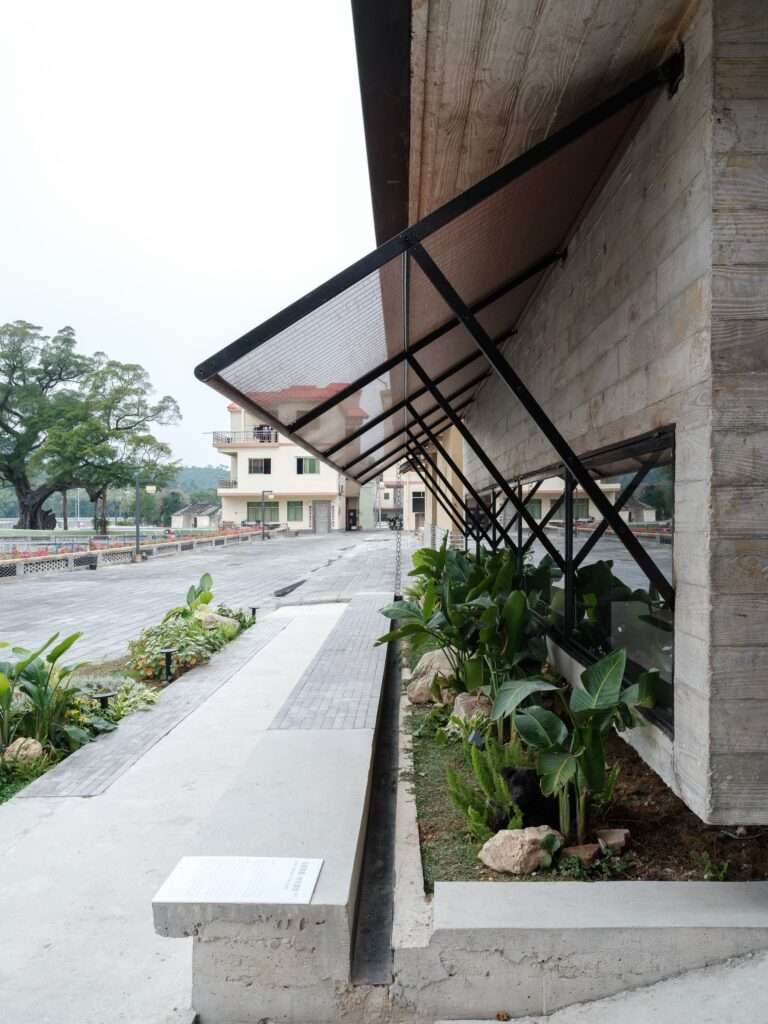
The tea house is executed as a monolithic concrete unit with a wood-textured surface, where structural elements, beams, slabs, walls, and openings, are read as an extension of a single continuous system. In this composition, these elements are not treated as separate parts but as one material system generating the building’s overall form. This approach aligns with contemporary Architecture trends that emphasize material unity.
A deep beam on the façade regulates the horizontal window level in accordance with the seated eye level, strengthening the visual relationship with the natural landscape and distant hills. This beam also integrates a suspended long bench, creating a direct connection between interior and exterior, where natural elements intersect with interior floor materials within a unified spatial continuity. For more on similar techniques, explore our Construction resources.
Treatment of Openings and Light as a Perceptual Structure
Openings are designed as tools for shaping light and view rather than conventional windows, with each opening configured to produce a specific relationship between interior and exterior. At the rear, a low window frames the adjacent stone terrace, while light filtering through dense beams produces subtle and continuous variations in interior illumination. These strategies are frequently discussed in Design articles focused on sensory experience.
Within this logic, the space becomes a quasi-cave-like formation, relying not on fixed lighting or added elements, but on the direct interaction between concrete mass and natural light. You can find further technical details in our Material Datasheets section.
Suspended Furniture as an Extension of Structure
Based on the cave concept, fixed furniture is eliminated in favor of a system of suspended elements that can be lowered and used when needed. Chairs, tea tables, and lighting fixtures are designed as detachable components, hung on wall-mounted supports inspired by the logic of hanging tea utensils. This innovative use of space is reminiscent of ideas found in various Projects that challenge conventional typologies.
Users are required to reconfigure the space themselves by lowering and arranging the elements, then restoring the space to its original condition after use. In this way, the space is continuously renewed between states of occupation and emptiness, while the suspension system reflects the logic of beams and openings, generating a quiet structural tension within the architectural composition. The Interior Design approach here prioritizes user interaction over fixed layouts.
✦ ArchUp Editorial Insight
The reuse of the village operates as a spatial outcome produced by the intersection of cultural governance policies and rural tourism economies, where the introduction of functions such as the bar and tea house is a direct result of identity-reproduction programs rather than an independent design decision. The primary friction arises between the requirements of preserving the historical fabric and the constraints of accommodating new economic uses within limited rural Buildings, resulting in an architectural envelope based on material recycling and mass regulation within strict organizational limits. For broader context, review case studies on Cities and their adaptive reuse strategies.
The project becomes a spatial compromise between these pressures, translating the discourse of identity into layers of local references and natural symbols such as the tree metaphor, rather than producing an independent formal language. The effect of structural inertia appears in the repetition of hybrid rural-commercial typologies, where funding logic and cultural marketing strategies prioritize “consumable authenticity,” making architecture a medium for executing system conditions rather than an autonomous agent of form production. To stay informed on current debates, check the latest Architectural News and critical discussions in the Discussion forum.
For a deeper understanding of material selection and sourcing, our Building Materials page offers extensive resources. Additionally, academic perspectives on this topic are available in our Research archive.