A Belgian Barn Transformed into a Light Filled, Sculptural Office with Stacked Timber Beams

In the pastoral landscapes of West Flanders, Belgium, a modest private barn has undergone a breathtaking metamorphosis. Once a simple agricultural structure, it now stands as a striking, light-filled office designed by Studio Farris Architects. Through ingenious spatial planning and a central sculptural element crafted from stacked timber beams, the barn has been reimagined as a dynamic, multifunctional workspace that harmonizes history with contemporary design.
Preserving the Past, Embracing the Future
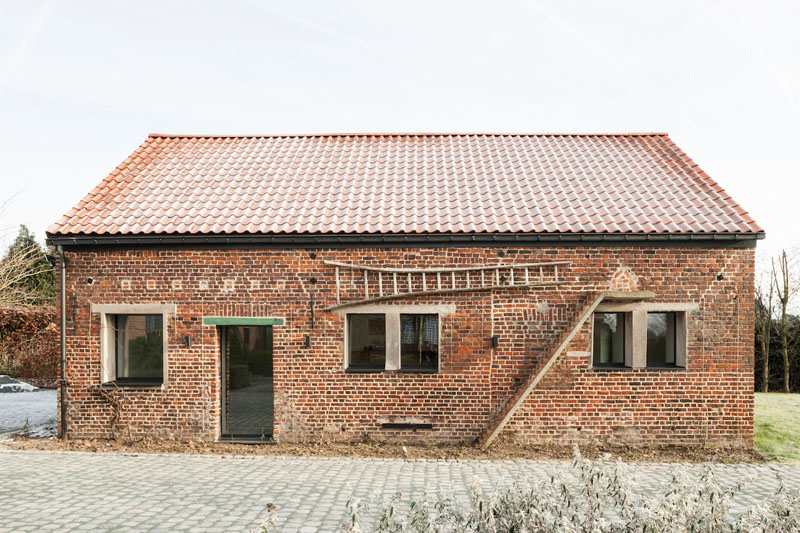
The barn’s historic brick shell remains intact, but its interior tells an entirely new story. The architects employed a “box within a box” strategy, inserting a new concrete volume inside the original walls. This clever approach ensures high energy efficiency while avoiding chemical interactions with sulfates in the old foundation. The result is a sleek, minimalist interior that echoes the barn’s original silhouette clean, solid, and self-sufficient while operating independently of its historic envelope.
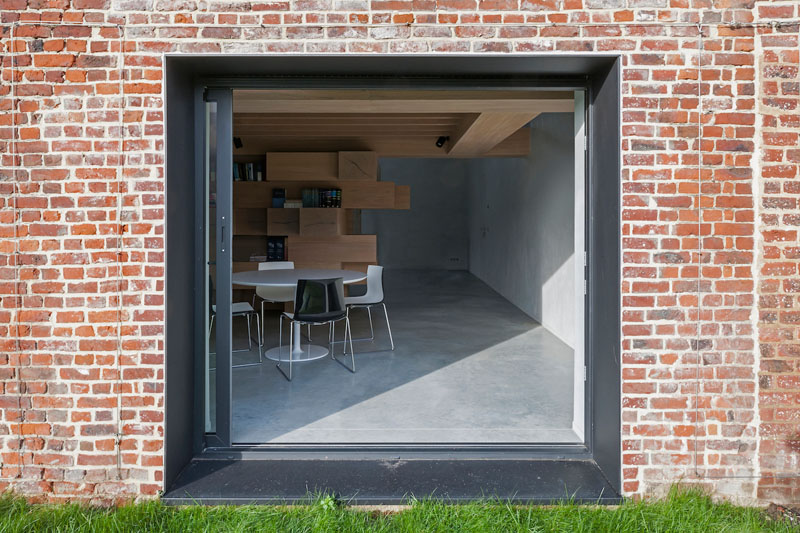
Strategic Light and Spatial Fluidity
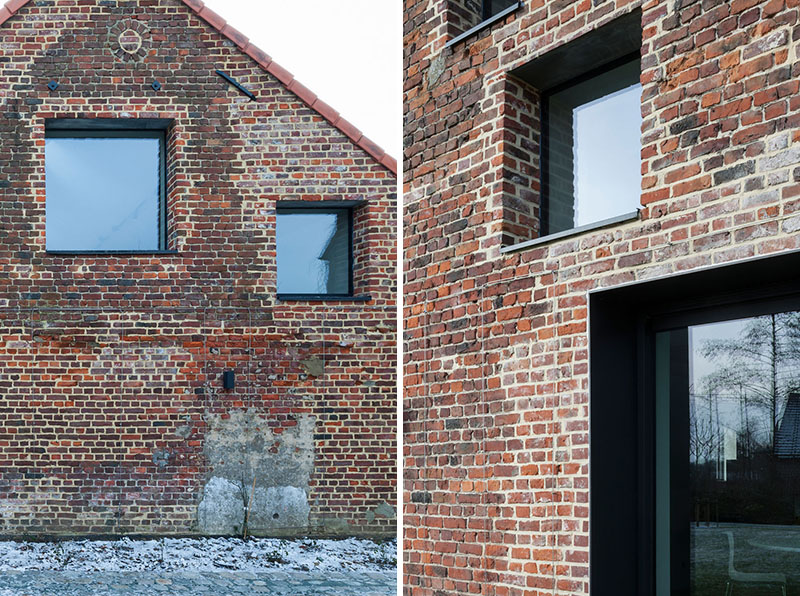
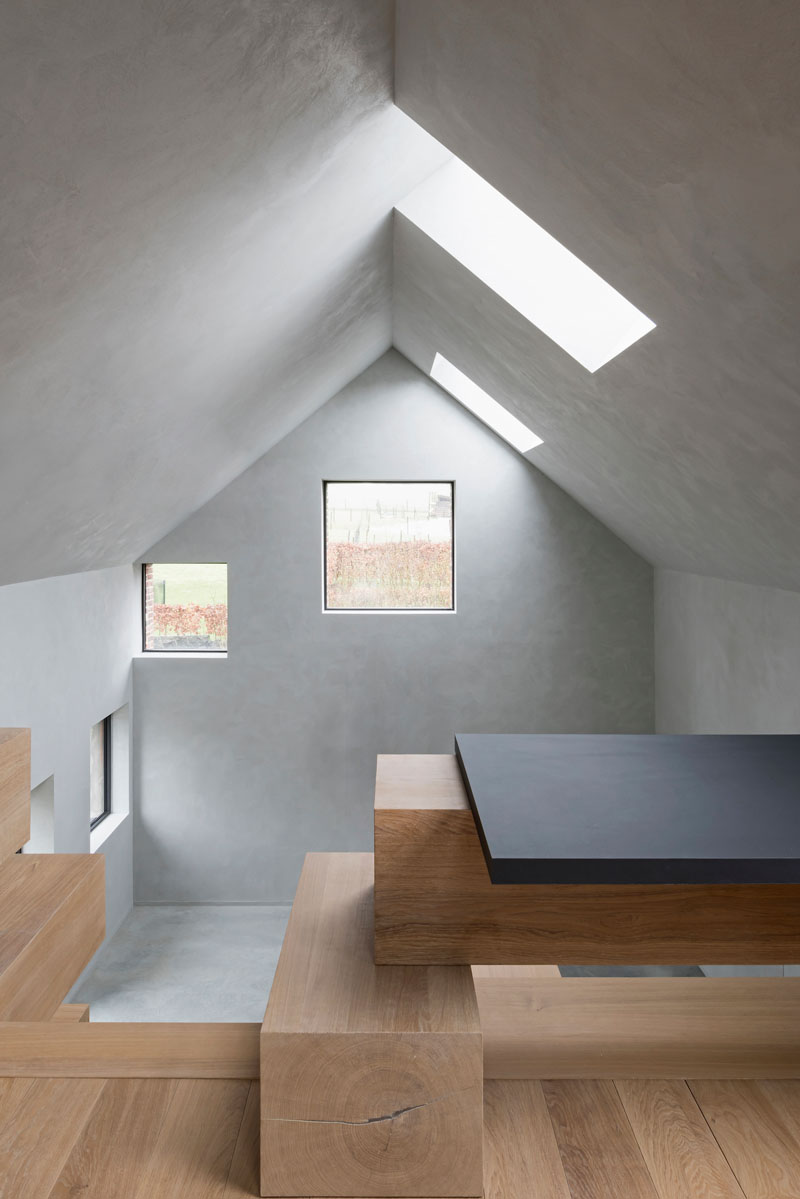
New windows and skylights are carefully positioned in rhythm with the barn’s original architecture, flooding the once-dark space with natural daylight. Instead of adding a full second floor (which would have closed off the interior), the architects opted for a removable, furniture-like structure. This preserves the barn’s openness while creating intimate, functional zones.
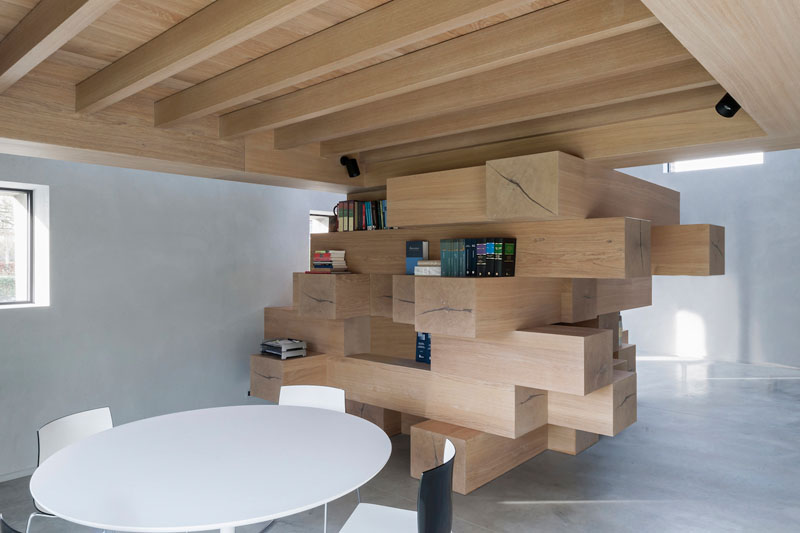
The Heart of the Design: A Multifunctional Timber Sculpture
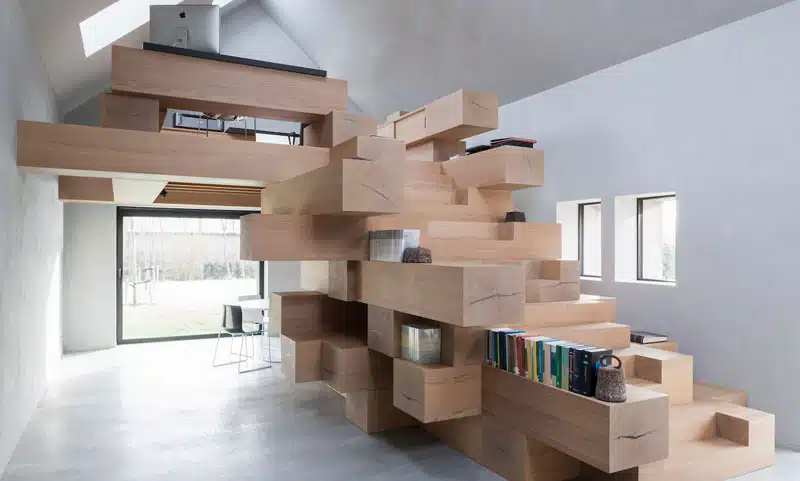
At the core of the transformation lies a breathtaking structure made entirely of stacked timber beams. It’s more than furniture; more than sculpture it’s the soul of the building, a multifunctional unit that defines the entire interior experience. The beams form stairs, shelves, storage, reading nooks, and even a workspace, ascending to a mezzanine that overlooks the surrounding countryside.
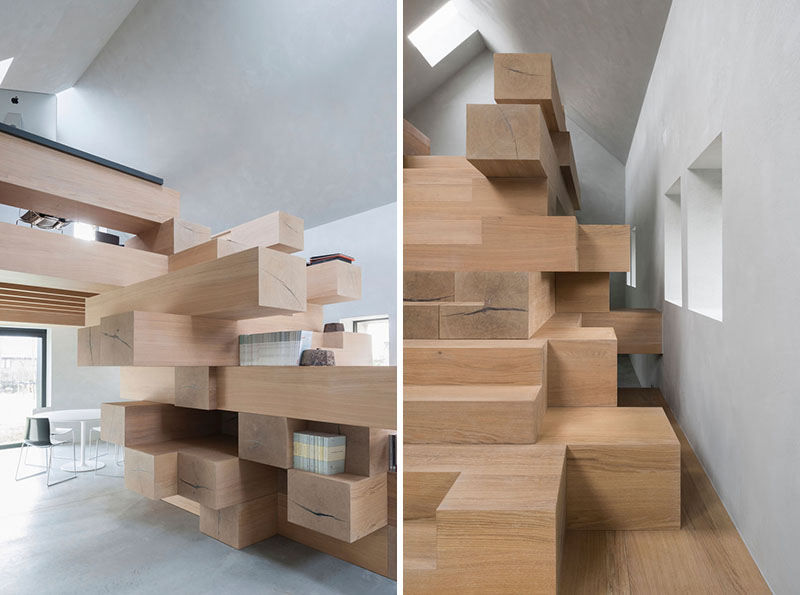
Modularity and Adaptability
Every component of this stacked design is intentional and flexible. The modular interior allows the space to shift and adapt, functioning as a meeting area, library, or lounge without the need for rigid walls or partitions.
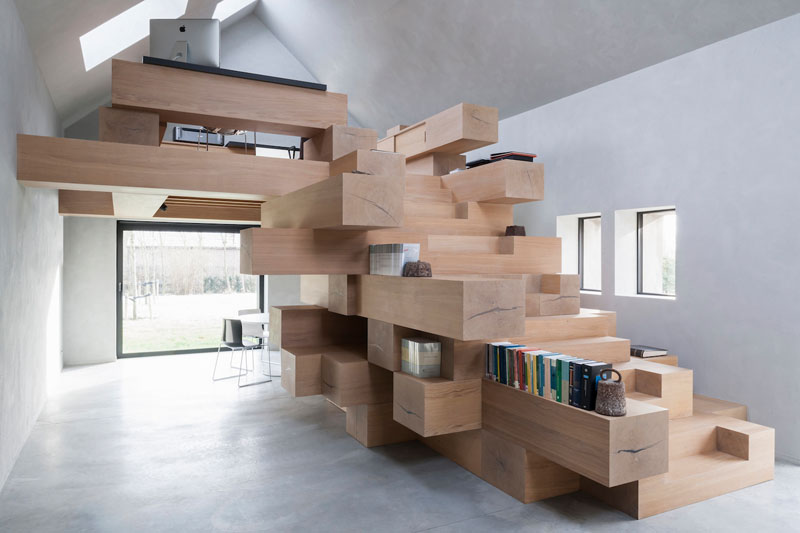
A Treehouse for Adults
The elevated workspace on the mezzanine feels like a serene, grown-up treehouse, while the ground-level meeting area benefits from expansive new openings that connect the interior to the rural landscape beyond. Light flows in from all directions, shifting throughout the day and seasons, ensuring a warm, inviting atmosphere year-round.
A Testament to Adaptive Reuse
Studio Farris has done more than convert a barn they’ve demonstrated how old structures can be adapted with precision, care, and artistry. This project stands as a shining example of sustainable design, proving that historic buildings can be reinvented without sacrificing their essence.
✦ ArchUp Editorial Insight
This Belgian barn conversion exemplifies how adaptive reuse can breathe new life into forgotten structures while honoring their history. Studio Farris’s approach melding minimalist design with functional artistry creates a workspace that feels both innovative and timeless. However, the reliance on a central timber sculpture, while stunning, may limit long-term flexibility for those needing conventional office layouts. That said, the project’s greatest strength lies in its celebration of light and materiality, proving that even the humblest buildings can be reimagined into inspiring, sustainable spaces.
Brought to you by the ArchUp Editorial Team
Inspiration starts here. Dive deeper into Architecture, Interior Design, Research, Cities, Design, and cutting-edge Projectson ArchUp.