A Radical Transformation: How an Interior Designer Turned a Standard House into a Personal Sanctuary Inspired by Nature

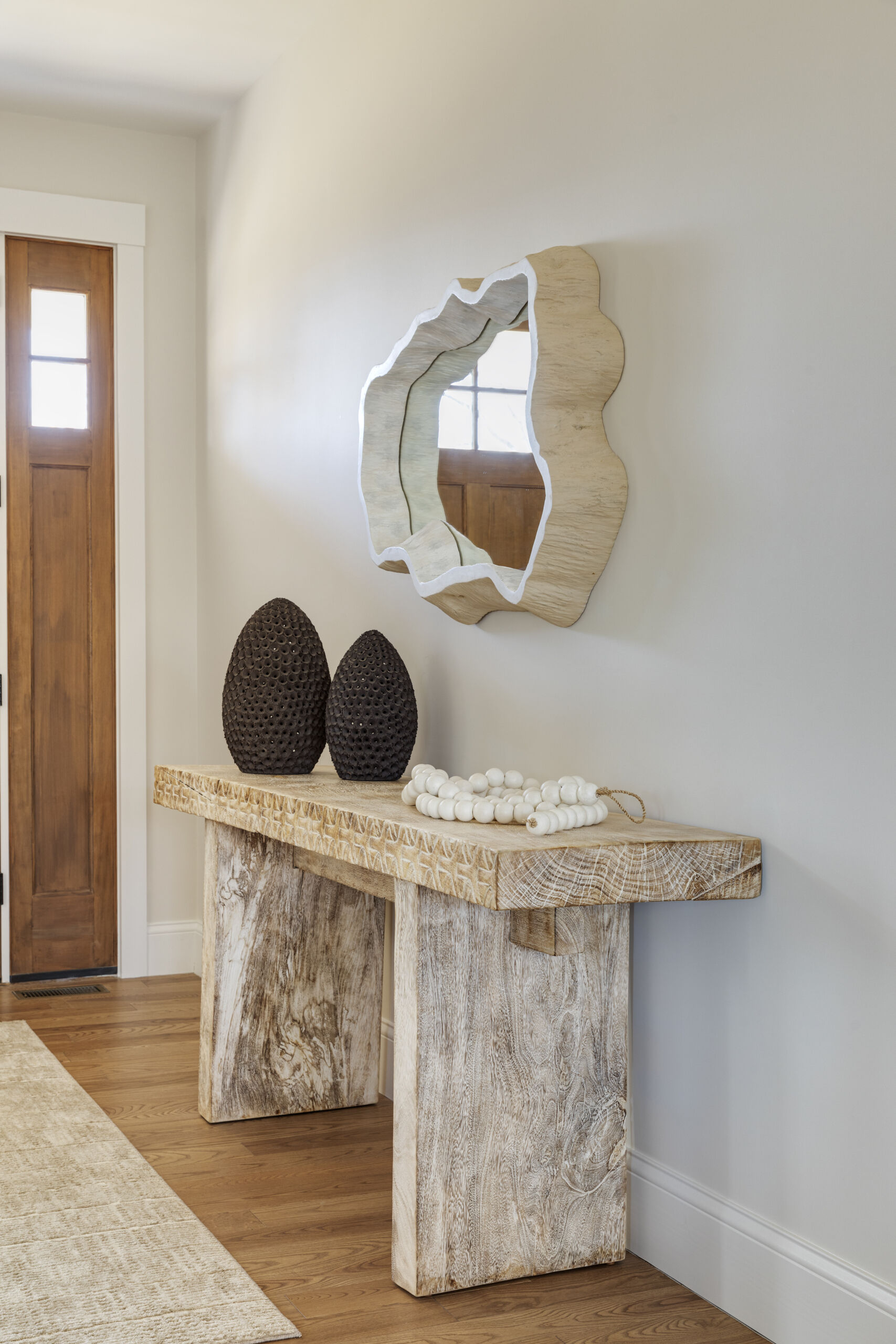
A family purchased a 3,306-square-foot house in a classic style, only to find it was merely a standard built space, devoid of any personal character or aesthetic touches that represented them. The finishes were basic, and the interior layout was typical, without any distinctive signature.
An interior designer completely changed this story by leading a comprehensive transformation of the space. Using organic textures, calm earthy tones, and smart structural improvements, the house became a natural extension of its surrounding coastal area. Every corner, from the entryway to the private spaces, now exudes a sense of tranquility and unique personality.
From a Standard Built Space to a Personal Sanctuary Expressing Identity
The designer had worked with these clients on previous projects, which gave her a deep understanding of their taste and preferences. Their complete trust in her was a key factor in the project’s success. The designer clarified that the goal was to “upgrade and customize the space to better reflect their personal style,” describing it as being “a completely blank canvas.”
The final result was a home where natural materials, soft colors, and carefully selected furniture create an atmosphere of comfort and refined beauty.
The Living Room: The Hearth as the Beating Heart of the Space
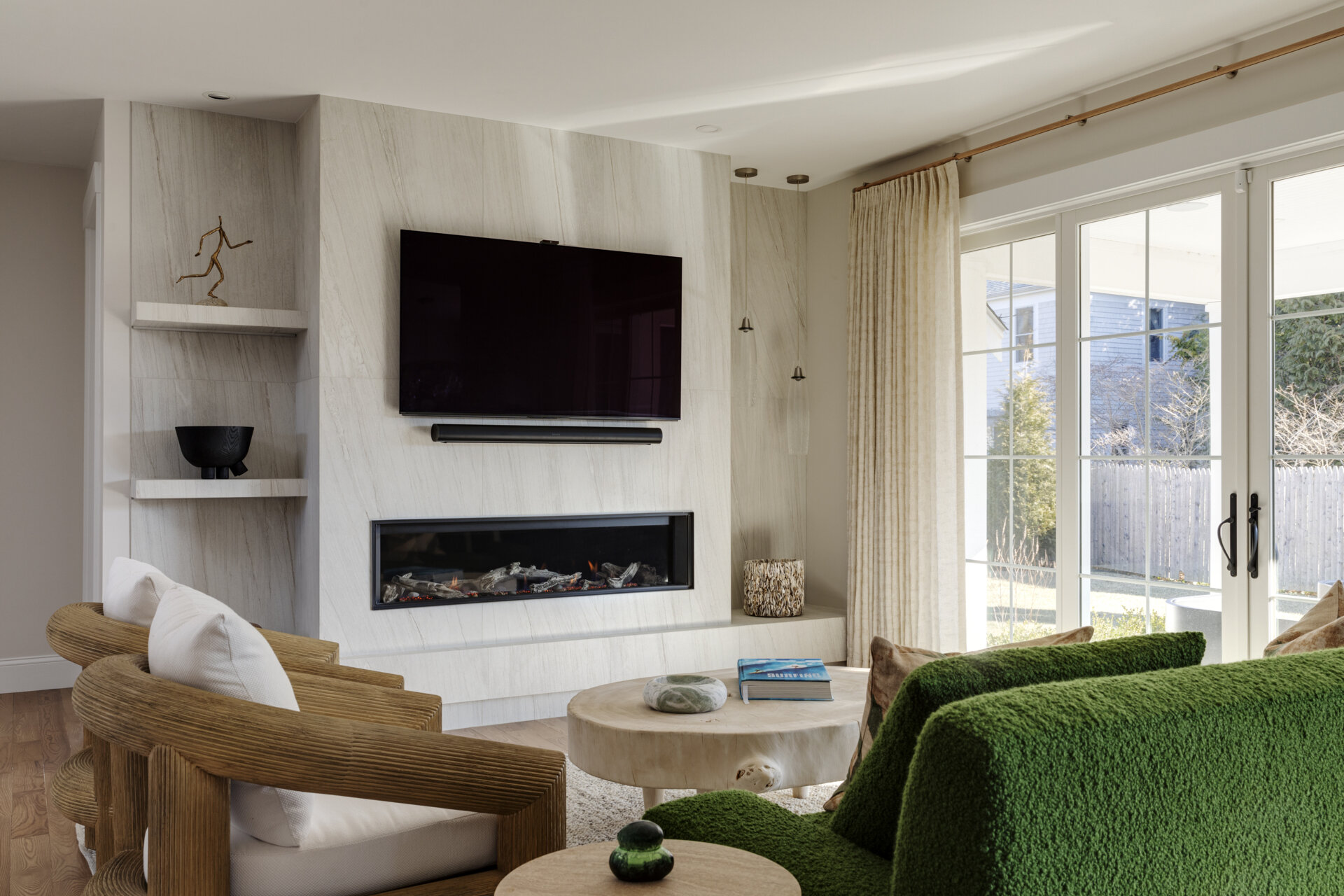
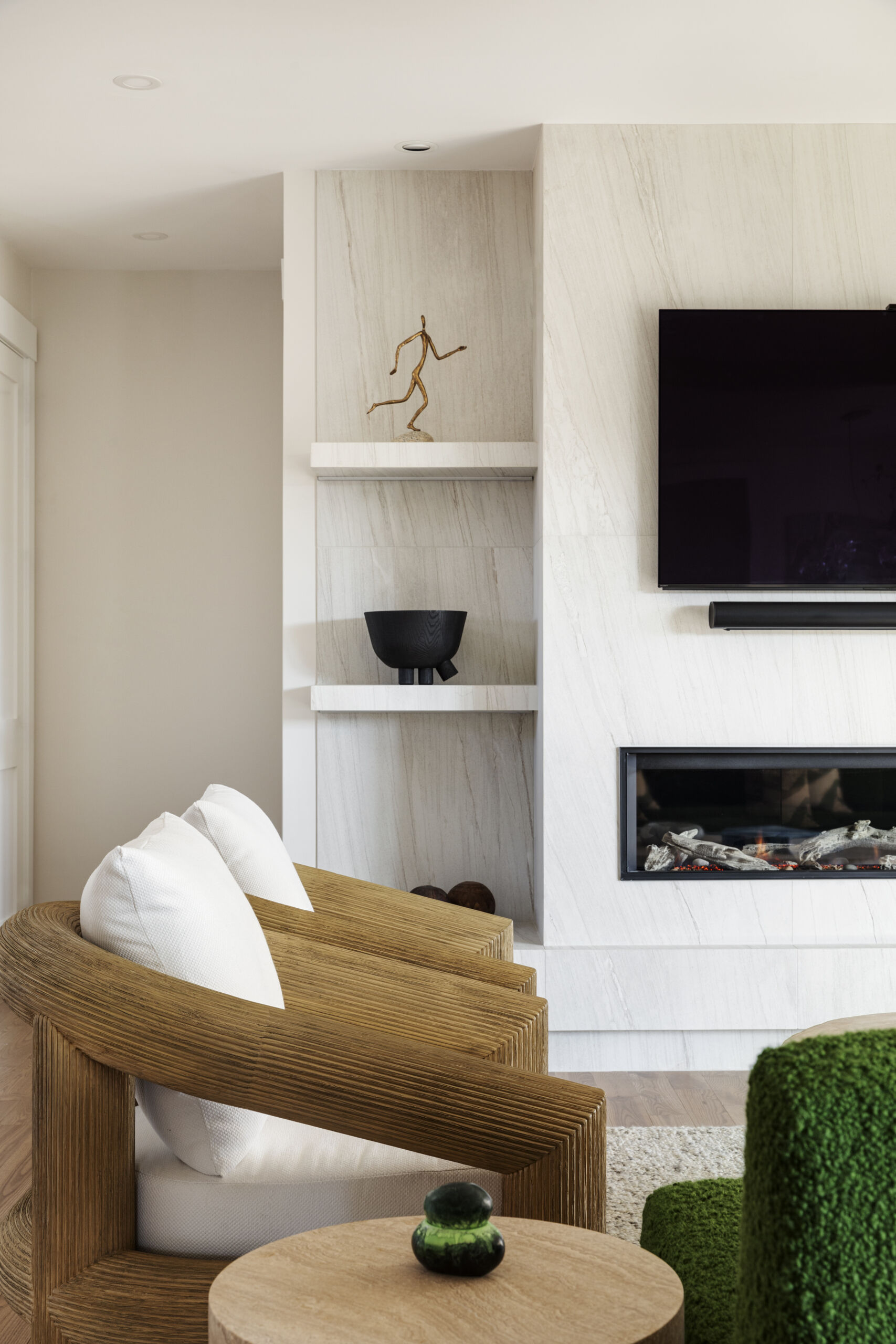
At the heart of the home, the fireplace became the central element defining the living area. It was surrounded by crystal alabaster tile, adding a touch of simple and elegant luxury. The overall ambiance was enhanced through the use of layered textures and calm colors that maintained the space’s peaceful character without losing its vitality, drawing visual cues from the nearby coast.
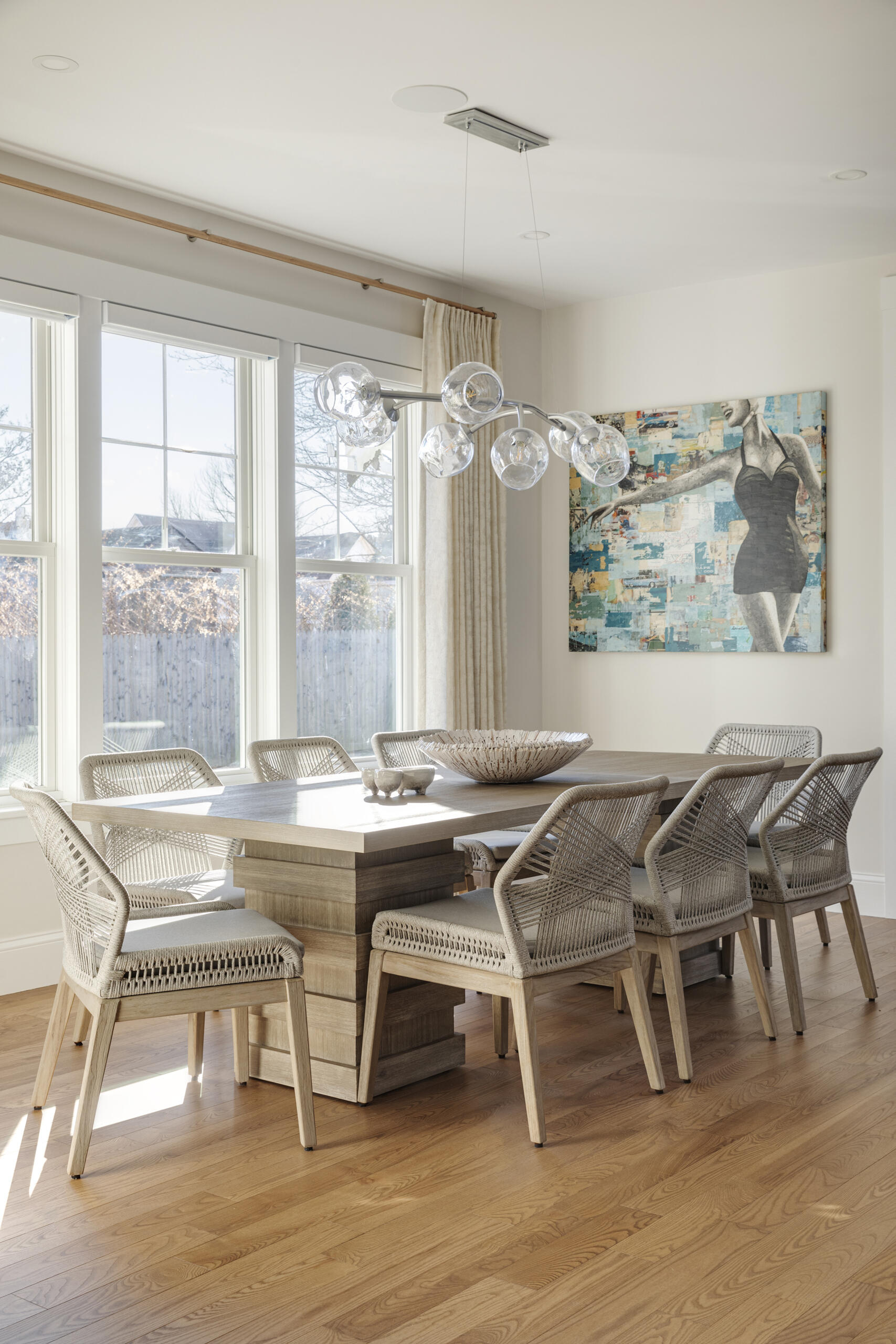
The Dining Room: Where Tranquility Meets a Gathering Spirit
The dining area continued the natural theme prevalent throughout the home by adopting serene earthy tones and organic textures that complement the rest of the interior design. Carefully chosen furniture pieces contributed to creating a comfortable and elegant space for meals and entertaining guests. The natural light filtering through the windows adds a warm touch, while the color palette derived from the displayed artwork adds depth and appeal to the space.
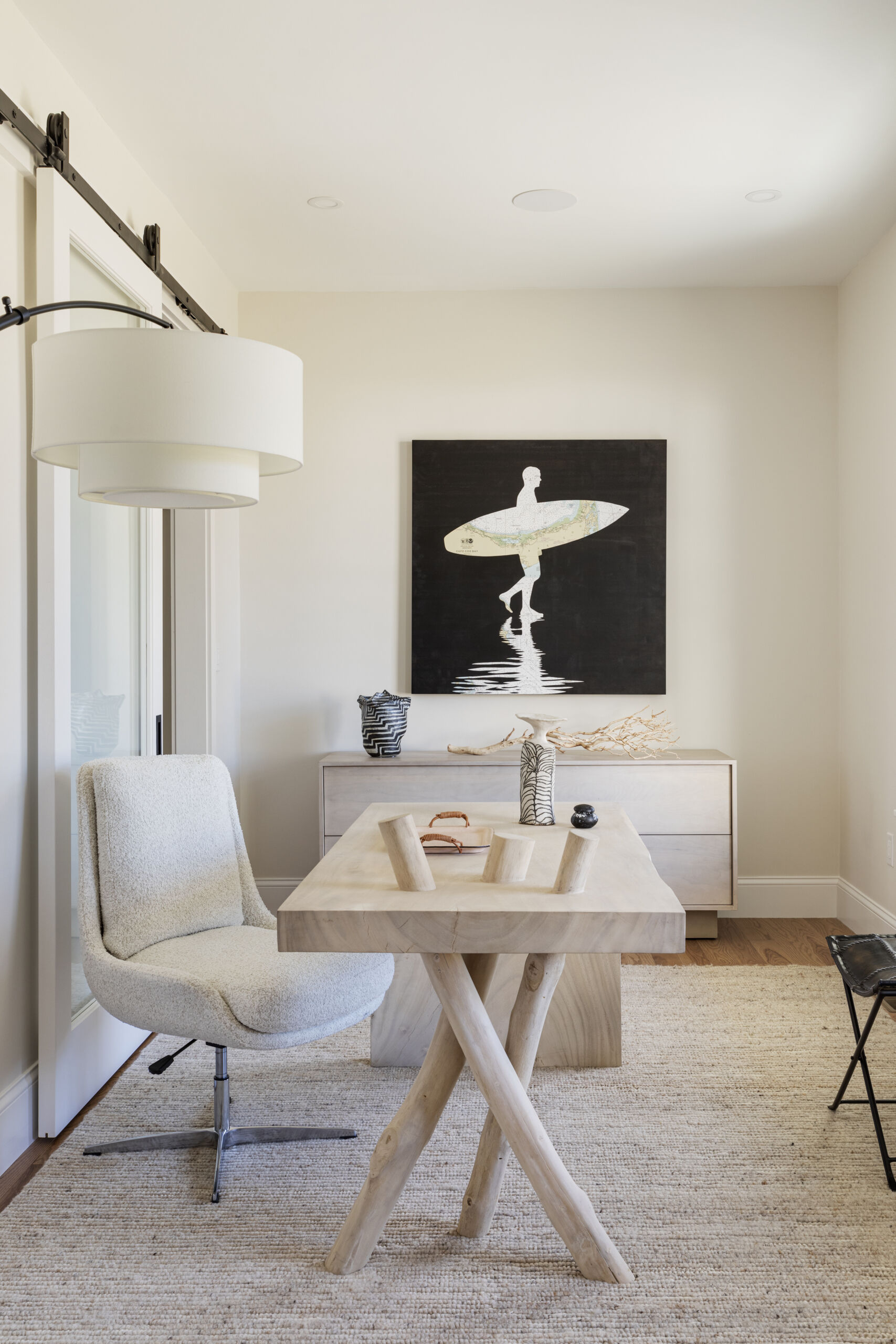
The Home Office: Natural Light and Flexibility of Use
To convert one of the rooms into a multi-functional space that balances work requirements and relaxation, sliding glass doors were installed. These doors significantly increased the flow of natural light inside while offering the flexibility to provide privacy when needed. This modification highlights how smart structural changes, not just decor, were key to enhancing the home’s value and aesthetic.
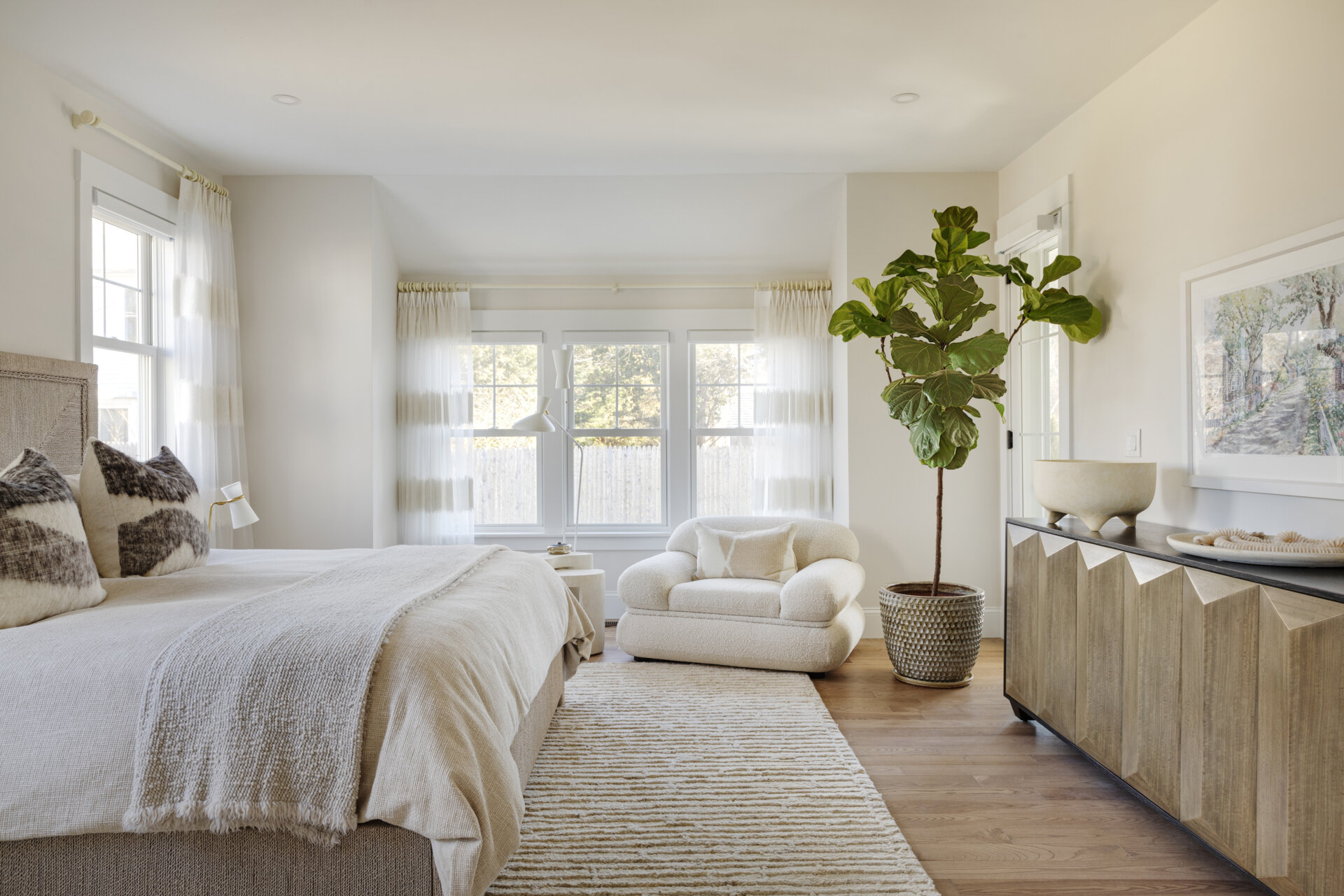
Personal Touches: Art and Natural Materials Tell the Story of the Place
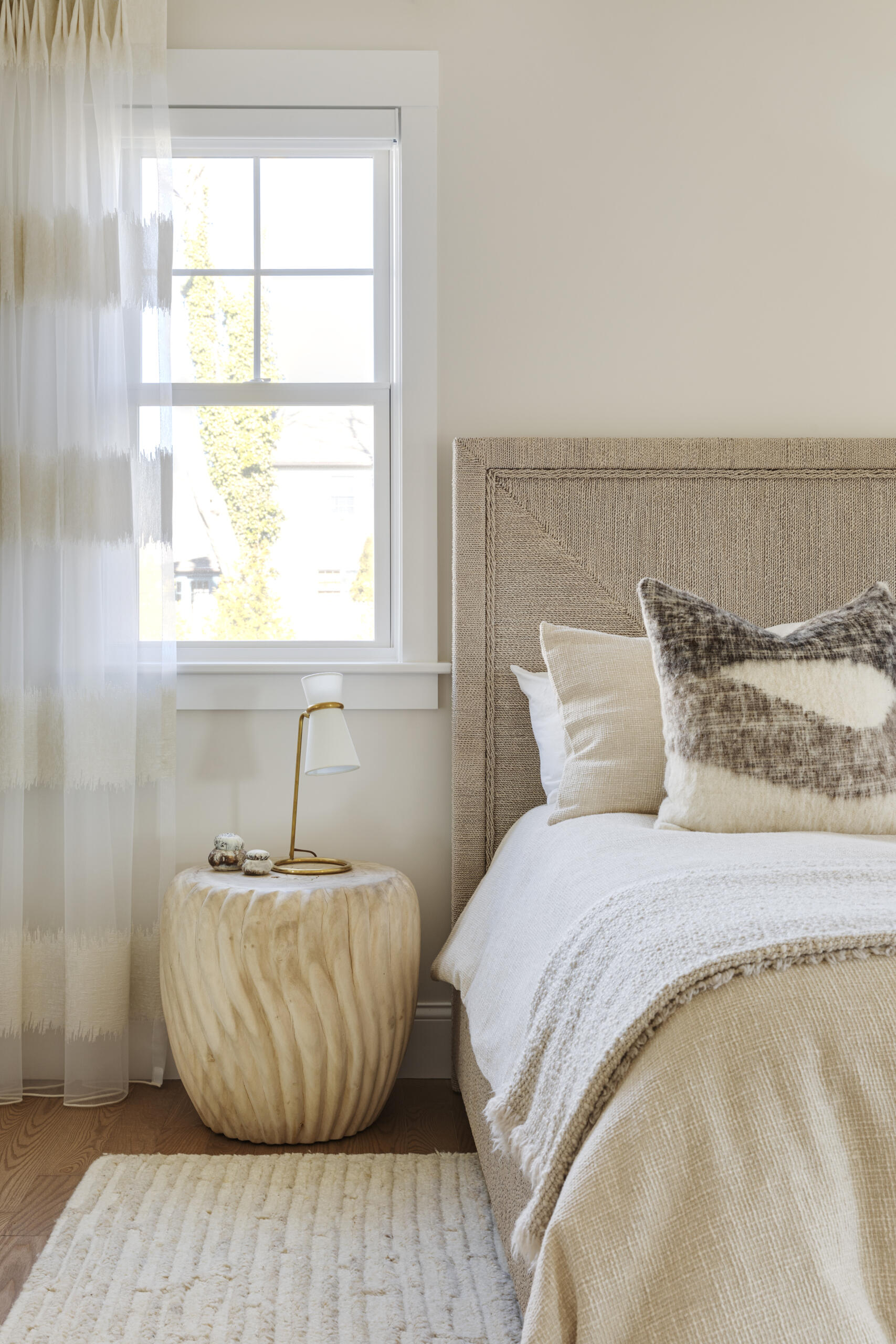
In the bedrooms, the clients’ sentimental artwork was carefully reframed to give each piece a new and modern presence that harmonizes with the renewed design of the space. Natural materials like rattan and wicker, along with subtle touches of green in the furniture and soft curved shapes, helped organically connect these rooms to the surrounding coastal environment. These deliberate choices created spaces that feel personal and attractive, imbued with warmth and identity in every corner.
Conclusion: From a Standard Template to a Personal Story
From its beginnings as a characterless standard house, this home now fully reflects the style and story of its owners. The designer successfully achieved a rare balance between practical function, visual beauty, and emotion, transforming the blank canvas into a personal sanctuary shaped by trust and a clear creative vision.
✦ ArchUp Editorial insight
This project addresses the transformation of a standard dwelling into a space that expresses its inhabitants’ identity by adopting a design strategy focused on aesthetic inputs derived from nature. The presented architectural solution relies almost entirely on surface-level coverings and decor, largely ignoring the potential to reformulate the original spatial structure of the standard house, which remains confined to its initial subdivisions without substantial development in the visual or kinetic flow between spaces. The contrast between the richness of the materials used and the simplicity of the planning solution raises a question about the depth of the architectural intervention. However, the designer excelled in working with the existing elements, successfully integrating the family’s sentimental artwork organically within the new narrative, achieving an intelligent continuity between the old memory and the new identity of the place.
Brought to you by the ArchUp Editorial Team
Inspiration starts here. Dive deeper into Architecture, Interior Design, Research, Cities, Design, and cutting-edge Projectson ArchUp.