AI-Generated 3D Models: The Gap Between Appearance and Fabrication

A university report published on October 1 has brought renewed attention to a practical problem in AI-assisted design: a convincing three-dimensional model may still be unsuitable for fabrication. MIT’s coverage concerns InstructMesh, research involving MIT CSAIL, Google and Northeastern University. The underlying paper was submitted to arXiv on August 28, 2026; this is recent coverage of an existing study, not a newly released construction system.
Editing the defect, not just the appearance
The paper describes an interface for selecting a region of a generated model and requesting local corrections through language or sliders. Examples include opening blocked voids, closing unwanted gaps and adjusting thickness. Its formative analysis covers 120 models, followed by user evaluations of identifying and repairing visible fabrication-related flaws.
What the findings do not establish
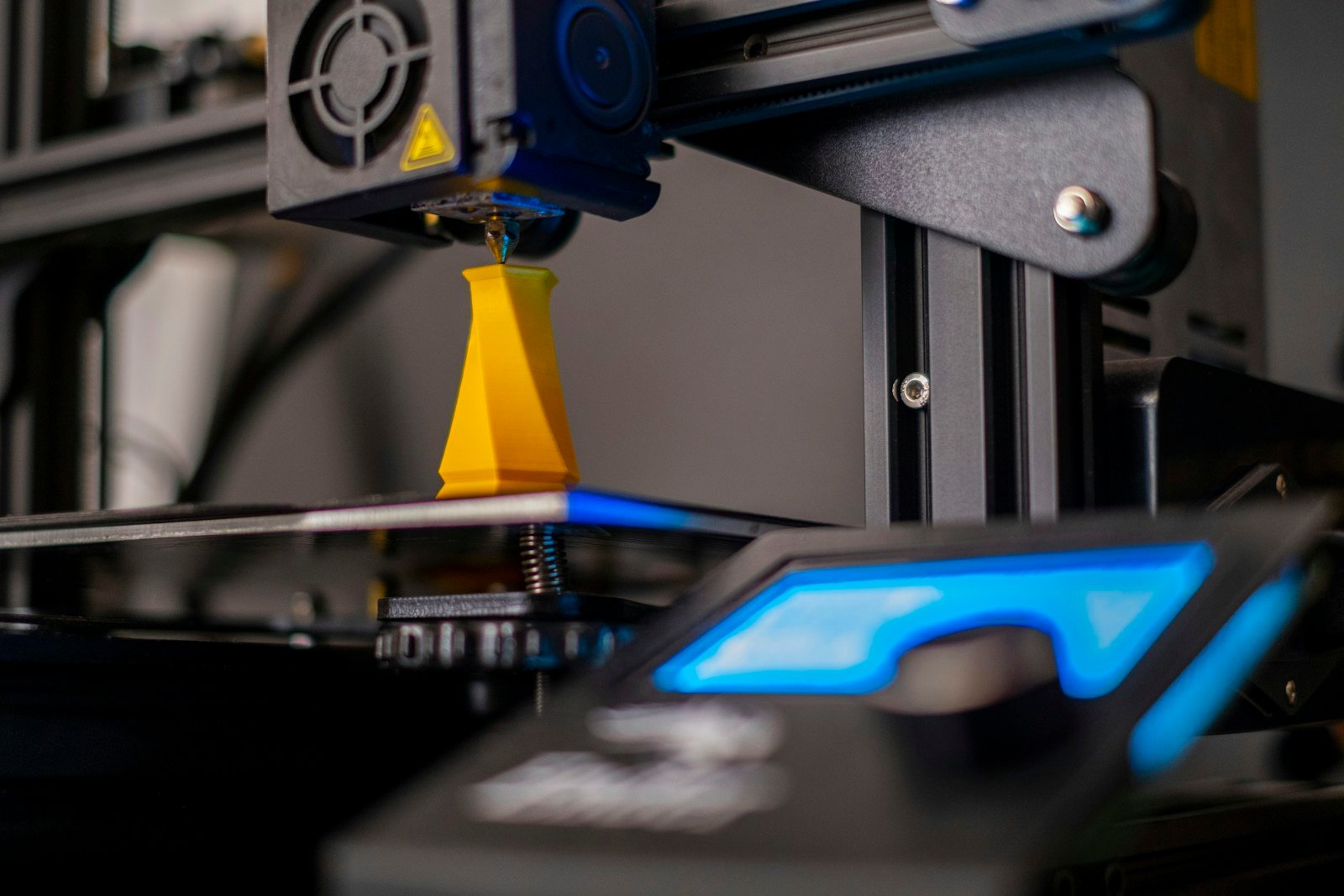
The work concerns small fabricated objects. Its results cannot be read as certification for building components, structural connections or occupied spaces. An editable model still needs checks appropriate to its material, production process and intended use. The accompanying photograph is illustrative and does not depict the experiment.
For architects and fabrication teams, the relevant question is how a proposed change becomes an accepted production instruction. A corrected opening on screen is one step; checking dimensions, tolerances, loads and assembly is another. ArchUp’s reading is that these responsibilities should remain explicit when generative tools enter a design workflow.
Source and funding
The university article is institutional coverage, not an independent product review. It reports support from Google and the MIT-HPI Collaborative Research Program. The technical source is the paper “InstructMesh: Selective Refinement of Generative 3D Models for Fabrication,” arXiv:2608.28534.
✦ ArchUp Editorial Insight
Automation changes the cost of producing a proposal before it changes the cost of verifying one. When a design team can generate many alternatives quickly, review becomes a separate allocation of labour rather than a task that disappears. The institutional question is who records acceptance, what evidence supports it and which party remains responsible when a fabricated result fails its intended purpose. A research interface that makes correction easier does not settle those contractual questions. If a workflow treats the ability to edit as proof of fitness for use, it can move unresolved checking work downstream to a fabricator who did not define the original model. That is a possible governance failure, not an outcome demonstrated by this study. For architectural practice, the useful implication is to distinguish proposal generation, geometric correction and technical approval as separate decisions. Each needs a responsible reviewer and a record of what was actually tested. Otherwise the apparent saving in design time may reappear as coordination work or discarded material. The final object is the consequence of that approval chain; visual coherence alone cannot show whether the chain is complete.