Small Paintings, Large Wall: How Repetition Shapes Viewing

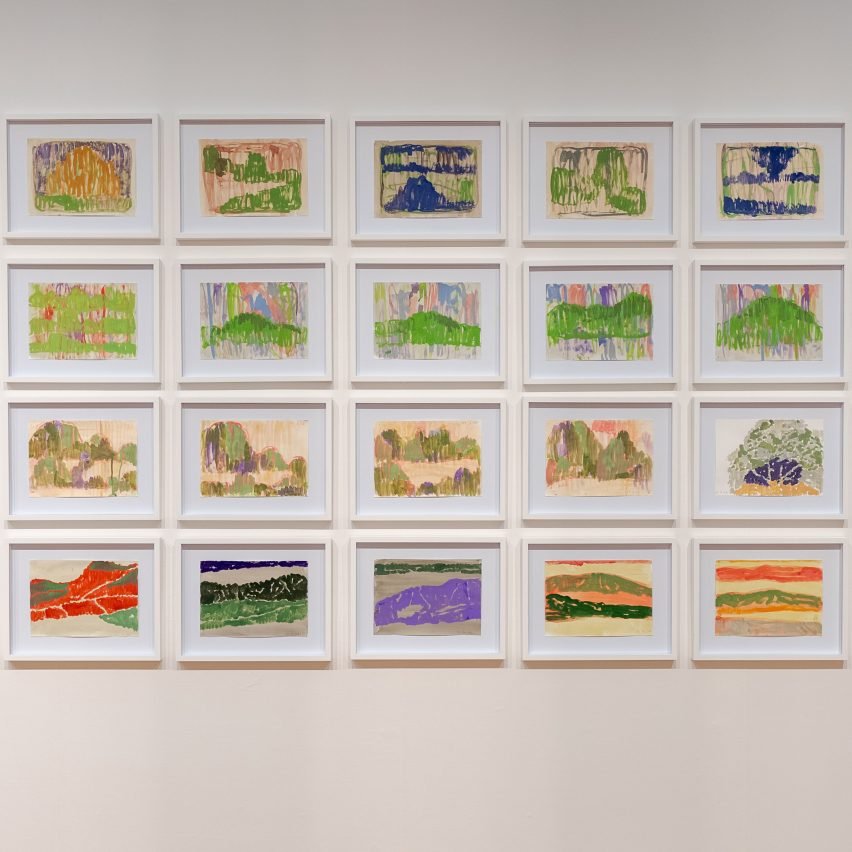
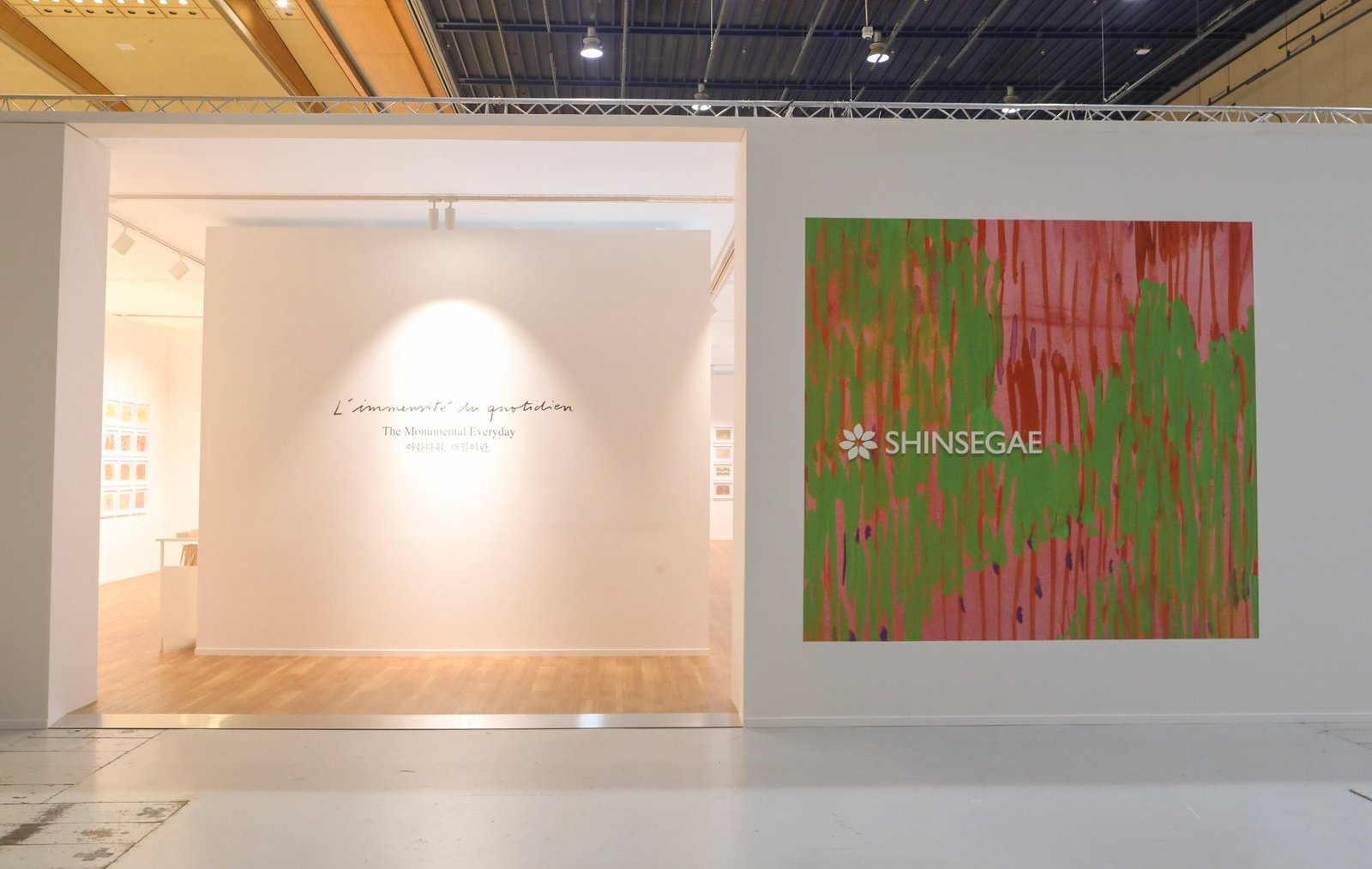
A small painting asks the viewer to approach. Hundreds of paintings on the same wall invite a different movement: stepping back to read their collective rhythm. Paul Cox’s Diary series operates between these distances. At the Shinsegae Lounge during Frieze Seoul, held from 2 to 5 September 2026, 336 works formed the exhibition L’Immensité du Quotidien: The Monumental Everyday.
Daily observation becomes a sequence
The gouache works draw on familiar scenes, including buildings, trees, fields and paths. Their subjects remain modest in scale, while changes in line, colour and composition give each image its own organisation. Displayed chronologically, the paintings make repetition visible without reducing the series to an identical pattern.
The sequence matters as much as any individual scene. A viewer can follow differences between neighbouring images or allow several works to combine into a broader field. The wall becomes a means of comparing days rather than simply a surface carrying separate pictures.
The wall as a field of attention
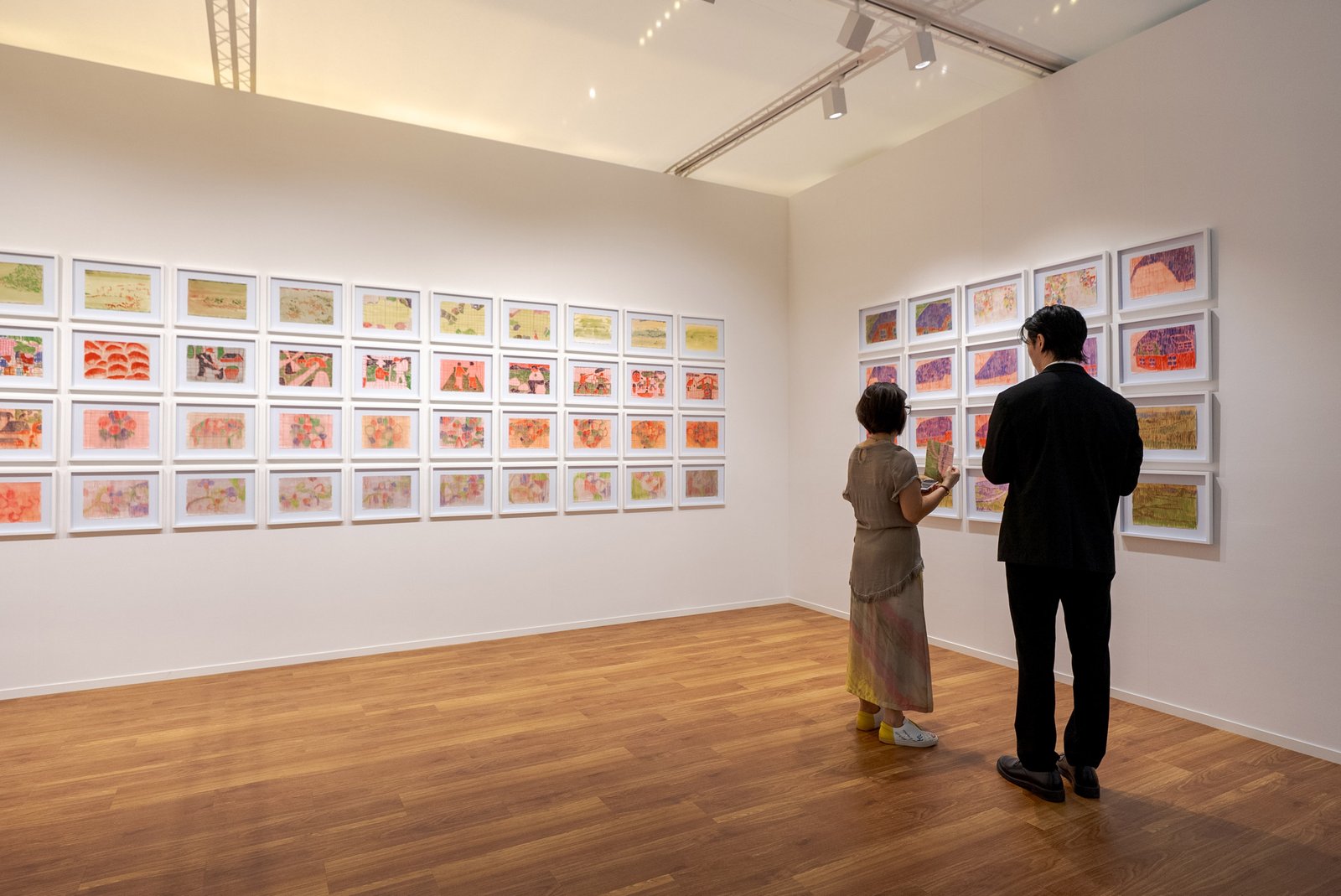
The dense arrangement establishes two scales of reading. At a distance, the repeated rectangular units create a collective landscape. Closer inspection brings back the particular mark, building or patch of colour within one work. Neither view replaces the other; the installation gains its spatial character from movement between them.
This is a useful distinction for exhibition design. Increasing the number of objects does not automatically deepen an encounter. Spacing, sequence and the distance available in front of a display influence whether repetition becomes a readable structure or a visual overload. Here, the repeated format provides a common reference through which differences can be noticed.
Art inside a branded lounge
Shinsegae Group presented the installation within its lounge at the fair. That setting brings the artist’s daily practice into a space with a second role: hosting visitors and representing a commercial organisation. The paintings can be considered through their composition while the spatial setting is examined through the kind of attention it encourages.
The relationship is more specific than placing art beside a brand name. A lounge offers a place to pause within the wider circulation of a fair; a serial display offers many possible points at which to begin looking. Their combination raises a practical curatorial question: how does the space support sustained viewing without making the works merely part of its atmosphere?
✦ ArchUp Editorial Insight
Attention is a limited resource within an art fair, where visitors move between many competing displays. A sponsor’s lounge introduces another demand: the space must host people while also establishing an institutional presence. Cox’s series brings these demands into the same room through repetition. Small works reward close inspection, while their accumulation creates a recognisable setting from farther away. This permits two different uses of the same wall: studying individual images and experiencing an overall atmosphere. The distinction matters because longer presence in a lounge does not necessarily mean deeper engagement with the art. Nor does commercial sponsorship alone determine the quality of that engagement. The curatorial question is how sequence, viewing distance and the opportunity to pause allow the works to retain their specificity within the branded environment. The installation makes daily observation spatial through a cumulative arrangement, but its success as a place for looking depends on more than the number of paintings. It depends on whether visitors can move between the collective image and the individual work without one scale erasing the other.
Artist: Paul Cox. Exhibition: L’Immensité du Quotidien: The Monumental Everyday. Presenter: Shinsegae Group, Frieze Seoul 2026.