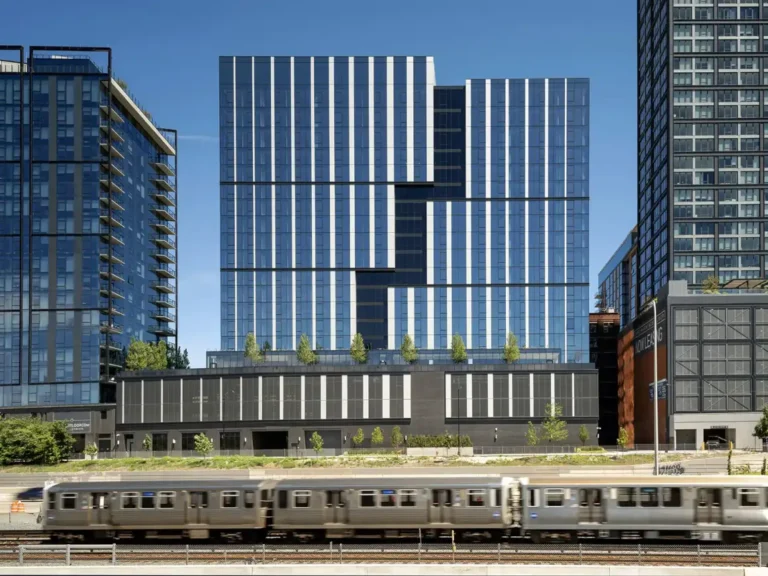
Atlanta Mixed-Use Tower: Tallest Build in 30 Years

Atlanta mixed-use tower development has resumed with 1072 West Peachtree.
The structure topped out in Midtown as the city’s tallest new building since the early 1990s.
It is now Atlanta’s fifth-tallest skyscraper.

Compact Site, Vertical Response
The project occupies a one-acre plot at a busy intersection.
It uses the full allowable height to deliver over one million square feet.
This approach reflects current strategies for high-density buildings in constrained urban cores.
Density is no longer optional it’s the baseline for urban growth in land-constrained cities.
Stacked Functions, One Structure
The design vertically stacks three uses.
The base holds 10 levels of parking and ground floor retail.
Ten floors of Class A office space follow.
A 40-story residential segment caps the tower with 350+ units the tallest housing block in Atlanta’s history.
Engineers tailored the structure to manage varying live loads.
The façade and interior design coordinate daylight, ventilation, and egress without visual noise.

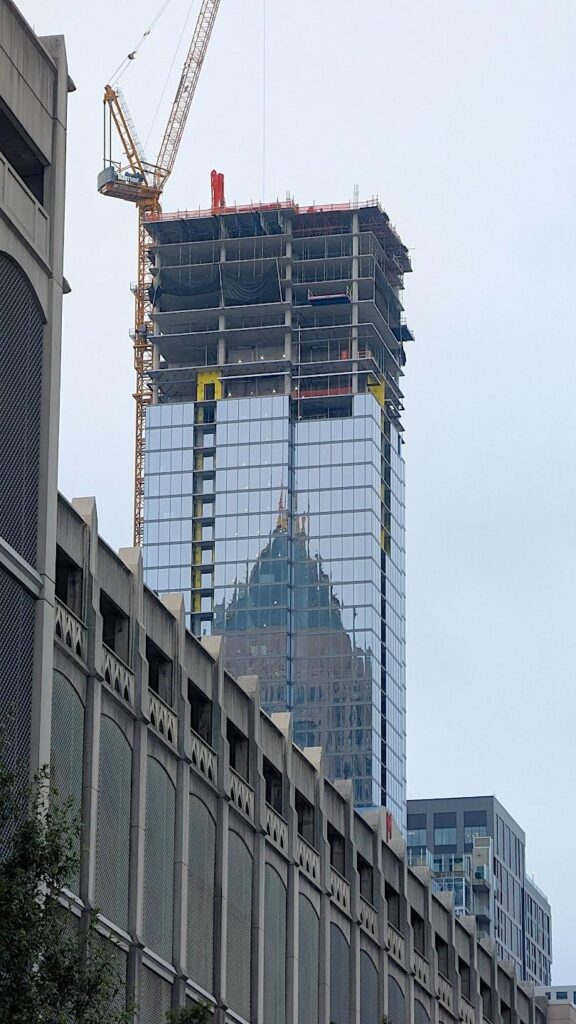
Timeline and Urban Role
Construction finishes in spring 2026.
Occupancy begins before summer.
The Atlanta mixed-use tower signals a pivot from sprawl to integrated vertical neighborhoods a model gaining traction in post suburban cities.
Engineering for Intensity
The core uses reinforced concrete for lateral stability.
Steel beams support the roof and reduce dead load.
These decisions follow seismic best practices for tall buildings.
Designers optimized window placement for daylight and cross ventilation.
This cuts energy use and supports sustainability targets.
Façade elements underwent wind and thermal stress tests during construction.
Vertical integration isn’t just efficient it’s becoming the only viable path for mature cities.
Replicating this model demands flexible zoning and strong market demand.
Current research assesses its transferability to secondary cities.
The Atlanta mixed-use tower proves that upward growth can outperform outward expansion if designed with precision.
Architectural Snapshot: The 1072 West Peachtree tower fuses housing, offices, and retail into one vertical neighborhood demonstrating that the future of dense cities lies not in footprint, but in layered, programmatic intensity.

✦ ArchUp Editorial Insight
The article efficiently frames 1072 West Peachtree as a symbol of resumed urban expansion in Atlanta, correctly highlighting its mixed use stacking and structural milestones. Yet it sanitizes the deeper tensions of high-rise density avoiding critique of luxury driven verticality in a city with acute housing affordability gaps. It treats urban expansion as inevitable rather than contested. Still, its concise engineering details and clear timeline offer useful documentation. Whether this model endures depends less on form and more on who it ultimately serves.