
Audrey by CozyCo Tiny Homes: Compact Living Redefined

General Concept and Dealing with Space Constraints
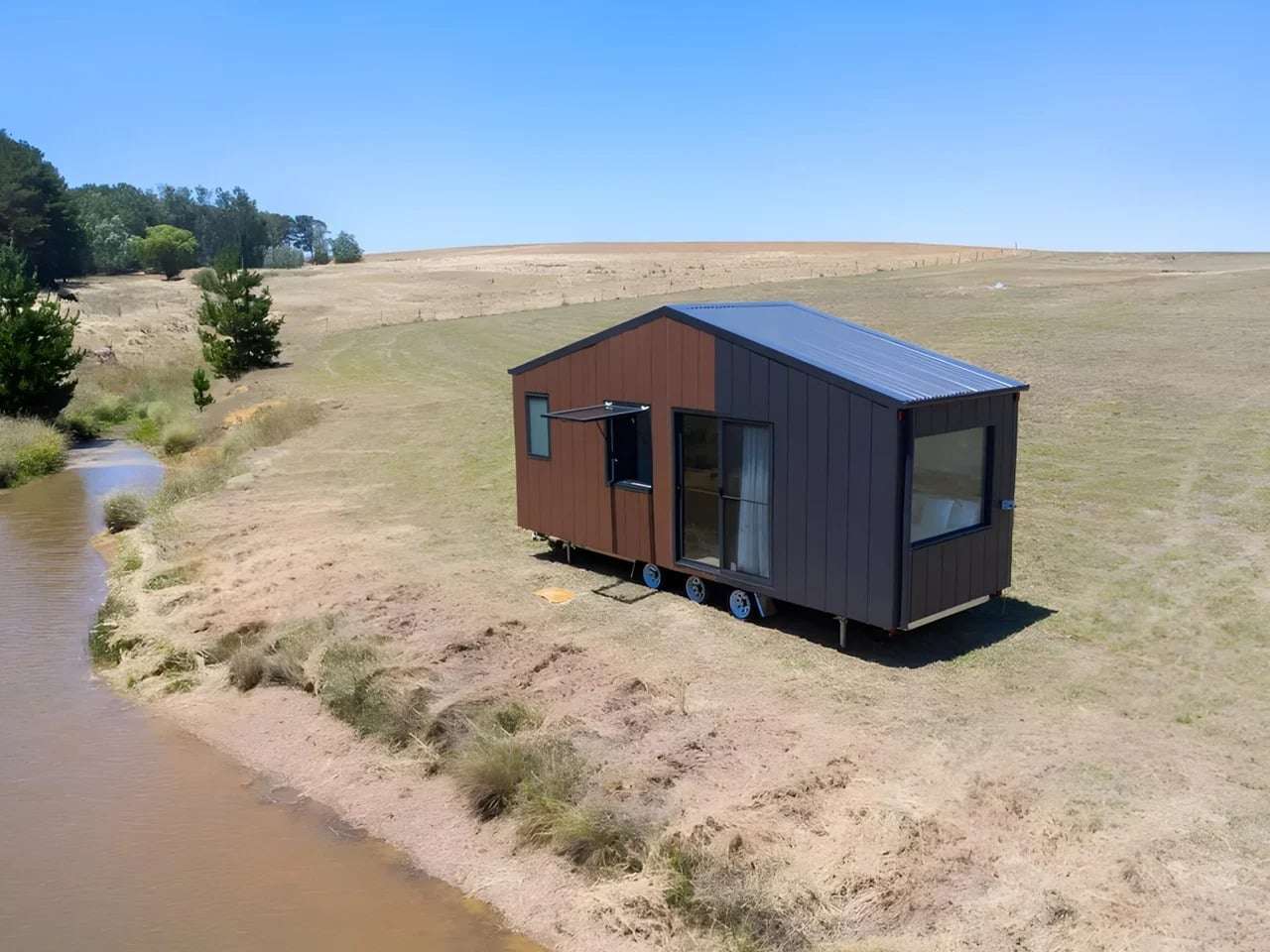
The Audrey house by CozyCo Tiny Homes presents a case study of an architectural solution that addresses the concept of tiny homes without imposing clear functional compromises. The design is based on a single level with a length of 7.2 meters, mounted on a triple-axle trailer, which defines the spatial framework and directly influences the organization of the interior space. The model aims to support multiple uses such as temporary living, guest accommodation, or semi-permanent residence within a limited footprint.
Exterior Treatment and Visual Integration
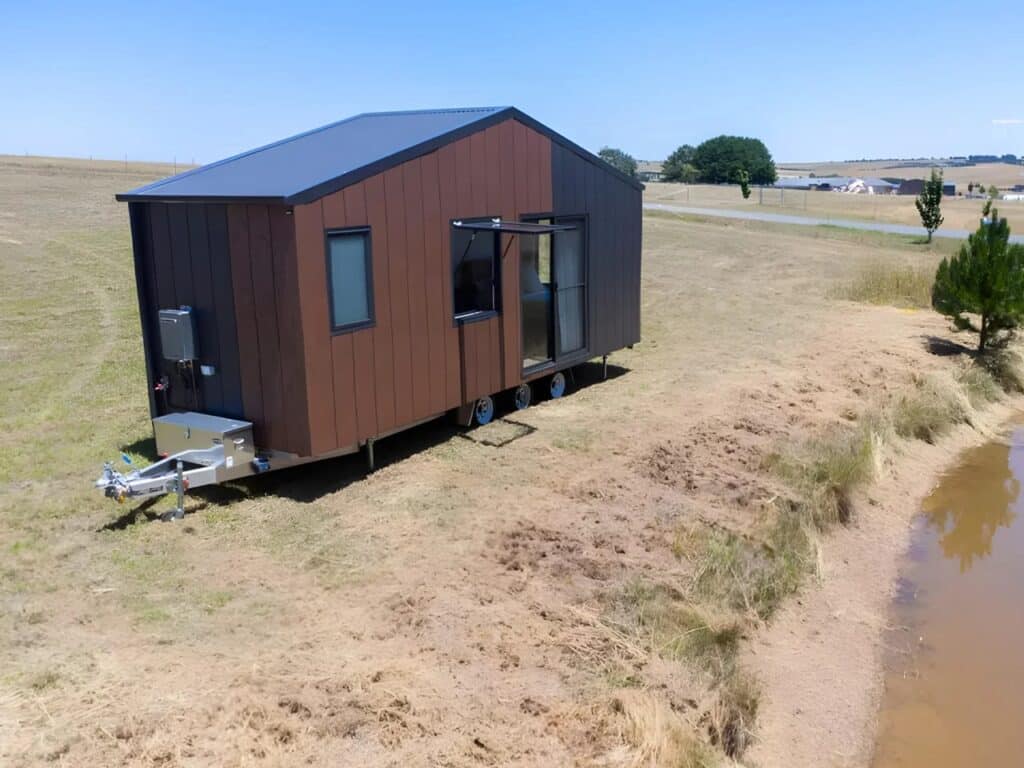
The exterior form relies on a combination of corrugated aluminum and wood-textured panels, a choice that creates a neutral character allowing the building to adapt to different contexts such as rural, coastal, or urban environments. A small external storage unit has also been integrated, designated for a gas cylinder, with the aim of reducing visible elements and maintaining the simplicity of the façade.

Interior Organization and Environmental Performance Efficiency
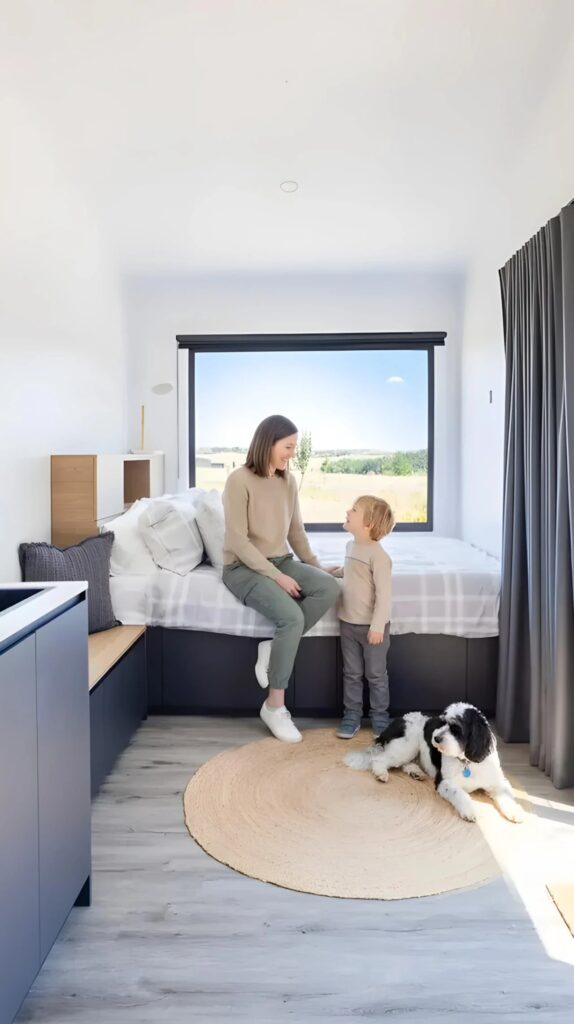
The internal layout follows an open studio-like configuration, which helps reduce visual interruptions and improves circulation within the limited space. Sliding glass doors enhance natural daylight penetration and reinforce the sense of openness. In terms of performance, the structural system combines R2.5 thermal insulation, VJ panels, and double glazing to improve thermal stability. The house is also equipped with gas systems, hot water supply, and air conditioning to ensure year-round usability, while integrating a storage bed to reduce the need for additional furniture pieces. This approach to interior design prioritizes functionality within a compact footprint.
Autonomy Options and Supporting Systems
Within the context of a shift toward more off-grid and independent living models, the units can be equipped with additional systems such as solar power, eco-friendly toilets, and water storage solutions. This approach is based on integrating service technologies that support self-sufficiency within the compact dwelling, while reducing reliance on external infrastructure. Similar solutions can be found in various projects focused on sustainable living.


Construction Methodology and Performance Guarantees
CozyCo, as a case study in this context, relies on locally sourced building materials and constructs its units according to integrated residential standards. The Audrey model is associated with a seven-year structural warranty, in addition to a long-term warranty for the trailer, reflecting a clear direction toward enhancing performance reliability in the mobile and tiny home sector. Detailed material datasheets would typically support such performance claims.
Functional Uses and Design Philosophy
In terms of usage, this type of unit can serve multiple functions such as short-term accommodation, a low-maintenance secondary dwelling, or within lifestyles that prioritize reducing daily complexity. The Audrey design reflects a core idea in this housing typology: spatial efficiency depends on the quality of organization rather than the scale of the space itself.


✦ ArchUp Editorial Insight
The Audrey model by CozyCo Tiny Homes operates as a spatial outcome of housing market compression and the shift in demand toward low-cost, movable residential units within a logic of maximizing returns from short-term rental models. The primary driver emerges from the intersection between demand for secondary housing and fast-paced real estate investment models, which imposes a compact, highly efficient spatial configuration.
Regulatory constraints related to trailer standards, service connections, and residential code limitations act as determining factors shaping the single-level structure and standardized infrastructure pathways. These pressures are resolved through an open-plan layout and the integration of storage and service units to minimize structural redundancy. The exterior envelope functions as a multi-context compliance response, enabling adaptation to varying regulatory environments. Updates on such standards can be followed via top news in the architectural field.
Ultimately, the form is not read as a purely design decision, but as a negotiated outcome between planning requirements, insurance costs, and flexible occupancy models. For those seeking employment in this innovative sector, architectural jobs related to tiny home design are becoming more prevalent.

★ ArchUp Technical Analysis
Technical and Documentary Analysis of the Audrey Project – Koziko Tiny Homes, United States:
This article presents an architectural analysis of the Audrey home as a case study in redefining the organization of small spaces within mobile homes. To enhance its archival value, we would like to present the following key technical and design data.
The design features a single story measuring 7.2 meters in length and mounted on a three-axle trailer, with a seven-year structural warranty and a long-term warranty on the trailer. The exterior combines corrugated aluminum with wood-textured panels, along with a small external storage unit dedicated to the gas cylinder.
The interior layout follows an open studio-style plan with sliding glass doors. The structural system integrates R2.5-level thermal insulation, VJ panels, and double glazing to improve thermal stability, supporting gas, hot water, and air conditioning systems, along with a bed featuring built-in storage space.
The unit can be equipped with additional off-grid systems including solar power, eco-friendly toilets, and water storage solutions. Building materials are sourced locally. The unit can serve as temporary housing, a guest unit, or semi-permanent accommodation.
Related Insight: Please refer to this article to understand the context of modern architectural preservation:
Mobile Tiny Homes: Design Strategies Between Spatial Efficiency and Off-Grid Independence.





✅ Official ArchUp Technical Review completed for this article.