The Shoeshine Problem


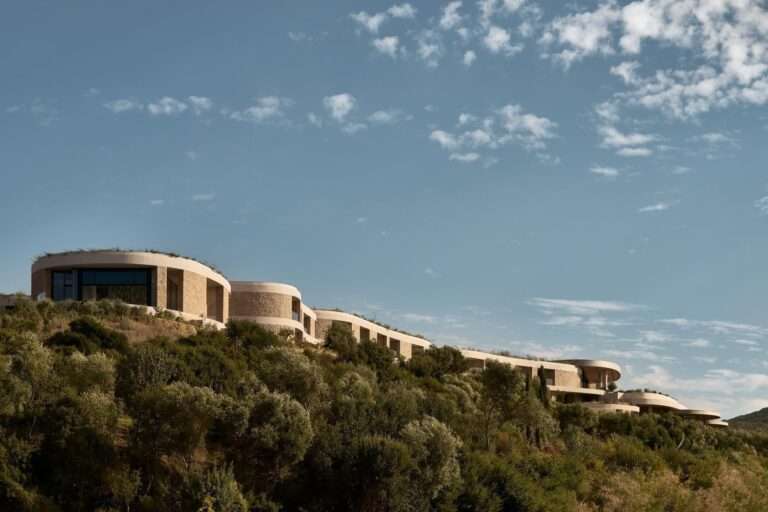
Cover: An editorial adaptation of the author’s original photograph, with visual enhancements and added title typography. © Ibrahim Fawakherji / ArchUp.
The most instructive failure I have heard described in the running of a great building was not a failure of the chillers, or the elevators, or a flooded plant room, or a maintenance contract gone wrong in the millions. It was a man with a brush and a small stool, and the fact that he was never hired. I was listening to a colleague who manages a large, important building, a mixed administrative and commercial property with restaurants and shops and workspaces and a whole machinery of security and cleaning and tenant relations humming behind it, the kind of asset whose annual running costs, written out on a page, would be enough to build another building somewhere smaller. And of all the crises that had lodged themselves in the memory of its management, the one he returned to, the one that had actually produced friction and bruised relationships, was the shoeshine. I will keep the details soft, because the point of this is not to expose anyone, but the shape of the story is worth holding up to the light, because it is a lesson about buildings that no drawing teaches and no handover document contains.
The owner had asked, in an operations meeting, for a shoeshine service to be added among the amenities of the building. The man who sits with a stool and a brush and returns a pair of shoes a few minutes later looking like someone else’s shoes. A small request. It needed no structural change, no enormous tender, no international consultant, no capital budget of any weight. Just a service. And it was not delivered. A year passed, and the annual review meeting arrived, and the management team walked the owner through everything, the maintenance, the completed works, the contracts signed, the modifications made, the problems solved, the costs approved, all of it looking orderly and competent. And then the owner asked a single question that folded the whole impressive performance in half. And the shoeshine? A short silence. It had not been done. Why not. We could not find the right specialist. And in that sentence, in that one small excuse about a vacancy in the market for shoe polishers, an entire philosophy of how to run a building, and really of how to think about architecture after the photographs are taken, quietly revealed itself.
The Building That Succeeded at Everything Except the Shoe
I keep this story because it exposes a problem far larger than footwear. You can run an asset worth hundreds of millions with reasonable competence, approve large maintenance orders, swap out chillers, repair lifts, renew systems, handle thousands of users moving through the space every day, and then stumble completely over a detail whose cost is probably smaller than a single minor invoice in the project’s monthly ledger. The question is why, and the answer is not laziness, because the team in this story was not lazy. The answer is that facilities management, like many disciplines built on competence, becomes very good at handling systems and noticeably weaker at handling the human detail, and the gap between those two things is where the trouble lives.
The facility manager, by training and by necessity, sees the building through tables. Preventive maintenance and corrective maintenance. Service level agreements and performance indicators. Energy consumption, occupancy, complaints logged and closed, work orders raised and cleared, budgets held or exceeded. This is not a criticism, it is the nature of the job, because a building of that scale genuinely cannot be held in the mind any other way, and the manager who cannot read it as a system will drown in it. But the user does not live inside a spreadsheet. The user walks in through the door, crosses the floor, rides up in the lift, waits for a colleague in the lobby, drinks a coffee, uses the washroom, and glances down at his shoes. That small sequence of sensations is the entire building to him. He has no access to the maintenance schedule and no interest in it. His experience of a three hundred million dollar asset is assembled, every morning, out of a handful of tiny physical encounters, and if those encounters are poor, no quantity of flawlessly executed back of house engineering will persuade him that he is in a first rate place. The architecture he actually inhabits is the one at the scale of his hand and his foot, not the one on the floor plans.
The Owner Was Not Asking for a Shoeshine
Here, I think, is where the real managerial error occurred, and it is subtler than a missed hire. The team heard a literal instruction, find me someone to polish shoes, and they went looking in the market for a shoe polisher, failed to find one conveniently available, and let the matter die. But the owner, in all likelihood, was not asking for a shoeshine at all. He was saying something quite different. He was saying, I want this building to hold a certain standard of service. And that is an entirely different instruction, one that cannot be closed by a recruitment search and cannot be defeated by the absence of a specialist.
Because in buildings of a certain ambition, some services matter not for their financial weight but for the message they transmit. A concierge, a valet, an umbrella at the door when it rains, a tailoring drop, a parcel desk, a man who shines shoes. None of these is necessary for the structure to stand. The tower will not fall if they vanish. But they may be entirely necessary for the building to hold its position in the market, to remain the address that companies want their name attached to, to keep the particular atmosphere that lets the leasing team charge what they charge. The owner, who signs the maintenance orders and the large expenditures without theatrics, was watching something the managers were not. He was watching whether the building still behaved like the kind of place he had paid to create. The shoeshine was a proxy, a small visible token standing in for a whole invisible promise about how it feels to be here. And the serious design of a building’s operation has to be able to read that kind of instruction correctly, to hear the standard behind the request rather than only the request.
Three Million Will Not Redeem a Detail Worth Three Hundred
This is one of the recurring paradoxes I see in the projects I work on, and it bewilders operational teams every time. An owner will approve an enormous and genuinely necessary maintenance expenditure in minutes, barely pausing over the figure, and then become visibly angry that a small sign was not mounted the way he asked, or that a service he requested never materialized. The team reads this as irrationality. How can he wave through millions yesterday and lose his temper today over something trivial. But the two things are not the same kind of thing at all, and treating them as comparable is the mistake. The large expenditure was a necessity, and he knows it, so his signature on it is simply the discharge of an obligation. The small detail is something else entirely. It is a test of attention. He is not measuring its cost. He is measuring whether, when he said something, anyone was actually listening. I told you a thing. Did you hear me. That is the real content of the question, and it is why the cost is beside the point.
And the moment you understand that, the whole matter migrates out of facilities management and into something more dangerous, which is the management of trust. A technical fault can be repaired. A chiller can be replaced, a leak sealed, a lift returned to service, and the relationship survives intact because no one doubts the competence behind it. But once an owner begins to feel that his management team does not register his small priorities, he will not keep that doubt neatly contained to small matters. He will begin, quietly, to re examine the large ones too. He will start to wonder what else is not being heard, what else is being allowed to drift, and the friction that follows is not about a brush and a stool. It is about whether he can still trust the people holding his asset. The shoeshine problem is never really about the shoe. It is the first visible crack through which an owner begins to lose confidence in everything else.

The Problem Was Never the Vacancy
What struck me most, honestly, was the excuse. We could not find a specialist. In the management of a building at that scale, that sentence is not an answer, it is the beginning of one, and the fact that it was offered as a conclusion is the actual failure. If a service is requested and no ready provider exists, there are obvious moves. Look elsewhere. Train someone. Contract an existing shop to send a man a few days a week. Stand the service up in house. Run a temporary pilot and see how it is received. Or, at the very least, go back to the person who asked and say, you requested this, we looked, here are the options and the costs and the risks, which would you like. Any of these would have closed the loop. What cannot be defended is a year of silence ending in a meeting where it emerges that nothing at all happened. That is not a problem in the supply of shoe polishers. That is a problem of closure, of the basic discipline that a request, once made, is tracked until it is either done or formally put to rest.
And this is the quiet truth that scales all the way up and down an organization. Small tasks need closure exactly as much as large ones do. Who asked, and when, and who owns it, and by what date, and what is blocking it, and what is the alternative, and has it been closed. These are the most elementary rules of running anything, and the reason buildings fail at them on the small items is precisely that the items are small, so no system of construction oversight or contract administration bothers to wrap its discipline around them. The big works get the governance. The shoeshine gets forgotten, not because it is hard, but because it is small enough to fall through every net the organization built for serious things, and it is in that gap that an owner’s confidence goes to die.
A Building Does Not Age in Its Concrete Alone
The story returned me to a question I turn over constantly, which is how buildings actually grow old. We tend to assume that aging means tired concrete, dated cooling plant, worn lifts, facades due for attention, the physical fabric slowly losing its first condition. But there is another kind of aging that has nothing to do with the material, and it is the aging of the service. A building can be twenty years old and behave as though it opened last month, and a building can be five years old and already feel exhausted, and the difference very often lies not in the structure but in the management. The sustainability of an asset, its ability to stay valuable across decades, depends far less on the durability of its materials than we like to admit, and far more on whether someone is continuously reconsidering what it offers the people inside it.
The building whose services are constantly revisited stays alive. You add a coffee point. You improve the wayfinding. You rework a reception area. You introduce a new service. You change the lighting, reconsider the seating, develop the landscape, rethink the retail mix. Each small intervention resets the relationship between the asset and the person using it, and that relationship is, in the end, what produces the economics, because the tenant is not renting a number of square meters. The tenant is renting the experience of the building, and the cities are full of older buildings that remain desirable purely because someone attends to them every single morning, down to the shoes of the people who walk in, and newer buildings that have already gone slack because no one is listening at that scale. Capital expenditure builds the asset. The far less glamorous operating expenditure is what preserves its dignity, and dignity, it turns out, is the thing tenants actually pay a premium for.
Architecture Does Not End at Handover
This is also, uncomfortably, a problem in how we architects regard our own work. We photograph the project on the day it opens. The facades are clean, the planting is new, the furniture is placed, and crucially no one has used the building yet, and then we publish the images and move on to the next thing. But that day is not the life of the building. It is only the moment of its birth, and the real examination begins when people enter and keep entering, after a year, after five, after ten. Does it still work. Can it adapt. Do its services evolve with its users. Does the facility management understand the philosophy of the project, or is all that remains of the architecture a maintenance schedule and a cleaning rota. The serious architectural research that our field still underinvests in is exactly here, in the long occupied life of buildings rather than their opening day, because that is where value is actually won or lost, and it is a life we rarely stay to witness.
And in that light, I have come to think the owner understood his building better than his managers did. It is easy to look at a man preoccupied with a shoeshine in a property worth hundreds of millions and conclude that he has lost his sense of proportion. But perhaps he could see what the team could not. Perhaps he understood that premium buildings are built out of the accumulation of small details, no one of which can ever be pointed to as the thing that raised the value of the asset, but dozens of which, taken together, make the difference between an ordinary building and one that companies compete to occupy. This is exactly how architecture itself works. You will never say a building is beautiful because of the shadow gap alone, or the door handle, or the texture of the stone, or the lighting. But neglect every one of those and the result is poor. Quality is the accumulation of small things, no one of which can explain the quality on its own, and the management of a building is subject to precisely the same law. The news will always report the dramatic failures, the structural fault, the budget overrun, and the industry competitions will always reward the sculptural gesture that photographs well on opening day, and both will keep missing the quiet arithmetic of small attentions that actually determines whether a building thrives through its long middle age.
So I give the whole thing its name, the shoeshine problem, and it is not the problem of finding someone to polish shoes. It is the managerial condition that sets in when an institution becomes so accomplished at handling large things that it begins, almost without noticing, to hold the small things in contempt. And that is a dangerous moment, because the user does not experience the building at the scale of three hundred million dollars. He experiences it at the scale of the hand, the foot, the chair, the door, the smell of the lobby, the sound of the space, the one minute he waited for a lift. A facility manager can know every number a building produces and still not know the building, and an owner can ask about something that looks trivial while he is in truth asking about an entire standard of care. That is the whole distance between managing a real estate asset and managing a place, because the asset has a financial value and the place has a relationship with people, and in one building worth hundreds of millions the final test of that relationship turned out to be a man, a small stool, and a brush for polishing shoes.
Ibrahim Fawakherji — ArchUp
✦ ArchUp Editorial Insight
The essay’s governing insight is that a facility manager reads the building as a system of tables while the user inhabits it at the scale of the hand and the foot, and the gap between those two legibilities is not a performance failure but a structural one, because the discipline’s entire apparatus — preventive and corrective maintenance, service-level agreements, work orders raised and cleared — was built to govern the systems that can be tabulated and was never designed to wrap its discipline around the small human detail that falls through every net the organization built for serious things. What elevates the shoeshine from anecdote to diagnosis is the essay’s recognition that the owner was not asking for a shoeshine but testing whether anyone was listening, which relocates the whole matter out of facilities management and into the management of trust: a technical fault is repaired without damaging the relationship because no one doubts the competence behind it, but the unregistered small priority makes the owner begin to re-examine the large ones, and the friction that follows is never about the brush and the stool. This connects directly to what this archive traced in A Building Becomes an Asset and The Louvre’s Stretch Marks: the value of a building is won or lost in its long occupied life rather than on its opening day, and the profession systematically underinvests in exactly that life because it photographs the project at birth and moves on. The essay’s sharpest structural contribution is its reframing of aging itself — that a building ages in its service as much as its concrete, and that the operating expenditure which preserves its dignity is the unglamorous counterpart to the capital expenditure that built it — which names the same procurement asymmetry this archive has documented throughout: the dramatic expenditure gets the governance and the press, while the accumulation of small attentions that actually determines whether a place thrives through its middle age is held in a quiet institutional contempt, filed beneath the notice of anyone the awards reward, until an owner, looking down at his shoes, discovers that the standard of care he paid to create had quietly stopped being delivered while every system reported itself green.