Vertical Campus Integration in Basel’s Industrial District

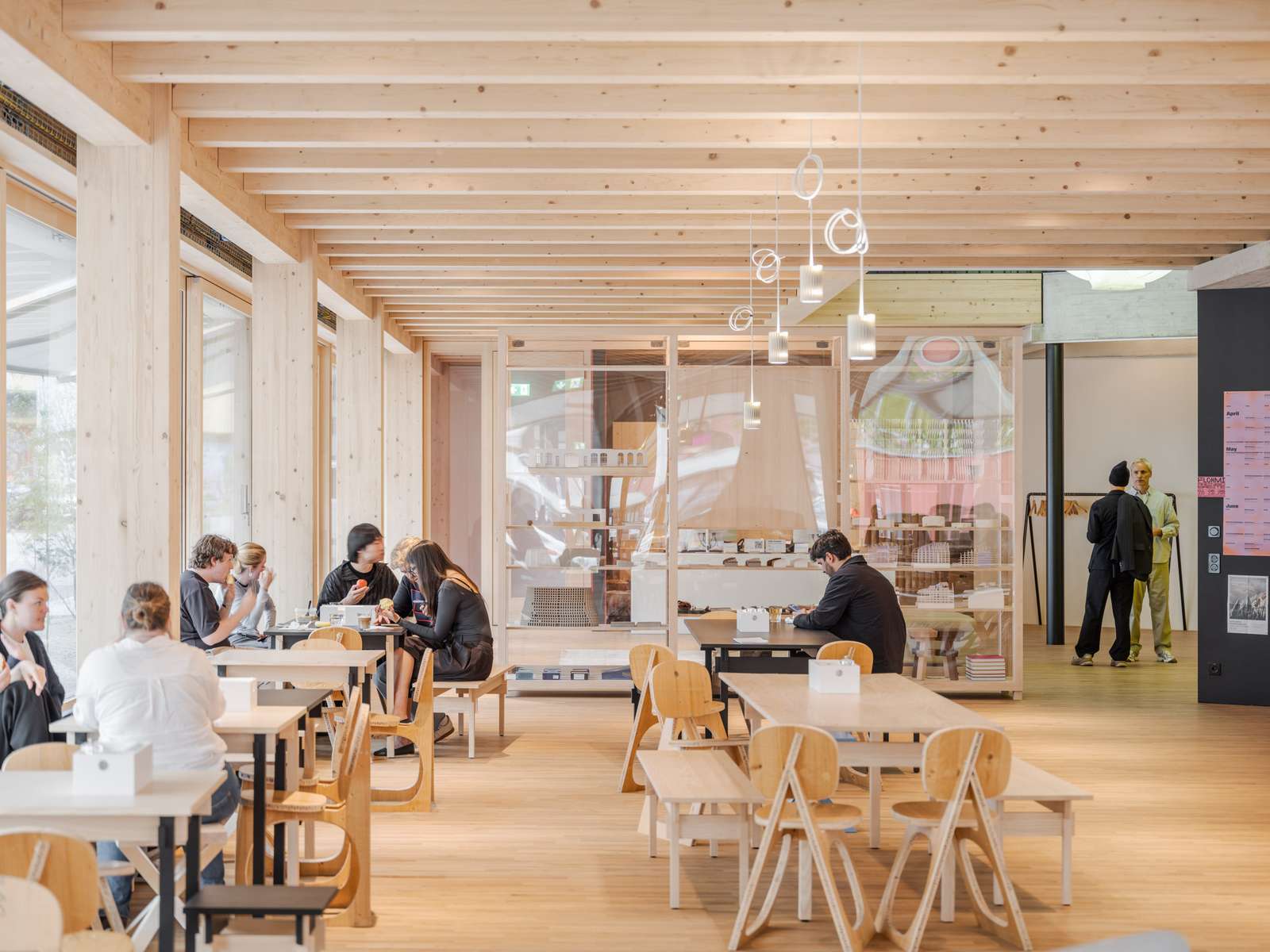
A new seven-story headquarters in Basel’s Dreispitz quarter establishes a permanent operational base within a formerly industrial district. The project utilizes a low-carbon structural strategy to house over 300 staff members across a 7,259-square-meter footprint. This intervention marks a significant phase in the ongoing urban evolution of the area, transitioning the neighborhood from logistics toward a mixed-use professional hub.
The design adopts a pragmatic material palette of exposed timber, concrete, and metal to reflect the site’s infrastructural history. By filling the entire triangular plot, the scheme maximizes floor area while creating distinct outdoor zones. Bands of corrugated metal cladding define the exterior envelope, punctuated by large-format glazing and retractable awnings for solar control.
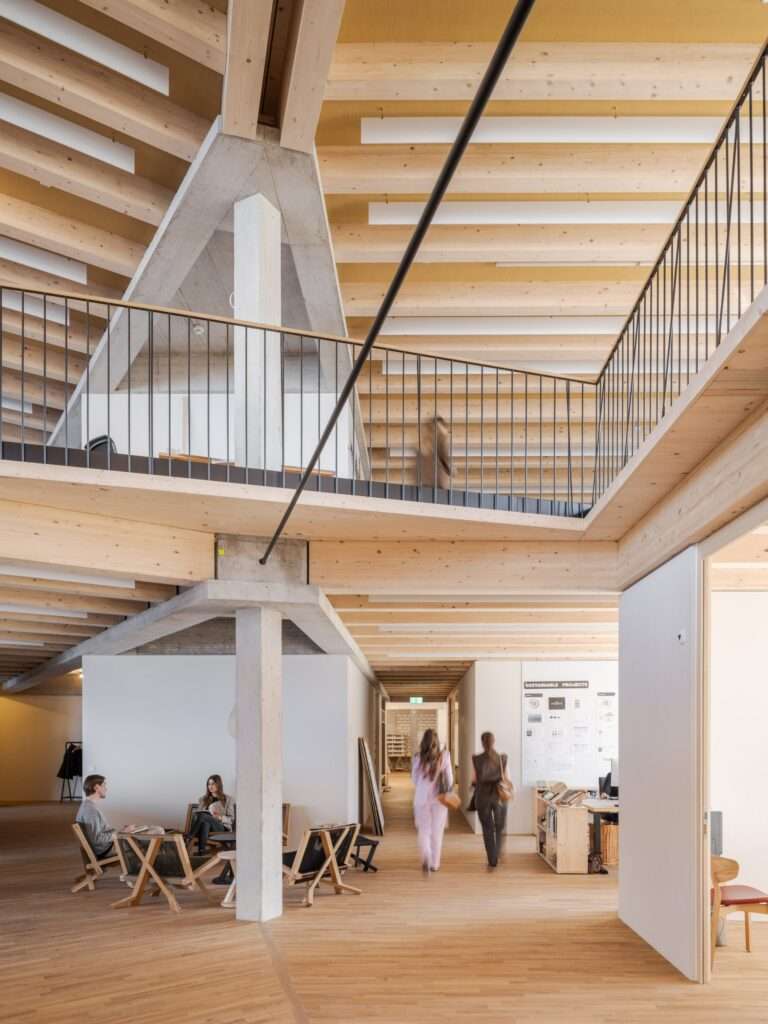
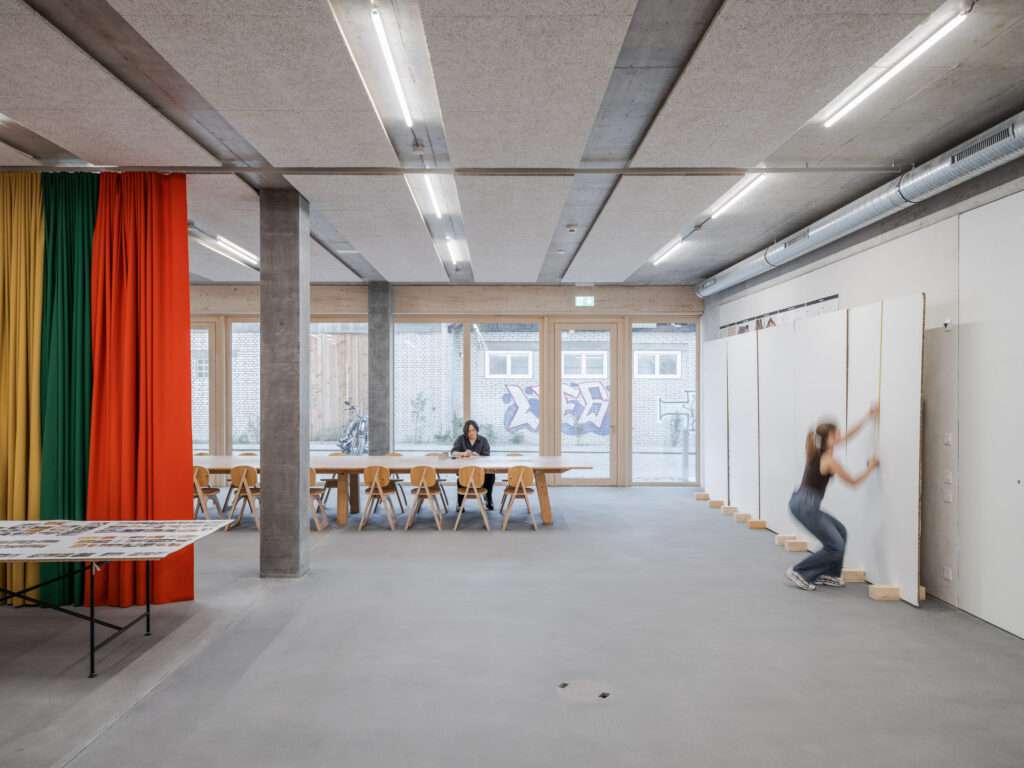
Internally, the team organized the program as a vertical campus to encourage movement between various departments. Double-height atria and open staircases break the traditional floor-by-floor hierarchy, facilitating visual and physical connections. The layout places workshops, administrative offices, and architectural studios in proximity, treating the interior more like a city than a partitioned office block.
Material Assembly and Structural Logic
The structural system combines a timber frame with a series of concrete cores to balance carbon footprint with seismic and fire requirements. The team chose to leave services, including ducting and conduits, fully exposed to emphasize the building’s functional identity. This approach treats the building materials as an honest expression of the construction process rather than a concealed assembly.
A central staircase serves as the primary circulation spine, linking all seven levels from the ground-floor cafeteria to the rooftop boardroom. Along the northern elevation, the floor plates narrow to follow the site boundary, resulting in a series of angular terraces. These outdoor spaces provide secondary circulation and breakout areas for employees throughout the workday.
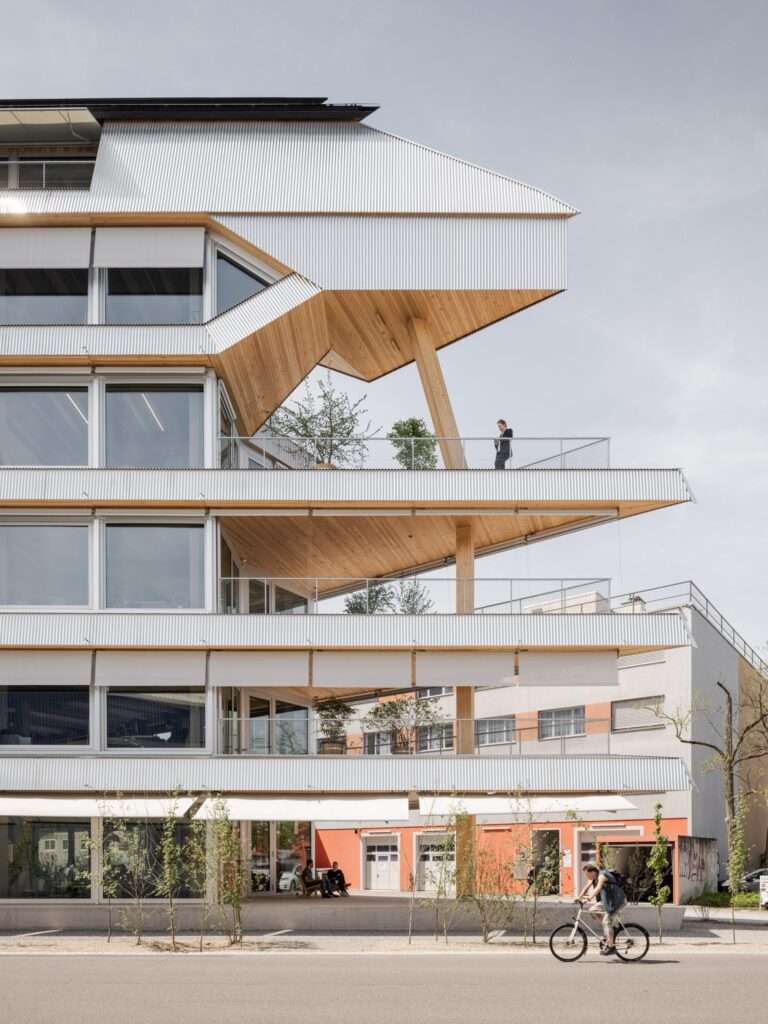
“The aim was to develop a building that, despite its new use as an open working environment, remains grounded in a context strongly defined by logistics and infrastructure,” the team states.
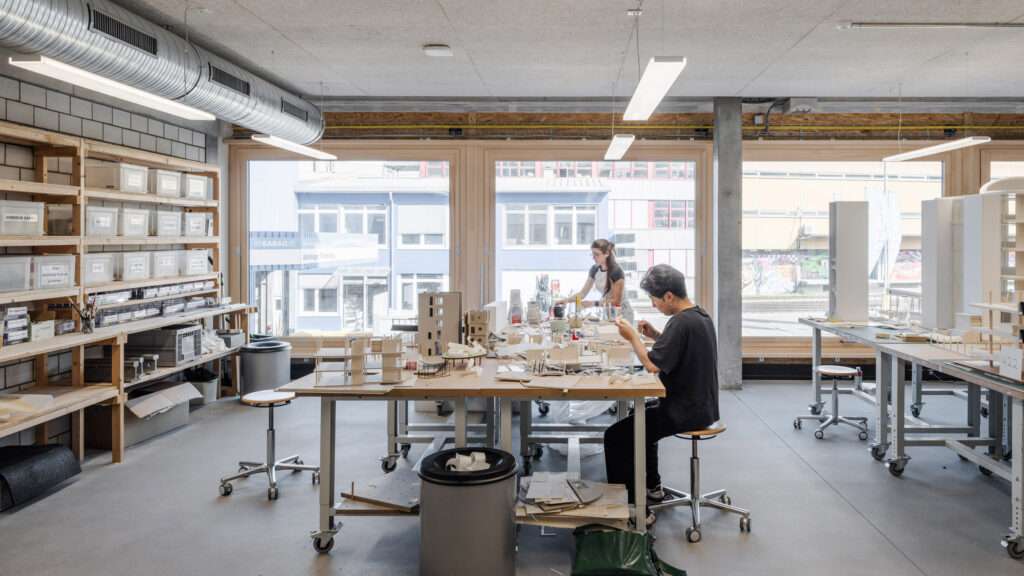
The intervention also includes a dedicated materials library, reinforcing the concept of the building as a physical repository. By utilizing an additive logic, the design allows for future modifications or potential disassembly of specific components. This flexibility ensures the building can adapt to changing operational needs within the architecture of the evolving Dreispitz district.
Circulation Hierarchy and Programmatic Intelligence
The spatial strategy relies on a sophisticated tension between the rigid triangular site boundary and a fluid internal circulation logic. By prioritizing the atrium as a void that connects disparate functions, the project avoids the silos typical of large-scale corporate environments. The material choices—raw timber and exposed concrete—function not merely as aesthetic markers but as a legible structural narrative. This directness suggests a programmatic intelligence where the building operates as a tool for work rather than a formal monument. The integration of outdoor terraces at every level provides essential relief to the dense floor plates, successfully negotiating the transition from private workspace to the industrial urban fabric of Basel.
✦ ArchUp Editorial Insight
Herzog & de Meuron’s Basel headquarters proposes something rarely attempted with such directness: a practice building its own workplace as an argument about architecture. The exposed timber frame, the materials library, the deliberately city-like interior — each decision reads as a position statement, a built manifesto declaring that spatial intelligence and low-carbon ambition can coexist without formal compromise. The vertical campus model rejects departmental isolation and treats adjacency as a design tool.
Yet the premise deserves scrutiny. When an office of this stature designs for itself, within its own masterplan, on land it controls, the result is architecture under uniquely favorable conditions. The pragmatic aesthetic — raw ducts, angular terraces, additive logic — carries conviction precisely because construction costs and client resistance were internal negotiations. Most workplaces operate under none of these freedoms. The manifesto lands cleanly when you own the territory.
Project Team: Herzog & de Meuron. Location: Basel, Switzerland.
Project Notes: Completed in 2024, this 7,259-square-metre headquarters forms part of the Vision Dreispitz masterplan. The team designed the structure as a vertical campus for over 300 staff members.