Book your vacation on this floating island made of plastic waste

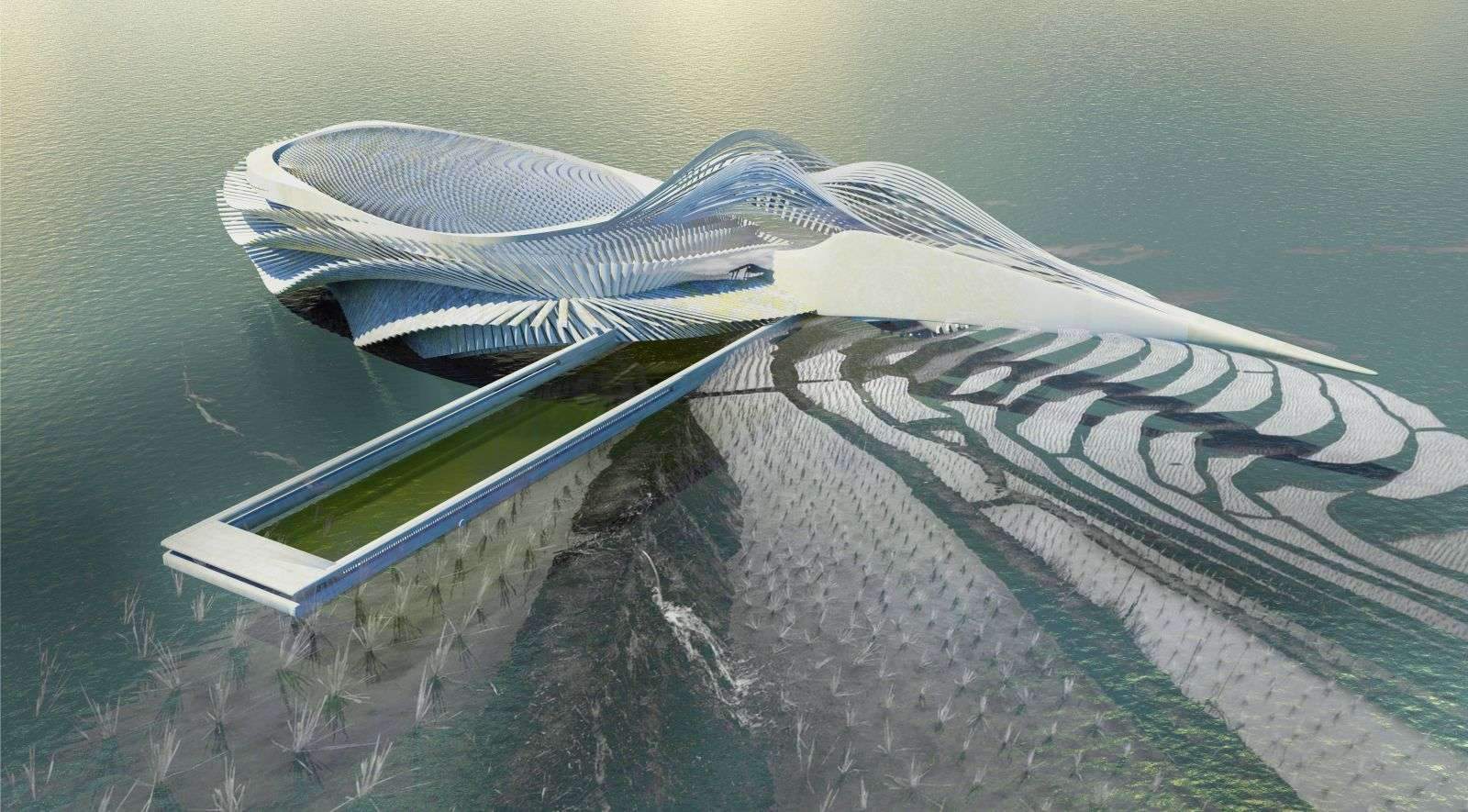
Do you want to pitch your tent on a plastic dump in the middle of the Pacific Ocean? A British architectural firm has come up with a concept of a floating island built from plastic waste collected in the ocean. An ecological structure inspired by mangroves.
Every year, eight million tons of plastic are thrown back into the sea. This material travels with the currents, eaten by plankton and marine organisms until it contaminates the entire food chain. The Tara Mediterranean Expedition is studying this phenomenon. See in the video how these scientists find plastic in the oceans.
The landscape is heavenly: in the middle of the Pacific Ocean, 2,700 km from the Australian coast. The Cocos Islands form an archipelago of 27 islets of fine sand bordering a turquoise blue lagoon inhabited by multicolored fish and sea turtles. It is in the middle of this piece of postcard that the British architect Margot Krasojević wants to install… a plastic dump. But a landfill that is a bit special since it is artificial islands built from plastic waste. The project, called Recycled Ocean Plastic Resort, should welcome its first tourists in 2025 with a campsite and a hotel.
Read also: Sustainable architecture: the environmentally friendly concept
Collecting plastic waste with the currents
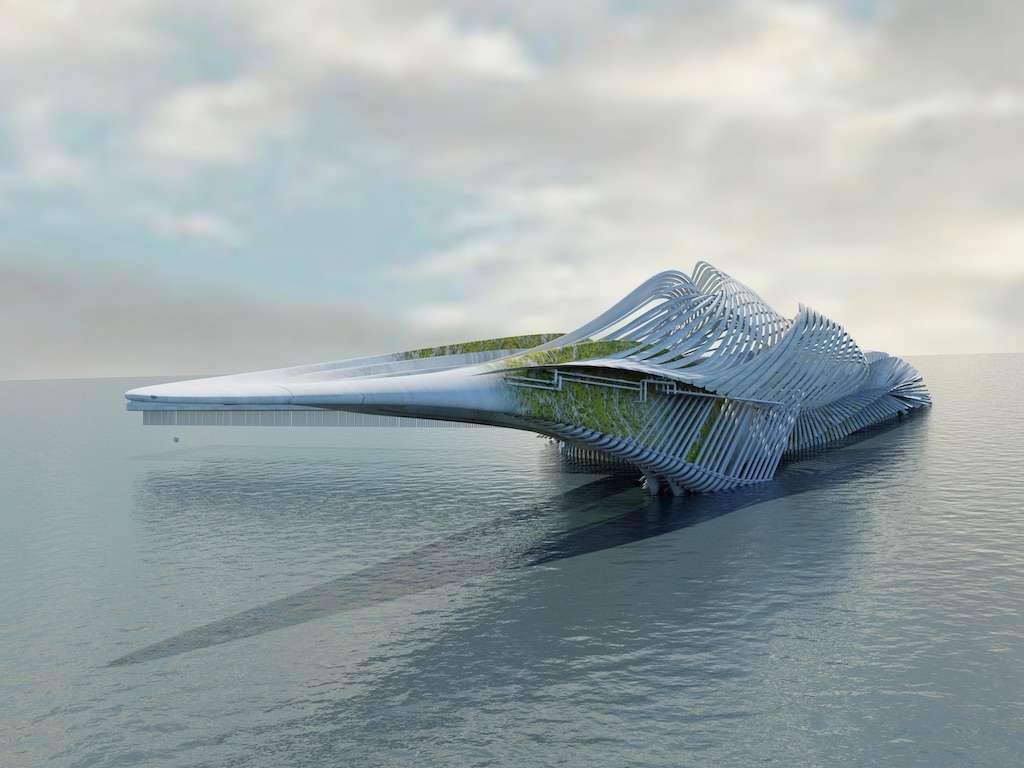
Recycled Ocean Plastic Resort by Margot Krasojević Architects
The Cocos Islands are facing increasing plastic pollution: according to a study by the University of Tasmania. The territory is covered with 141 million pieces of debris such as bottles, bags, shoes or toothbrushes. That is to say 238 tons of plastic accumulated on the beaches. Waste that poses a major risk to local fauna and flora and spoils the landscape. Margot Krasojević therefore had the idea of recycling all this plastic in the form of a floating structure.
The island would be built from wooden walkways attached to the bottom of the water, to which would be connected some kind of articulated arms that will collect the plastic waste floating around. The waste would be fed into large bags and then covered with biodegradable concrete fiber to form a mesh structure. “Upon contact with water, these ‘tentacles’ will swell and expand, absorbing sediment and preventing the water from flooding the island or capsizing it,” the project website describes.
The architect then imagines growing mangroves around the plastic structure that would “cement” and stabilize it all. The architectural firm studied ocean flows to understand where the plastic waste carried by the ocean comes from and to position the island accordingly. Thus, the island will grow as the waste accumulates “within its capacity to evolve”.
Read also: For a more sober housing: a frugal and creative architecture
Floating islands: the new ecological Eldorado?
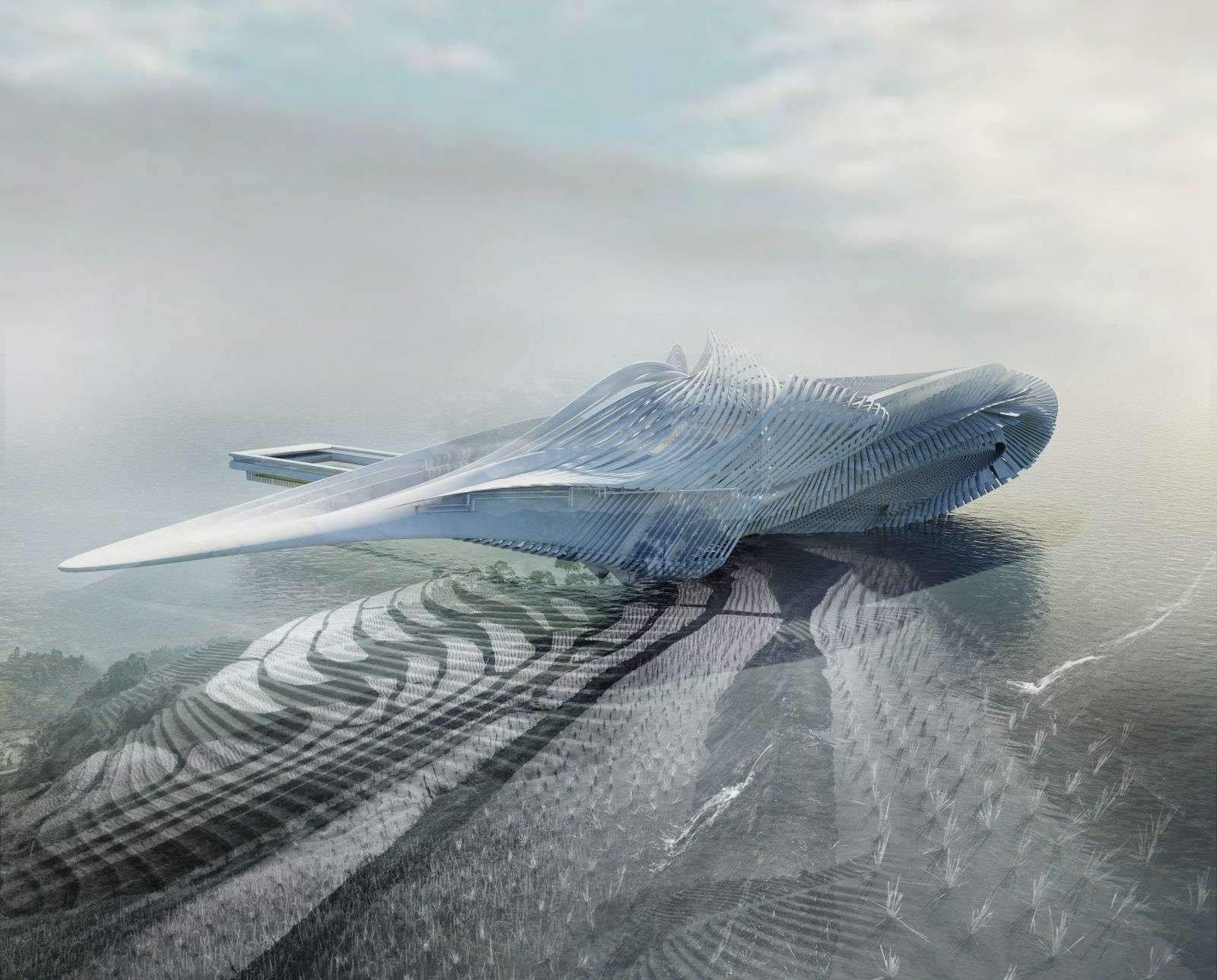
Recycled Ocean Plastic Resort by Margot Krasojević Architects
The hotel will offer a series of “canopy rooms” with showers using filtered sea water pumped through solar panels; it will be surrounded by camping grounds. The architectural firm was commissioned for the project by a South African mining company. That funds initiatives to build ecosystems and manage pollution from the mining industry. But it is not at all certain to see the light of day.
Unfortunately, the concepts of eco-islands are multiplying like wildfire, without being realized most of the time. In Polynesia, off the coast of Tahiti, an American foundation has been trying for years to obtain a building permit for an archipelago of autonomous artificial islands covered with solar panels and wind turbines, and powered by aquaculture.
In 2019, a project for an eco-friendly “floating city” capable of withstanding hurricanes was presented to the UN. Italian architect Pierpaolo Lazzarini has imagined “floating Mayan pyramids”. While the South Sea Pearl eco-island intended to be located off the coast of Haikou, in the China Sea, and has never seen the light of day.
It is therefore likely that in 2025, the Cocos Islands will still have 27 islets and even more plastic waste on its beaches.