Digitally Fabricated Concrete Truss Connects Historic Buildings in Italian Cultural Center

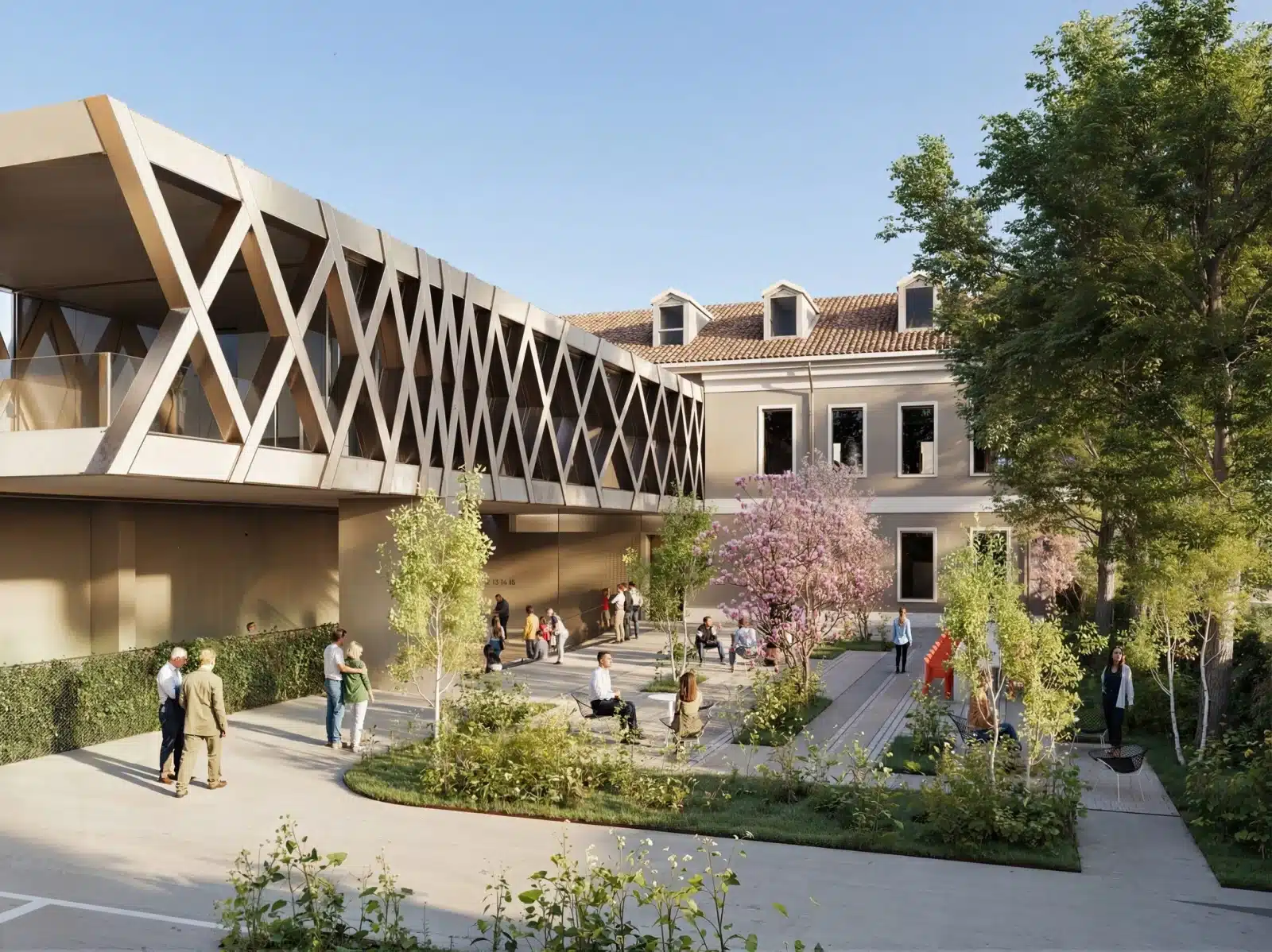
CRA–Carlo Ratti Associati has won the competition to design the Buzzi Heritage Cultural Center in Casale Monferrato, Italy. The project transforms two former school buildings into a public cultural hub. A 100-meter-long suspended concrete truss links the structures above a landscaped garden.
Suspended Structure Bridges Past and Future
The design introduces a dramatic cantilevered element that hovers above ground level. This approach opens the site to the city rather than creating a closed institutional campus. The suspended truss acts as both physical connector and symbolic bridge between industrial heritage and contemporary urban planning.
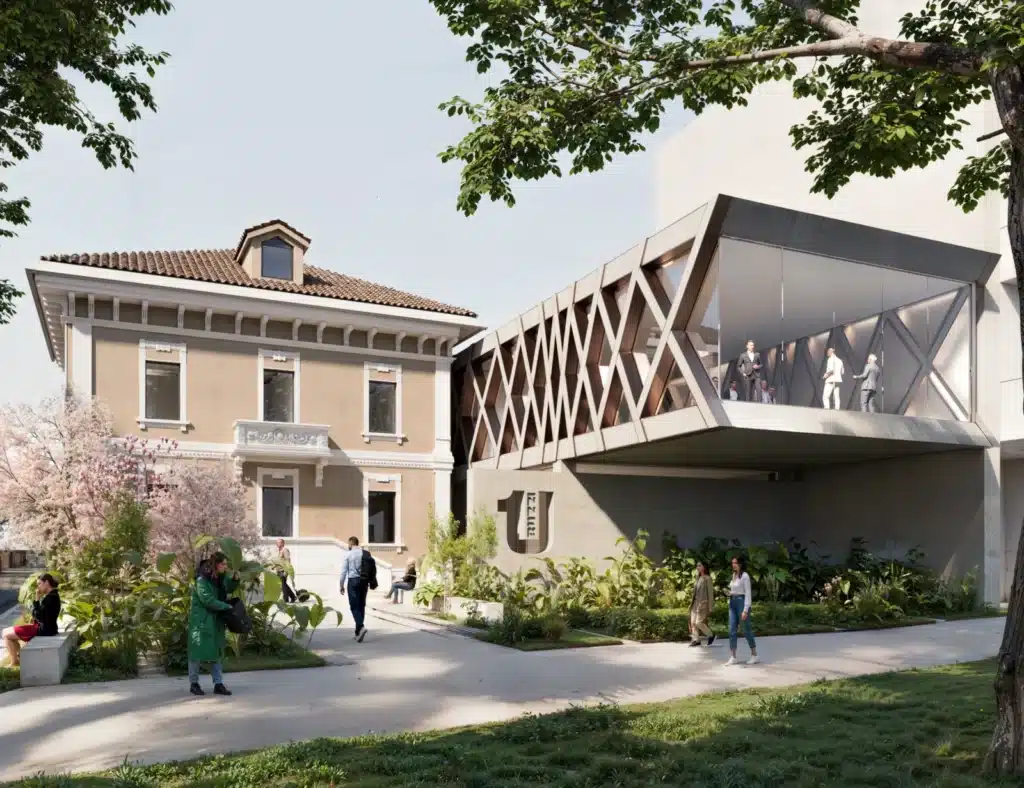
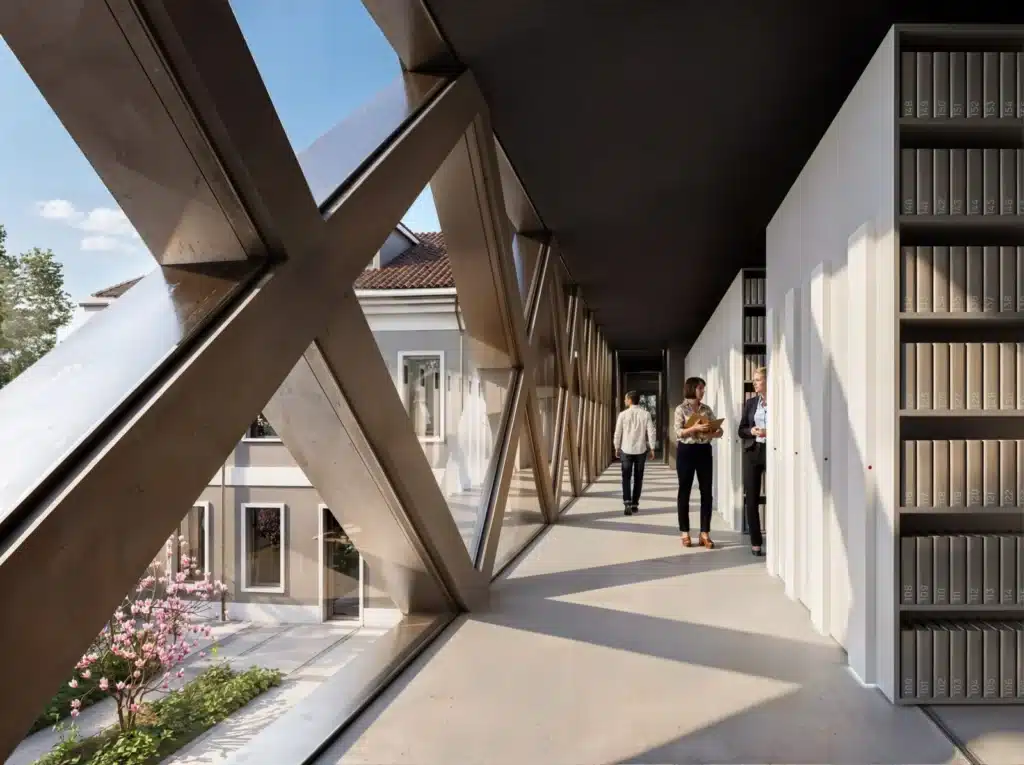
Moreover, the elevated volume houses historical archives, research facilities, and cultural programs under one roof. At ground level, the architecture creates permeable public spaces. The garden becomes an integral part of the cultural experience rather than decorative backdrop.
New Construction Method Challenges Concrete Conventions
The project represents the first real-world application of a patented construction system combining traditional concrete casting with digital fabrication. While digital processes have transformed steel, timber, and glass production, reinforced concrete has resisted similar innovation until now.
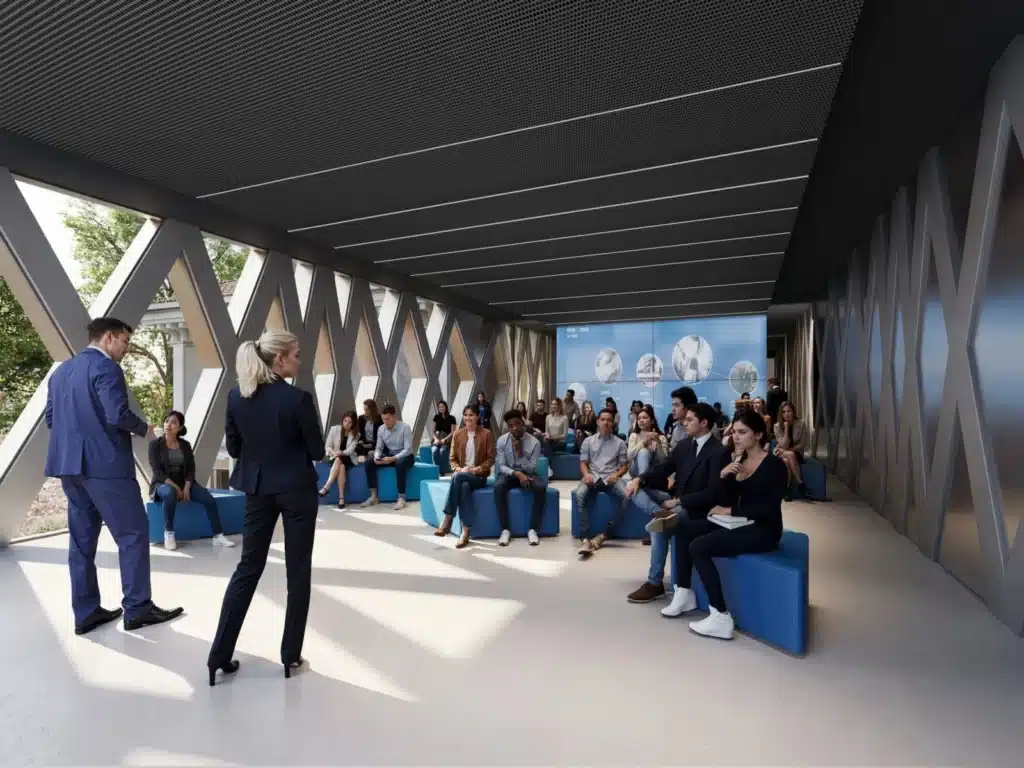
The system uses laser cutting and CNC machining to manufacture steel components off-site with high precision. These components serve dual roles as permanent formwork and structural reinforcement. Unlike conventional temporary molds, they remain embedded in the finished structure.
Therefore, this approach reduces material waste and shortens construction timelines. It also minimizes on-site complexity while improving structural performance. The digitally fabricated truss demonstrates how building materials can evolve through manufacturing precision.
Three Courtyards Define Public Experience
Beneath the suspended structure, the project organizes three distinct courtyards with different access levels. The first courtyard opens fully to the city as the most public face of the complex. Meanwhile, the second courtyard creates a shared zone for both public and private activities.
The third courtyard provides private space for the nonprofit Centro Incontro Fondazione Maurizio Buzzi and its social functions. This layered arrangement mediates between openness and intimacy through spatial transitions. However, the framework remains flexible enough to support both programmed events and everyday public life.
The courtyard sequence shapes a dynamic cultural environment that can adapt over time. Each zone calibrates different levels of access and use within the overall design. This spatial strategy transforms former educational facilities into an accessible civic destination.
A Quick Architectural Snapshot
The Buzzi Heritage Cultural Center reimagines heritage buildings through digital fabrication and spatial layering. A 100-meter concrete truss suspends above three courtyards in Casale Monferrato. The project demonstrates how construction innovation can serve cultural sustainability and public accessibility. Read more news about contemporary cultural architecture.
✦ ArchUp Editorial Insight
This project emerges from three converging pressures reshaping European cultural infrastructure. First, heritage buildings increasingly face adaptive reuse mandates as municipalities seek alternatives to demolition and new construction costs. Second, concrete innovation has lagged behind other materials precisely because conventional formwork systems remained economically viable. Digital fabrication only becomes attractive when labor costs and timeline pressures exceed traditional methods.
Third, the courtyard strategy reflects a broader shift in how cultural institutions negotiate public access. The tiered privacy model acknowledges that nonprofits require both visibility and operational autonomy. Opening fully to cities generates foot traffic and political goodwill. Maintaining private zones ensures functional sustainability.
The suspended truss solves a specific problem. It connects without demolishing, spans without columns, and creates sheltered public space without enclosure. This project is the logical outcome of heritage preservation economics, digital manufacturing maturity, and evolving expectations for institutional transparency.