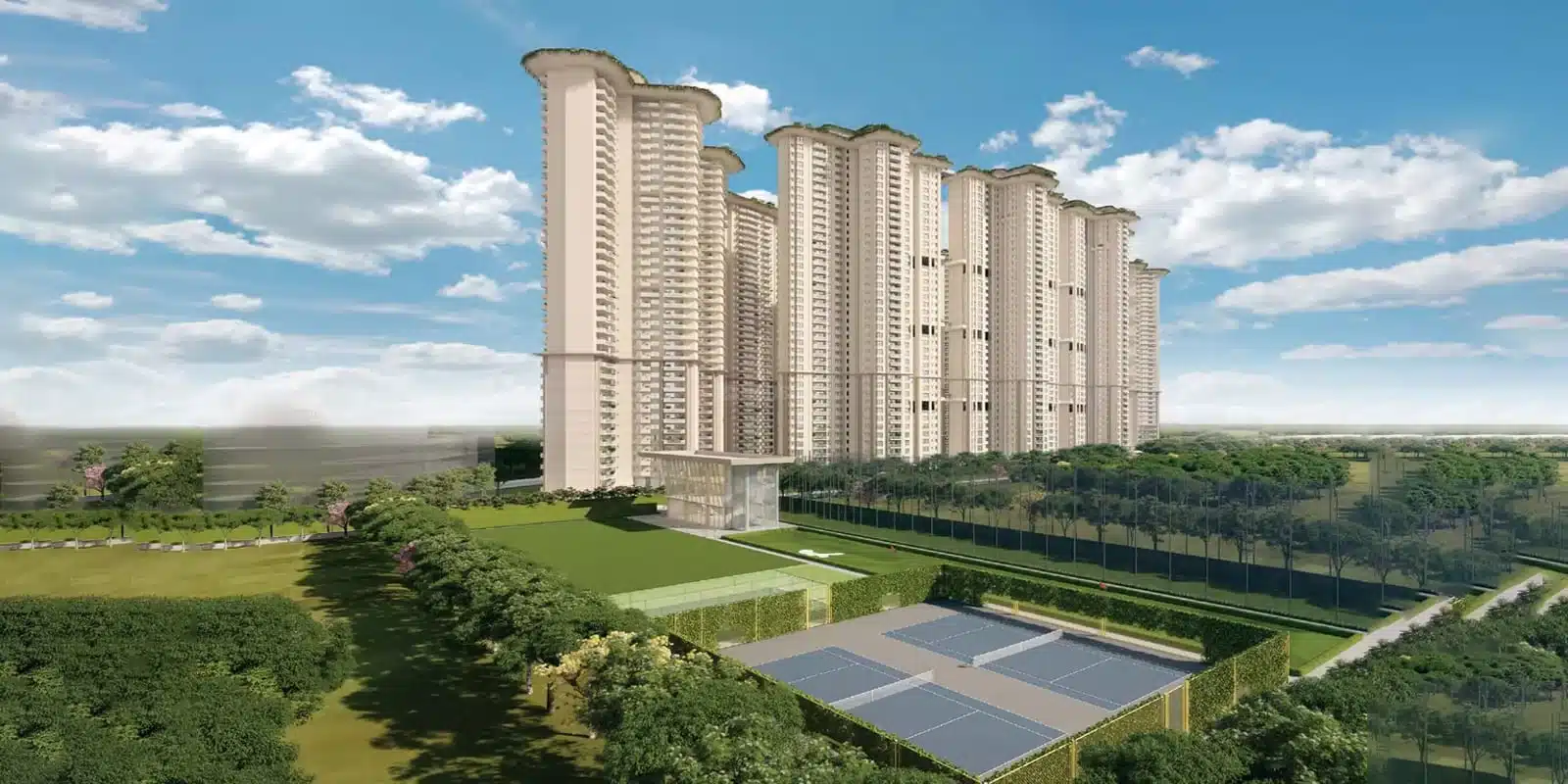
Aerial view of a branded residential tower complex in Gurgaon with curved forms and landscaped grounds.

Branded Residential Gurgaon 2026 Subsumes Architecture into Brand Logic

Home » News » Branded Residential Gurgaon 2026 Subsumes Architecture into Brand Logic

Branded residential development in Gurgaon treats architecture as a brand tool, not decoration.
The project sits in Sector 53 on Golf Course Road.
It integrates form, orientation, and layout into a single commercial strategy.
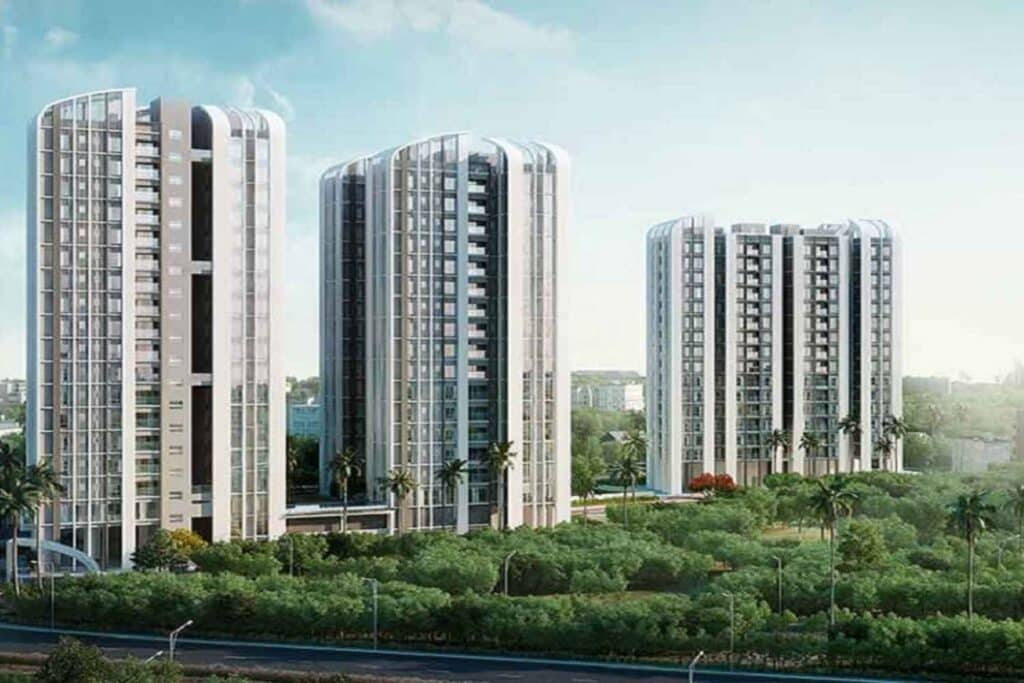
Three curved branded residential towers in Gurgaon with glass facades and green surroundings.
The project’s vertical massing and glazing strategy respond to local climate while reinforcing its commercial identity. (Image © Developer Visuals)

Site and Urban Context

The two acre plot lies in a fast growing residential zone.
It connects directly to major roads.
This reflects how infrastructure shapes housing value in northern India’s cities.

Towers respond to markets, not just space needs.
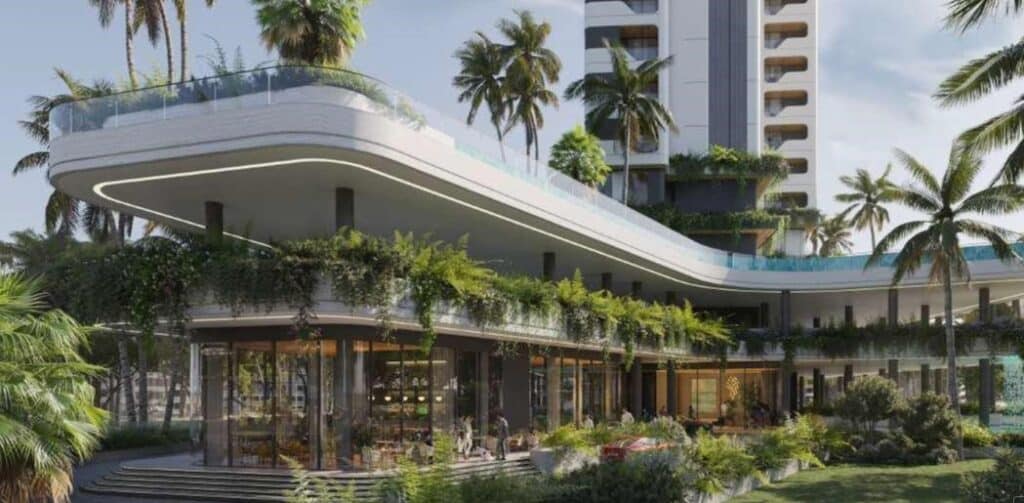
Podium level of a   development in Gurgaon featuring terraces, palm trees, and communal zones.
The ground-level design merges retail, social areas, and vegetation to reinforce the project’s identity as a lifestyle destination. (Image © Developer Visuals)

Architectural Composition and Massing

The tower holds 96 units only three and four-bedroom layouts.
It uses a smooth, curved mass.
It avoids standard concrete modules.
This positions the project within debates on buildings as identity markers.

Climatic Orientation and Environmental Performance

Designers aligned the tower north south.
They used solar and wind data.
This cut heat gain and cooling loads.
The team now pursues LEED certification, aligning with sustainability benchmarks.
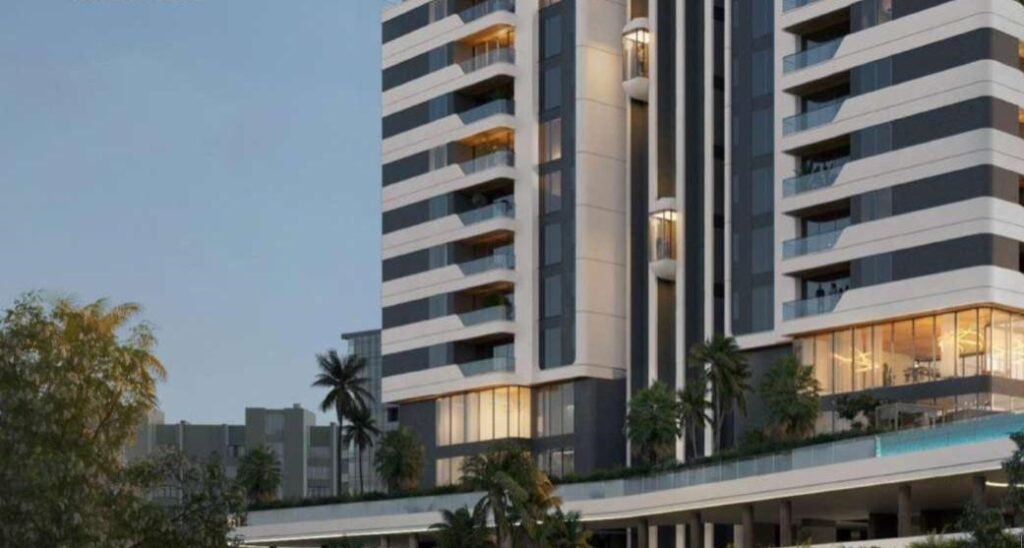
Evening view of a residential tower in Gurgaon showing illuminated balconies and rhythmic vertical facade.
The facade’s horizontal banding and recessed balconies respond to solar orientation while reinforcing the building’s visual identity. (Image © Developer Visuals)

Interior Design as Brand Continuity

Interiors include apartments, a clubhouse, and gardens.
All follow one visual language.
Designers extended the facade logic indoors.
This turns interior design into a branding instrument.

Architecture now answers what value it creates not how to build.

Economic Context of Branded Housing

India ranks sixth globally in branded residential output.
Demand in Gurgaon, Mumbai, and Bengaluru drives growth.
The sector may expand 60% by 2027.
This ties to shifts in construction and marketing.

Teams selected materials for strategic clarity.
Facades link to identity goals.
They reflect principles of building materials in branded schemes.
The project appears in the global archive of branded residential cases.

The architecture platform analyzes its market form synthesis.
Editorial research cites it as proof of architecture’s economic realignment.

Branded residential has become an urban value framework, not just a marketing label.

Architectural Snapshot
The Gurgaon project shows how South Asian housing now embeds design in branded residential systems shifting from space delivery to urban value structuring.

Facade elevation of a Gurgaon residential tower with recessed balconies and textured cladding.
The tower’s segmented facade and recessed lighting emphasize verticality while aligning with the project’s commercial identity strategy. (Image © Developer Visuals)

✦ ArchUp Editorial Insight

The article presents Gurgaon’s branded residential project as architecture shaped by market logic.
It accurately records form, orientation, and branding but sidesteps critical questions about equity or urban exclusion.

The tone leans toward investor briefing, not architectural critique.
Still, its documentation of climate response and design continuity holds archival value.

In ten years, such projects may symbolize not innovation but architecture’s quiet absorption into brand strategy.

Further Reading From ArchUp

  • Star Lounger is created from stretch velvet and brass

    Born from creativity, research, planning and mind-bending techniques, Canadian designer Troy Smith brilliantly crafts ‘Star Lounger’ – a one-of-a-kind conceptual piece of furniture created from stretch velvet and brass.“Named after the shape and appearance of a star – my aim was to break the mold, go beyond and make a sculptural work of art” says

  • Nested Lamp: an eye-catching addition to your interiors

    Finding the perfect harmony between material and functionality, Germany-based designer Deniz Aktay crafts “Nested Lamp” – featuring light brilliantly being ‘caught’ and enclosed by two semi-transparent or plexi-glass sheets.During his studies and work experience – the multitudinous intricate aspects of creating, forming and designing have always been a vital aspect in his innovatively creative work. “The

  • rehub: a new disruptive process to manipulate glass waste

    Materials & Surfacesrehub is a cutting-edge startup located in Murano, dedicated to developing groundbreaking technologies aimed at transforming non-recyclable glass waste into valuable resourcesFounded by Matteo Silverio and Marta Donà, winners of the special award by EDIT Napoli at the latest Venice Innovation Design edition, rehub‘s mission is to develop technologies that aim to give

  • This biobased house is made from sustainable materials

    Currently on display at Dutch Design Week 2021, “The Exploded View” uses only biobased materials to demonstrate the potential of sustainable design.Mycelium flooring, seaweed tiles and a bacteria lamp are just three of over 100 sustainable materials and other technologies featured inside “The Exploded View”, an installation created using only biobased materials and circular construction

Leave a Reply

Your email address will not be published. Required fields are marked *