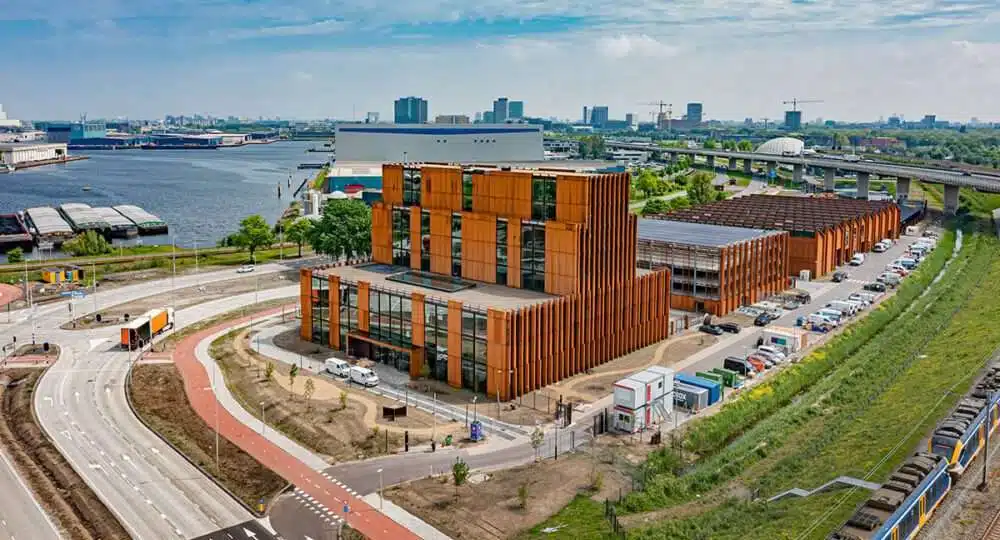
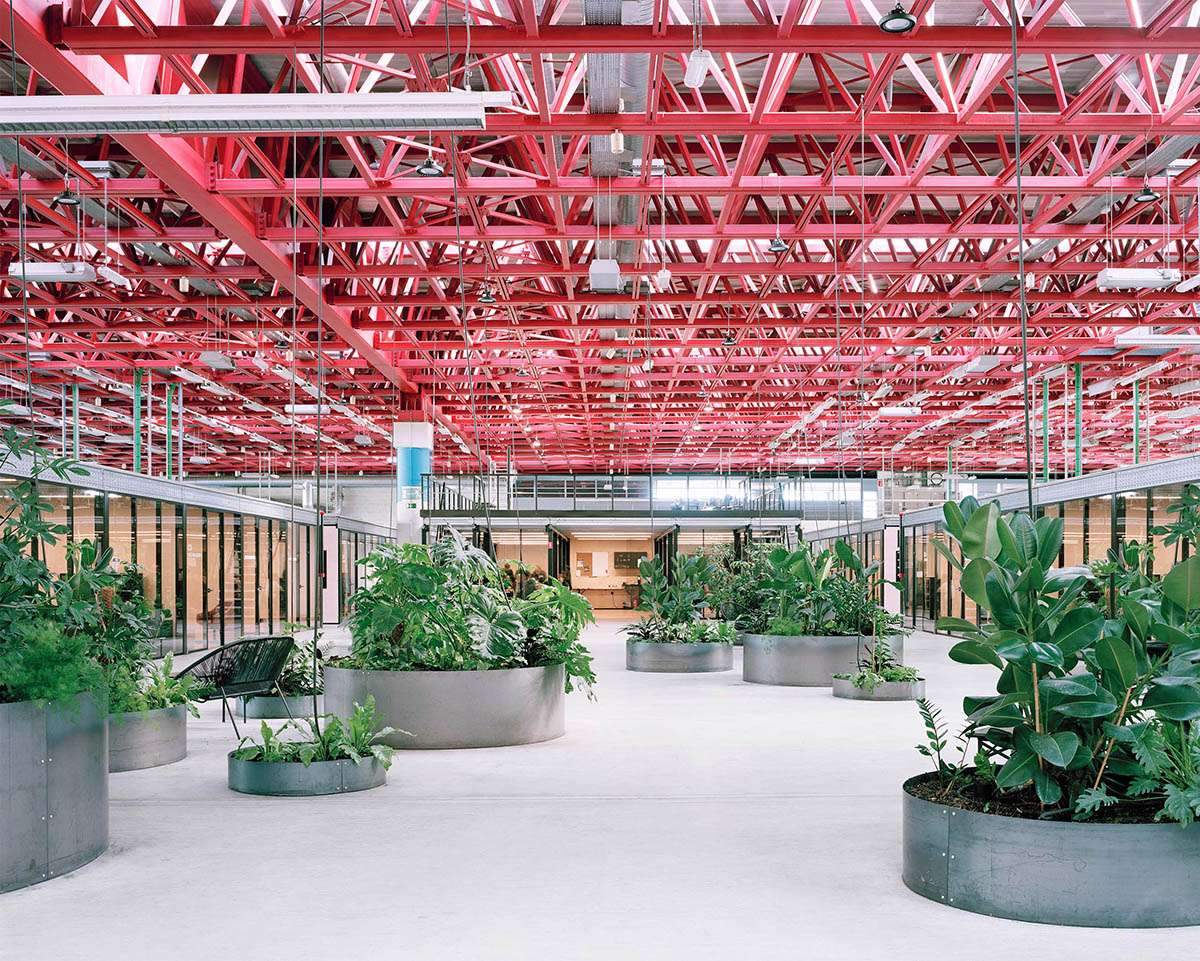
Postmodern Office Tower in Canary Wharf Set for Partial Demolition and Extension

A 1990s postmodern office building in Canary Wharf faces partial demolition as part of ambitious expansion plans. The 10-storey structure will undergo significant transformation, with three additional floors planned to increase height and functionality.
Renovation Plans Unveiled
The proposal targets a postmodern office tower located in East London’s prominent business district. Architects plan to demolish portions of the existing structure before adding three new levels. This approach aims to modernize the aging buildings while preserving its core framework.
The project reflects growing trends in urban planning where adaptive reuse meets contemporary demands. Moreover, this strategy proves more sustainable than complete demolition and reconstruction.
Postmodern Architecture Under Transformation
The original architectural design represents typical 1990s postmodern aesthetics. However, changing workplace requirements now demand updated facilities and increased capacity. Therefore, the partial demolition approach balances heritage considerations with modern functionality.
Canary Wharf continues evolving as a dynamic business hub. Consequently, older structures must adapt or face obsolescence. This project demonstrates how architecture can respond to market pressures while maintaining urban continuity.

Context Within Canary Wharf Development
The practice behind this proposal has previously delivered notable projects in the area. Additionally, their portfolio includes floating pavilions at Wood Wharf completed in 2023. They also collaborated on reimagining public realm spaces within the district.
These past projects establish credibility for handling sensitive interventions in this high-profile location. Meanwhile, their experience demonstrates understanding of local planning requirements and community expectations.
Implications for Office Space
The expansion addresses critical demand for modern workspace in London’s financial district. Office tenants increasingly require flexible layouts and enhanced amenities. Furthermore, adding three floors significantly increases rentable square footage without expanding the building footprint.
This construction strategy maximizes site potential while minimizing ground-level disruption. The partial demolition method also reduces waste compared to total reconstruction.

Publication and Industry Response
The news emerged through specialized architectural media on February 13, 2026. Industry platforms quickly shared the announcement, highlighting its relevance to ongoing debates about preserving postmodern architecture.
Social media engagement indicates strong professional interest in the project. However, public consultation processes will ultimately determine community support for these changes.
Will this adaptive approach become the standard for upgrading aging office towers in major business districts?
A Quick Architectural Snapshot
The subject building comprises 10 existing storeys with proposed addition of three levels. Built during the 1990s, it features postmodern design characteristics typical of that era. Located in Canary Wharf, East London, the structure currently functions as commercial office space within the district’s dense urban fabric.
✦ ArchUp Editorial Insight
Partial demolition in Canary Wharf is not an architectural decision, but an inevitable outcome of three intersecting pressures. First, the cost of complete demolition and reconstruction exceeds the acceptable financial risk threshold for commercial real estate investors. Second, local planning regulations favor interventions that preserve existing footprints to avoid infrastructure reassessment. Third, demand for flexible office spaces requires additional height without disrupting ground-level operations.
The recurring pattern: 1990s postmodern buildings in financial districts undergo the same equation, not because they are aesthetically obsolete, but because HVAC systems, elevators, and cabling no longer accommodate current digital usage density. The final form reflects cost-versus-time optimization, not architectural vision.
The outcome always appears last, after financial and regulatory decisions have determined everything.