Casa Entre Peraus: Site-Driven Architectural Decisions

Impact of Site Conditions on Architectural Decisions
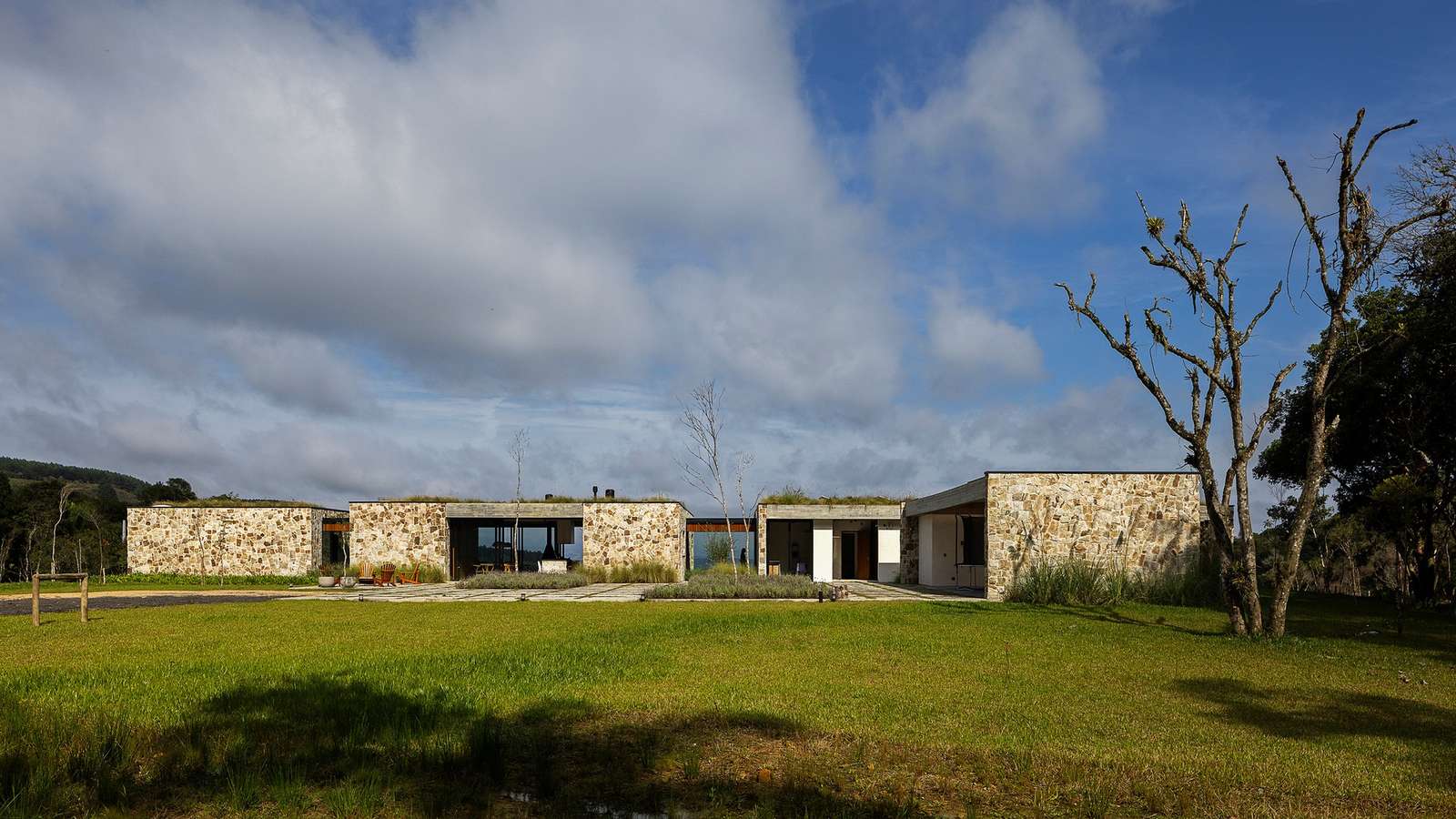
The Architecture of the Casa Entre Peraus project demonstrates how site characteristics can evolve into a decisive factor in shaping design decisions from the earliest stages. Located on extremely steep terrain in the inland region of Santa Catarina, the project required expanding the scope of Design beyond architectural drawings to include site access mechanisms, material transport strategies, and the organization of construction phases.
Execution Constraints and Structural System
At the same time, the physical constraints of the site directly influenced the selection of structural solutions. Difficult access for large trucks, weather-sensitive concrete casting operations, and the lack of room for improvisation during Construction led to the adoption of a simplified structural system based on precise planning and continuous control over execution stages.
Logistics Management Within the Project
On another level, logistical considerations became an integral part of the construction process itself. A mid-point staging area was therefore used to reorganize loads, alongside the use of four-wheel-drive trucks and a dedicated tractor for material transport. These measures enabled project execution while minimizing direct impact on the natural site and surrounding landscape. You can explore similar Projects that address logistical challenges in sensitive environments.
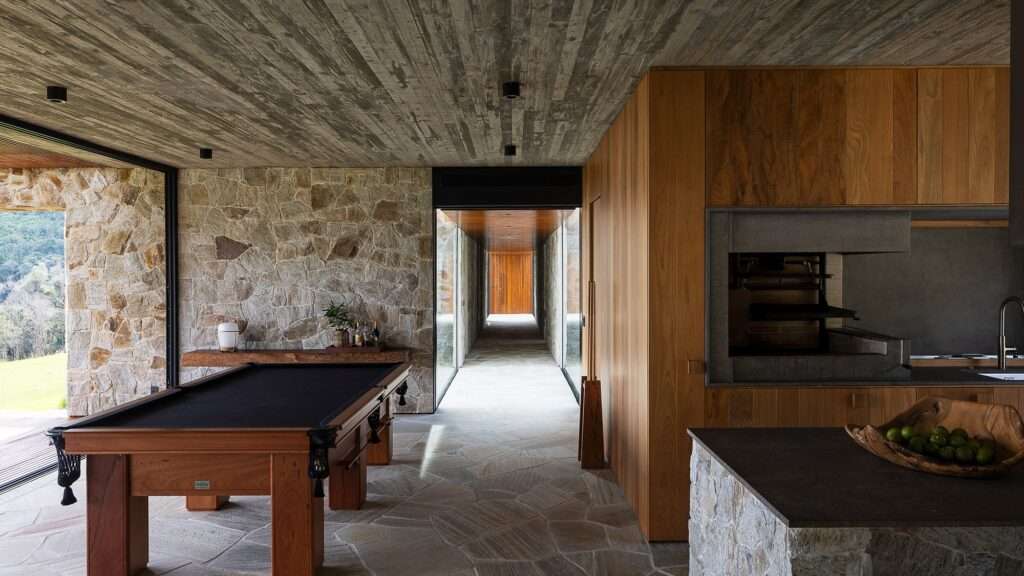
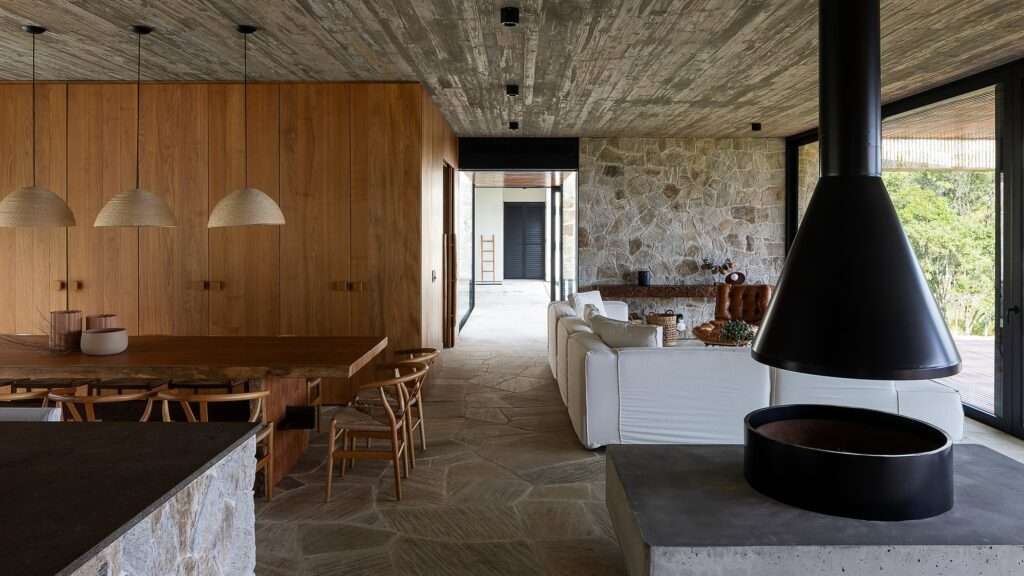
Integration of the Building with Site Topography
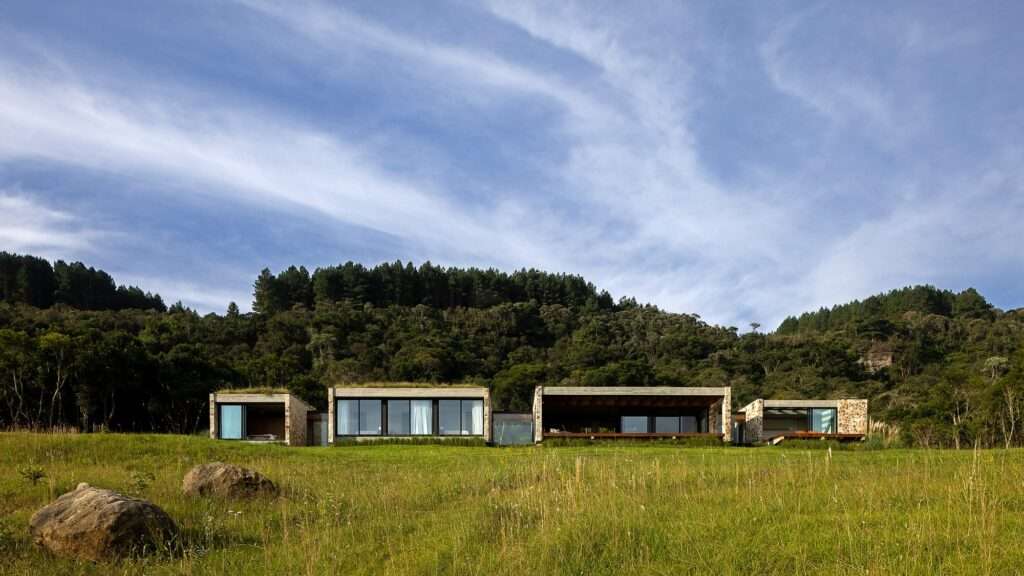
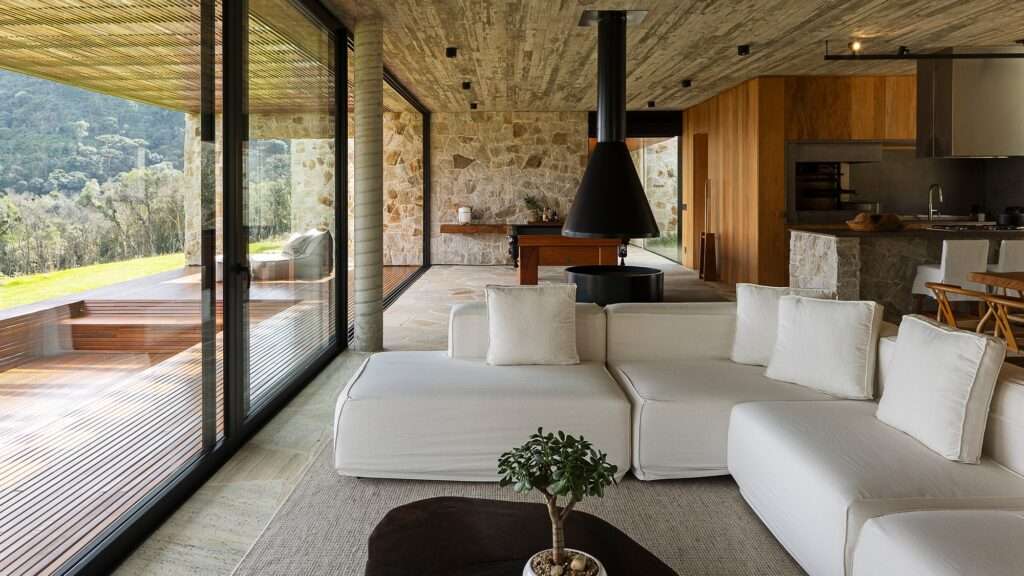
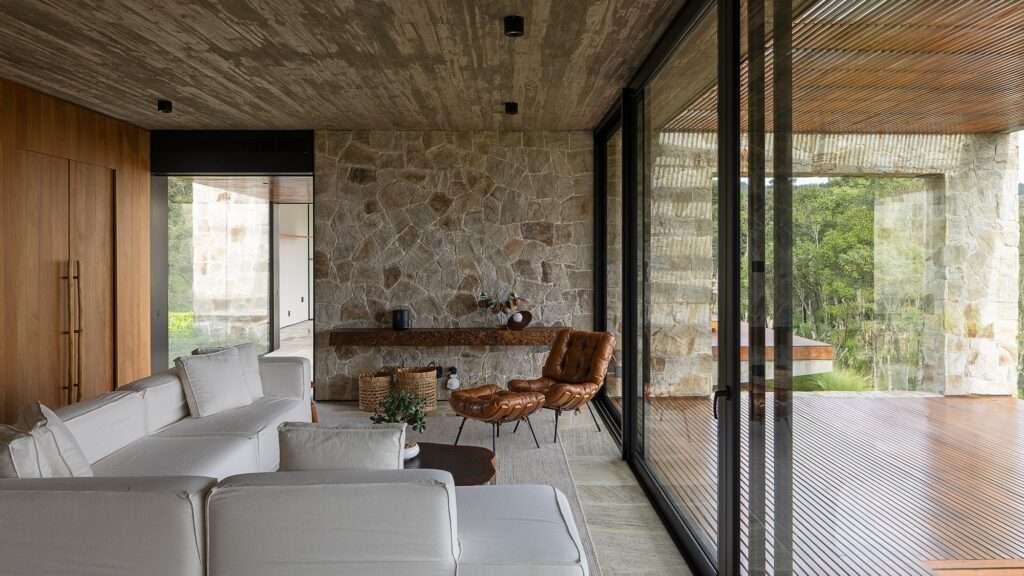
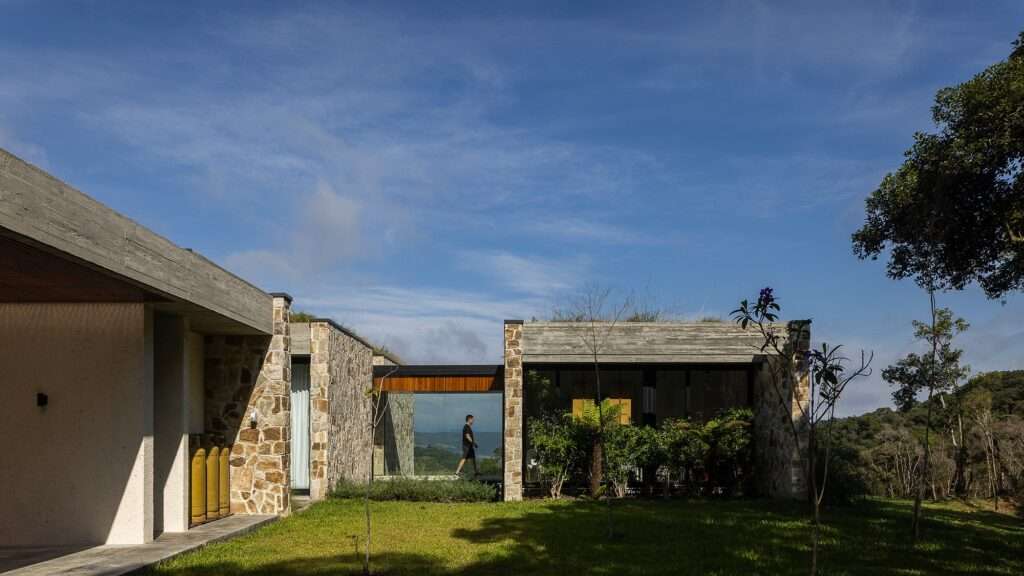
The layout of the complex reflects an approach grounded in adapting to the natural characteristics of the site rather than reshaping them. Buildings were distributed in a way that respects the existing topography and native forest, maintaining a minimal visual presence aimed at reducing the architectural mass’s impact on the natural landscape.
Environmental Preservation as Part of the Technical Solution
Environmental considerations were treated as a core component of the project’s technical decisions. Accordingly, equipment usage was limited to existing access routes without additional tree clearing, and structural solutions were adopted to reduce direct contact between the building and the ground. Elevated foundation bridges and moisture-control treatments improved structural durability while limiting environmental disturbance. For more information on innovative materials, check the Material Datasheets available on ArchUp.
Integration of Environmental and Performance Strategies
The project integrates both passive and active strategies to enhance environmental performance. A green roof equipped with a natural irrigation system contributes to thermal comfort, water management, and stronger visual integration with the site. Additionally, skylights enhance cross-ventilation through the chimney effect, reducing reliance on mechanical systems, while high-performance window systems reflect the precision of execution under the site’s logistical constraints. Stay updated with the latest trends via Top News in architectural innovation.
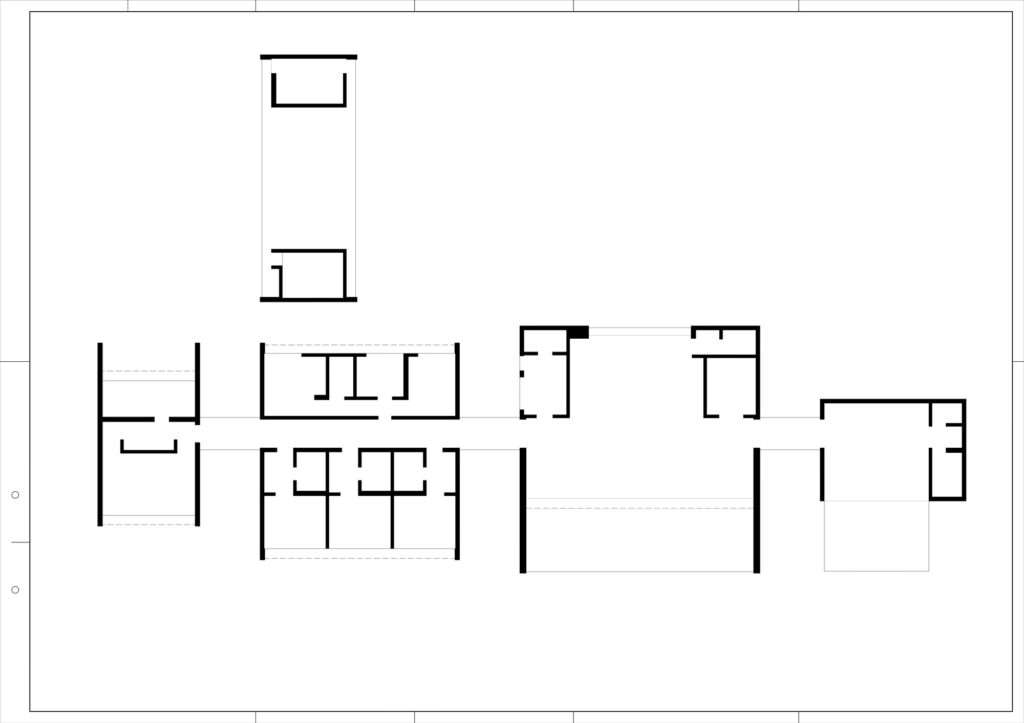
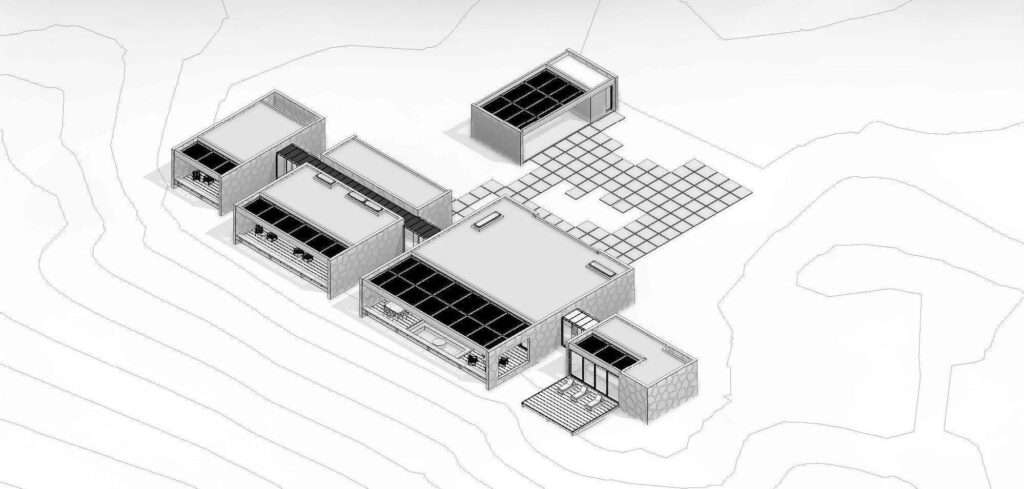
Infrastructure and Long-Term Sustainability
The project’s infrastructure is based on a set of systems aimed at strengthening long-term sustainability. These include energy generation through photovoltaic panels, water recycling, continuous waste management, and recycling mechanisms. This approach reflects a direct link between building operational performance, continuity, and reduced resource consumption. Many Cities are adopting similar sustainable infrastructure models worldwide.
The Site as a Driver of the Architectural Process
The project treats site conditions as active drivers in shaping architectural solutions rather than as external obstacles to the design process. Geographic, environmental, and logistical constraints are therefore transformed into factors that define the nature of technical and executional decisions.
Relationship Between Constraints and Design Solutions
This case illustrates how site-related constraints can become embedded within the project’s internal logic. Instead of relying on isolated solutions to address challenges, technical and environmental considerations were integrated into a unified framework that reflects a direct response to the site’s characteristics and conditions. Engage in professional Discussion about constraint-driven design on ArchUp’s platform.
✦ ArchUp Editorial Insight
The Casa Entre Peraus project begins not as a design decision but as a direct response to increased access costs generated by extremely steep inland terrain in Santa Catarina, where site accessibility becomes a financial factor that elevates operational and insurance risk levels. The primary driver is a supply model based on remote locations in which supply chains are fragmented, replacing conventional lifting methods with phased redistribution mechanisms and transport via four-wheel-drive vehicles and intermediate staging points. The absence of regulatory flexibility and the persistence of weather variability during concrete casting impose temporal pressure that transforms design into a fixed system of execution protocols. The architectural mass becomes a solution for reducing ground contact through structural elevation, minimizing earthworks, and simplifying load logic. Renewable energy systems and water recycling operate more as environmental compliance models than as design-driven gestures, resulting in a final outcome that reads as a negotiated equilibrium between logistical rigidity and economic pressure imposed by the site. Learn more about innovative solutions in the Archive of architectural case studies.