Casa Refugio: Enclosed Mass and Interior Openness

Mass and Envelope as a Tool for Privacy
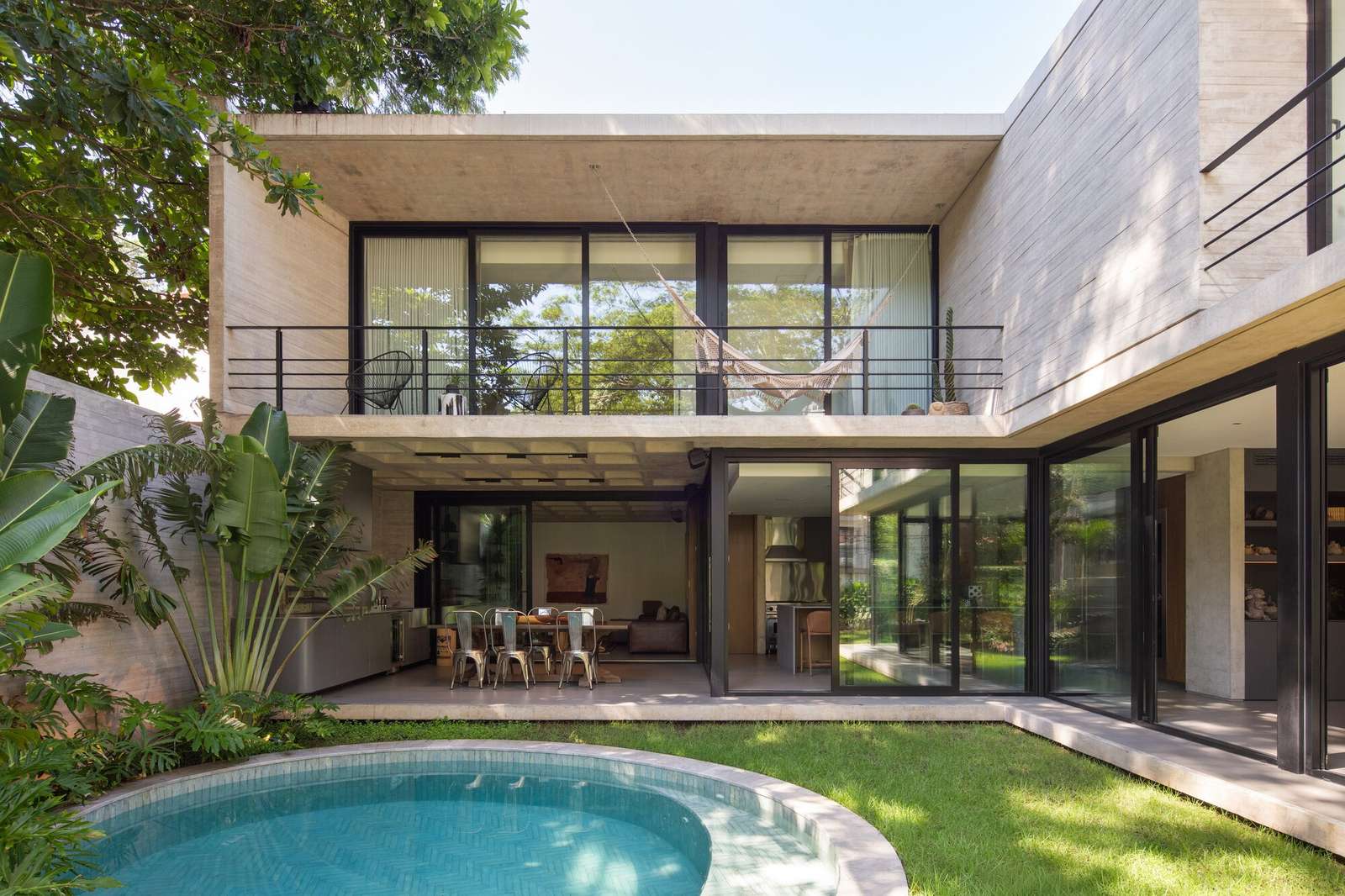
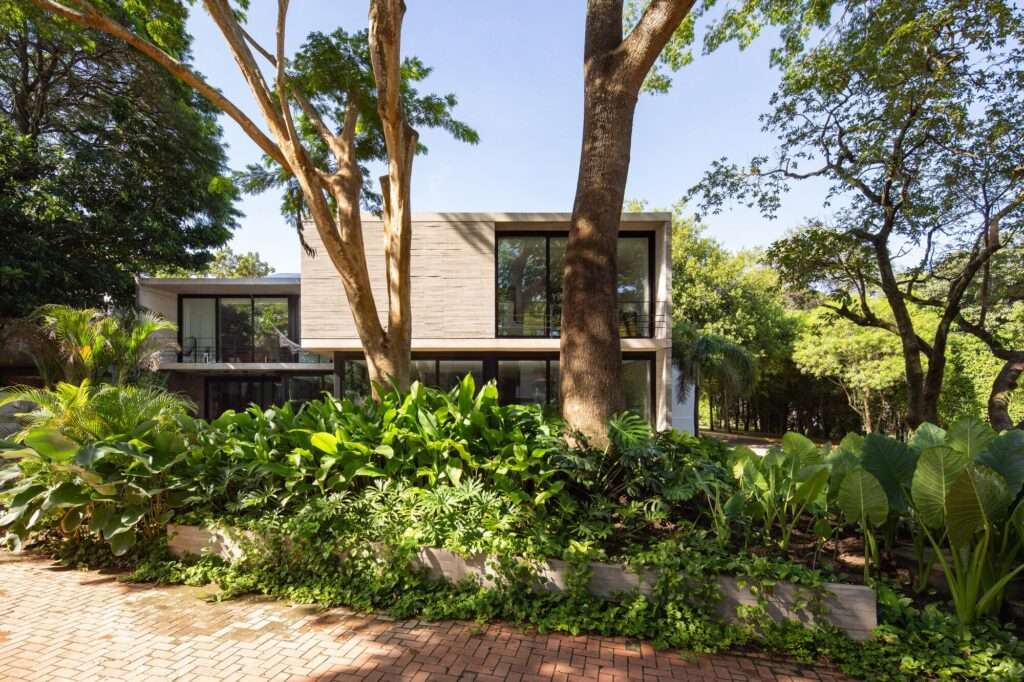
The project is presented from the street side as a compact and closed mass, where the front façade appears as a solid cube that enhances privacy and reinforces the building’s solid character. In contrast, a portion of this mass extends outward to define the main entrance, creating a clear indication of the entry path. This projection is also differentiated materially through the use of white walls, in contrast to the rest of the structure made of exposed concrete, highlighting the contrast between elements and revealing a clear Architecture volumetric hierarchy.
Site Organization and Interior Spatial Formation
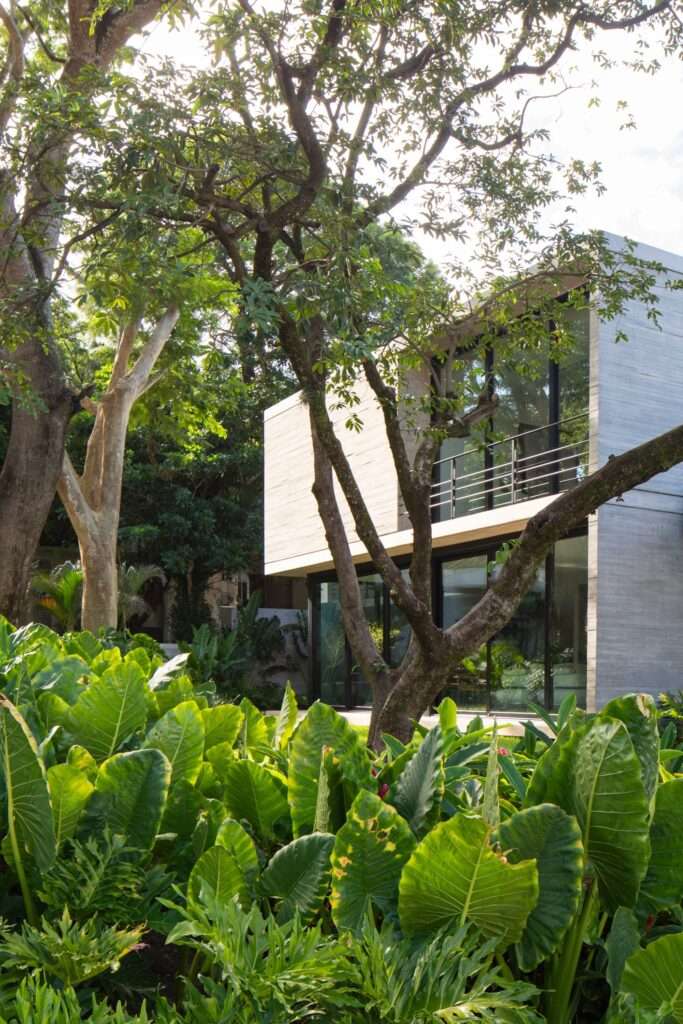
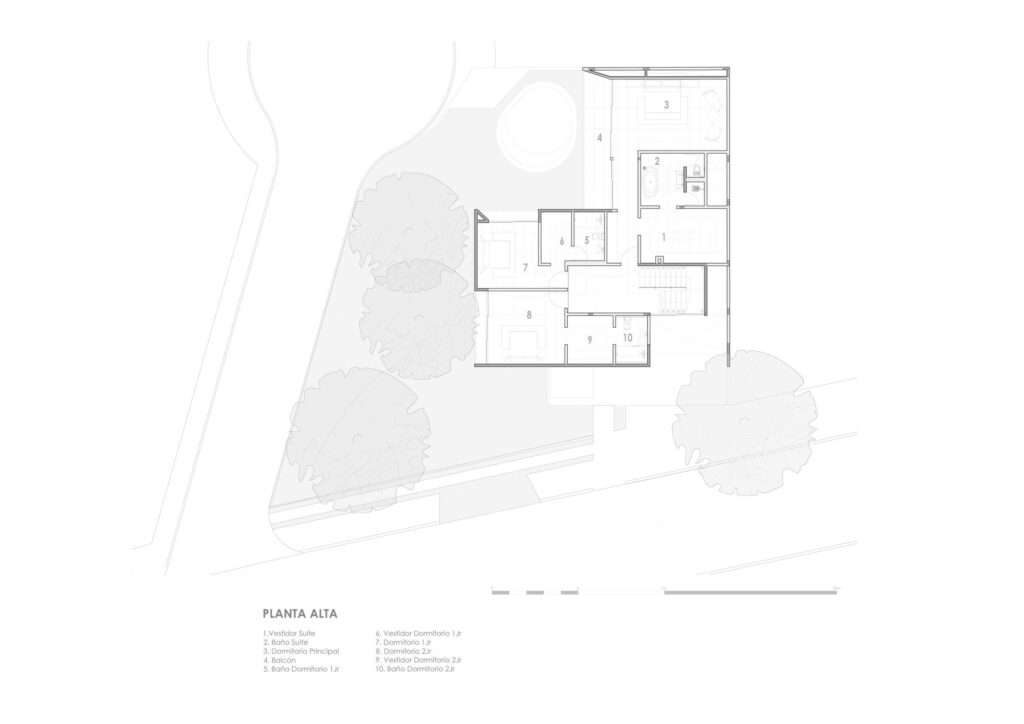
The project is located on a corner plot, which led to the adoption of an L-shaped plan based on shared boundary walls. As a result, the internal ground area is liberated and transformed into a large garden. This garden is not treated as a secondary void but becomes the organizing element of the project, especially with the presence of existing trees that strengthen its role within the overall composition.
| Item | Details |
|---|---|
| Architects | DB Estudio de Arquitectura |
| Area | 3843 ft² |
| Year | 2025 |
| Photographs | Paul Renaud |
| Manufacturers | Hansgrohe, Cortizo, Docol, Knauf, MARAZZI, Portobello, Total Conforto |
| Lead Architects | Daniela Bejarano, Gian Maximiliano Parada Mendez, María José Soliz Sahonero, Diego Vaca Rodas |
| Category | Houses |
| Plumbing | Dino E. Galean Mendoza |
| Electric | Fanor Escobar Eguez |
| Structure | Oscar Rivero Z |
| Air Conditioning | Confort |
| Carpentry | Cortizo |
| Locksmith | Alsevic |
| Flooring and Wall Coverings | Tumpar |
| City | Santa Cruz de la Sierra |
| Country | Bolivia |
Relationship Between Mass and Visual Openness
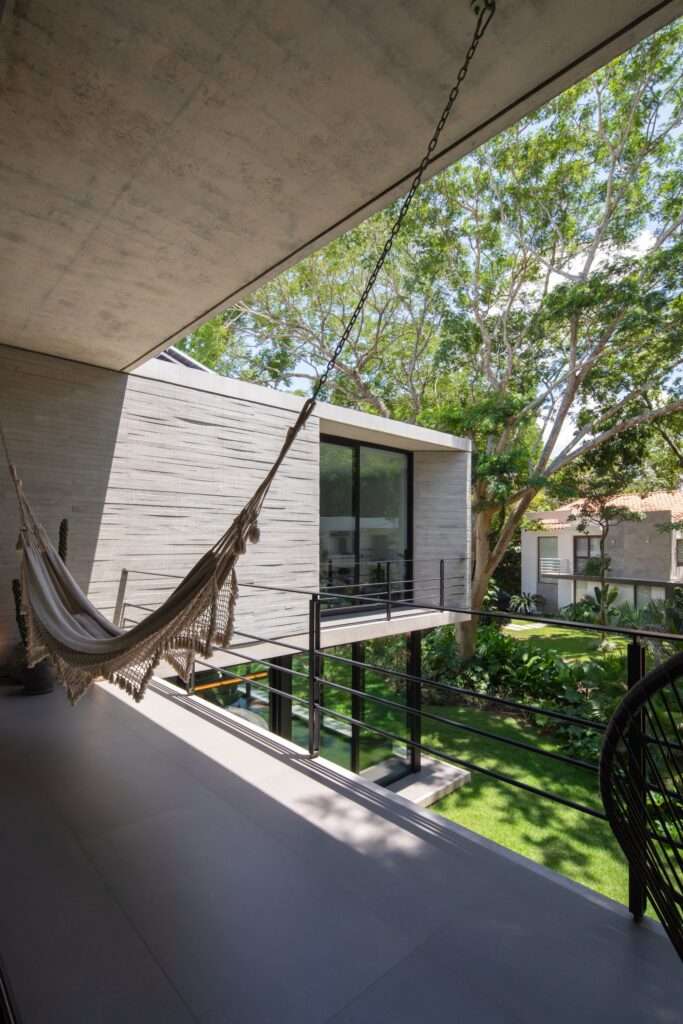
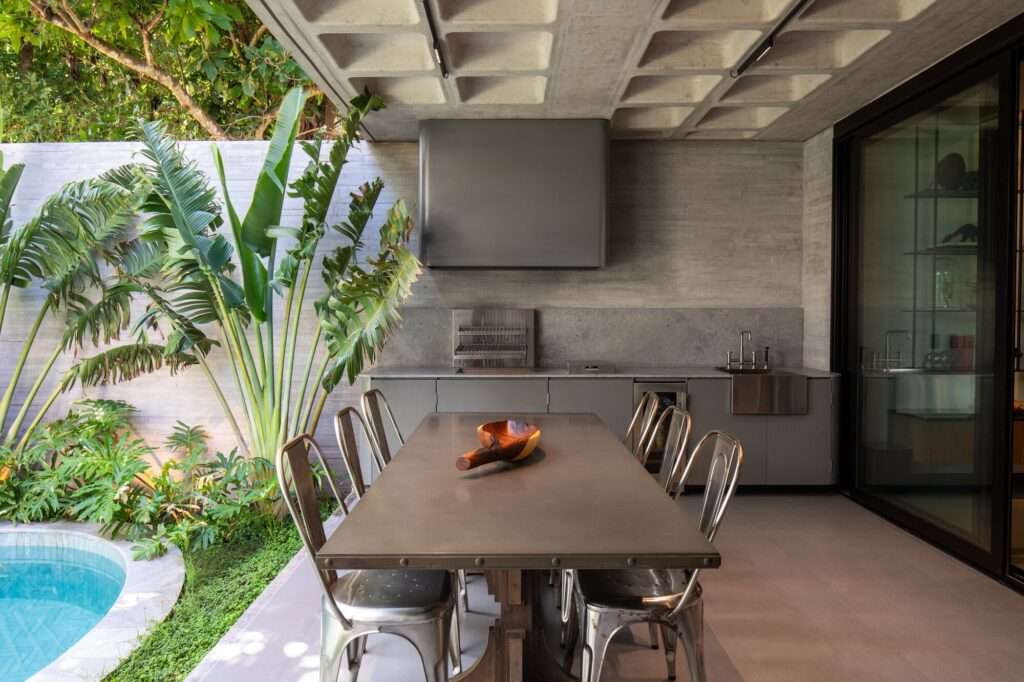
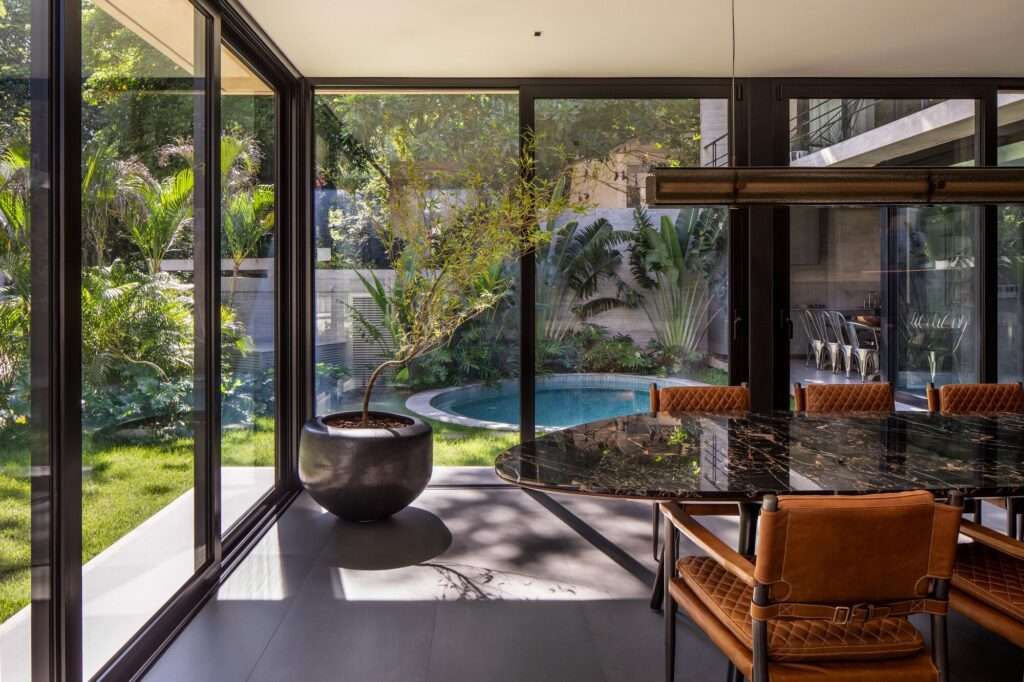
While the street-facing wall remains completely solid, the other façades open up through large glass surfaces. In this way, the project transitions from external closure to internal openness. This contrast enables a direct visual connection with the garden, strengthening the relationship between Interior Design and the natural surroundings.
Organization of Ground Floor Spaces
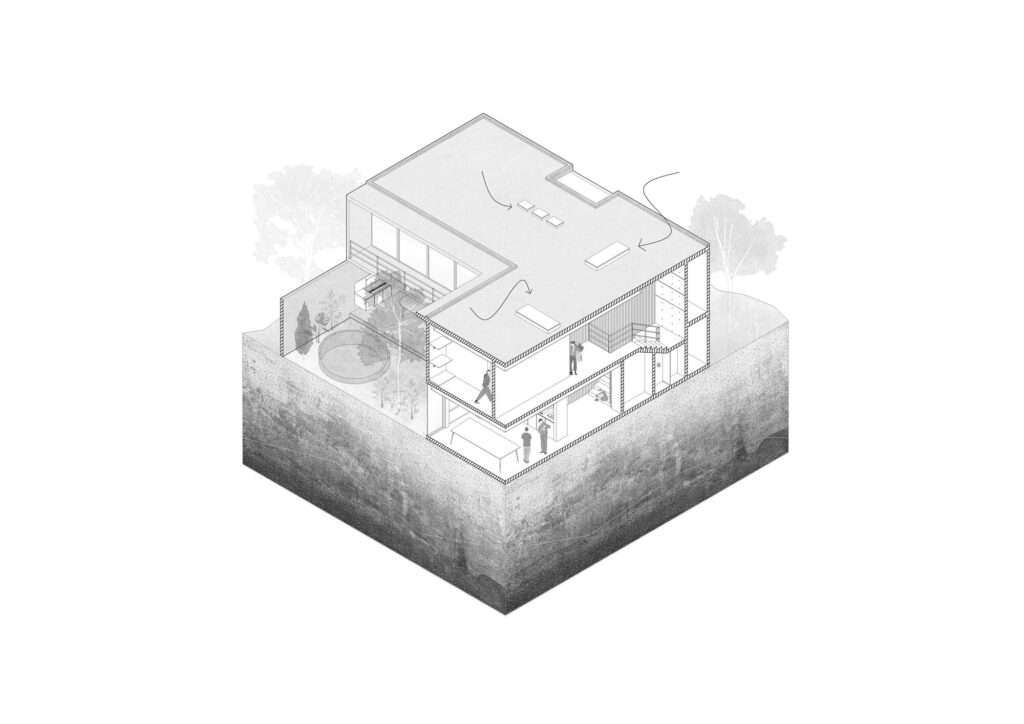
The ground floor functions are distributed within an open volume that combines social and service areas. This configuration relies on reducing traditional partitions and replacing them with custom-designed furniture elements that maintain visual permeability, allowing different uses to coexist without rigid separation. As a result, the sense of spatial expansion is reinforced, along with greater flexibility of movement and clear Design spatial continuity.
Privacy Distribution on the Upper Floor
In contrast, the upper floor contains the private areas, consisting of two junior suites and one master suite. All of these spaces are oriented toward the garden, providing direct views while enhancing privacy and benefiting from natural lighting. Through this arrangement, continuous visual contact with the natural surroundings is maintained without compromising the insulating function of private spaces.
Environmental Strategies and Spatial Continuity
The Design integrates sustainability considerations through the use of photovoltaic panels on the roof to improve energy efficiency, in addition to skylights that direct natural light into the interior spaces. In this context, fluidity emerges as an organizing principle, both spatially and visually, where the architectural treatment is based on spatial continuity and a balanced interaction between the mass and the surrounding environment. The use of advanced Building Materials and systems enhances the overall performance.
✦ ArchUp Editorial Insight
Casa Refugio can be read as a spatial outcome generated by the constraints of a corner plot subdivision, privacy requirements, and the pressures of land-use efficiency within a semi-urban residential context. The primary driver lies in optimizing the use of an L-shaped plot under regulatory conditions that impose façade setbacks and reinforce visual enclosure along street boundaries. Points of friction emerge in the cost differences between exposed concrete, glass systems, and more complex Construction detailing, in addition to energy efficiency requirements that encourage the integration of photovoltaic panels and controlled natural lighting. This results in a solid façade that operates as an urban compliance envelope, while the program is reorganized around an internal garden void that functions as an environmental balancing element and a determinant of property value. On the upper floor, the occupancy units are oriented toward this void, with a reduction of fixed partitions in favor of functional furniture, reflecting a decrease in fixed Construction costs and a direct response to both market logic and regulatory frameworks. For further reference, explore related Projects and the latest Architectural News.