Centre Pompidou Hanwha Transforms Seoul Tower Into Museum of Light

The Centre Pompidou opens its Seoul outpost in June 2026, converting a former aquarium into a contemporary museum. The project occupies four levels within the landmark 63 Building in Yeouido’s financial district. This marks the institution’s first major expansion into East Asia during its Paris renovation closure.
Adaptive Reuse Creates Urban Lantern
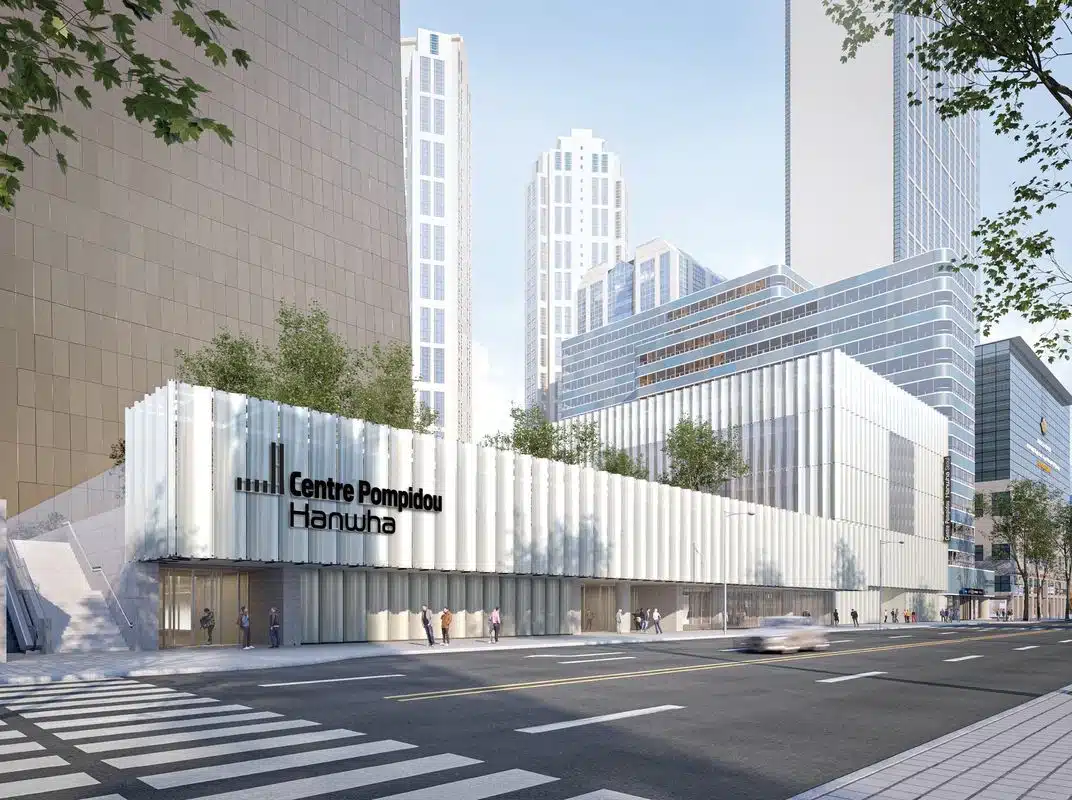
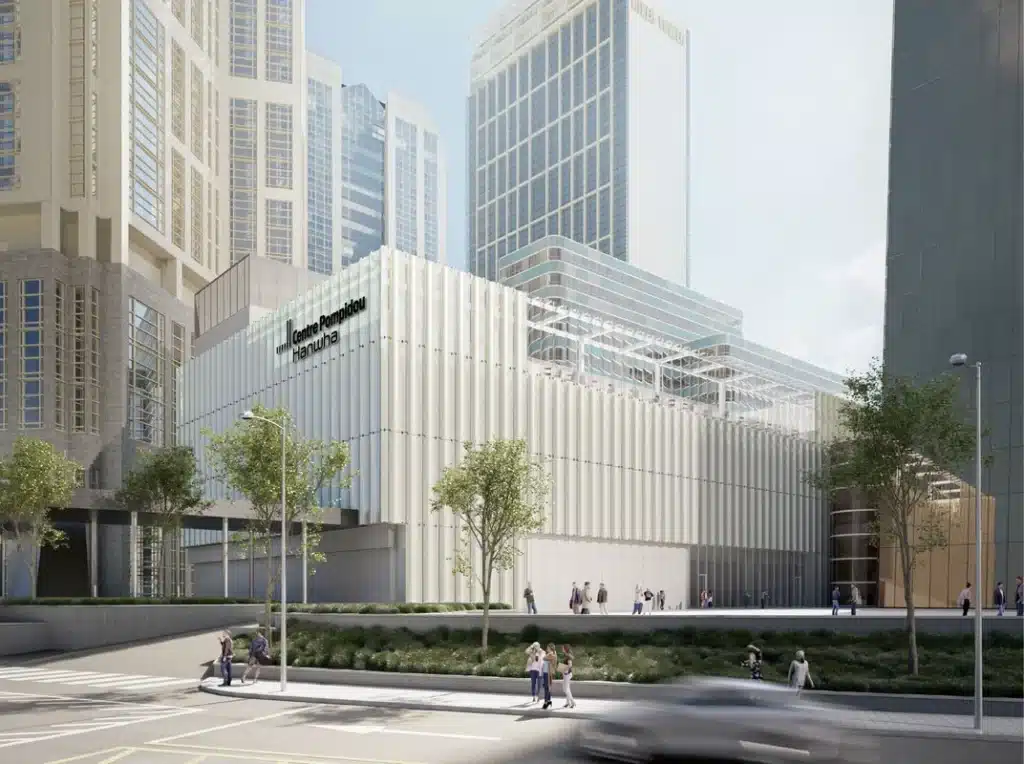
The design transforms over 10,000 square meters of interior space previously used as an aquatic facility. Moreover, the intervention introduces a translucent envelope that fundamentally changes the building’s relationship with light. The architecture employs daylight penetration to activate exhibition spaces throughout the day while projecting illumination outward after dark.
A 150-meter-long glazed façade establishes visual connection with the Han River and surrounding cities. Therefore, the museum functions as both cultural destination and civic threshold within Seoul’s dense metropolitan fabric. The horizontal expression contrasts sharply with the vertical dominance of the 63 Building tower. Furthermore, a ground-level sculpture garden reworks the public interface between the institution and its urban planning context.
Flexible Gallery Spaces Support Dual Programming
The museum organizes approximately 1,500 square meters across two principal gallery spaces. However, additional exhibition areas and educational facilities support varied programming scales. The spatial layout prioritizes flexibility for exhibitions drawn from the Paris collection alongside presentations of contemporary Korean art.

Circulation and gallery sequencing accommodate parallel narratives within the interior design framework. Meanwhile, façade details subtly reference traditional Korean roof forms through building materials selection. This programmatic structure reflects a four-year partnership between the Centre Pompidou and Hanwha Foundation of Culture.
Museum Typology Redefined Through Light and Connectivity
The Seoul outpost emerges as part of a distributed museum model during the Paris institution’s closure from 2025 to 2030. Consequently, the project reframes museum typology through adaptive reuse rather than new construction. The design mediates between Pompidou’s cultural ethos and local architectural references.
The opening exhibition, The Cubists: Inventing Modern Vision, will activate the transformed spaces. Therefore, this news signals significant institutional expansion for global buildings serving cultural programming in Asia.
A Quick Architectural Snapshot
Centre Pompidou Hanwha converts a 10,000-square-meter aquarium into a light-filled museum across four levels. The 150-meter glazed façade creates urban connection while flexible galleries support dual curatorial programming. The project opens June 2026 within Seoul’s 63 Building tower in Yeouido.
✦ ArchUp Editorial Insight
The Centre Pompidou Hanwha reveals institutional survival strategy during extended closure periods. Major museums now face a critical choice: remain dormant or distribute their collections globally. The Paris renovation from 2025 to 2030 creates five years of potential irrelevance. Therefore, satellite locations maintain brand visibility and generate revenue streams.
The selection of an existing structure rather than new construction reflects current economic realities. Adaptive reuse reduces costs and accelerates timelines significantly. Meanwhile, partnership with Hanwha Foundation transfers financial risk while providing local expertise and connections.
South Korea emerges as strategic territory for Western cultural institutions seeking Asian expansion. The country offers stable economy, established art market, and minimal regulatory barriers. Seoul’s position as cultural hub strengthens institutional legitimacy across the region.
This project is the logical outcome of renovation necessity plus financial pragmatism plus Asian market opportunity.