Chinese Embassy London: Diplomatic Compound at Royal Mint Court 2026

Chinese Embassy in London controversy centers on a new diplomatic compound at Royal Mint Court. The site lies next to the Tower of London in a dense historic district. Public debate focuses on security and geopolitics. Yet architectural analysis raises deeper questions about scale, function, and urban integration.

Site: Historic Value and Urban Pressure
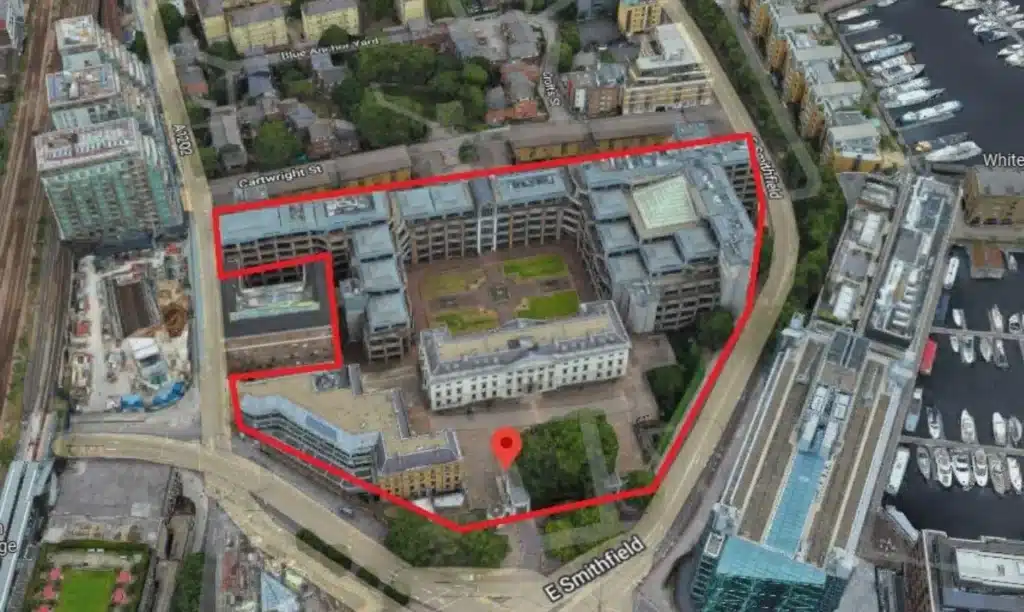
Royal Mint Court holds historic significance. It also sits near critical infrastructure and major tourist routes. Any new building here must respect strict limits on height, massing, and sightlines. Placing a large embassy in this context forces tough design choices. Architectural design must integrate without dominating or isolating.
Scale and Functional Program
The project covers roughly 20,000 square meters. This far exceeds a standard embassy’s footprint. It includes offices, formal reception halls, cultural spaces, and advanced support systems. Such scope shifts the building type from civic symbol to closed institutional campus. This change reshapes its relationship with public space through cities planning logic.

Architectural Organization and Massing
The design uses simple volumes and minimalist façades. It avoids overt symbolism but aligns with the urban grain. The real complexity lies inside. Designers strictly separate public and secure zones. They embed layered access controls a norm in diplomatic architecture, yet amplified here by scale.
Basement Levels and Infrastructure
The project includes deep underground levels. These house mechanical systems, communications hubs, and service logistics. Their proximity to vital fiber optic cables adds sensitivity. The foundation now interacts with sovereign digital infrastructure. Modern construction methods make this possible.
Diplomatic Architecture as Instrument of Control
Global practice shows embassies evolving into operational platforms. Symbolism gives way to efficiency, continuity, and control. This shift defines the Chinese Embassy in London controversy. It also explains why the Chinese Embassy in London draws scrutiny beyond politics. The Chinese Embassy in London acts as spatial infrastructure not just a diplomatic facade.
Architectural Snapshot
Chinese Embassy in London controversy reveals how diplomatic buildings now operate as nodes of urban and geopolitical control.
✦ ArchUp Editorial Insight
The Chinese Embassy in London controversy arises from institutional patterns rather than design intent. Long approvals, heightened diplomatic risk, and security driven procurement favor containment over openness. Financial logic prioritizes a single fortified compound, while geopolitical uncertainty demands operational autonomy. These pressures intersect with urban regulations that allow redevelopment but enforce historic compliance.
The resulting architecture is the logical outcome of layered controls: zoning adherence with internal segregation, public-facing neutrality with inward facing infrastructure. Deep basements conceal complex technical systems within constrained sites. Repetition of similar embassy typologies worldwide reflects standardized responses to shared concerns about sovereignty, surveillance, and continuity. The building acts as spatial infrastructure shaped by risk management, not as a civic symbol.