Circular Workplace Integrates Natural Material Showroom in Odense

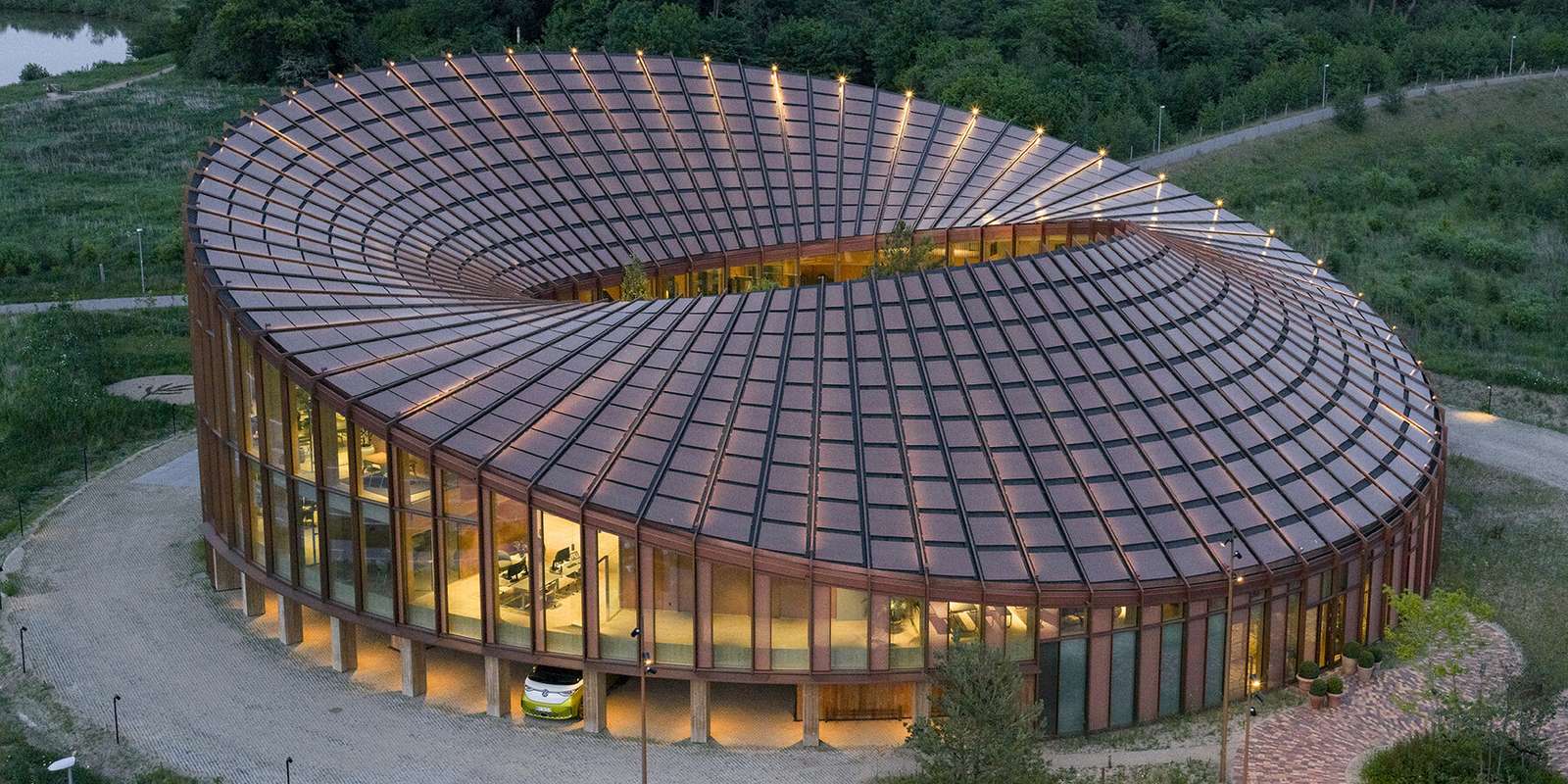
A new 2,800-square-meter headquarters in Odense, Denmark, functions as both a workplace and a full-scale catalog of natural building materials. The circular structure encloses a central courtyard to bring daylight and greenery into the heart of the daily office routine. This approach turns the physical architecture into a living demonstration of the products the company supplies.
The project sits on a site positioned between a busy industrial zone and the quiet wetlands of Glisholm Lake. To address these contrasting surroundings, the team designed a looping form that creates a sheltered internal environment. The design replaces traditional showroom displays with inhabited architectural elements. Employees and visitors walk across clay floors, sit beneath ceilings made from recycled paper fibers, and work within a mass timber frame — a structural system using large, solid wood panels and beams for strength and fire resistance.
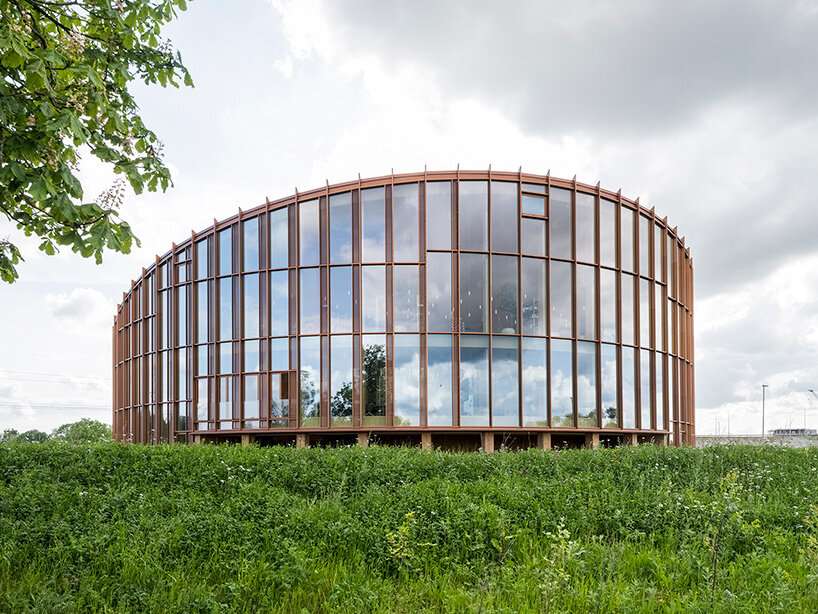
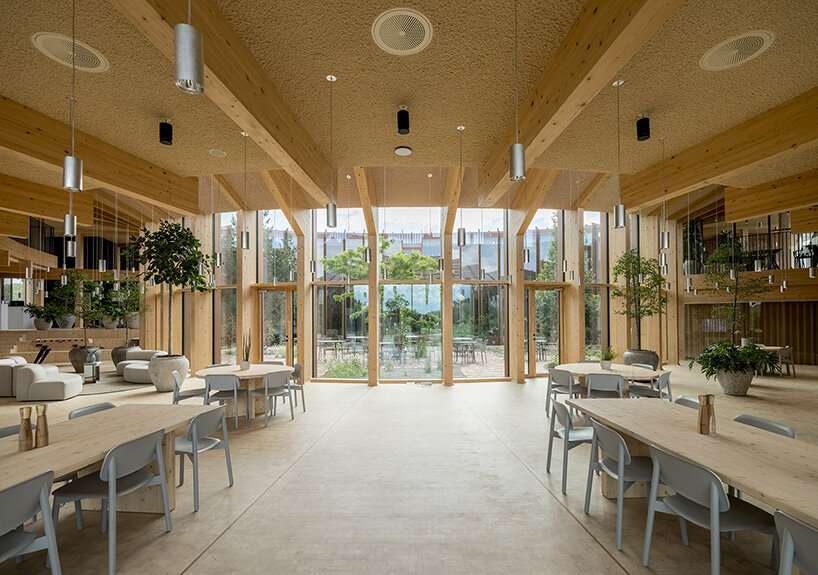
Mass timber columns and generous glazing define the interior workspaces, maintaining a constant visual link to the outdoors. The team integrated cork and eelgrass into the finishes, allowing users to experience the textures and acoustic properties of these sustainable materials at a professional scale. This strategy shifts the concept of a material library from a collection of small samples to a series of functional, immersive spaces.
Environmental Performance and Geometric Logic
The undulating roof serves several technical functions beyond its visual profile. The structure rises toward the north to capture views of the woodland and drops toward the south to minimize heat gain from the sun. This sloping surface provides an optimized platform for 880 custom-shaped photovoltaic panels. These solar cells generate renewable energy directly on-site, integrating power production into the construction logic of the building envelope.
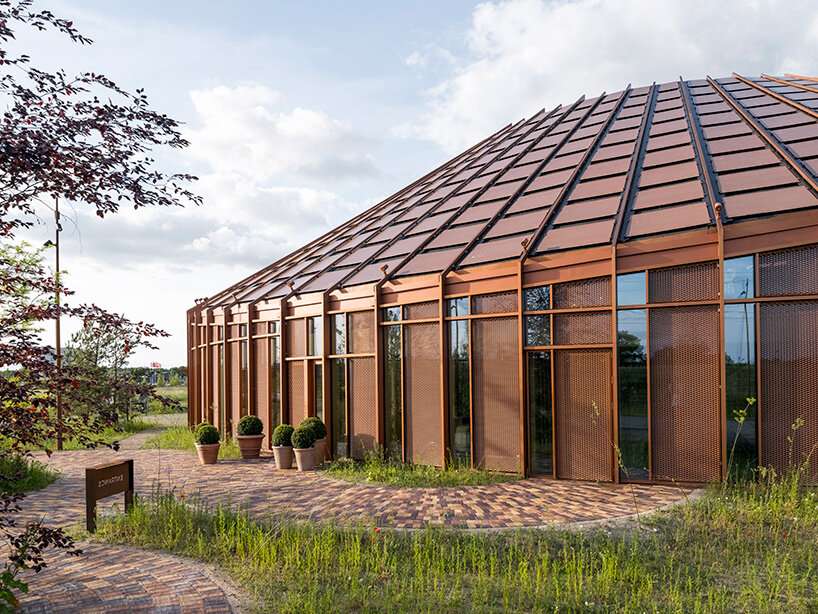
Along the facade, a gridded system of timber and glass regulates the internal climate. Vertical fins become more frequent on the southern side to block intense sunlight while remaining open on the north to maximize natural light. Outside, the landscape design includes planted basins and open channels. These features manage rainwater runoff, slowing the flow into the local ecosystem as part of a broader sustainability strategy.
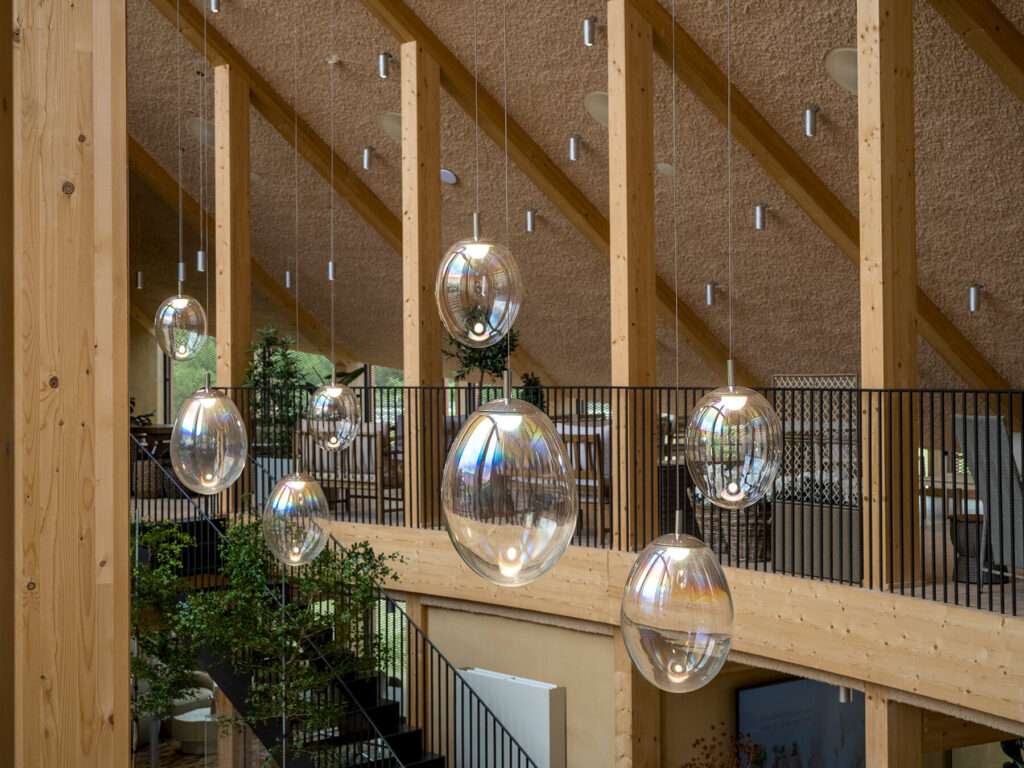
The interior focuses on the central courtyard, which acts as the social heart of the building. Brick paving extends from the indoor lobby into the outdoor space, blurring the boundary between the two. Stepped seating and native plantings transform the courtyard into an informal amphitheater. This shared landscape provides a quiet retreat from the surrounding industrial activity while encouraging interaction between different departments.
Spatial Sequence and Material Hierarchy
The architectural strategy relies on a clear geometric loop to organize complex programmatic needs. By choosing a circular plan, the design eliminates dead-end corridors and creates a continuous flow of movement. The structural clarity of the mass timber frame provides a rhythmic backdrop that organizes the various material “samples” from eelgrass to recycled paper into a coherent spatial sequence. The project successfully balances the functional requirements of a high-performance office with the tactile needs of a showroom. It uses the building’s section, specifically the varying roof height, to negotiate the transition between public-facing entrance areas and private focused work zones without relying on heavy internal partitions.
✦ ArchUp Editorial Insight
The project represents a sophisticated fusion of corporate identity and architecture by transforming the structural envelope into a living product catalog. This approach moves beyond the superficial application of finishes, instead using mass timber and recycled fibers to define the very atmosphere of the workspace. By centering the program around a biophilic courtyard, the design successfully mitigates its industrial context through internal focus. However, the circular typology carries inherent risks regarding future flexibility. The highly specific, custom-shaped photovoltaic roof and the rigid looping geometry prioritize a singular aesthetic vision over long-term adaptability. While the building excels as a bespoke showroom, its circular footprint and specialized components might restrict the ability to expand or reconfigure the building if the manufacturer’s operational needs evolve in the coming decades.
Project Team: Bjarke Ingels Group (BIG), BIG Landscape, BIG Sustainability, CJ Group, OBH Gruppen, Henry Jensen, ZERO Engineering. Location: Odense, Denmark.
Project Notes: Completed headquarters for Dymak. The 2,800-square-meter facility holds DGNB Gold, Heart, and Diamond certifications for environmental and architectural quality.