
Color Pit: Rethinking Playgrounds Through Color and Ground


Spatial Intervention in a Post-Disaster Context
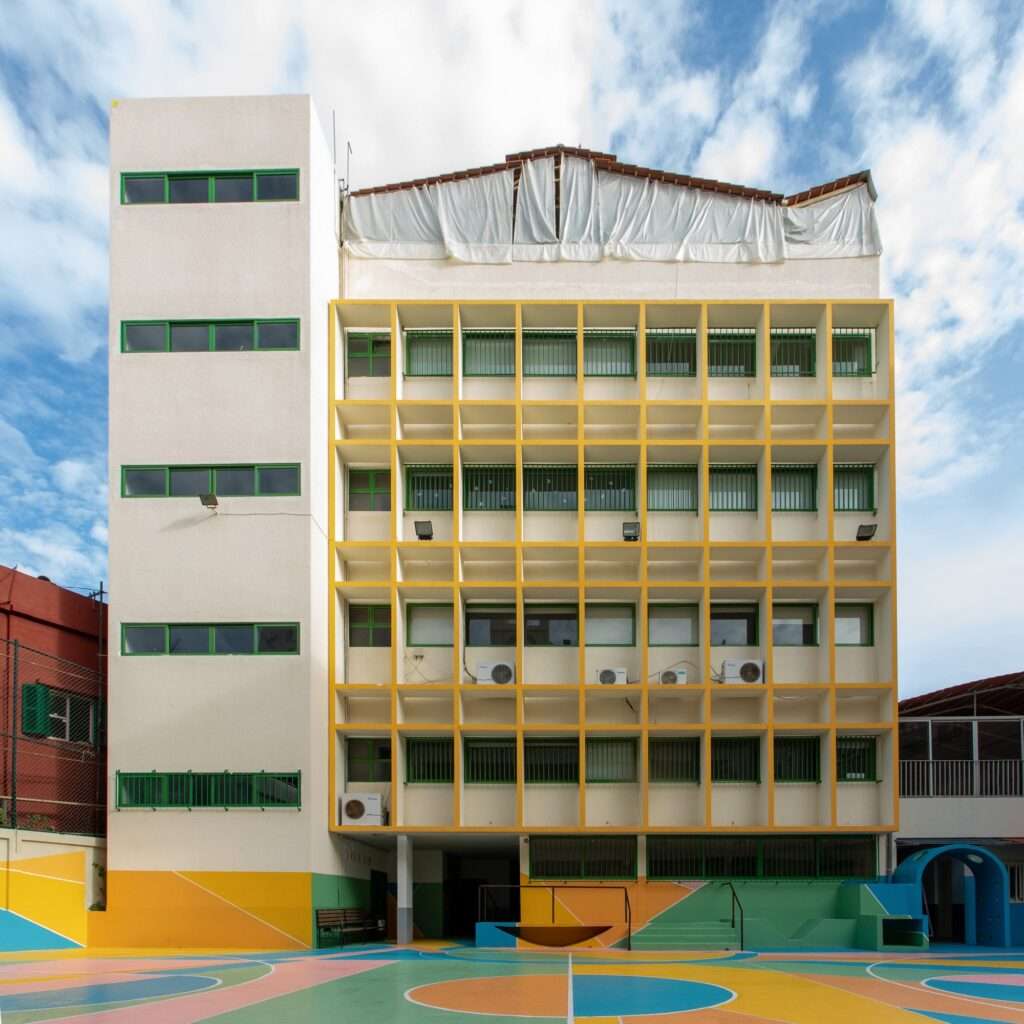
The Color Pit project is a localized ground-based intervention implemented within a school playground in Beirut following the 2020 explosion. In this context, the focus was on rethinking everyday Architecture conditions within a damaged urban environment, where the aim was not to create a new element but rather to rework an existing space under exceptional circumstances.
Redefining the Play Space
The project is grounded in an approach that frames play as both a social and therapeutic act. Accordingly, the playground was treated as a space often marginalized in reconstruction processes, despite being an essential part of children’s daily lives and directly linked to gradual recovery. Design interventions in such contexts require a deep understanding of local needs.
The Social Context of Recovery
While post-disaster efforts typically concentrate on infrastructure and shelter, the project highlights the importance of spaces that are not classified as traditional urban priorities. From this perspective, the playground becomes a domain through which psychological and social stability can be supported via movement, imagination, and everyday interaction. Similar approaches can be seen in various Cities facing rapid urbanization and trauma.
Reinterpreting the Ground as a Visual Plane
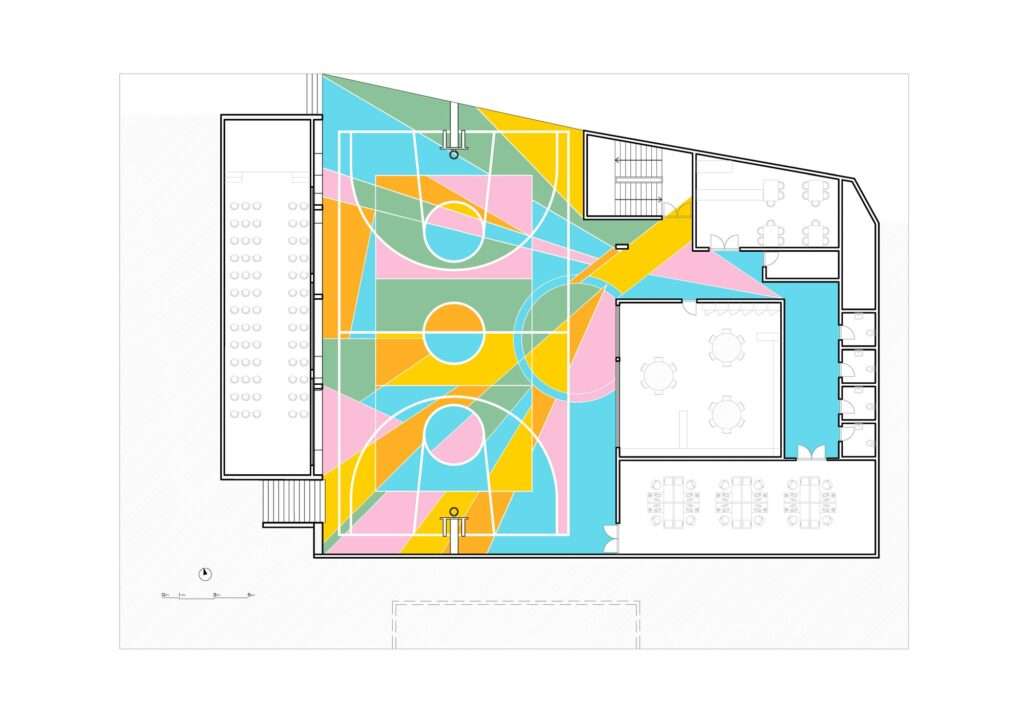
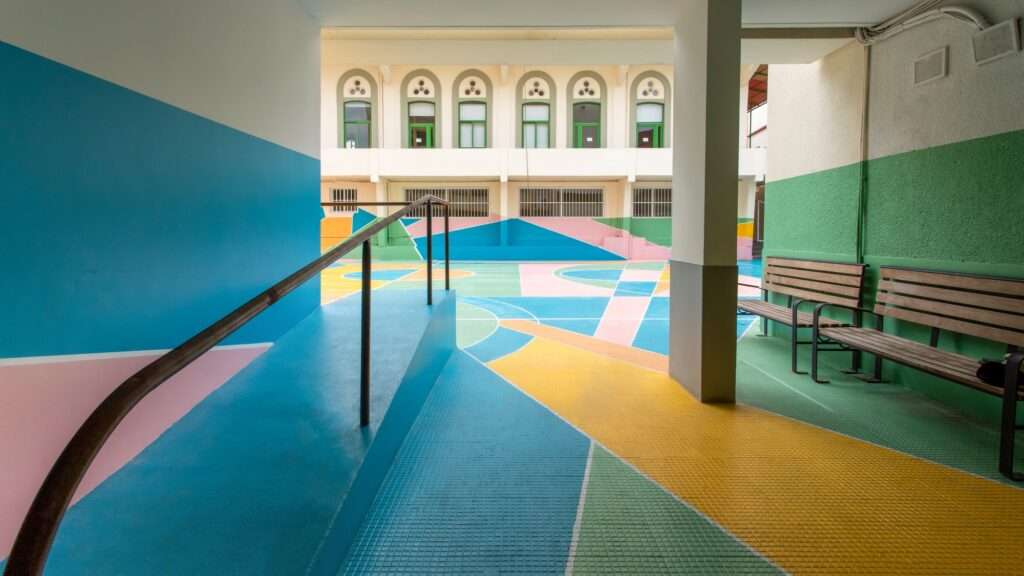
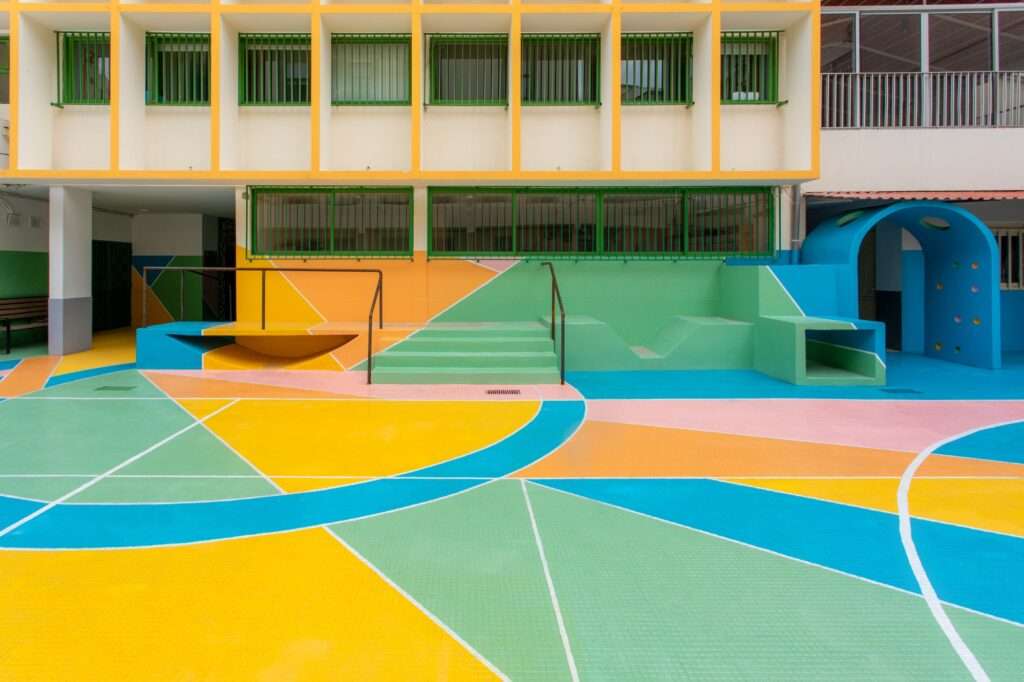
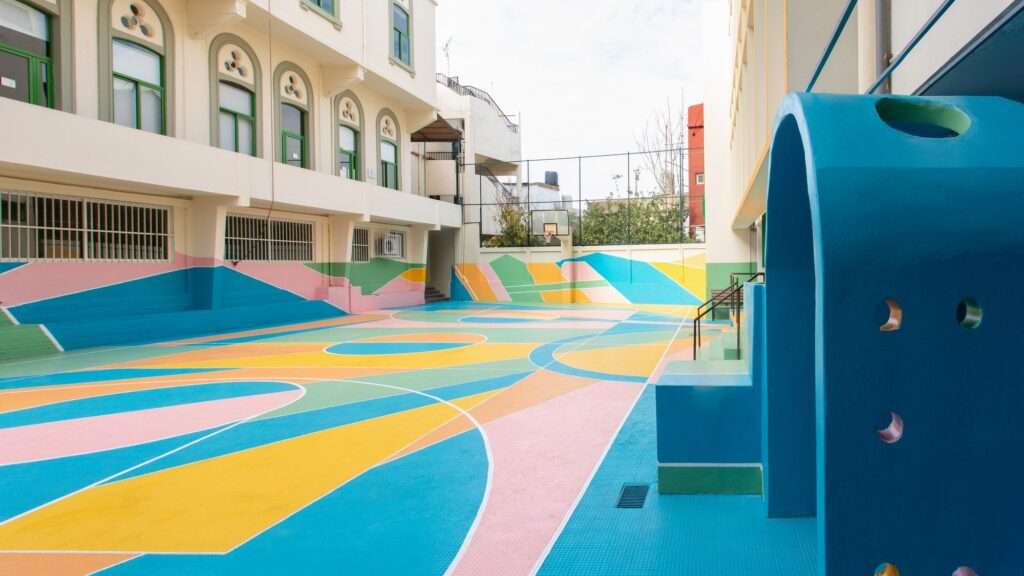
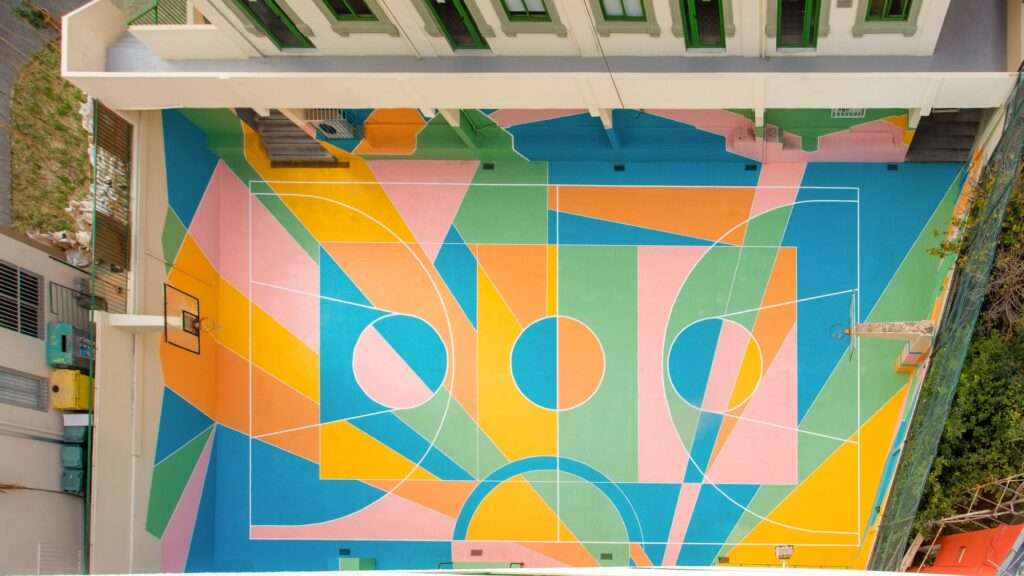
Color Pit reinterprets the notion of a “sunken pool” by altering the perception of the ground surface using paint alone. Chromatic gradients and fluid forms generate a sense of depth and topography without structural interventions or excavation, defining the play space through visual perception rather than physical boundaries. This technique draws from innovative Construction methods that prioritize surface treatments over heavy structural changes.
Play as an Open System of Interaction
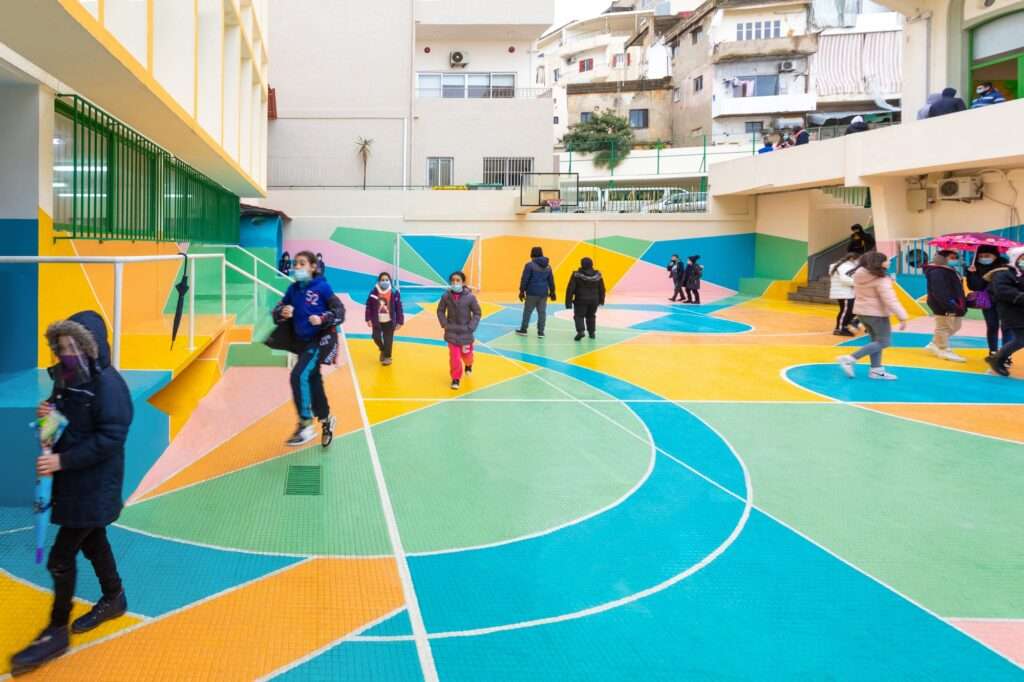
Rather than imposing fixed rules, the painted surface operates as a system of visual cues that guides interaction without determining it. This enables multiple modes of use such as jumping, tracing, gathering, or inventing individual and collective play patterns, transforming the site into a flexible framework for continuous experimentation. Many Projects in post-disaster settings have successfully used similar low-cost, high-impact strategies.
Restoring the Role of the Schoolyard in the City
In dense urban contexts where playgrounds are often reduced to neutral concrete surfaces, the project redefines these spaces as environments with latent social potential. Through this shift, play becomes a practice linked to interaction and psychological adaptability, where color and movement act as mediating tools to reactivate the relationship between users and place. The choice of Building Materials here is intentionally minimal, relying mainly on paint and existing ground conditions.
✦ ArchUp Editorial Insight
The Color Pit project emerges in post-explosion Beirut within a broader context of reconstruction capital being redirected toward securing housing and essential infrastructure, while school outdoor spaces are classified as low-priority urban assets within funding models driven by donor agencies and rapid delivery metrics. The primary driver is a financing environment that favors low-cost, reversible interventions over long-term investments. Regulatory and implementation constraints include liability risks within school environments, slow procurement procedures, and unstable land restitution decisions, all of which push toward low-complexity surface-level solutions. Within this framework, the ground plane is transformed into a low-cost behavioral interface through visual encoding with paint, bypassing the complexities of excavation and maintenance. The result is not design in the conventional sense, but rather a settlement between resource austerity and institutional demands for a framework of social recovery, where play is redefined as measurable patterns of occupation within the public realm. For further reading on similar approaches, consult the Research available on spatial adaptation in crisis zones, and stay updated via Architectural News on emerging post-disaster strategies. Additionally, the project’s documentation can be found in the Archive of low-cost urban interventions. The team behind Color Pit also shared insights at various Events focused on participatory design and child-centered recovery.




Warning: You forgot to add the main image. @design-lens
solved. thanks for Warning.