Prairie Ark: Topography, Form, and Programmatic Flexibility

Context and Architectural Challenges
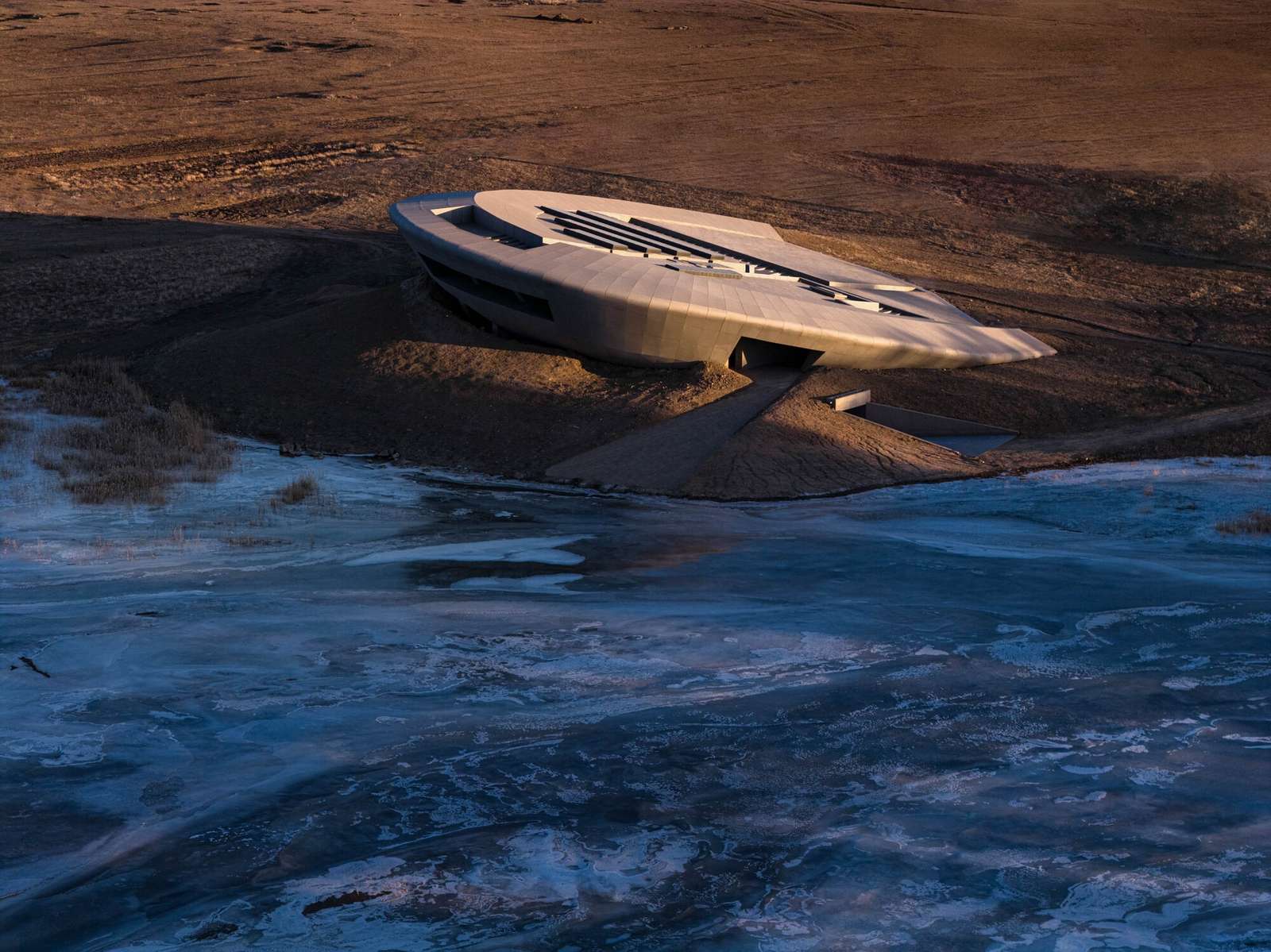
The grasslands of the Ulanqab Plains belong to a traditional nomadic cultural environment, with an almost complete absence of an original built infrastructure. The Architecture challenge operates on three levels: avoiding the transformation of the project into a symbolic representation of culture, preventing the introduction of an alien urban architectural language, and at the same time addressing a flat terrain that requires Buildings to be visually legible from a long distance without losing their direct relationship with the site.
Formal Strategy and the Generation of Contrast
The proposal by BUZZ Architects, as a case study, is based on a dual composition structured around opposing logics: a horizontal mass integrated into the ground and a vertical suspended one. Through this contrast, the site is framed rather than reduced to a single reading, with both forms working together to produce a visual and functional relationship with the surrounding landscape. For more innovative Design strategies, this approach serves as a key reference.
Integration of the Building with Topography and Movement
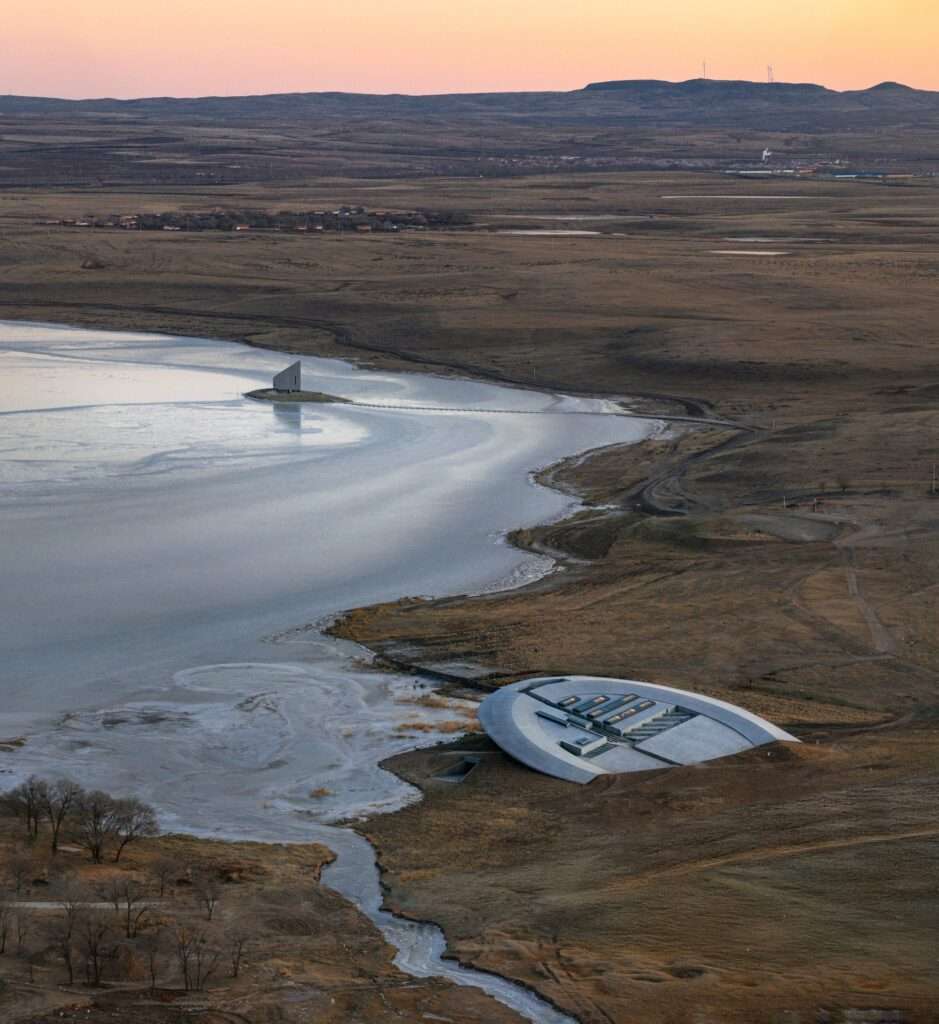
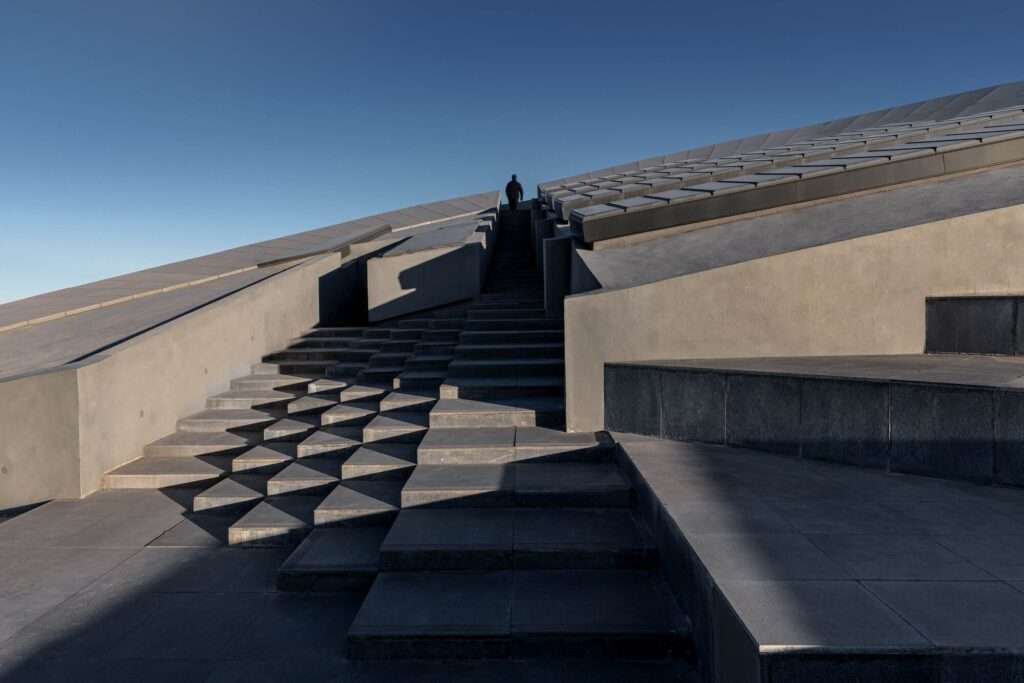
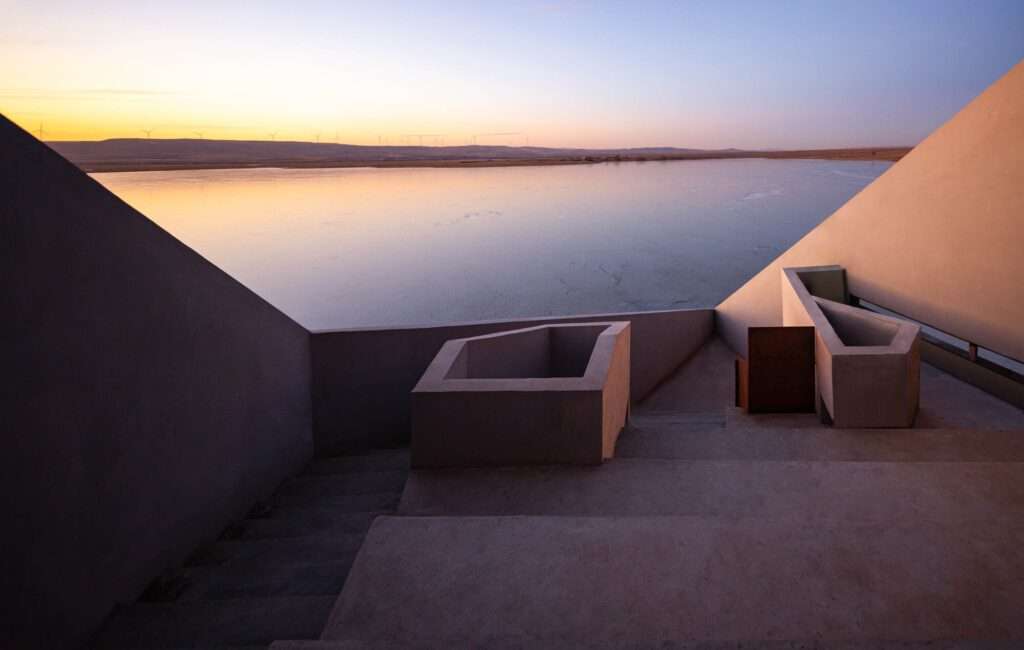
The “Prairie Ark” Projects approach takes the form of a disc embedded within the terrain, with a sloping section that follows the natural gradient rather than cutting through it. The stepped roof extends to align with site levels and continues the natural line of the ground, reducing the separation between building and environment. The design also abandons ceremonial central entrances in favor of multiple access points at different levels, connected by earth ramps that integrate pedestrian movement directly with the site’s topography.

Interior Space as a Flexible Container
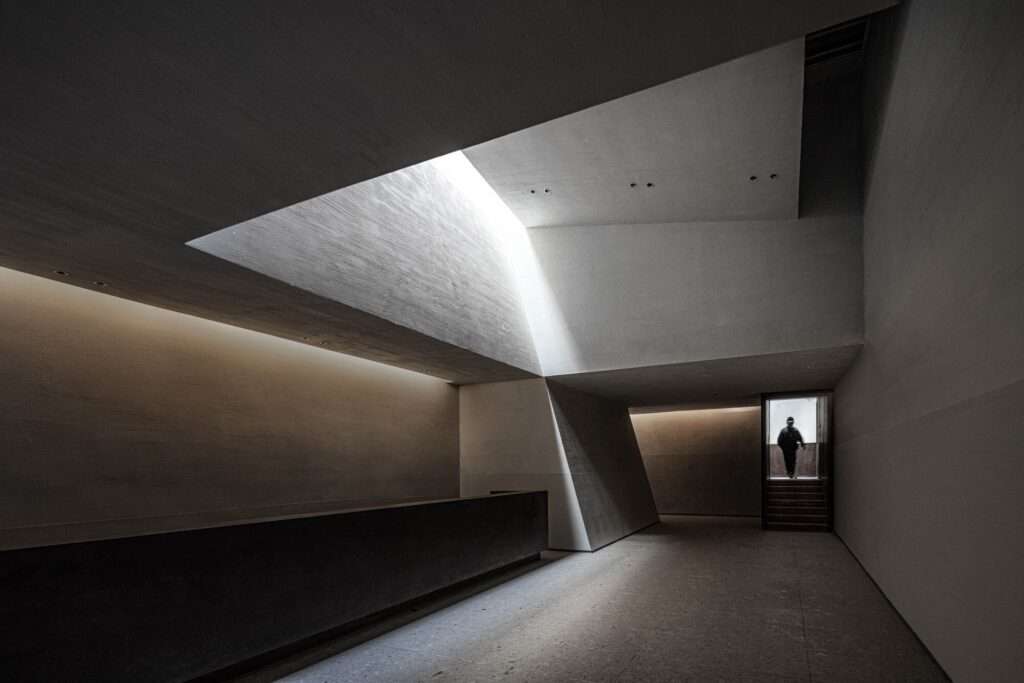
The interior is designed as a single open volume without fixed partitions, allowing the redefinition of uses within the space according to need. This organization transforms the building into an adaptable container, where activities shift without permanent structural interventions. Contemporary Interior Design often embraces such flexibility to enhance user experience.
Light and Functional Program
The design relies on a grid of roof openings that allow natural light to enter from above, with its quality changing throughout the day to become a formative element of spatial experience. At the same time, the functional program remains open and flexible, accommodating art exhibitions, cultural gatherings, performance events, and community activities, making use dependent on time and context rather than fixed allocation. Upcoming Events at similar cultural venues highlight this trend.
The Lighthouse and Structural System
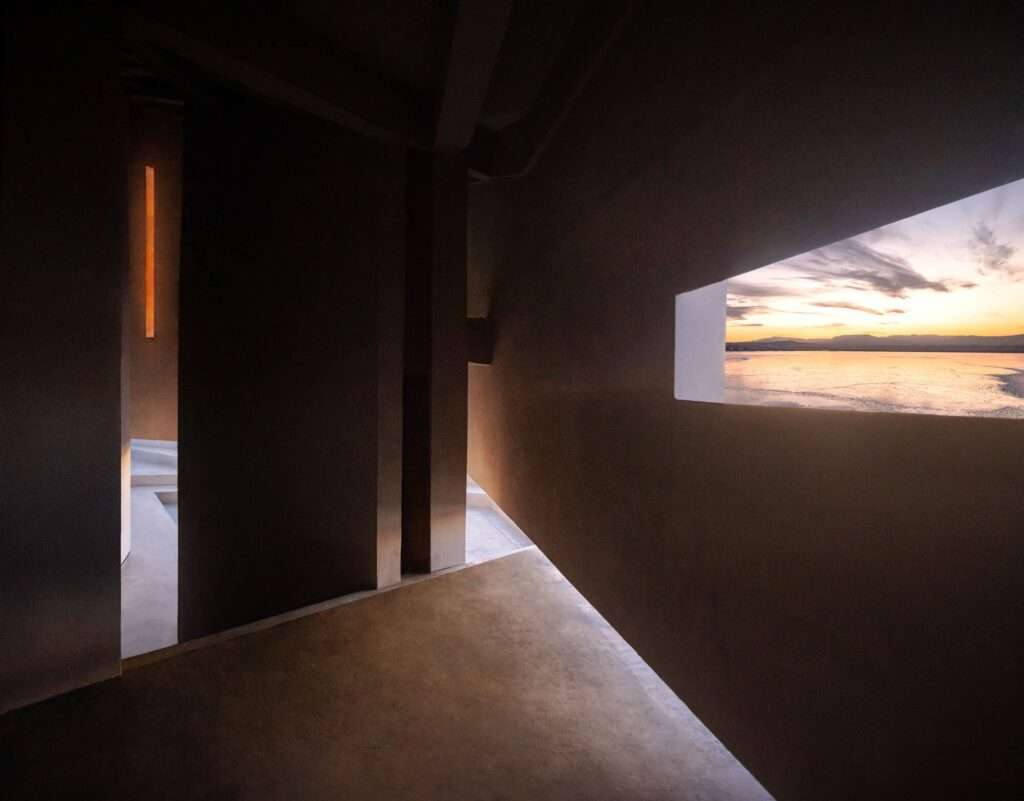
The “Nomad Lighthouse” tower is located on a small island on the eastern shore of Lake Laoli, positioned at its highest point. The tower breaks the horizontal continuity of the plains through a vertical form inspired by historical signal towers that rely on long-distance visibility. Its structure consists of three chimney-like cores that serve both structural and operational functions, including structural support, smoke extraction, and heat distribution, making stability linked to fire as part of the logic of formation. Detailed Building Materials and structural insights are critical for such innovative systems.

Formal Paradox and the Relationship Between Mass and Site
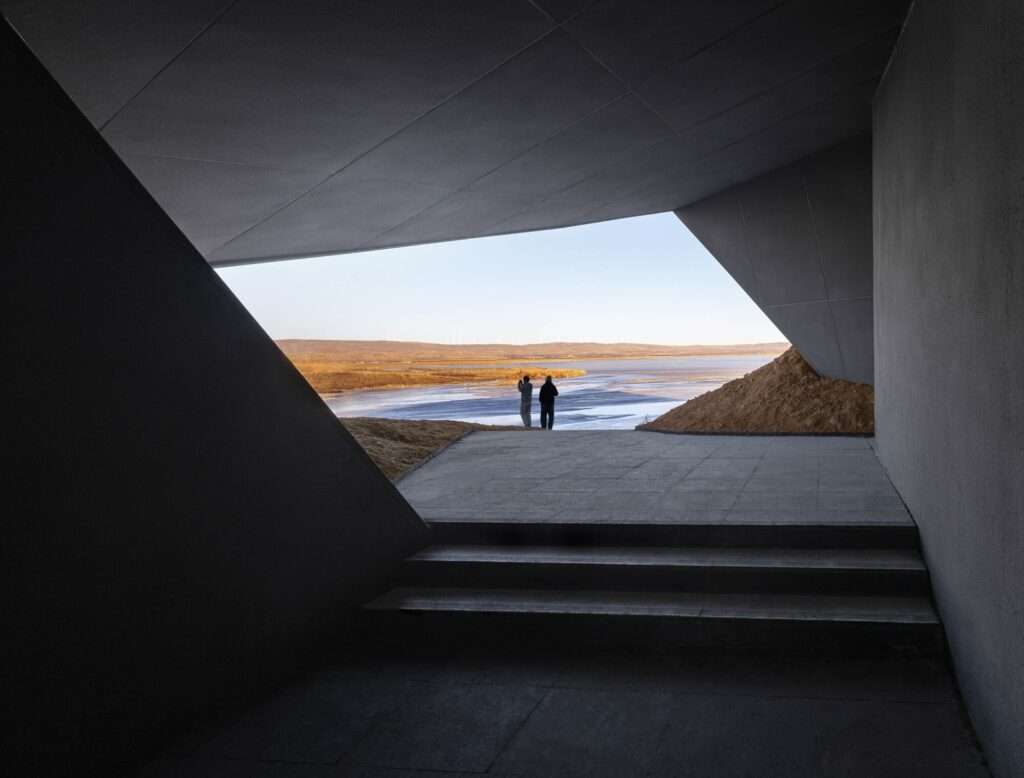
The concrete mass tilts toward the lake while simultaneously lifting off the ground, producing a visual paradox between material heaviness and a sense of levitation. This condition becomes an organizing device for perception, where movement progresses inward through a corridor passing an open-air theater and a public gathering space before reaching the rooftop, which opens onto the full extent of watery meadows and grassland. This reflects advanced Construction techniques that balance weight and levitation.
Dual Organization of Buildings
The two buildings are designed as a functionally integrated system based on a clear duality: a buried horizontal structure adjacent to the meadows and a vertical structure overlooking the water. This contrast creates a spatial distribution of public activity linked to the surrounding rural residences and establishes a cultural core that functions as a natural extension of the site rather than a detached object. Explore the Archive for more case studies on dual organizational strategies.
Time as a Formative Factor
The project is conceived to resist the notion of final completion, avoiding treatment as a fixed and fully resolved mass. Instead, traces of time accumulate on its surfaces, and programs evolve through use, allowing the buildings to absorb gradual transformations in life and activities forming around them. Current Architectural News frequently discusses time-based design approaches.

✦ ArchUp Editorial Insight
The Prairie Ark project and the Nomad Lighthouse tower operate as spatial outcomes within a context governed by cultural preservation constraints and low-density land-use regulations in rural environments. The catalyst lies in the absence of prior urban models and the necessity of producing a spatial identity without resorting to symbolic replication. Points of friction emerge from terrain management, public access challenges, and open environmental exposure across the plains and the island lake setting, imposing a strict logic on material selection and circulation organization. The solution is embodied in a dual organizational system combining a buried horizontal program with a vertical structure functioning as a visibility and spatial linkage device across distances. Programmatic neutrality, distributed roof openings, and multiple entry levels are employed as mechanisms for use adaptability. The structural chimney system is integrated with a thermo-spatial logic, while environmental erosion is redefined as part of lifecycle management rather than material degradation. For technical specifications, refer to the Material Datasheets and ongoing Research publications.