Cyclone by HopFlyt: Ducted Wing and Vertical Takeoff Concept


The Ducted Wing: An Early Idea in Aviation History
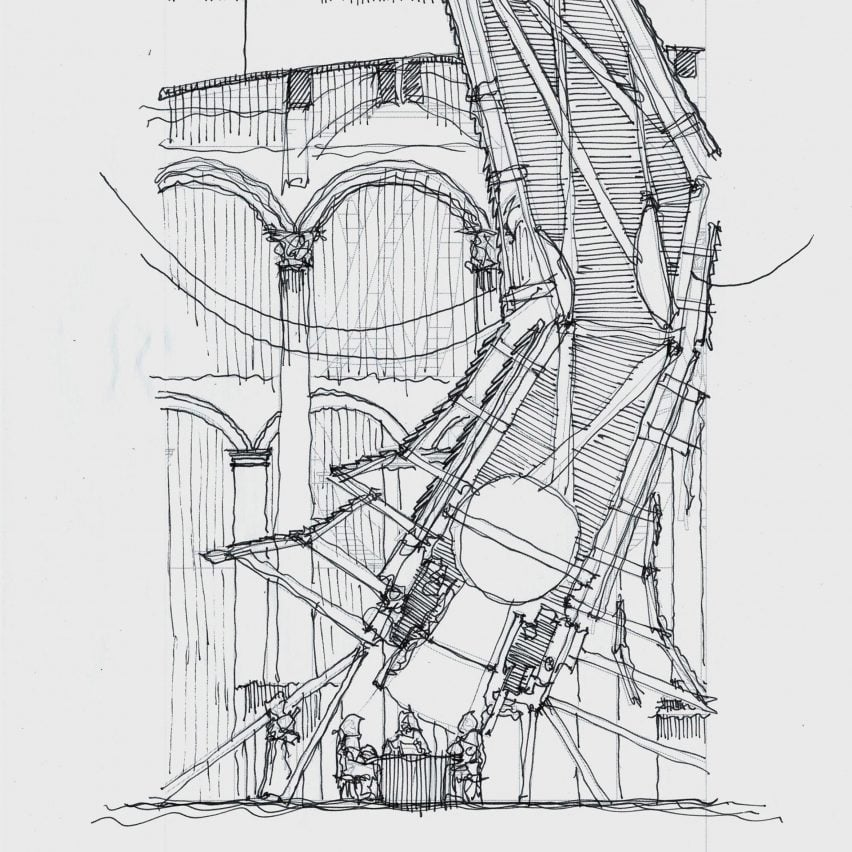
The concept of the “ducted wing” first appeared in the late 1920s within the patents of Willard Ray Custer. This idea is based on integrating propellers inside semi-circular cavities within the wings, with the aim of directing a stream of high-speed airflow over the lifting surface at low speeds. Early models demonstrated the ability to achieve near-vertical takeoff in their initial stages, before the emergence of modern aviation terminology associated with electric vertical takeoff aircraft. However, it was not widely adopted due to the material limitations of that period, as well as the shift toward jet aircraft, which brought conventional designs to the forefront.
Reinterpreting the Concept in a Contemporary Context
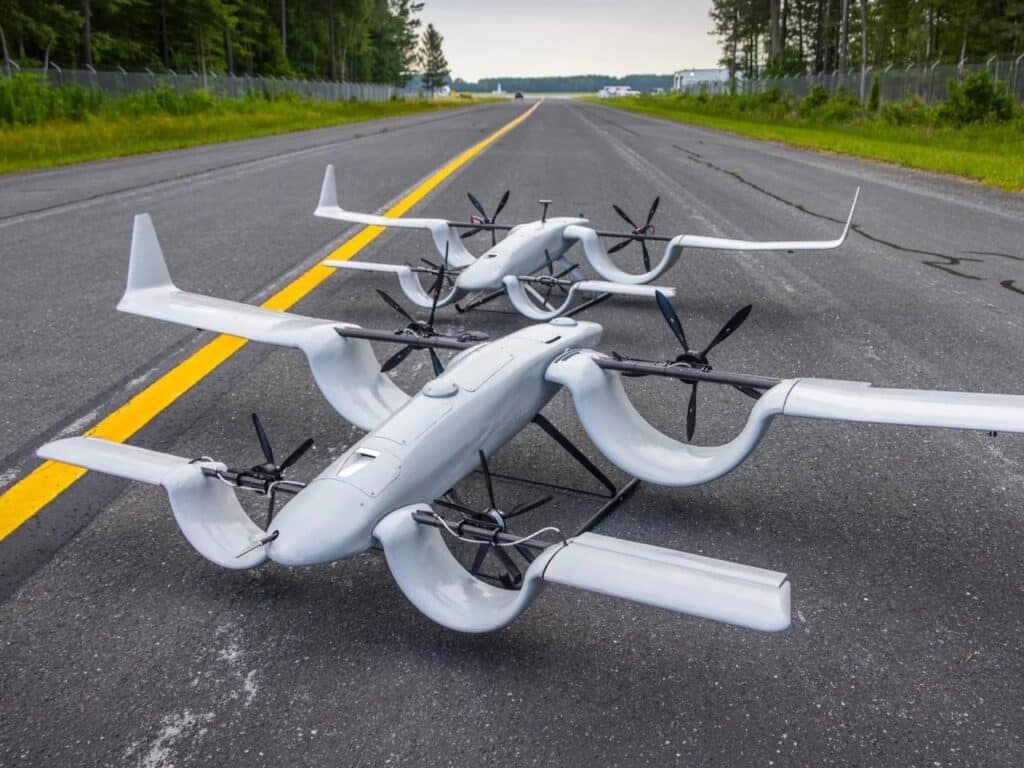
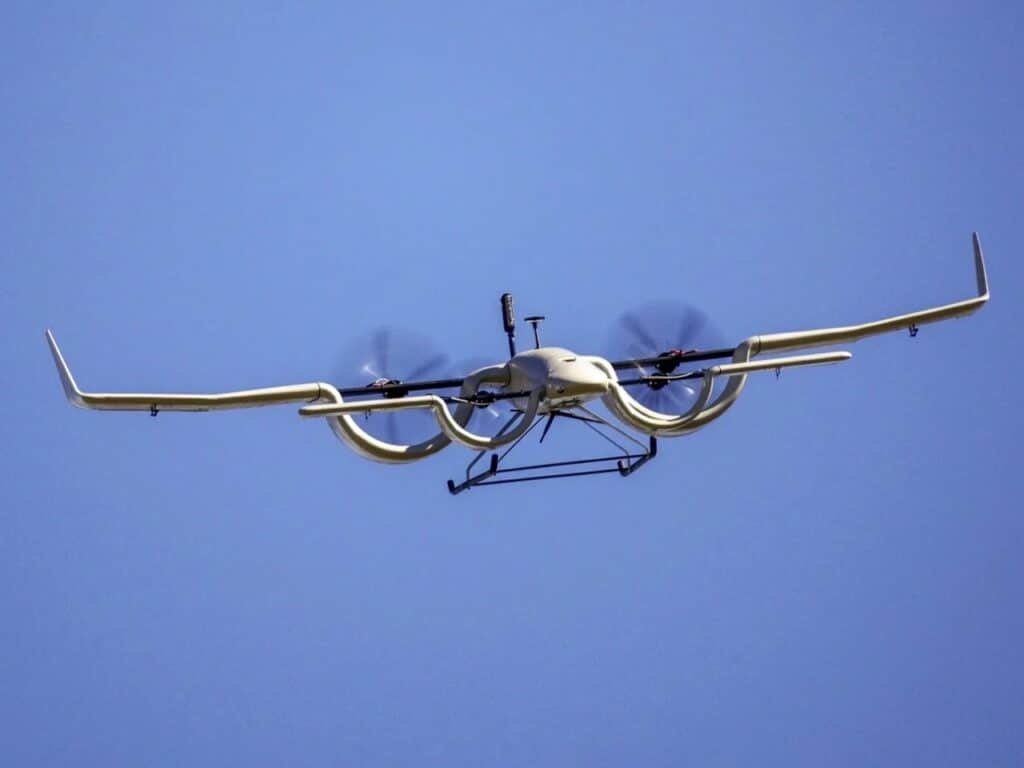
In the present day, some companies have revisited this concept by integrating it with modern propulsion technologies. Within this context, HopFlyt has developed a prototype for a vertical takeoff unmanned aerial vehicle that combines the ducted wing concept with hybrid propulsion systems and modern composite materials. The airflow ducts shift during takeoff to direct thrust vertically, then reposition during forward flight, altering the distribution of aerodynamic forces across the wing. These ducts can also be used as an auxiliary element for control during landing by increasing air resistance.
Performance and Potential Operational Applications
According to the available technical data, this configuration aims to improve energy efficiency during takeoff compared to some conventional vertical systems, while reducing fuel consumption during sustained operation. The design also indicates the possibility of carrying medium payloads and transporting them over relatively long distances. This type of system is proposed for operational contexts such as maritime supply chains, support for offshore energy platforms, and medical logistics delivery, where flexibility in takeoff and landing represents a critical functional advantage.
The Aerodynamic Logic of the Ducted Wing
A conventional wing generates lift through the aircraft’s movement through the air at sufficient speed, creating a pressure difference between the upper and lower wing surfaces. This typically requires a significant forward velocity before efficient lift performance can be achieved. In contrast, the ducted wing concept shifts this input condition by directing airflow directly onto the wing surface instead of relying entirely on the aircraft’s forward motion.
This is achieved by placing a propeller inside a semi-circular duct that accelerates airflow over the lifting surface, enabling lift generation even at low speeds. As a result, the point of dependence shifts from “flight speed” to “airflow management” within the construction itself.
Engineering Implementation Development in Modern Applications
In contemporary applications, this concept has been further developed by introducing more flexible design elements, such as rotatable ducts that allow separation between vertical takeoff mode and horizontal flight mode, rather than relying on a compromise between the two. Within this framework, certain experimental models such as those developed by HopFlyt rely on redirecting the ducts between hovering and forward flight phases.
This approach is interpreted in engineering terms as becoming feasible only with the advancement of digital control systems, electric propulsion, and lightweight composite materials, factors that were not available at the same level of performance when the concept was first introduced.

Hybrid Propulsion Architecture and Functional Distribution
The propulsion system of the Cyclone aircraft is based on a hybrid configuration that distributes energy functions across multiple sources. In this model, batteries are responsible for powering the vertical takeoff and hovering phases, where the ducted wing operates at peak efficiency due to directed airflow. In contrast, a turbine generator supports horizontal flight, reducing full reliance on batteries over medium and long ranges.
This separation of propulsion roles allows for an extension of operational endurance compared to fully electric systems, which remain constrained by battery energy storage capacity.
Impact of the System on Range and Operational Efficiency
From an operational perspective, this configuration significantly improves the aircraft’s practical range compared to conventional electric vertical takeoff aircraft. This is achieved by reducing battery consumption during sustained cruise flight, as the energy load is shifted to the turbine generator.
As a result, the system becomes more suitable for missions requiring extended flight duration without interruption.
Economic Implications in Maritime Applications
At the economic level, estimates suggest a substantial reduction in operational costs compared to helicopters used in similar roles. If these figures are validated in real operational environments, they could lead to a reassessment of the current economic model in fields such as maritime supply logistics and offshore energy platform operations, which still rely heavily on helicopters despite their high operating costs.


Organizational Development and Funding Context
HopFlyt has reached its current stage with limited funding resources compared to similar advanced air mobility companies. The company operates from a private facility in Maryland, supported by a team whose cumulative aerospace experience spans more than a century. Within this context, the company is continuing its Series A funding round to support the development of a hybrid-electric prototype, as well as to conduct flight demonstrations ahead of its planned 2027 launch.
Positioning the Model Within the Evolution of the Aerodynamic Concept
The assessment of whether the Cyclone aircraft represents a practical realization of Willard Ray Custer’s idea remains dependent on experimental test results. Theoretically, the aerodynamic foundation of the concept has remained stable, while practical implementation was historically delayed due to limitations in enabling technologies.
However, the current phase suggests a convergence between the original aerodynamic concept and advances in propulsion systems, control technologies, and materials science, making its practical validation more feasible than ever before.
✦ ArchUp Editorial Insight
The Cyclone aircraft by HopFlyt emerges as a direct outcome of venture capital allocation patterns toward regional air transport services and maritime supply chains. Limitations in battery energy density and the requirements of long-range endurance are forcing vertical takeoff systems to evolve toward hybrid solutions. Regulatory constraints related to aircraft certification processes, combined with the lack of clearly defined liability frameworks for semi-autonomous flight, further restrict the full scalability of all-electric aircraft. At the same time, operational demands in environments such as offshore platforms and medical logistics are pushing toward distributed energy architectures.
In this context, the ducted wing does not function merely as an aerodynamic innovation, but rather as a functional redistribution of propulsion forces between vertical takeoff and sustained cruise phases, achieved by separating battery-driven and turbine-assisted energy roles. This configuration reactivates the historical logic of ducted lift within a modern technological framework governed by computational stability systems and capital efficiency constraints.