Daisy Ranch: Linear Design and Materials

Spatial Context and General Idea
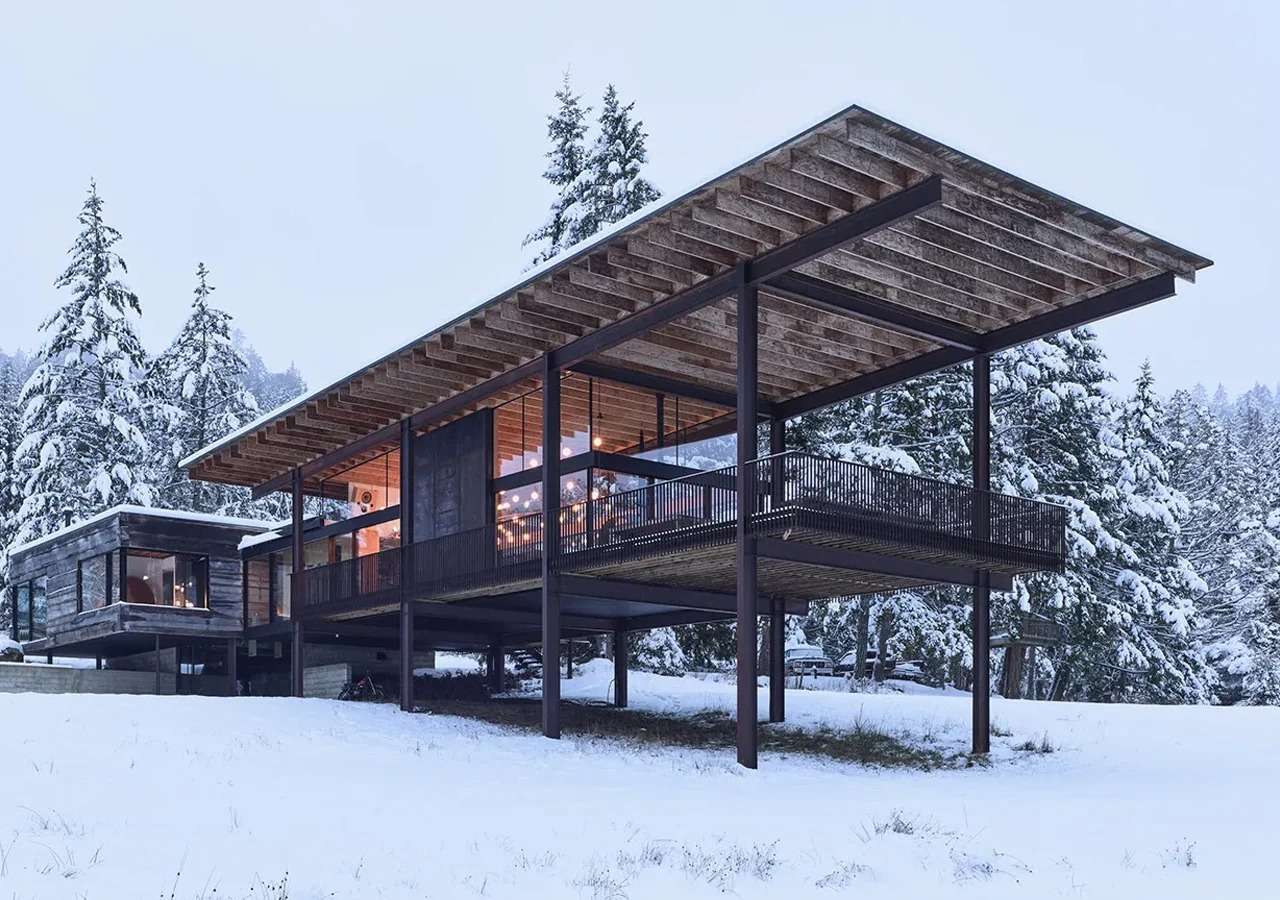
Salt Spring Island is located within a natural environment characterized by cliffs, meadows, and dense forests, making the site strongly defined by its natural elements. Within this context, Daisy Ranch emerges as a private residential project by Olson Kundig, led by Tom Kundig, where the design engages with the tension between the natural character of the place and the idea of contemporary construction as an additional layer within this landscape.
Architectural Composition and Massing Organization
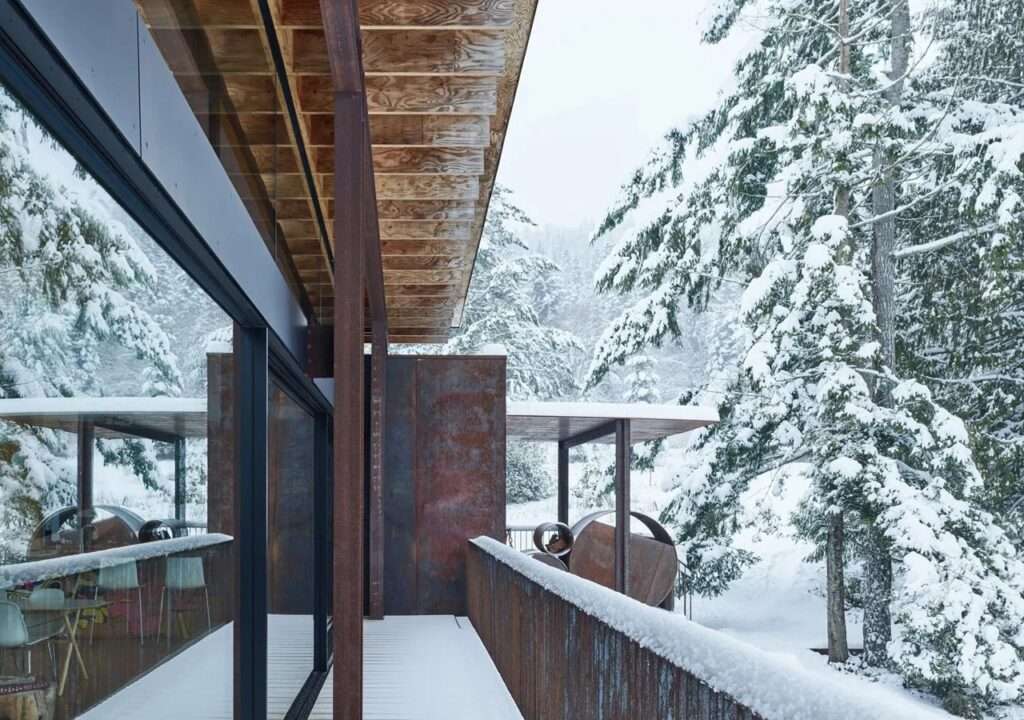
The building is positioned at the edge of an open meadow and relies on a simple volumetric organization based on the interaction between two main volumes: a rough glass box and an extended cantilevered roof. This roof stretches over a wide outdoor terrace, creating a transitional zone between interior and exterior. It also provides protection from the changing climate without isolating the building from its natural surroundings.
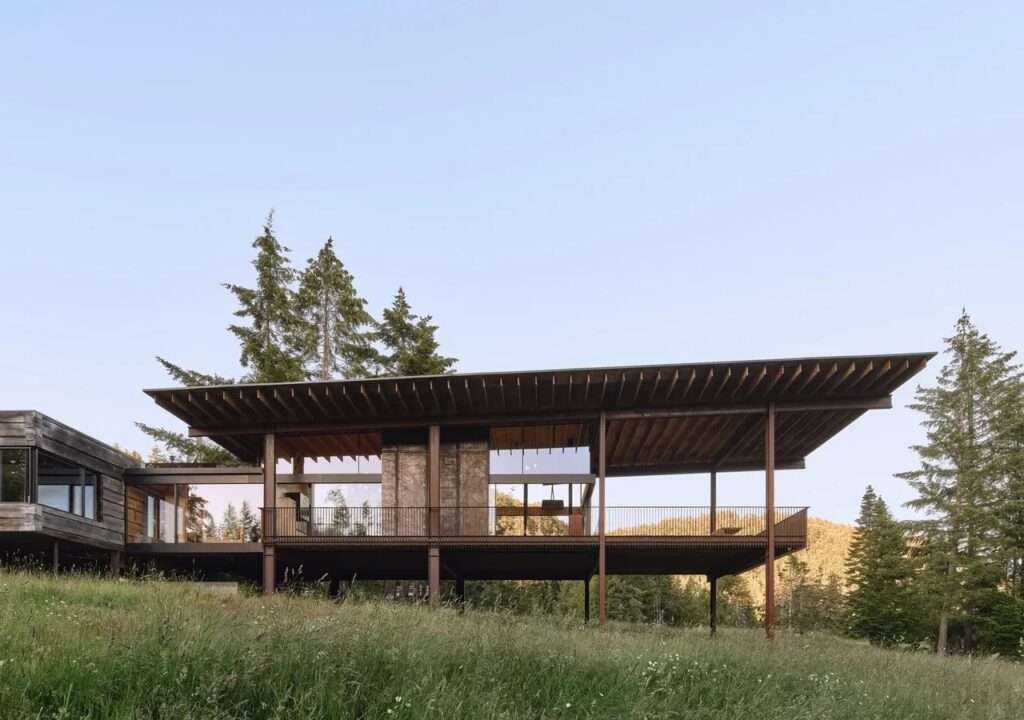

Architects: Olson Kundig | Photography: Andrew Latreille
Materials and Visual Treatment
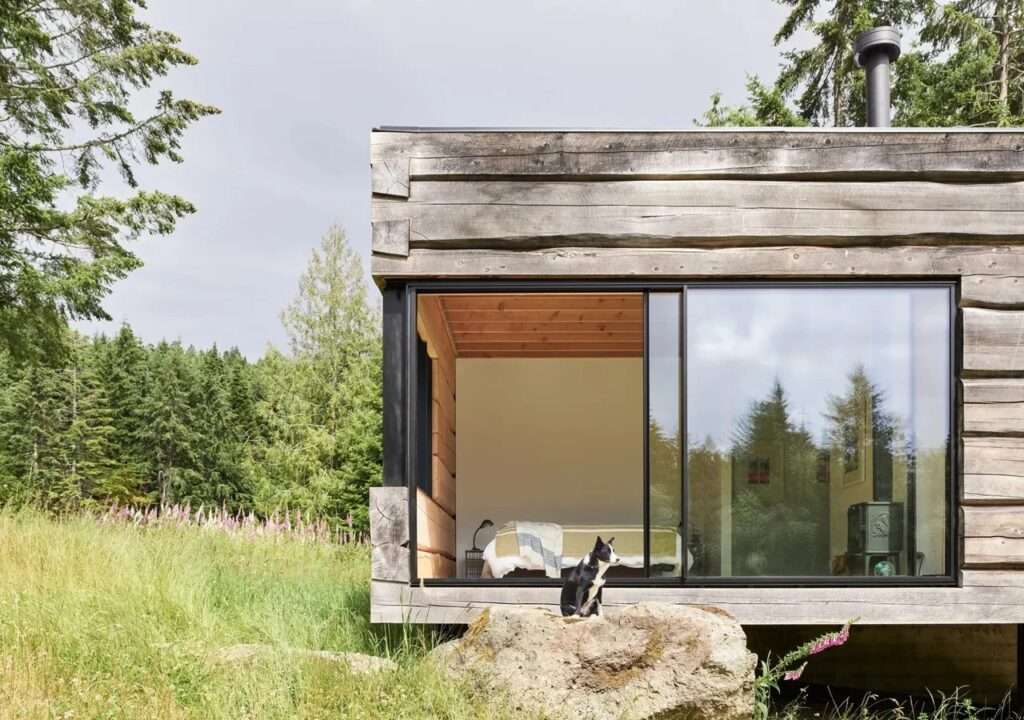
The façade is based on a layered material gradation, where large geometrically cut timber elements coexist with glass, softening the impact of the weathered steel with its rusted tone. This composition relies heavily on the strategic use of Building Materials, and does not rely on ornamentation but rather on a visual balance produced through the interaction of materials with time and the surrounding environment, giving the building a character closer to a gradual emergence within the site rather than an imposed form. Detailed specifications can be found in the Material Datasheets.
Spatial Organization and Volume Distribution
The plan follows a clear linear organization connecting two main volumes separated by an eastern entry stairway. The entrance is concealed beneath an extended roof overhang, creating a calm and indirect arrival moment. The northern volume, clad in wood and steel, accommodates the private functions, including the primary suite and additional bedrooms, with framed view corridors that allow partial and carefully composed glimpses of the landscape rather than full openness, achieving a balance between privacy and connection to the surroundings.


Interior Composition and Material Treatment
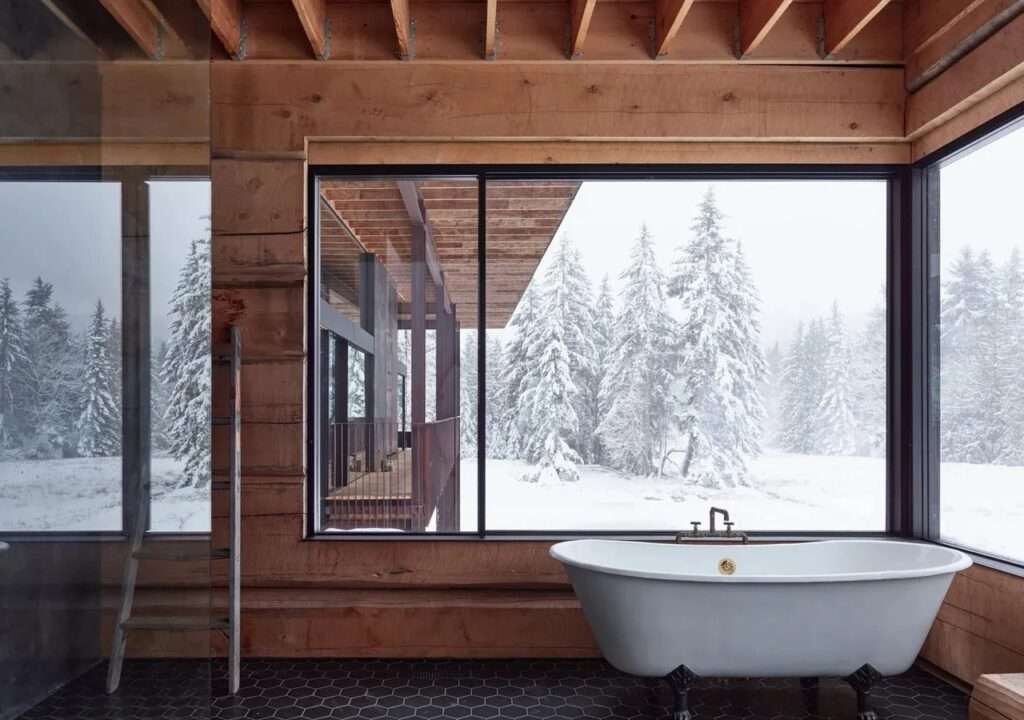
Inside, the bathroom stands out as the most intimate space in terms of material treatment. The extensive use of wood introduces a sense of warmth, while a classic freestanding bathtub is positioned in front of corner windows to enhance the visual relationship with the exterior. This attention to internal space aligns with principles of Interior Design. These details reflect a more tactile reference to traditional construction, where familiar elements are used in a direct and functional manner.
Relationship Between Design and Execution
The project was developed in direct collaboration with the client Patrick Powers, who combines roles as builder, fabricator, and general contractor. This relationship is reflected in the nature of the execution, where the building appears as the result of accumulated material decisions made on-site rather than as a detached design object. Within this context, the project can be read as a gradual construction process driven more by the interaction of materials and relationships than by a fixed final composition. This collaborative approach is often discussed in the Architects Lobby and various Research initiatives.


✦ ArchUp Editorial Insight
Daisy Ranch on Salt Spring Island operates as a specific architectural outcome formed at the intersection of the client’s capacity for direct construction and a regulatory framework that defines building conditions on a sensitive coastal site. The composition does not originate from a purely aesthetic intention, but from the logic of land use within environmental and legislative constraints that structure the massing into a linear axis and two separated volumes mediated by movement and entry. To see how similar projects are documented, you can browse the Archive or review recent Projects. The extended roof functions as a climatic device for managing loads from weather and rain while maintaining visual openness toward the landscape. The distribution of materials, wood, steel, and glass, reflects considerations of sourcing and durability rather than formal expression. Ultimately, the building appears as a negotiated solution between the client’s construction expertise and the environmental and regulatory constraints of the site.