East River Residence: Suspended Coastal Architecture

Suspended Architecture as a Design Concept
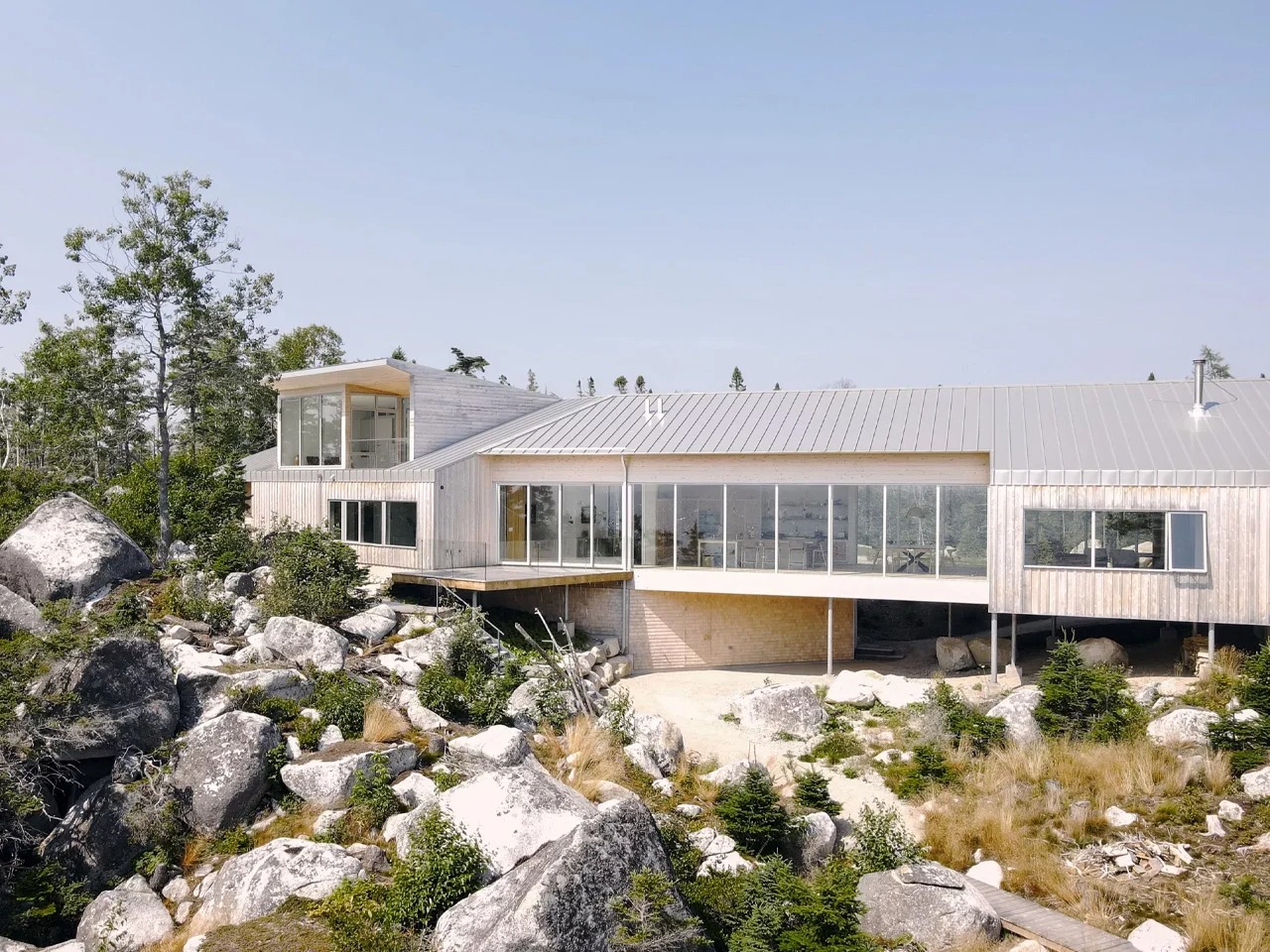
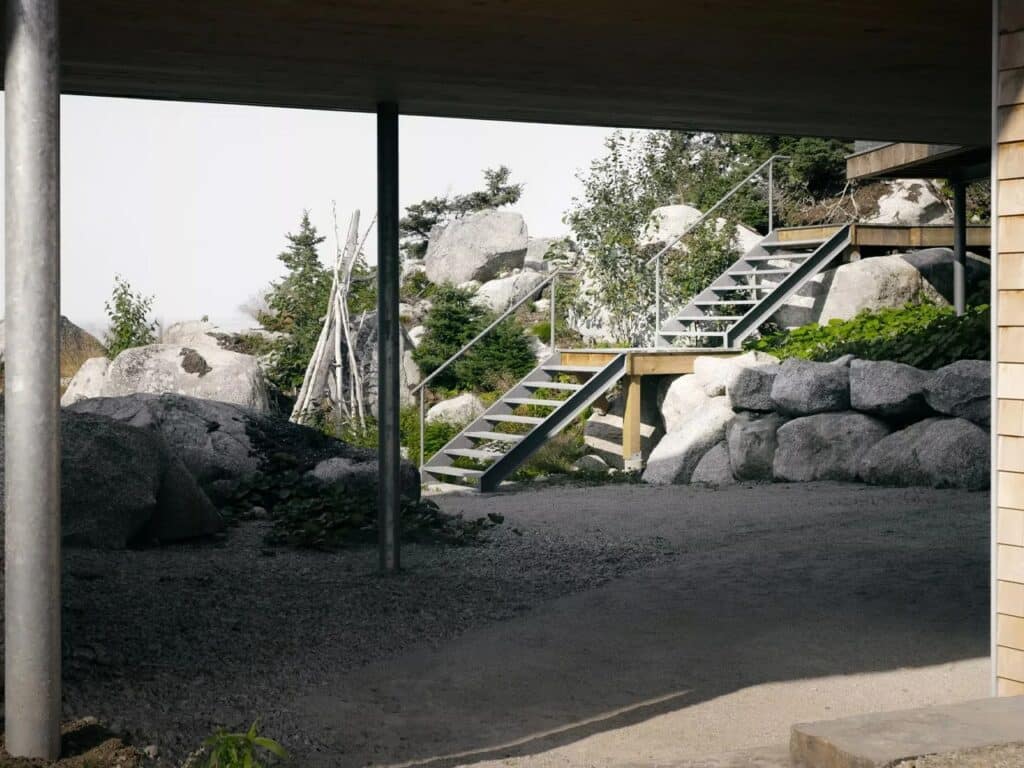
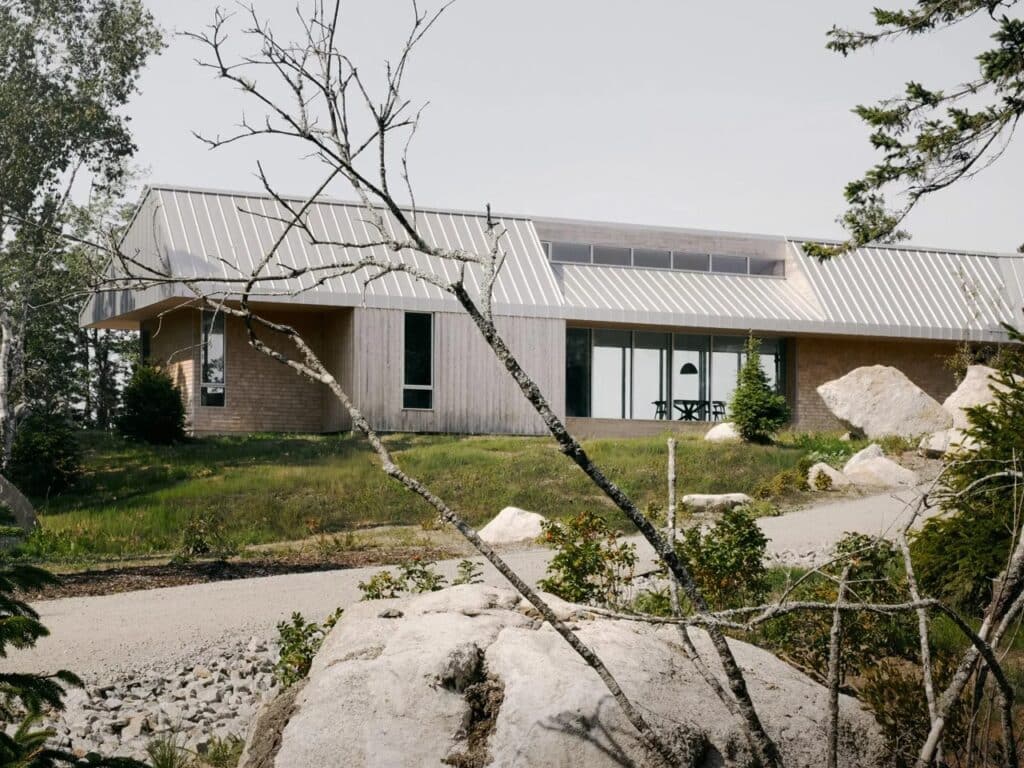
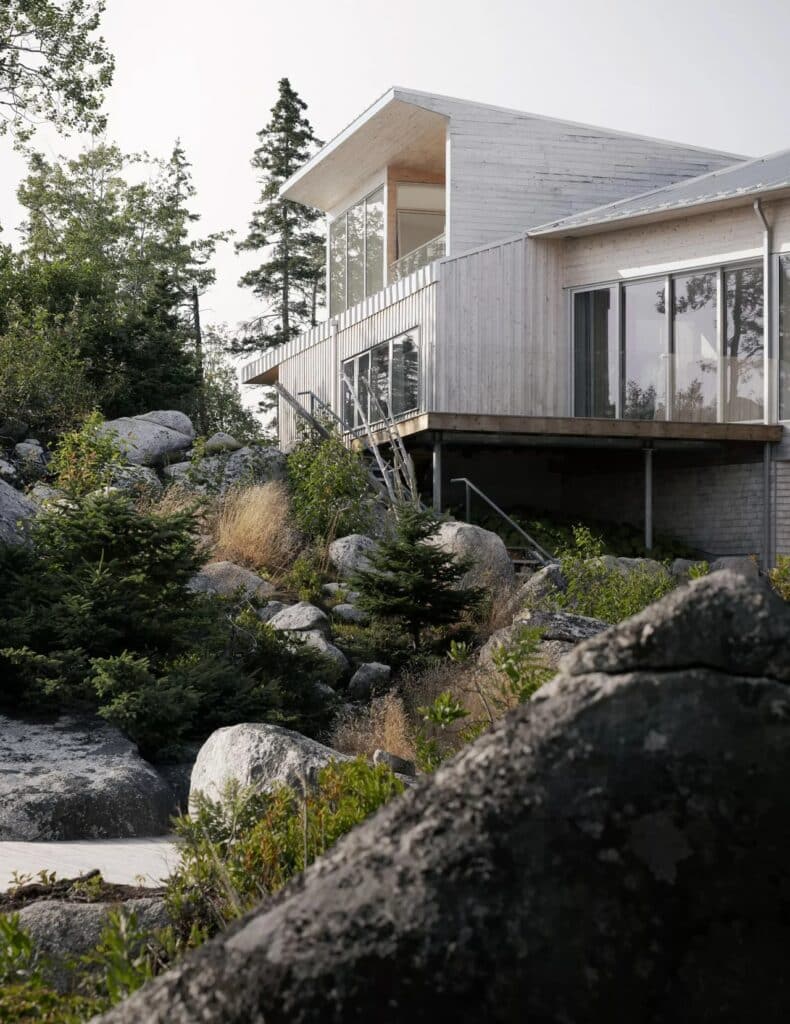
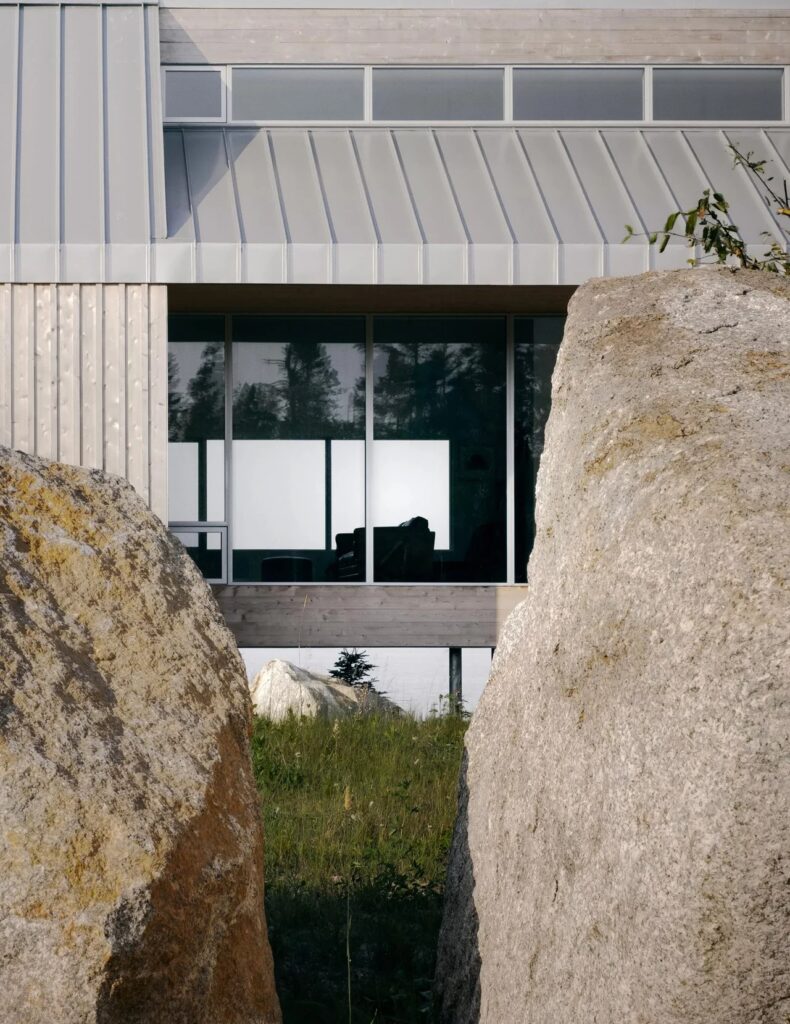
In this project, the building appears as if it is suspended above the ground rather than resting directly on it. This approach reflects a degree of control in handling the Architecture mass, where the house is supported on slender steel columns that allow the rocky terrain beneath to remain untouched. As a result, the ground void becomes an active part of the experience rather than merely a structural base.
Within this framework, the East River Residence project on the Atlantic coast of Nova Scotia, designed by Omar Gandhi Architects, can be read as a case study of this type of intervention that visually and structurally separates the Buildings from the land without completely detaching it from it.
Reading the Site as a Design Entry Point
The Design concept emerged directly from the nature of the site. During the site analysis, the coastline was traced and a transition through a dense forest was followed until reaching a natural valley located between rocky slopes. This topographic depression was neither modified nor filled, but rather adopted as a fundamental element in shaping the architectural decision.
Accordingly, the design was based on preserving the natural condition of the site, where the space between the slopes became the framework that defines the building’s relationship with the ground and reorganizes its presence within it instead of imposing a form upon it.
The Building as an Extension Between Two Natural Elements
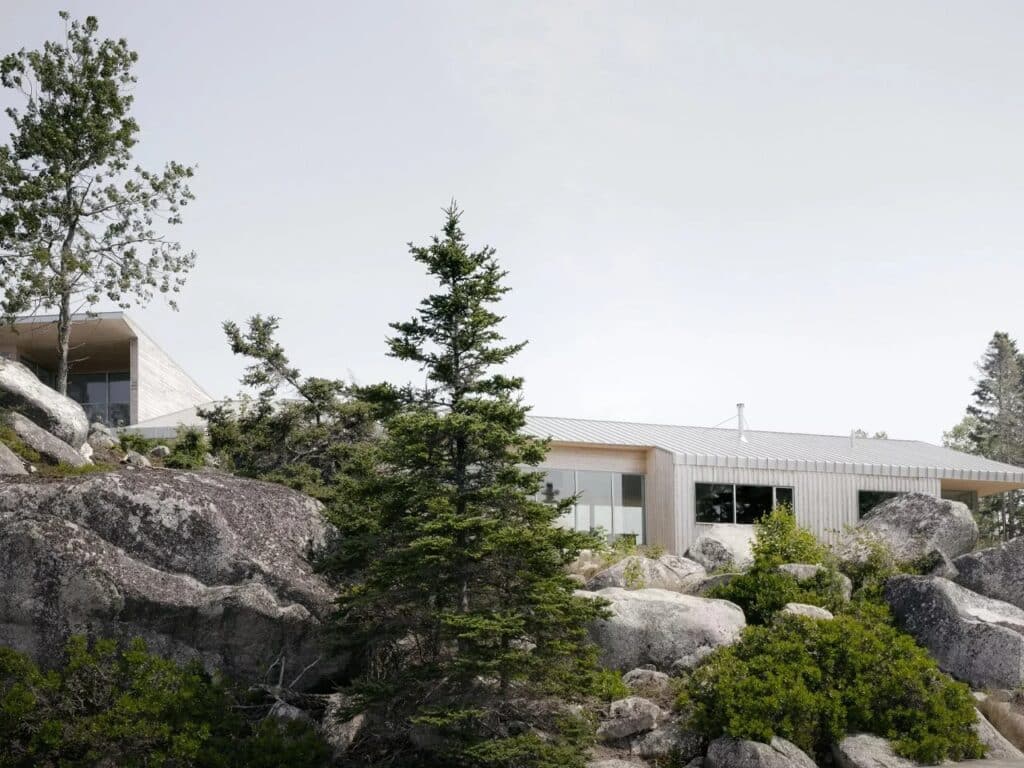
In this context, the building is read as a bridge extending across the natural depression between two rocky slopes. It does not sit as an isolated mass, but rather spans the void within the site, while the ground continues beneath it uninterrupted, visually and formally, as if it were a continuous layer. Its location, surrounded by dense forest, also limits its direct visibility from the shoreline. As a result, the building does not reveal itself immediately, but is instead gradually discovered through movement within the site, either by moving deeper inland or walking along the coastline. This makes the act of arrival itself part of the spatial perception experience. You can explore similar Projects for more inspiration.
Sectional Logic and the Roof as a Spatial Organizing Device
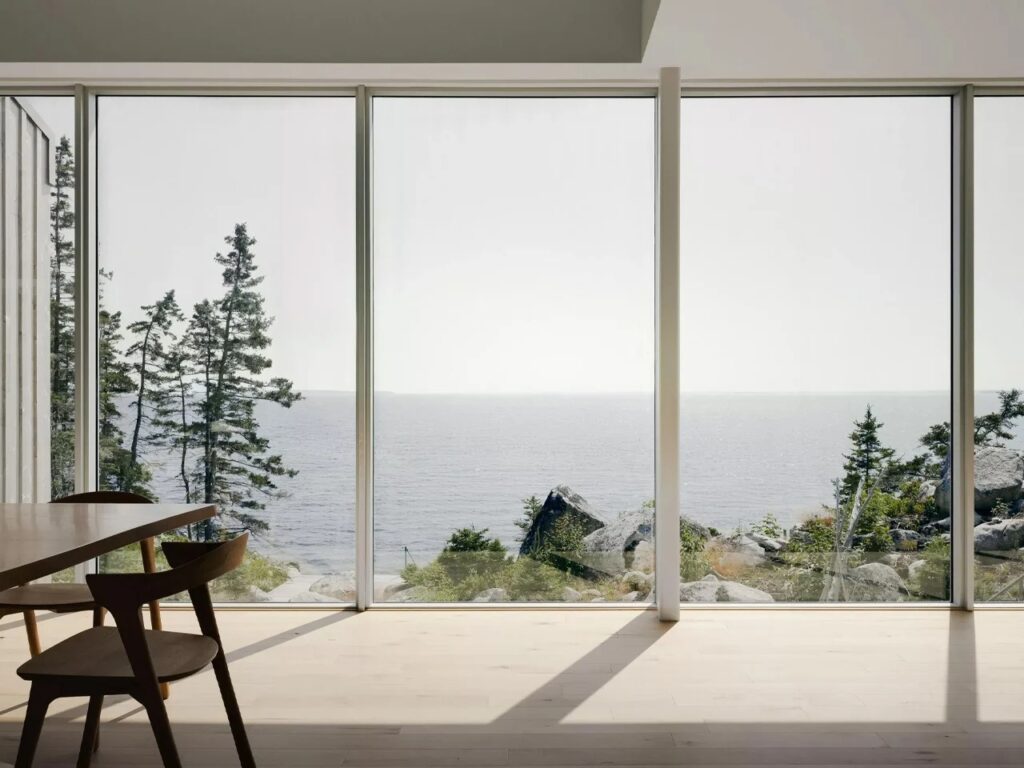
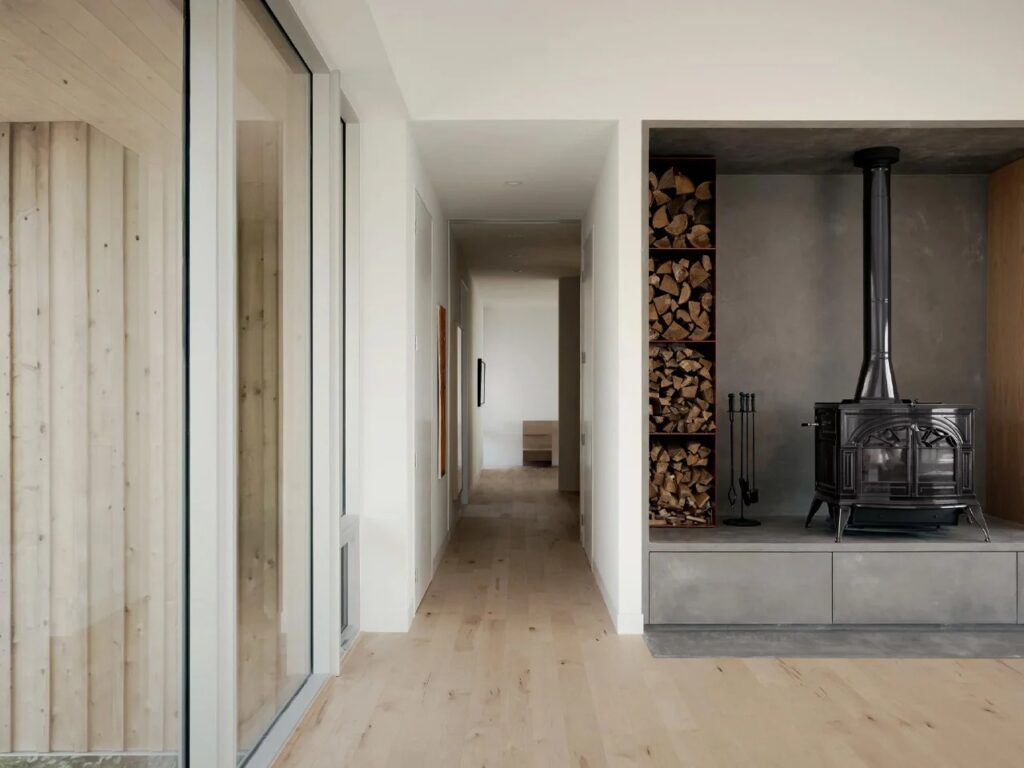
The roofline becomes the most dominant architectural expression of the building. Rather than treating form as a fixed mass, it directly follows the variations of the terrain beneath it. In elevated areas, the roof lifts over rocky protrusions, while it lowers above the main living space, helping to control natural light and creating a more focused spatial atmosphere. It then rises again over another programmatic zone, such as the yoga studio, enhancing the sense of verticality and connection to the sky. In this way, the shifting section becomes a tool for organizing the interior experience and directly linking it to the transformations of the surrounding landscape.
Materials and Material Identity
On a material level, the building maintains a direct relationship with its coastal context through a visually subdued language. The color palette relies on dark and neutral tones intended to blend into the tree line rather than contrast with it. Within this framework, the primary materials, steel, wood, and shadow, act as the main expressive elements without introducing additional visual layers. For further technical details, check out these Material Datasheets. The structure was executed by Blueprint Construction, with structural engineering by Design Point, where the execution treats the idea of lifting the building mass above challenging terrain as part of the architectural logic rather than a separate technical solution. This approach aligns with innovative Construction techniques.
Visual Documentation and the Building’s Relationship to the Site
The project photographs, taken by Felix Michaud, present the relationship between the building and its site from a more abstract perspective rather than a purely technical documentation. The images focus on how the building exists within the natural landscape without imposing a dominant visual presence on it. In this context, the East River Residence appears closer to a floating element above the terrain rather than a mass that dominates it. In doing so, the natural condition of the site is preserved, keeping the ground in its original state without direct modification, reflecting a design stance grounded in minimizing physical intervention as much as possible. Stay updated with the latest Architectural News for similar case studies.
✦ ArchUp Editorial Insight
East River Residence emerges as a direct outcome of the intersection between financing models for residential relocation from urban centers such as Montreal, strict regulatory frameworks governing coastal land use in Nova Scotia, and considerations related to minimizing structural risk on unstable terrain. The decision to suspend the building mass on steel columns operates as a mechanism to reduce excavation costs and ground intervention, while transforming the natural slope into a buildable structural reference without reshaping the site. The elongated footprint and sectional variations similarly respond to direct requirements for daylight penetration beneath the forest canopy, as well as the distribution of circulation within constraints of access and Architectural Jobs feasibility. In this context, the form is not read as an aesthetic choice, but rather as a negotiated solution between construction efficiency, soil constraints, and environmental permitting systems in coastal regions. For related discussions, visit the Architects Lobby and browse the full Archive.