
The Knoll: Compact Living and Spatial Efficiency

The Concept of Living in Small Spaces
Living in small homes is based on reducing the living area and the associated storage elements and interior voids. This approach means redefining the concept of comfort within smaller spatial limits, where the process of internal organization becomes more important than the size of the Architecture itself.
The Formation of “The Knoll” as a Case Study
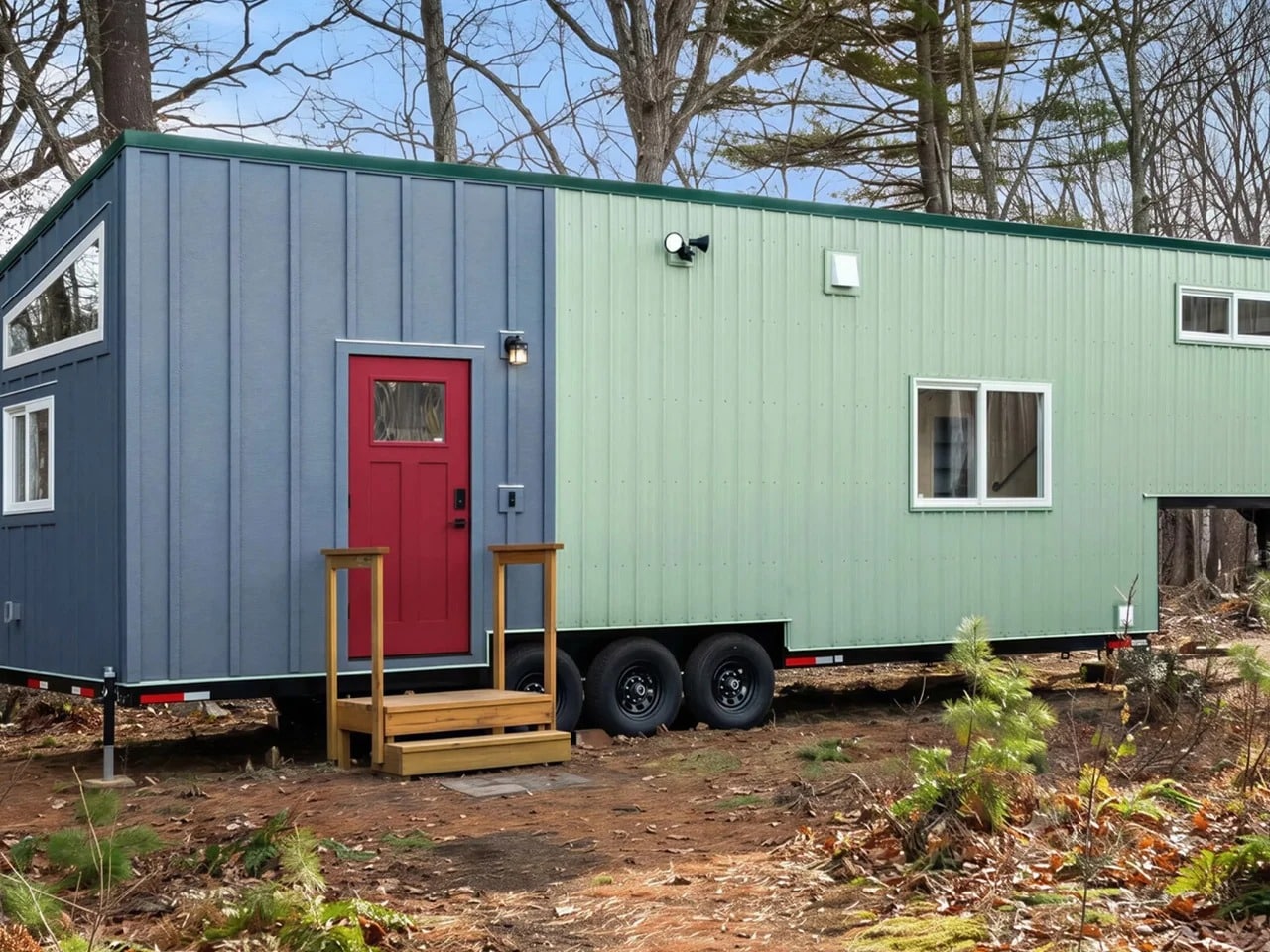
“The Knoll” is a residential model built on a triple-axle gooseneck trailer with a raised structure, measuring 38 feet in length and 10 feet in width, with a total area of 390 square feet. Compared to traditional tiny house models, the additional one and a half feet in width has a direct impact on the perception of interior space, as the design feels closer to residential apartments than to a conventional mobile unit. Similar Projects have explored this approach in recent years.
Functional Dimensions and Organizational Considerations
This expansion allows accommodation for one to five people, making it suitable for family or shared use within a limited spatial scope. However, these dimensions are associated with regulatory requirements, most notably the need for a special permit when towing it on public roads. This logistical factor affects its mobility, although it remains one of the considerations addressed when choosing this type of Construction.
External Composition and Visual Identity
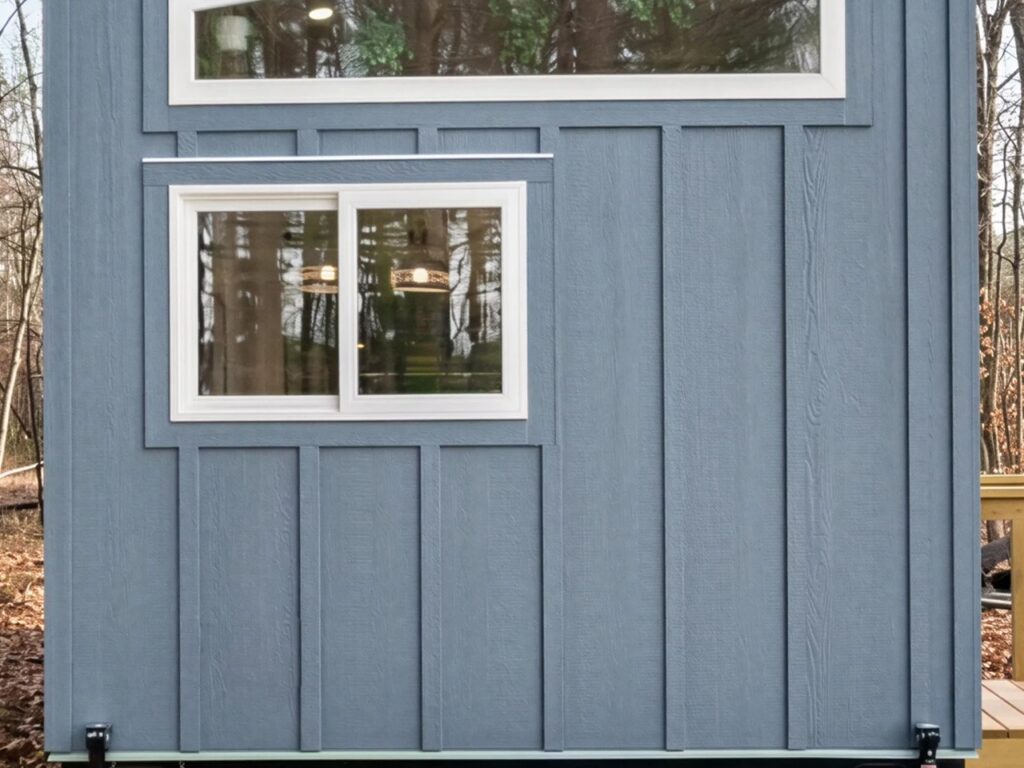
The exterior design relies on a clear visual composition from the outset, using a two-tone material palette that combines metal with board and batten wood siding, topped with a metal roof. This composition gives “The Knoll” a sharp, contemporary character, visually aligning it more with a mountain cabin concept than with a conventional mobile living unit. The choice of Building Materials plays a key role in achieving this aesthetic.
Interior Treatment and the Role of Color
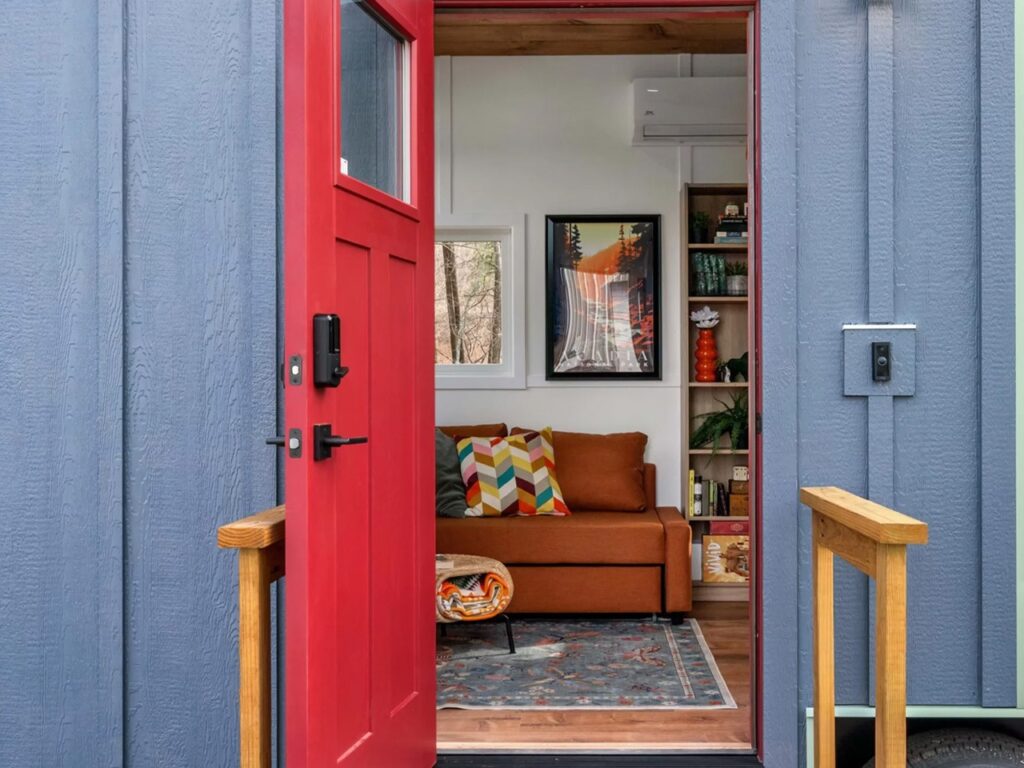
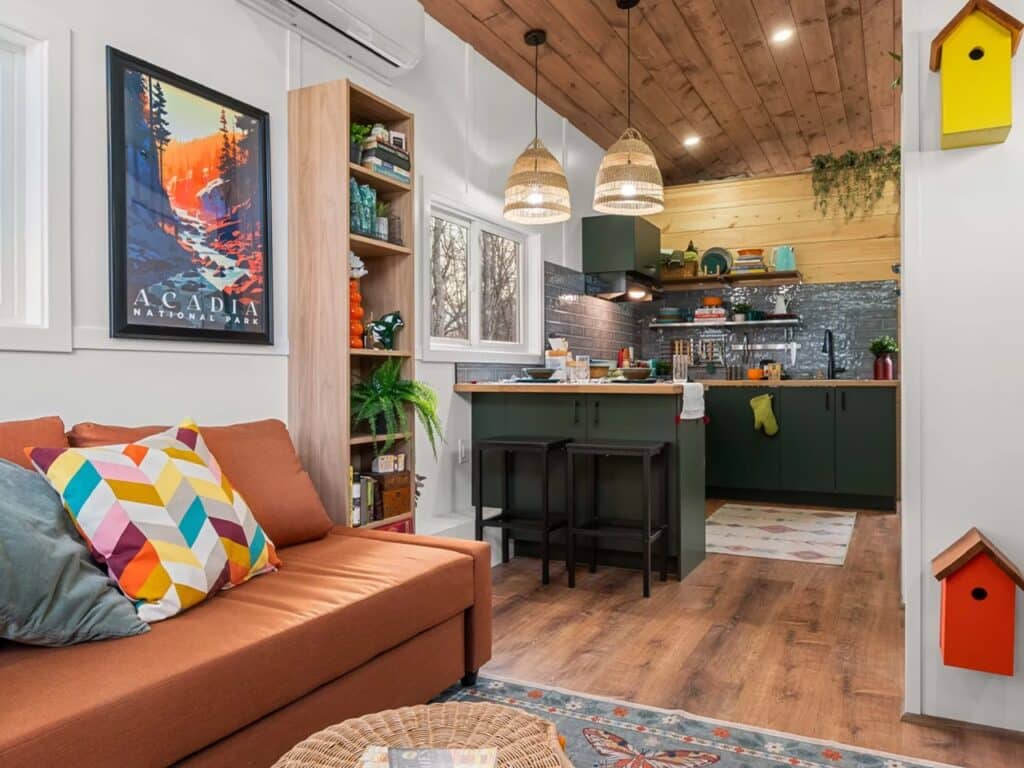
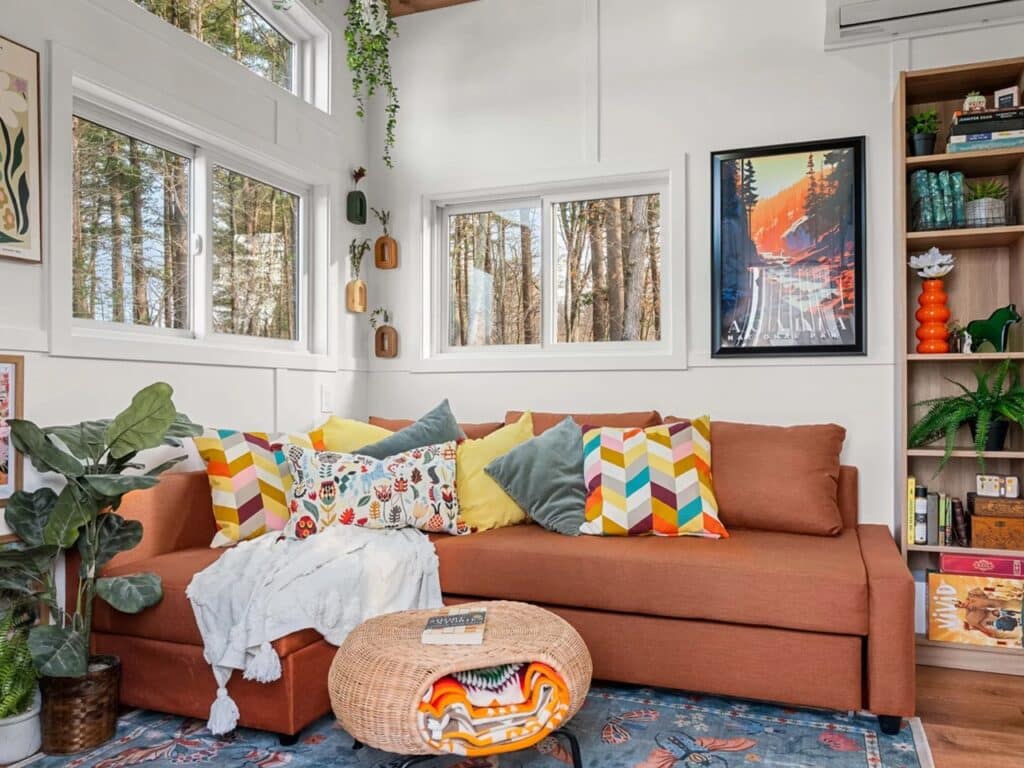
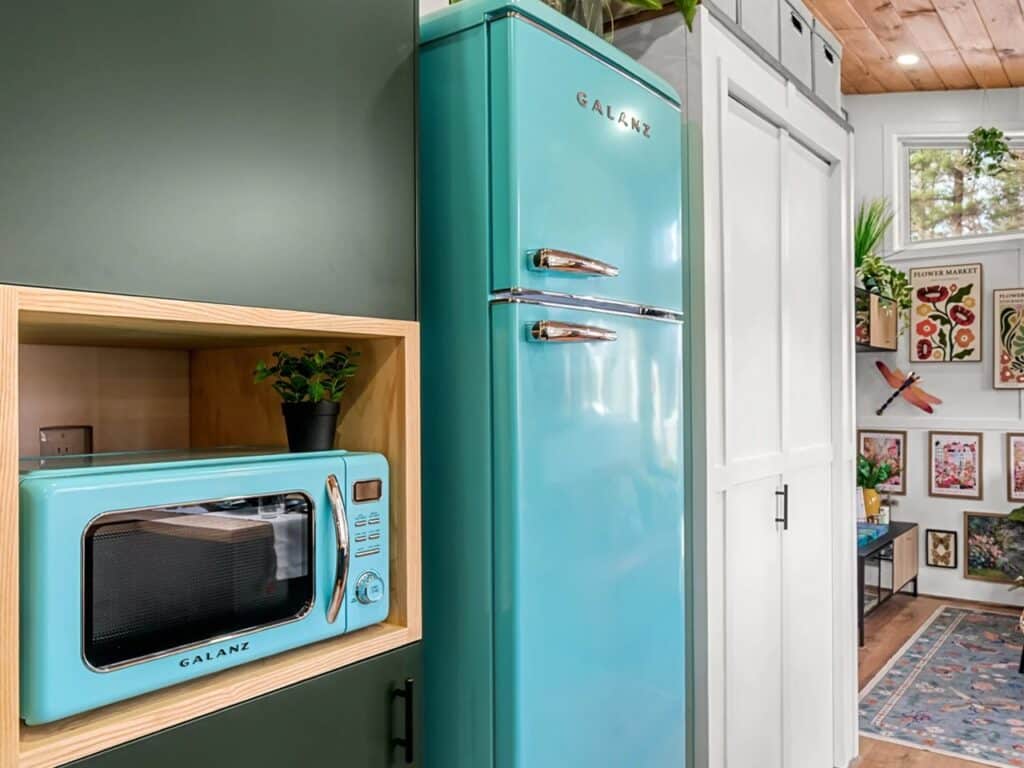
Inside, color is treated as a fundamental design element rather than an additive feature. This is reflected in the use of rich, layered tonal variations throughout the different spaces, reinforcing the idea that color strengthens the architectural composition instead of merely decorating it. As a result, the interior spaces appear more organized and visually coherent, with a strong sense of integrated Interior Design awareness.
Spatial Organization and Interior Functions
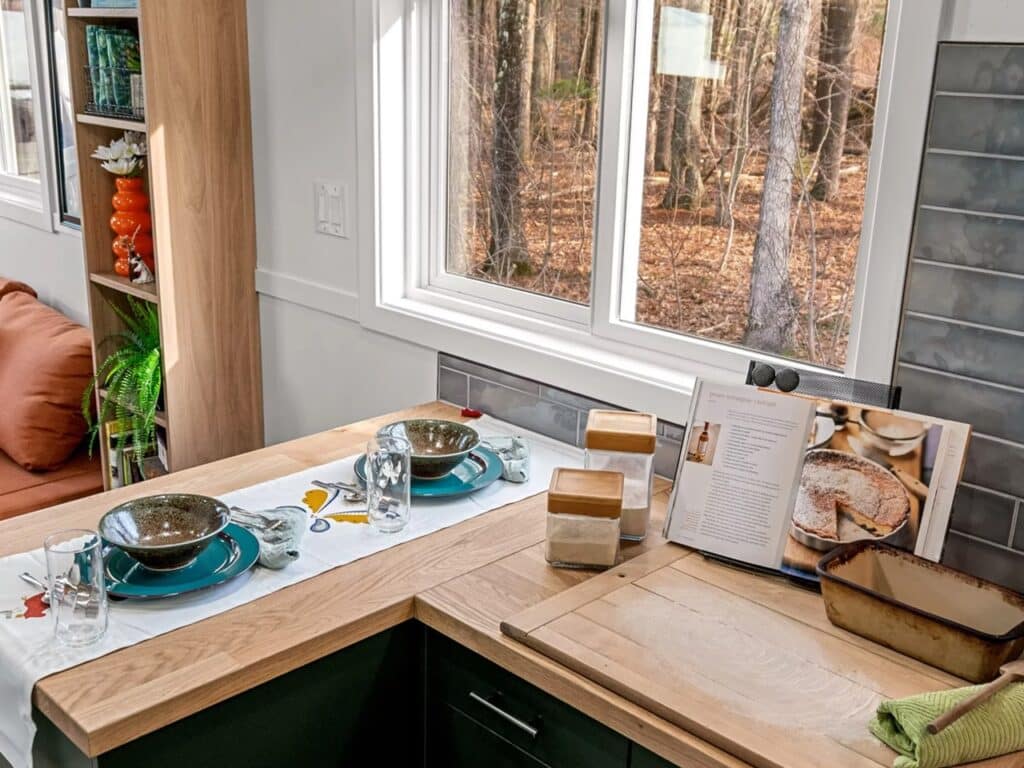
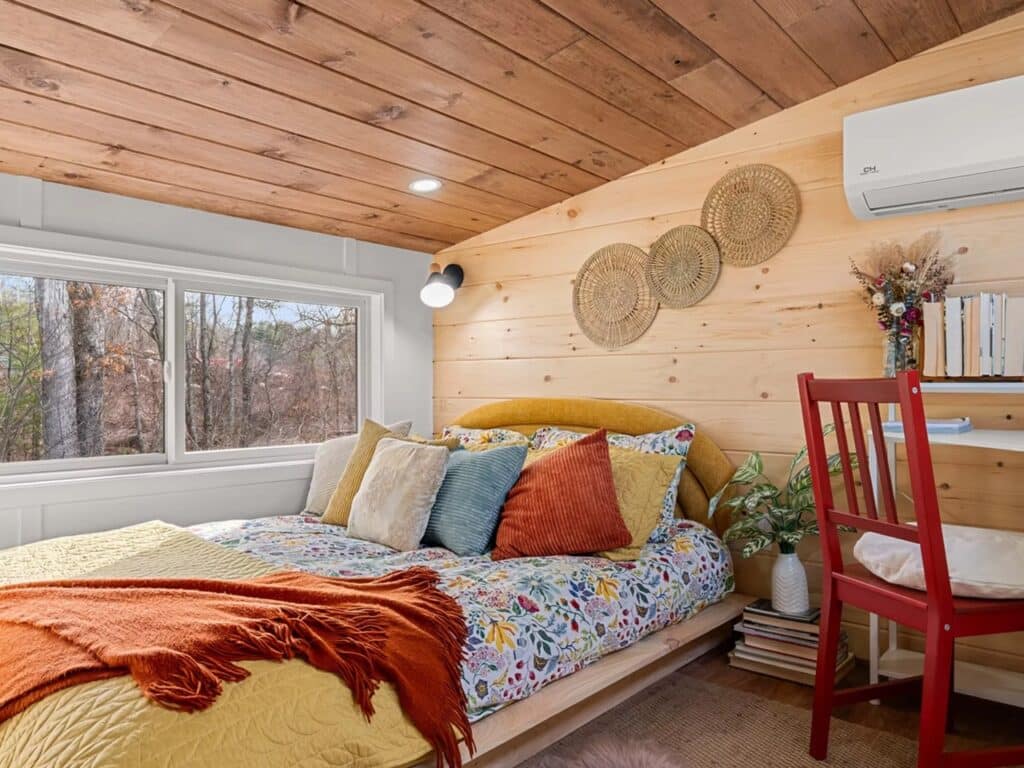
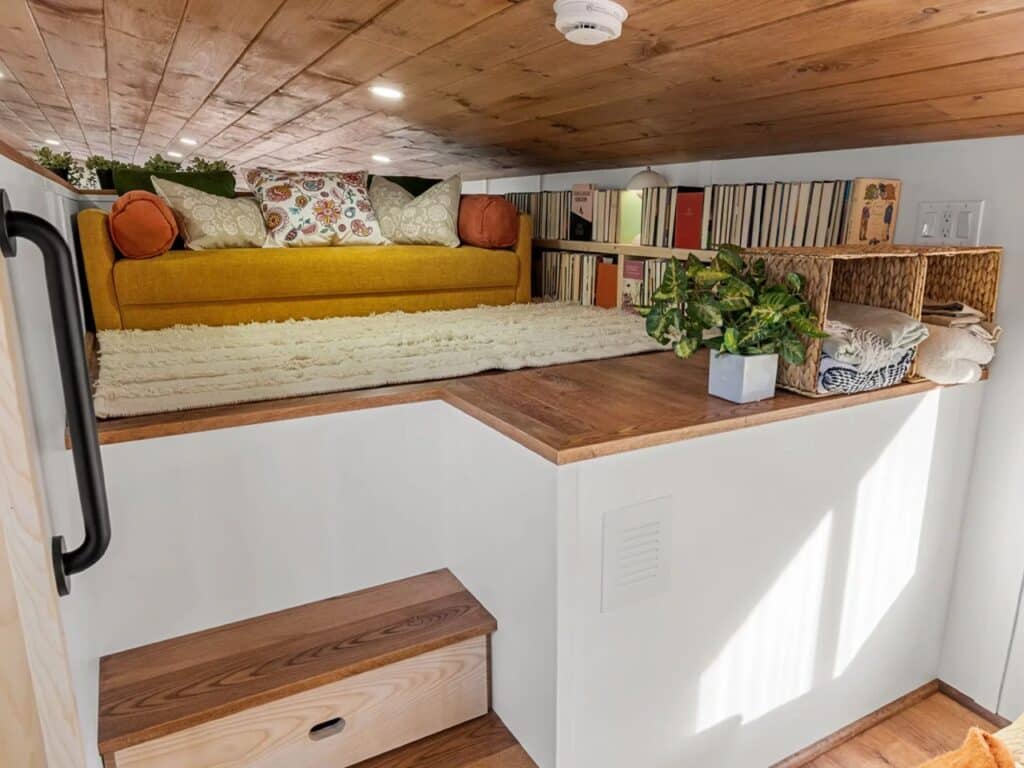
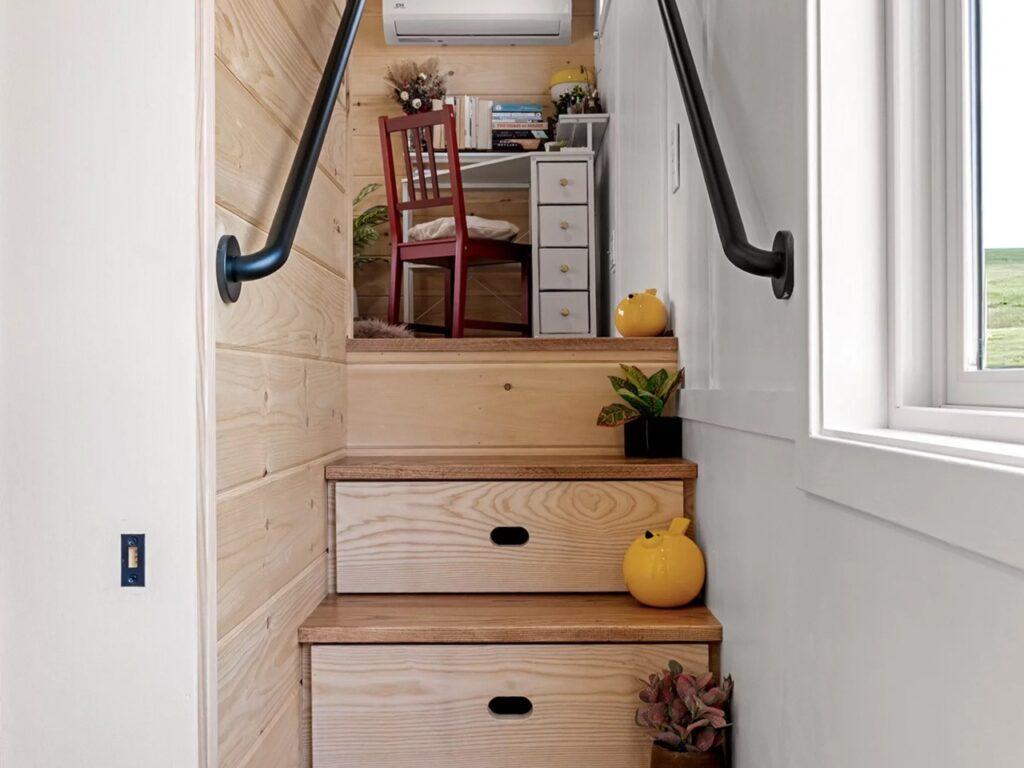
The interior layout is based on a clear functional distribution; the main floor includes the kitchen and living area, while the upper level is positioned above the gooseneck section to form the primary bedroom along with a workspace. The staircase connects the different levels and integrates storage spaces within its structure, leading to a second, lower-height loft dedicated to reading. In addition, the design includes provisions for a washer and dryer, supporting its use as a fully functional permanent residence. Efficient organization is a recurring theme in compact Buildings designed for full-time living.
Regulatory Considerations and Pricing
All configurations of the model are NOAH-certified, and their prices vary depending on the level of finishing; ranging from fully equipped versions to unfurnished units, and down to the basic shell only. This gradation reflects a diversity in completion levels, while maintaining a consistent core idea: a compact residential unit that remains fully functional without compromising essential comfort elements. Detailed specifications can be found in the Material Datasheets provided by the manufacturer.
✦ ArchUp Editorial Insight
The Knoll operates as a spatial outcome of a low-space housing economy, where capital shifts its investment toward movable assets rather than fixed real estate. At the same time, regulatory frameworks, such as overland transport permits, road classification systems, and NOAH certification, impose direct constraints on the geometric form. The driving force emerges from the intersection between rising housing costs in urban markets and the demand for mobile living units that preserve flexibility of occupation between individual and family use. These trends are frequently discussed in Top News coverage of contemporary housing solutions.
Friction arises from axle load limitations, public road licensing requirements, insurance liabilities, and the standardized manufacturing constraints on unit width. The result is a 38-foot gooseneck configuration that redistributes functions across vertical layers and integrated storage spaces, where logistical constraints are transformed into a strategy of spatial intensification. Meanwhile, pricing tiers reflect varying levels of industrial standardization within a modular production system. For ongoing updates and professional discussions, the Architects Lobby provides a valuable platform for sharing knowledge on small-space innovation.

★ ArchUp Technical Analysis
Technical and Documentary Analysis of The Knoll Project – United States:
This article presents an architectural analysis of The Knoll project as a case study in the small housing approach through intensive functional organization within mobile homes. To enhance its archival value, we would like to present the following key technical and design data.
The model is based on a triple-axle gooseneck trailer with a raised height, measuring 38 feet in length and 10 feet in width, with a total area of 390 square feet, requiring a special permit when towing on public roads. The home accommodates one to five people, and all its configurations are NOAH-certified.
The exterior design features a two-tone combination of metal and board-and-batten wood panel cladding with a metal roof. The main floor includes the kitchen and living area in an open layout, with rich, layered color tones.
The loft is located above the gooseneck section, forming the primary bedroom with a workspace, along with a second low-height attic dedicated to reading, and stairs connecting the levels that integrate storage spaces within them. The design includes washer and dryer hookups, with prices varying according to the finish level (fully equipped version, unfurnished version, basic shell only).
Related Insight: Please refer to this article to understand the context of modern architectural preservation:
Mobile Tiny Homes: Functional Intensification Strategies and Regulatory Compliance.





✅ Official ArchUp Technical Review completed for this article.