Temerty Building Design Unveiled at University of Toronto to Expand Health Research Hub

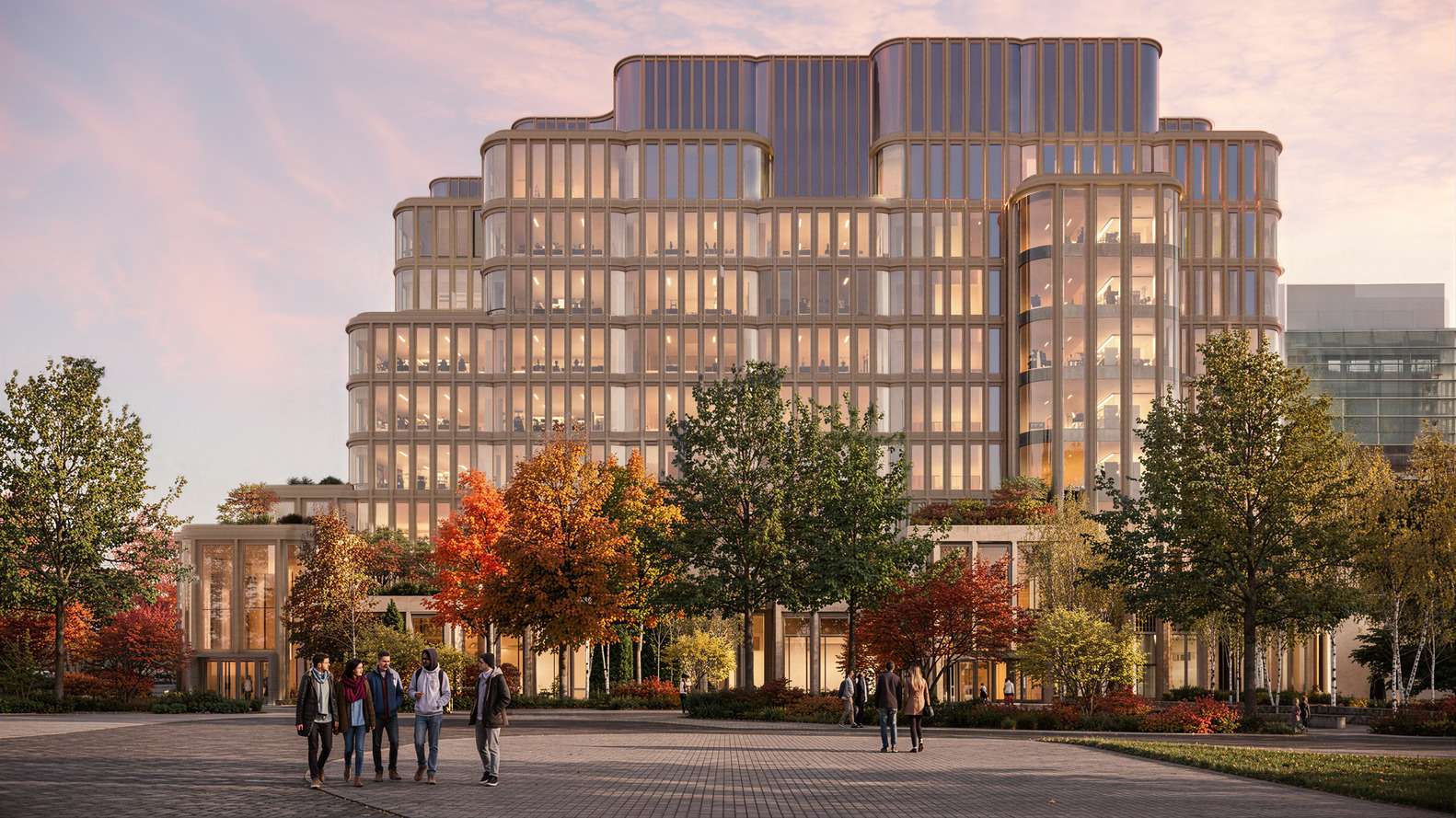
The University of Toronto has unveiled the Temerty Building, a 36,000 square meter health research and education facility at its St. George campus. The project will replace a 1969 wing and expand the Medical Sciences Building. Construction will begin in the second half of 2026.
Replacing a 1969 Wing at the Campus Gateway
The Temerty Building will stand at the western edge of the existing Medical Sciences Building. The site sits beside Convocation Hall and forms a gateway to Front Campus. Therefore, the project plays a key role in the campus’s historic core and broader architecture context.
Nearly 60 percent of the total area will support research functions. The building will include specialized laboratories for infectious disease research and aquatic disease models. Meanwhile, classrooms and shared academic spaces will address growing faculty demands.
The project also strengthens connections between existing buildings by linking corridors and improving circulation. Designers introduced clear movement loops and daylight into previously enclosed interiors.
Flexible Academic and Community Spaces
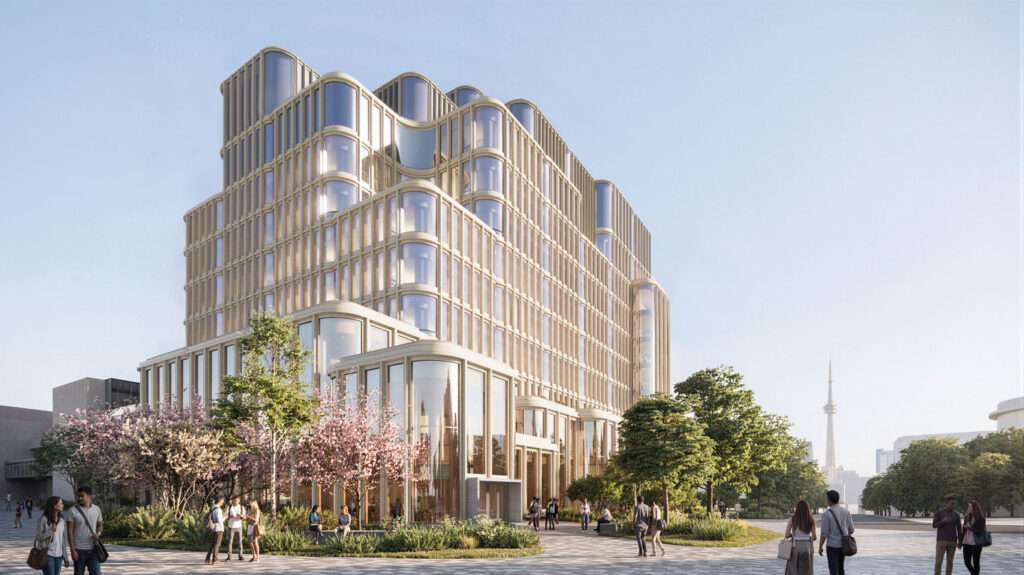
The ground floor features a triple height hall for gatherings and ceremonies. This space will host informal meetings, secondary events, and graduation functions. Moreover, movable walls allow the central area to transform from studio classrooms into an open event venue.
Dedicated spaces for Elders and Knowledge Keepers occupy the southwestern corner. An adjacent Indigenous teaching garden extends learning into the landscape. These elements connect academic life with cultural practices and reflect evolving campus priorities in urban planning.
Above, one level houses flexible classrooms and seminar rooms. Seven additional floors contain laboratories organized into wet labs, dry labs, and open social areas. This layout supports collaboration while maintaining functional separation.

Façade Strategy and Environmental Systems
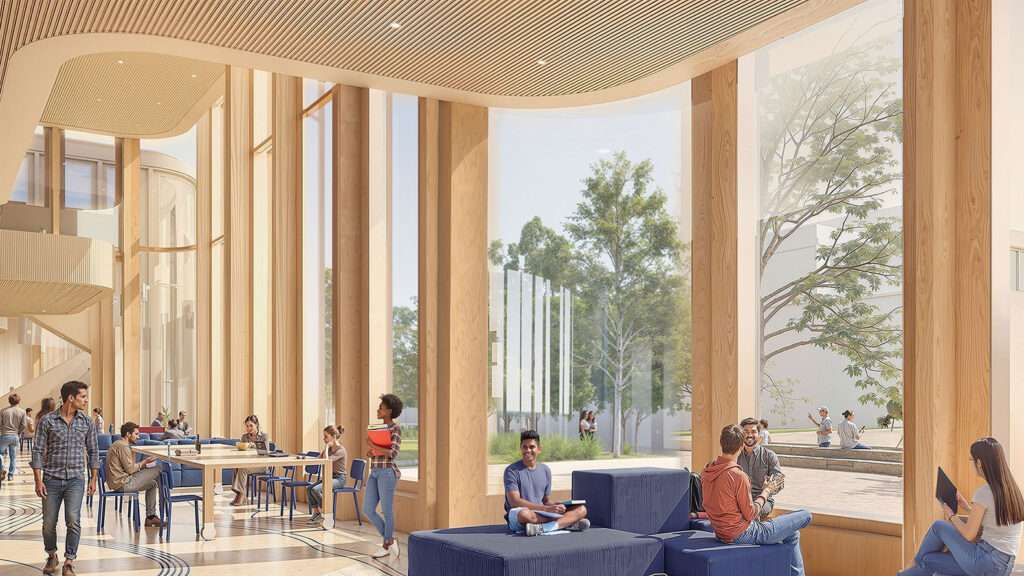
The building form draws inspiration from regional escarpments. A façade of glass and sandstone defines the exterior. Transparent lower levels reveal communal areas and activate the campus edge. The vertical articulation responds to surrounding historic structures.
Material choices highlight durable building materials suited for long term academic use. Curved corners reference nearby colonnades and reinforce visual continuity.
The university aims to become climate positive by 2050. Therefore, the project integrates renewable energy systems and a district energy nodal plant in the basement. This plant will provide heating and cooling to nearby facilities. These strategies align with broader goals in sustainability and responsible construction.
Work on site will begin with preparatory phases in July 2026. The project adds to ongoing institutional development frequently covered in our latest news.
A Quick Architectural Snapshot
Project: Temerty Building
Location: University of Toronto, St. George Campus
Size: 36,000 square meters
Program: Research labs, classrooms, communal halls
Start of construction: 2026
Focus: Health research, flexibility, sustainability, campus integration
✦ ArchUp Editorial Insight
The design of the Temerty Building reflects institutional shifts toward space optimization and climate compliance. By replacing a 1969 structure with a high-density vertical laboratory, the university responds to rising land values and the exhaustion of available ground area on the St. George campus. The program allocation prioritizes research over traditional lecture halls, indicating a strategic pivot toward revenue-generating scientific output. Inclusion of a district energy nodal plant serves as a logistical solution to aging infrastructure rather than a purely environmental gesture. Furthermore, the integration of Indigenous spaces suggests a behavioral adaptation to modern socio-political standards in academic environments. The material choice of sandstone mediates between the cost of maintenance and the requirement for historic continuity. This project is the logical outcome of real estate scarcity, centralized energy management, and institutional rebranding.