econitWood: Pioneering Sustainable Wood Manufacturing

With its sustainable wood manufacturing method, econitWood provides a ground-breaking answer in a society that struggles with deforestation, carbon emissions, and waste generation. Sawdust and wood scraps are converted into novel materials by econitWood, which solves urgent environmental issues and raises the bar for the wood sector. However, what sets econitWood apart from conventional techniques? What are the consequences for the future of interior architecture and design, and how does it address sustainability and resource depletion?
Genesis and Vision
econitWood was founded in Germany to address important problems in the wood industry by professionals in forestry, materials science, engineering, and business. In order to address the growing need for sustainable products, the company aims to limit environmental degradation, eliminate waste, and alleviate deforestation. By converting wood leftovers and byproducts into useful materials, econitWood’s approach guarantees less environmental effect and advances the circular economy.
Sustainable Production Processes
econitWood sets itself apart with its zero-waste concept and effective raw material usage. econitWood uses wood wastes like sawdust, wood chips, and forestry waste instead of traditional wood manufacture, which produces a lot of waste. This strategy supports sustainable forestry practices and is in line with the ideas of a circular economy by optimizing resource consumption and lowering the need for virgin wood.
Adhesive Technology: Using environmentally friendly adhesives that reduce harmful emissions, econitWood is a major player in the production of wood-based materials. Through the use of low-formaldehyde adhesives or bio-based adhesives, econitWood improves indoor air quality and promotes healthier living environments.
Energy Efficiency: Every step of the production process is carefully planned to use as little energy as possible. Energy recovery systems increase energy efficiency and lower total energy requirements by capturing and reusing heat produced during production. This not only minimizes the carbon impact but also cuts operating expenses, making the procedure financially feasible.
Water Conservation: Cutting-edge methods and closed-loop technologies drastically cut down on water usage. In keeping with larger environmental conservation initiatives, econitWood reduces waste and guarantees a minimal environmental impact by treating and reusing water used during manufacture.
Collaboration with Harry Thaler: 3D Printed Nature
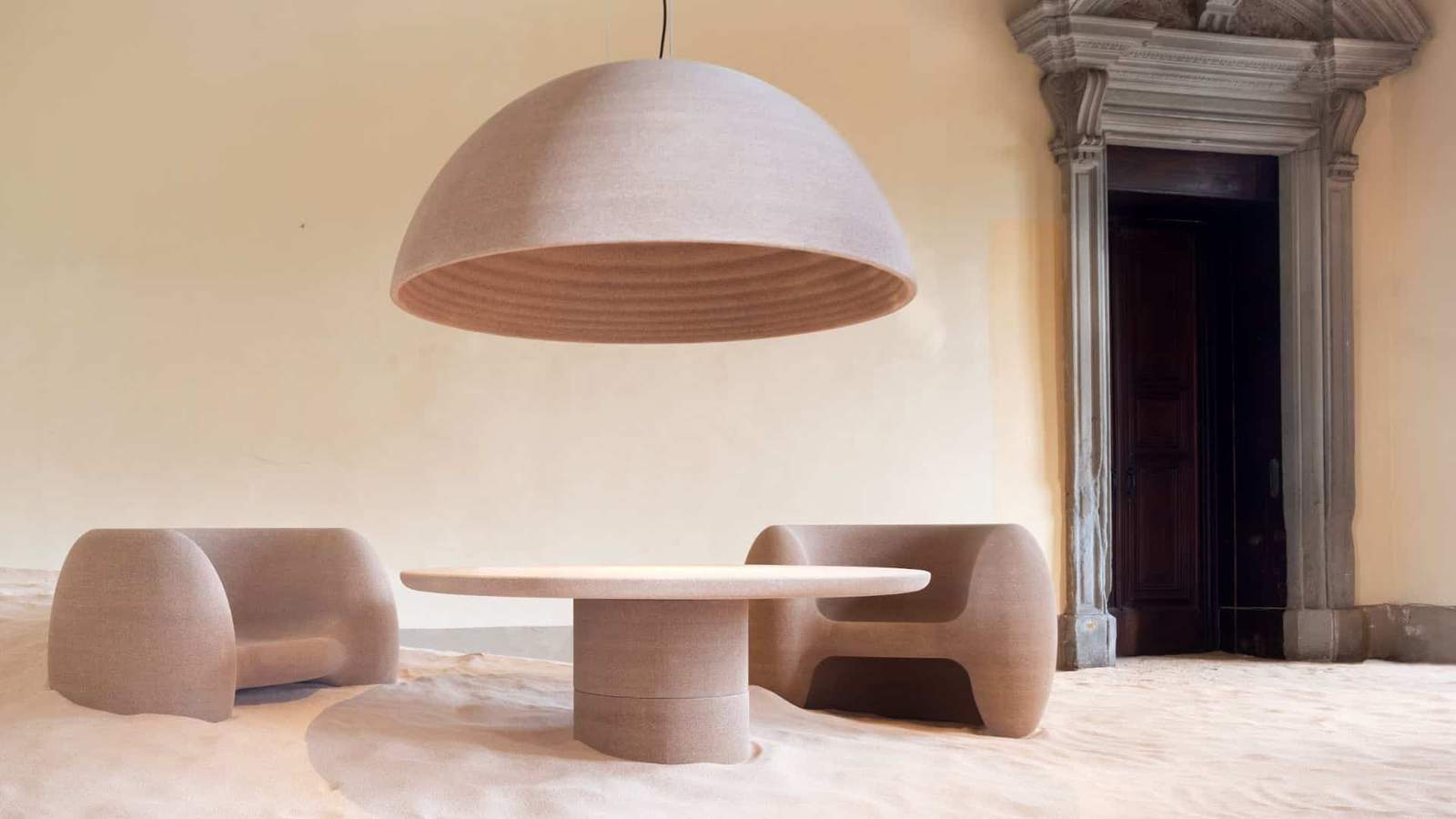
Renowned Meranese designer Harry Thaler demonstrated the potential of econitWood’s 3D printing technology during the 2024 Milan Design Week with his display “Printed Nature.” Exhibiting original design items made with econitWood’s cutting-edge process, the exhibition was held at the historic Villa Vagatti as part of the Fuorisalone within Alcova.
Functional stools and tables, as well as lamp clusters that resembled mushrooms, were among Thaler’s collection’s flowing seats. The pieces highlighted econitWood’s environmentally friendly fabrication method when they were shown against a background of wood powder. The partnership pushed the envelope in terms of innovation and sustainable design by showcasing how wood scraps may be transformed into useful and beautiful products through the use of 3D printing technology.

Versatility and Applications
EconitWood materials are employed in a variety of applications outside furniture design.
- Construction: Manufacturing MDF and particleboard, which are used to make wall panels, roofing, and flooring.
- Interior Fittings: Producing cabinets, furniture, and other interior components.
- Packaging: Providing environmentally friendly substitutes for conventional packaging materials.
Future Implications
econitWood is a significant advancement in the production of wood-based products. Its dedication to efficiency, sustainability, and superior quality not only creates a new benchmark for the sector but also reflects international efforts to lessen environmental effect. The made-to-order strategy maximizes resource efficiency while minimizing the environmental impact of mass production. It also aligns with concepts of responsible consumerism.
Craftspeople are able to produce elaborate designs that are visually captivating and demonstrate environmental responsibility because to the combination of sustainable materials and state-of-the-art technologies. econitWood is leading the way in this movement, providing a picture of a future in which sustainability and artistry live in harmony, as demand for sustainable products rises.
Conclusion
To sum up, econitWood’s creative approach to wood production tackles important environmental issues and offers adaptable and sustainable interior and design solutions. Its production approach is a leader in the changing field of environmentally conscious wood production since it not only demonstrates a better way to manufacture but also reflects a larger change towards responsible consumerism and environmental sustainability.
Finally, find out more on ArchUp: