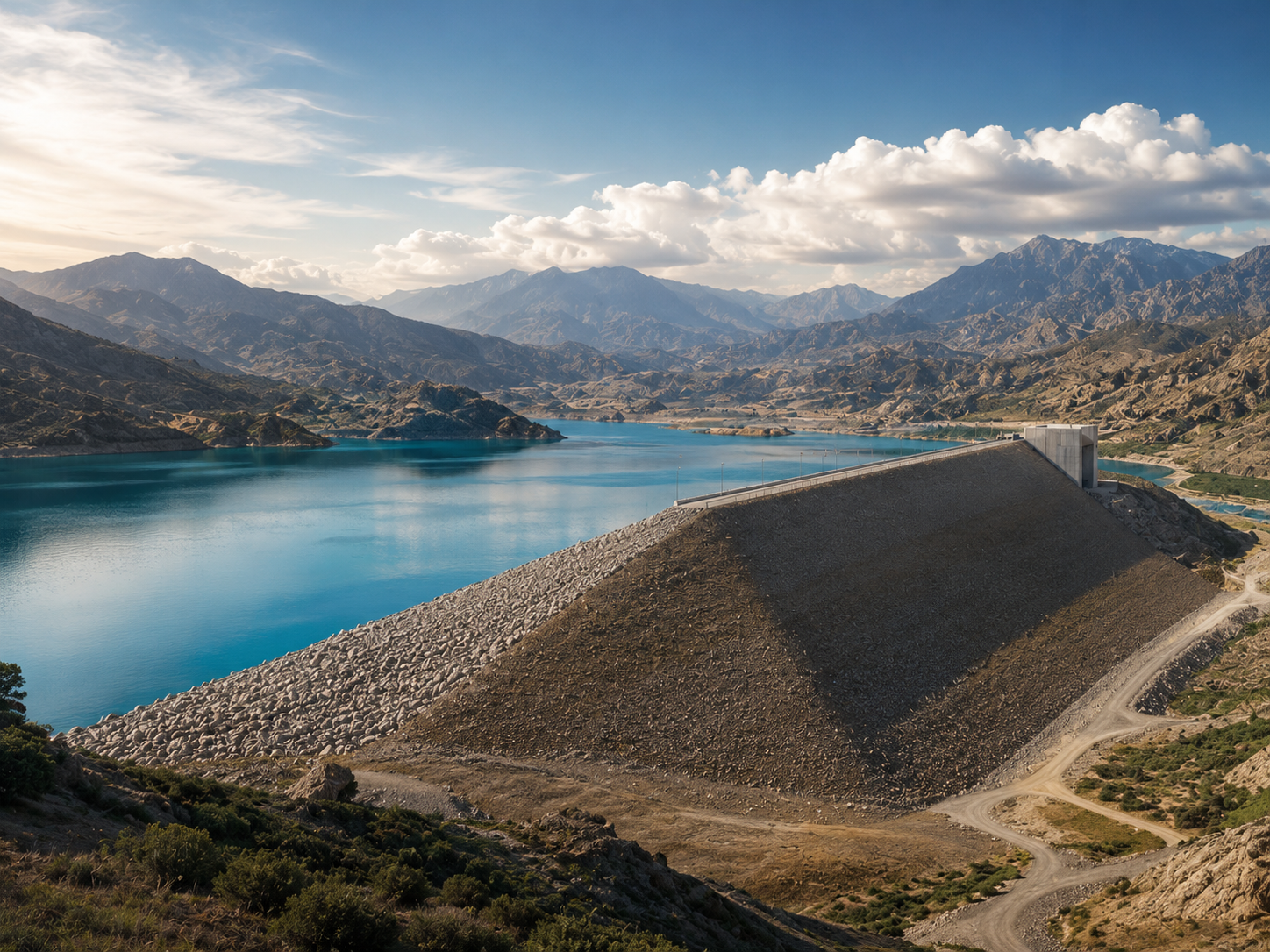
Literature Review: Experimental and Numerical Study of the Effect of Earthquakes on Earth Dams

1. Introduction Earth dams represent critical infrastructure serving multiple strategic purposes, including irrigation, water supply, and flood control. The seismic safety of these structures is of paramount importance, as failure during an earthquake can lead to catastrophic downstream consequences. Historical precedents highlight this vulnerability; for instance, the 2011 Tohoku earthquake in Japan damaged 745 out of 3,730 small earth dams in Fukushima Prefecture alone, leading to the complete collapse of three dams, including the 18.5-meter-high Fujinuma dam which resulted in human casualties. Similarly, the 2008 Wenchuan earthquake in China inflicted severe damage on numerous structures, including four large earth and rockfill dams exceeding 100 meters in height. These catastrophic events underscore the urgent need for comprehensive research into the seismic behavior of earth dams through both experimental physical models and advanced numerical simulations. Consequently, this review synthesizes current knowledge on the seismic performance of earth dams, focusing specifically on shaking table experimental studies, numerical modeling using finite element and finite difference methods (including the GeoStudio suite), and soil improvement techniques utilizing cement and polypropylene fiber reinforcement.
2. Shaking Table Experimental Studies on Earth Dams Shaking table testing has been extensively employed as a primary method to investigate the dynamic behavior of earth dams. Researchers have conducted full-scale shaking table tests on 3-meter-high model embankments at the E-Defense facility in Japan to meticulously examine the seismic performance of small earth dams repaired with sloping core zones (ESCZ) and geosynthetic clay liners (EGCL). When tested simultaneously under Level-1 (177 Gal) and Level-2 (471 Gal) seismic motions, the models exhibited distinct behaviors. Level-1 shaking caused no water leakage or significant deformation in either model. However, under Level-2 shaking, large longitudinal cracks developed at the crest of the EGCL model, while only minor cracks appeared in the ESCZ model. The residual crest settlements recorded were 21.4 mm (0.71% of dam height) for the ESCZ and 16.7 mm (0.54% of dam height) for the EGCL, structurally indicating that embankments utilizing geosynthetic clay liners perform comparably to those with sloping core zones. Notably, these studies revealed a phase difference in measured accelerations between the upstream and downstream sides, an anomaly attributed primarily to variations in water content and saturation conditions. Further small-scale tests on 400 mm high models confirmed this resilience, showing no failure along the GCL interface even at severe accelerations up to 12 m/s², while acceleration responses gradually amplified toward the crest of the dam.
These experimental approaches have successfully identified key characteristics of dynamic failure mechanisms. Deformation patterns consistently reveal that upstream slopes experience greater displacement than downstream slopes. This behavior is driven by increased acceleration caused by a reduction in shear elastic stiffness due to higher water content, coupled with a decrease in matric suction within the saturated soils. Furthermore, the development of negative excess pore water pressure on the upstream side indicates an undrained shear behavior of the compacted soils, which subsequently leads to increased effective stress and the restraint of slope failure. This specific phenomenon strongly suggests that achieving sufficient compaction of the upstream embankment material—specifically reaching 95% of its maximum dry density—is a fundamental engineering requirement for earthquake resistance.
3. Numerical Modeling of Earth Dams Under Seismic Loading Advanced numerical modeling has become an indispensable engineering tool for predicting the seismic behavior of earth dams. Extensive numerical studies using the finite difference code FLAC have evaluated how various input assumptions critically affect the performance of homogeneous earth dams. Research demonstrates that assuming a rigid bedrock can overestimate crest settlements by approximately 100% compared to a compliant bedrock, even when bedrock stiffness is exceptionally high. Furthermore, neglecting the vertical component of ground motion typically underestimates permanent crest settlements by about 30%, while ignoring pore water pressure build-up during seismic shaking can reduce settlement estimations by up to 50%. Notably, the largest settlements are consistently observed under resonance conditions, where the input motion’s mean period closely aligns with the fundamental period of the structural system.
Complementing these findings, comprehensive fully coupled dynamic finite element (FE) analyses have been conducted on structures like the La Villita earth dam in Mexico, utilizing cyclic non-linear constitutive models that account for the full stress history of the dam, including layered construction and reservoir impoundment. These studies highlight that 2D plane-strain analyses require specific stiffness adjustments to accurately account for the stiffening effect inherent to narrow canyon geometries. Similarly, assessments of the Marana Capacciotti earth dam using kinematic hardening constitutive models for structured clays revealed that advanced fully coupled nonlinear approaches provide highly realistic predictions of permanent displacements. These displacements are fundamentally associated with seismic-induced plastic strain accumulation and the subsequent development of excess pore water pressure, highlighting the limitations of simple empirical regression models.
In the realm of commercial geotechnical software, the GeoStudio suite—comprising SEEP/W, SLOPE/W, and QUAKE/W—has been practically utilized for the seismic analysis of earth dams. For example, analyses of the Al-Wand earth dam in Iraq under various seismic peak accelerations demonstrated that pore water pressure values at the dam’s base are consistently greater than those at the top, although increasing the acceleration magnitude does not yield a direct or proportional effect on these pressure values. The simulations further showed that both horizontal and vertical displacements escalate progressively over the duration of the earthquake, paralleled by a continuous decrease in effective stress, which indicates progressive structural soil weakening. This underscores the software’s capability to model complex dynamic interactions when accurately calibrated.
4. Soil Improvement for Earth Dams: Cement and Fiber Reinforcement Geotechnical soil improvement utilizing cement and discrete polypropylene fibers has emerged as a highly promising technique to enhance the mechanical properties of earth dam materials. Investigations into the uniaxial compression response and seismic wave velocity of cement-stabilized sandy clays indicate that fiber addition unequivocally increases compression strength across all cement contents. These fibers prove increasingly effective with higher degrees of cementation, particularly at the early stages of the stress-strain curve where the secant deformability modulus is significantly augmented. Engineering consensus points to a 0.15% fiber content as the most effective ratio for optimizing both strength and deformability. However, P-wave velocity measurements derived from ultrasonic tests show inconsistent correlations with the mechanical properties of fiber-reinforced specimens, suggesting that such non-destructive diagnostic techniques should be applied with high caution in fiber-reinforced matrices.
High-amplitude resonant column tests investigating the dynamic properties of fiber-reinforced sands under saturated conditions further reveal that at small strains, the maximum shear modulus (Gmax) decreases with increasing fiber content due to a reduction in direct sand-grain contacts. While the inclusion of fibers helps mitigate stiffness degradation in well-graded crushed rock mixtures, it shows negligible effects on uniform natural sands, and material damping remains largely unaffected across the board. Scaling these material properties to macro-structures, analyses of embankment dams utilizing reinforced cohesive shells with non-woven geotextiles demonstrate that reinforcement successfully decreases both crest displacements and internal shear strains by nearly 20%. Nonetheless, the beneficial effects of such horizontal reinforcement progressively diminish as the total height of the dam increases, while simultaneously causing a slight amplification of input acceleration at the crest.
Innovative material applications extend beyond internal reinforcement to seepage control mechanisms. Centrifuge modeling and 3D numerical simulations comparing polymer antiseepage walls against conventional concrete equivalents under extreme seismic motions up to 0.4g showcase profound differences. The highly flexible and lightweight polymer walls register significantly smaller peak accelerations, with internal compressive and tensile stresses plummeting to a mere fraction of those experienced by concrete walls. Consequently, while concrete structures suffer clear tensile failure under severe shaking, polymer walls maintain their absolute structural integrity and exhibit superior compatible deformation capacity alongside the surrounding soil mass.
5. Synthesis and Research Gaps This extensive review of current literature highlights critical mechanisms of dynamic failure and material reinforcement, yet it simultaneously exposes several profound research gaps. Primarily, while studies heavily rely on either physical shaking table tests or numerical modeling, there is a distinct lack of research systematically combining the two—specifically, validating GeoStudio software outputs against physical model results utilizing identical geometric and loading parameters. Additionally, homogeneous and zoned dam configurations require direct comparative physical testing under standardized seismic events. Furthermore, the combined application of cement stabilization and polypropylene fiber reinforcement within earth dams has not been sufficiently documented through controlled, scaled shaking table experiments. Bridging the scaling effects between small-scale laboratory models and full-scale prototypes remains a pivotal challenge that future combined experimental-numerical research must address to ensure the resilient engineering of global water infrastructure.
✦ ArchUp Editorial Insight
The vulnerability of earthen infrastructure to seismic shock is a clinical symptom of the systemic tension between static human construction and the planet’s kinetic unpredictability. Data layering reveals that relying solely on physical observation is no longer sufficient; the integration of advanced numerical modeling redefines the earth dam from a mute barrier of soil into a highly analyzed matrix of stress variables, pore pressures, and liquefaction potentials. This systemic pressure generates an institutional decision framework where infrastructural survival is dictated by predictive computational simulations rather than sheer material volume.
Consequently, the architectural and engineering outcome is a paradigm shift where the “digital twin” becomes the primary site of structural investigation. Built massing is no longer designed simply to retain water, but engineered to dynamically absorb, negotiate, and dissipate violent seismic energy. In 2026 cities, this rigorous alignment of experimental physics and numerical data transforms civil infrastructure into a proactive spatial defense. The designer’s role evolves from manipulating raw building materials into mastering invisible tectonic forces, finalizing a profound fiduciary responsibility to protect civilizational continuity against catastrophic environmental rupture.
References
[1] Sawada, Y., Oda, K., Jeong, S., & Koyama, N. (2020). Seismic performance and numerical simulation of earth-fill dam with geosynthetic clay liner in shaking table test. Geotextiles and Geomembranes, 48(3), 370-384. DOI: 10.1016/j.geotexmem.2019.11.006
[2] Al-Adhadh, A. R. A., & Al-Saedi, A. S. J. (2021). Seismic performance of Al-wand earth dam: numerical analysis. Journal of Physics: Conference Series, 1895(1), 012015. DOI: 10.1088/1742-6596/1895/1/012015
[3] Masini, L., & Rampello, S. (2020). Influence of input assumptions on the evaluation of the seismic performance of earth dams. Journal of Earthquake Engineering, 26(6), 2842-2873. DOI: 10.1080/13632469.2020.1835747
[4] Sawada, Y., Oda, K., & Jeong, S. (2018). Seismic performance of small earth dams with sloping core zones and geosynthetic clay liners using full-scale shaking table tests. Soils and Foundations, 58(3), 519-533. DOI: 10.1016/j.sandf.2018.01.003
[5] Payan, M., Senetakis, K., Khoshghalb, A., & Khalili, N. (2018). Modulus reduction and damping increase of two sands reinforced with polypropylene fibers. Journal of Materials in Civil Engineering, 30(8), 04018164. DOI: 10.1061/(asce)mt.1943-5533.0002164
[6] Consoli, N. C., Festugato, L., & Heineck, K. S. (2015). Influence of discrete fibre reinforcement on the uniaxial compression response and seismic wave velocity of a cement-stabilised sandy-clay. Geotextiles and Geomembranes, 43(1), 1-10. DOI: 10.1016/j.geotexmem.2014.11.007
[7] Pelecanos, L., Kontoe, S., & Zdravkovic, L. (2015). A case study on the seismic performance of earth dams. Géotechnique, 65(11), 923-935. DOI: 10.1680/jgeot.sip.15.p.009
[8] Elia, G., & Rouainia, M. (2013). Seismic performance of earth embankment using simple and advanced numerical approaches. Journal of Geotechnical and Geoenvironmental Engineering, 139(7), 1115-1129. DOI: 10.1061/(asce)gt.1943-5606.0000840
[9] Amini, M., Jafarian, Y., & Heshmati, A. A. (2010). Seismic displacement analysis of embankment dams with reinforced cohesive shell. Soil Dynamics and Earthquake Engineering, 30(11), 1199-1212. DOI: 10.1016/j.soildyn.2010.04.023
[10] Li, J., Zhang, J., Wang, Y., & Wang, B. (2020). Seismic response of earth dam with innovative polymer antiseepage wall. International Journal of Geomechanics, 20(7), 04020081. DOI: 10.1061/(asce)gm.1943-5622.0001664