Ferrari Flagship Store Combines Heritage Architecture with Industrial Retail Design on London’s Old Bond Street


Ferrari has opened a new flagship store inside a Grade II-listed Queen Anne building at 48-50 Old Bond Street in London. The project preserves the early 1900s Portland stone façade while introducing a contemporary retail interior. Moreover, the 850-square-meter space reinterprets Ferrari’s manufacturing concept for a luxury shopping environment.
Historic Shell Meets Contemporary Intervention
The building retains its original exterior character within Mayfair’s protected streetscape. However, the interior design completely transforms the spatial experience. The design team developed the project around Ferrari’s Officina concept, treating the store as a curated exhibition space rather than traditional retail. Floor-to-ceiling glazing creates gallery-like transparency at street level, connecting the interior to Bond Street’s pedestrian flow.
The structural system remains exposed throughout, revealing columns and proportions inherited from the original architecture. Meanwhile, a continuous stainless-steel element wraps the perimeter, establishing material separation between historic and contemporary layers.

Floor-to-ceiling glazing connects the curated interior directly to Bond Street. Image © Jamie-Stoker/WWD
Industrial Material Palette Defines Spatial Character
The design employs restrained building materials throughout all levels. Concrete flooring provides a neutral foundation while stainless steel, glass, and aluminum define display systems. Therefore, the material strategy echoes automotive manufacturing precision rather than conventional luxury retail warmth. Display fixtures function as engineered components with minimal ornamentation.
Subtle red accents reference Ferrari’s signature color without overwhelming the industrial palette. The construction approach prioritizes contrast between cold surfaces and refined display elements, creating controlled visual tension.
Three-Level Program Organizes Distinct Functions
The basement Caveau level houses rare components and collectible objects from Ferrari’s Maranello headquarters. This floor adopts archival presentation methods, resembling museum display more than commercial retail. The middle level presents ready-to-wear fashion, accessories, and lifestyle products with deliberate spacing between items.
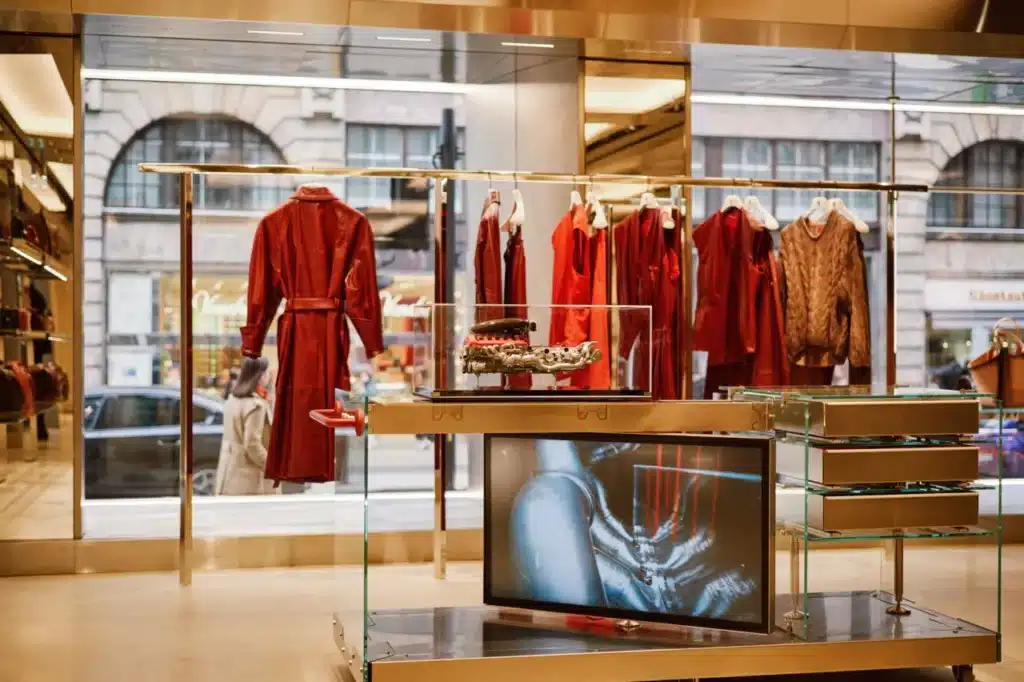
Stainless steel, glass, and concrete define the project’s industrial material palette. Image © Jamie-Stoker/WWD
Furthermore, the upper floor contains the Tailor Made atelier for private client appointments and bespoke garment customization. This level features more enclosed volumes with seating arrangements supporting privacy. Berlin-based Gonzalez Haase AAS and Milan studio Formafantasma provided architectural input under Ferrari Style creative direction, blending exhibition thinking with retail requirements.
Strategic Location Within Luxury Retail District
The Bond Street location positions Ferrari within London’s established luxury retail corridor. This opening joins Ferrari’s expanding international flagship network in major cities. The Mayfair address connects the brand to the district’s long association with high-end fashion and design houses.

The project demonstrates how automotive brands translate manufacturing precision into spatial design language. The store makes shopping an architectural experience rather than purely transactional activity, according to recent news from the luxury retail sector.
A Quick Architectural Snapshot
The Ferrari Old Bond Street flagship occupies 850 square meters across three levels inside a protected heritage building. Industrial materials including concrete, stainless steel, and glass define the interior character. The project balances historic preservation requirements with contemporary retail spatial strategies, creating controlled contrast between old and new building layers.
✦ ArchUp Editorial Insight
The Ferrari Bond Street project reflects a broader shift in how automotive brands approach physical retail. Luxury car manufacturers face declining showroom traffic as digital platforms handle most purchasing decisions. Therefore, these brands must justify expensive real estate through alternative revenue streams.
Fashion and lifestyle merchandise offer higher margins with lower inventory costs compared to vehicle sales. Heritage buildings provide instant credibility without requiring decades of retail presence. The industrial material palette signals manufacturing authenticity while minimizing fit-out expenses.
The three-level program segregates customer tiers effectively. Basement archives create artificial scarcity. Middle floors capture impulse purchases. Upper ateliers secure high-value custom orders through private appointments.
This project is the logical outcome of declining automotive showroom relevance plus luxury real estate competition plus brand diversification pressure.