Foam Earplugs: Single-Use Design and Hidden Environmental Cost

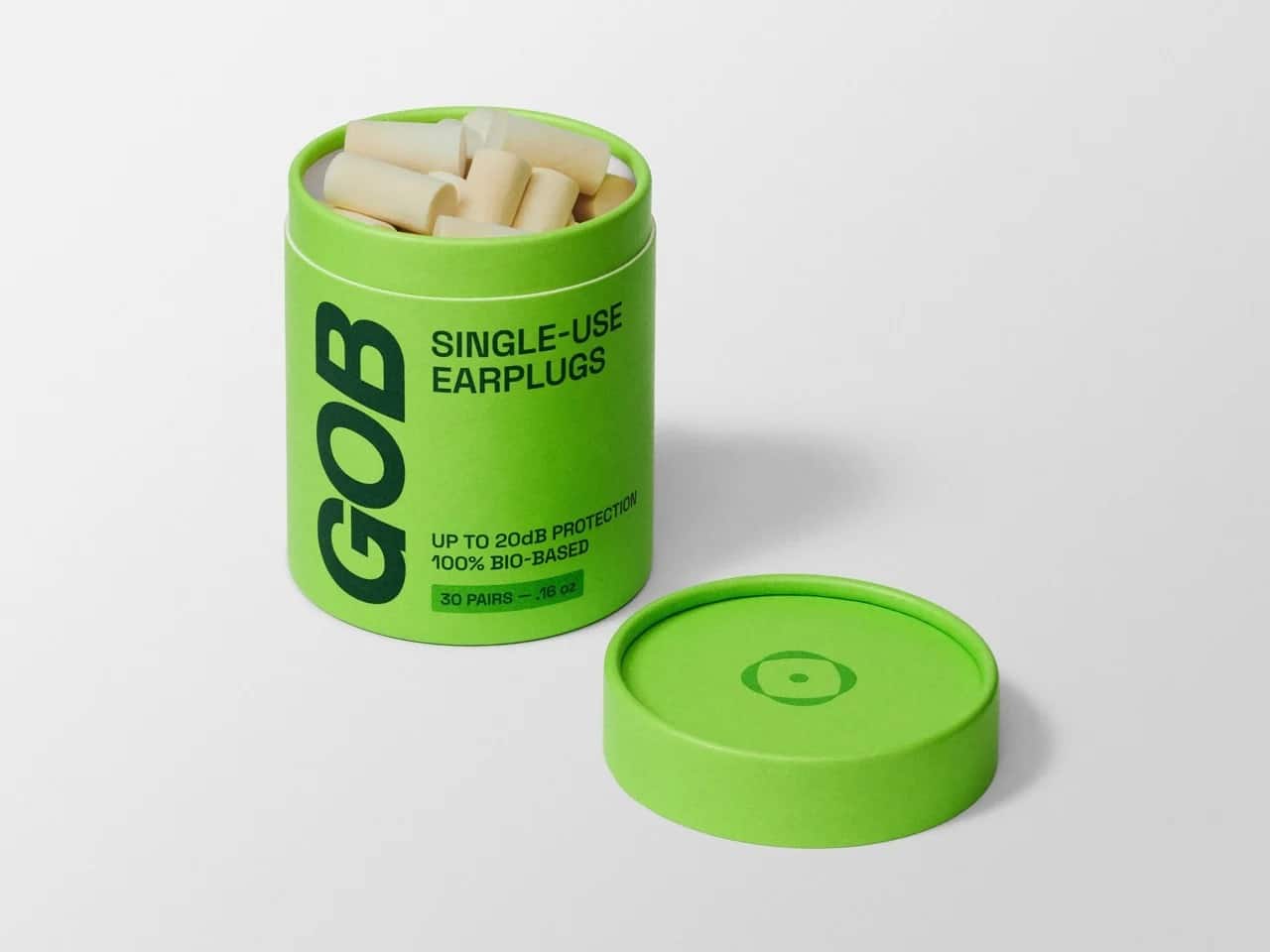
Foam Earplugs: Single-Function Design and Hidden Cost
For over fifty years, foam earplugs have stood as a clear example of single-purpose design. At their core, they are small cylinders made from polymer-based materials such as polyurethane, engineered to expand inside the ear canal in order to reduce surrounding noise. Their effectiveness lies in their functional simplicity, performing one task with high efficiency and without complexity.
However, this model of rapid use and immediate disposal reveals a less visible dimension. These products are widely used across everyday situations, from travel and flights to concerts, and are then discarded immediately after use. As this cycle repeats on a global scale, large quantities of fossil-fuel-based plastic waste accumulate, potentially persisting in the environment for extremely long periods. Here, a contradiction emerges between the product’s individual efficiency and its cumulative environmental impact.
Rethinking the Material: From Manufacturing to Biocultivation
In contrast to this traditional model, attempts have emerged to reimagine not only how earplugs are used, but how they are produced in the first place. Some of these efforts have turned toward bio-based materials derived from “mycelium,” the root-like network that forms the structural foundation of fungi.
Instead of conventional industrial manufacturing, these materials are treated as living organisms grown within controlled environments, resulting in alternatives that perform a similar sound-insulation function to foam, yet differ fundamentally in their life cycle. After use, they can biodegrade naturally and return to the soil as a nutrient source rather than persisting as permanent waste. In this way, the discussion shifts from merely improving product performance to redefining the relationship between industrial materials and ecological systems.
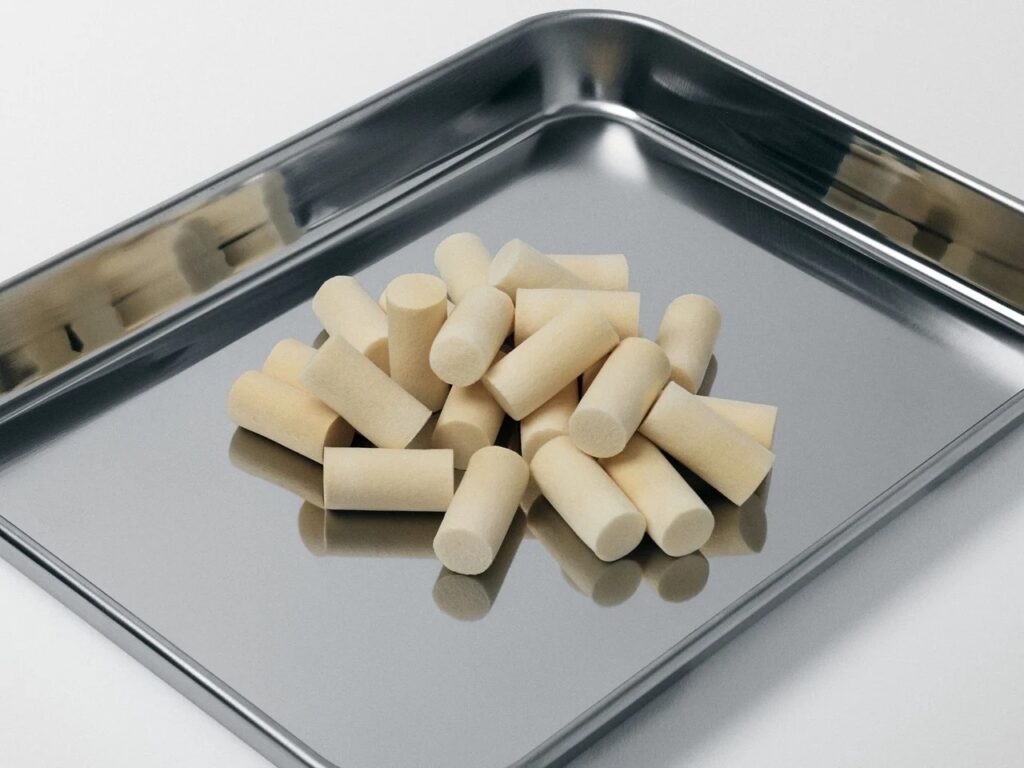
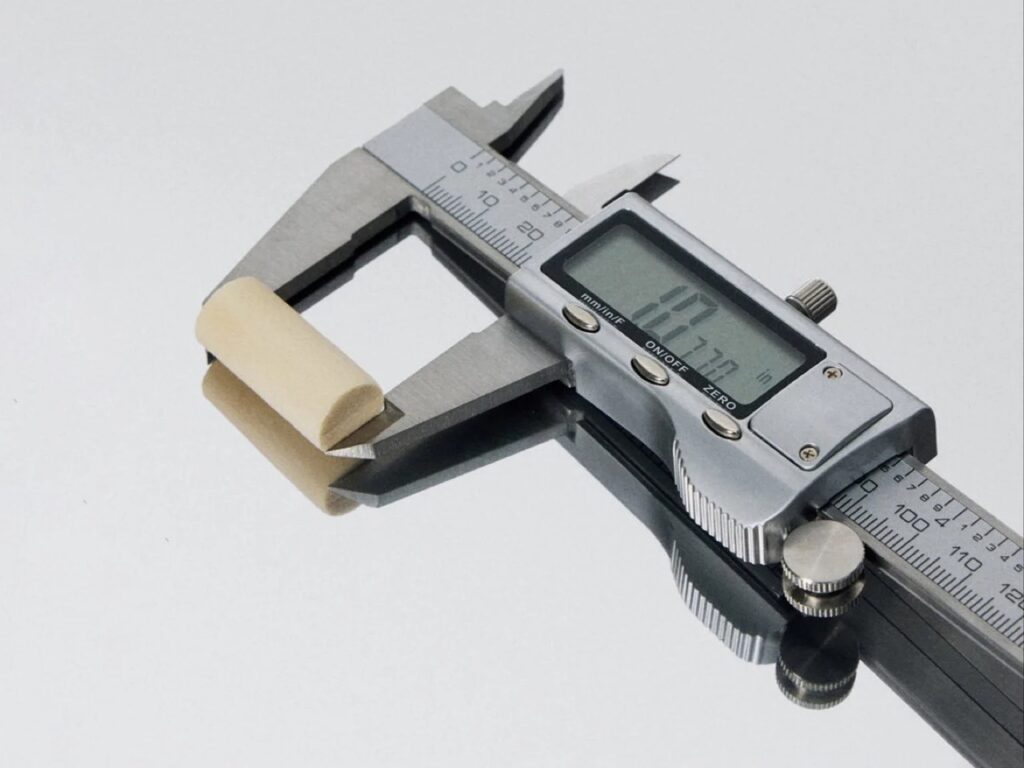
Expansion of Mycelium Use in Bio-Based Materials
The use of mycelium in this context represents a continuation of earlier attempts to apply it across multiple domains, such as packaging materials and experimental structural applications. However, extending its use into short-life personal products, items that are used briefly and then replaced, marks an important shift in how the scope and potential of this material are understood.
From a materials science perspective, this direction opens a broader discussion about the possibility of scaling down bio-based solutions for everyday use, rather than limiting them to large-scale or experimental applications.
Functional Performance Within a Limited Use Range
In terms of performance, this type of material is reported to achieve noise reduction levels ranging approximately between 12 and 25 decibels. This places it within the category of general everyday use cases, such as reducing noise in transportation or at music events, where complete sound isolation is not required, but rather a reduction of sound intensity to a more tolerable level.
Material Structure and Physical Properties
Structurally, the material is presented as a single-component biological mass, without synthetic additives or conventional binding agents. This makes it closer to an organic substance entirely formed through the growth of mycelium in a controlled environment.
It is also characterized by a porous structure and a soft texture, allowing it to adapt to the shape of the ear canal with moderate flexibility. Unlike some traditional foams that rely on strong expansion after compression, this material depends on lighter pressure and a more gradual adaptation to internal form, which alters the nature of its mechanical interaction with the ear.


Redefining Market Access Through the Point of Use
Innovation here is not limited to material or design alone; it extends to the method of reaching the end user. Instead of competing in the traditional retail space for shelf presence in pharmacies or stores, the strategy is redirected toward actual usage environments.
In this context, the focus shifts to live event venues, where demand for earplugs peaks and where conventional products are heavily used and immediately discarded. This positioning at the point of use transforms the product from a displayed commodity into a functional solution directly embedded in its context.
Reducing Dependence on Awareness Through Direct Substitution
From a strategic perspective, this approach reduces the need for large-scale awareness campaigns aimed at changing consumer behavior. Rather than attempting to convince users to adopt an alternative in a different setting, the alternative is introduced directly into the existing system.
As a result, the change becomes material rather than behavioral, with the product being replaced at the moment of need instead of requiring shifts in habits or preferences.
Design That Aligns with Reality Rather Than Reconstructing It
This mode of thinking reflects a deeper understanding of the difficulty of changing user behavior at scale. Consequently, the emphasis shifts toward transforming the material and the product itself, rather than attempting to reshape individual behavior.
The result is a distribution model based on “contextual integration,” where the product reaches users at the right moment and place, making the transition to the alternative smoother and less disruptive to existing habits.

✦ ArchUp Editorial Insight
Foam earplugs function as a regulatory-compliance outcome tied to noise safety and risk management within low-cost mass consumption supply chains, designed through polymer distribution networks that prioritize efficiency maximization and reduced replacement cycles. Their widespread adoption emerges from a demand structure embedded in environments such as live events, air travel, and high-density temporary spaces, where the responsibility for auditory harm is effectively transferred from institutional frameworks to the end user. Mycelium-based alternatives represent a reconfiguration of material pathways from petrochemical extraction to biological production; however, their significance lies more in the reorganization of distribution logic than in the transformation of the material itself. The strategy of insertion at points of use redefines the market as an infrastructural system rather than a conventional sales channel, thereby shifting innovation from consumer behavior to institutional repositioning within networks of events and intensive use environments.