The Hive, Vancouver: A Mass Timber System in a Seismic Zone

Engineered Timber Structural System
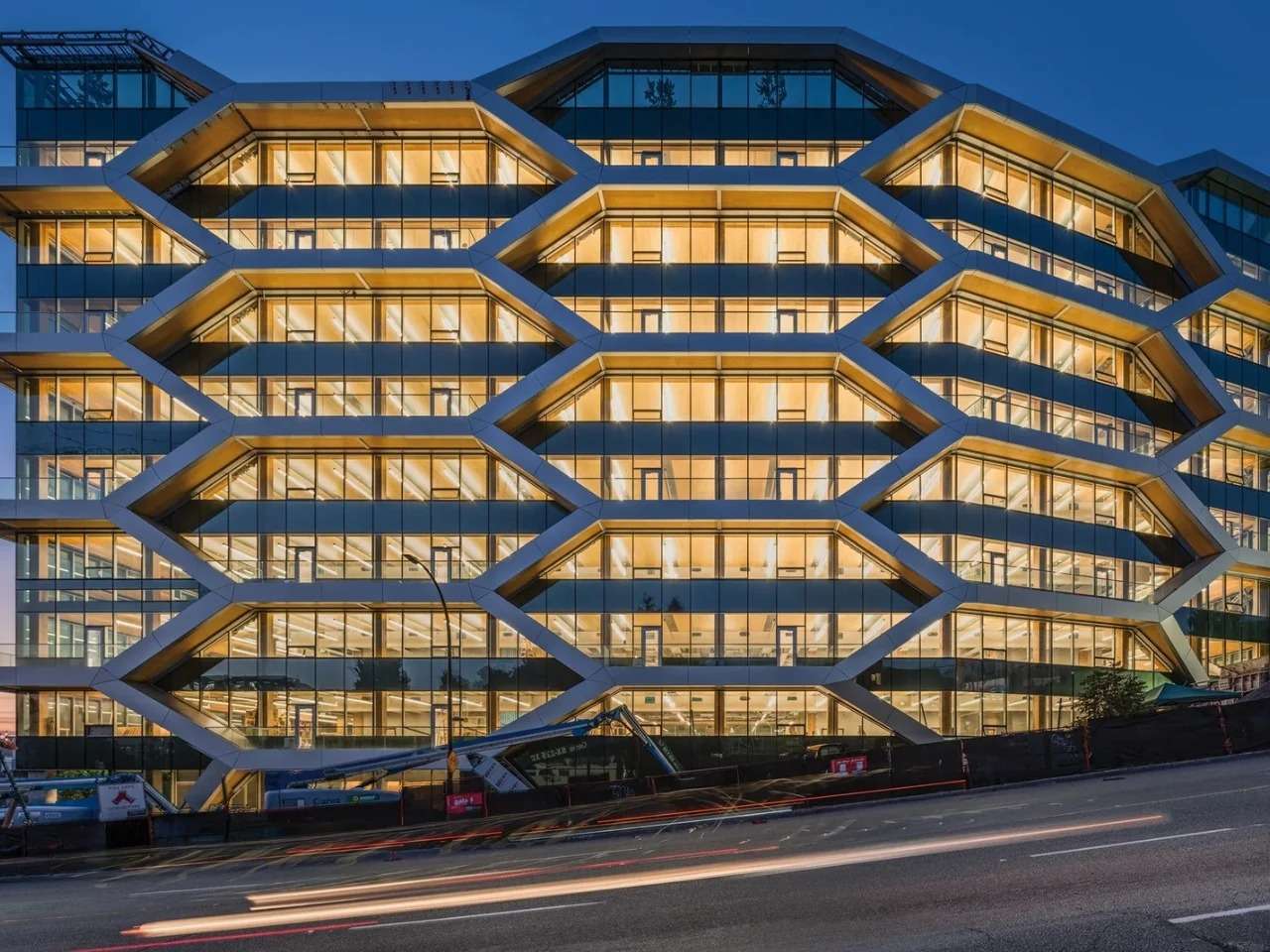
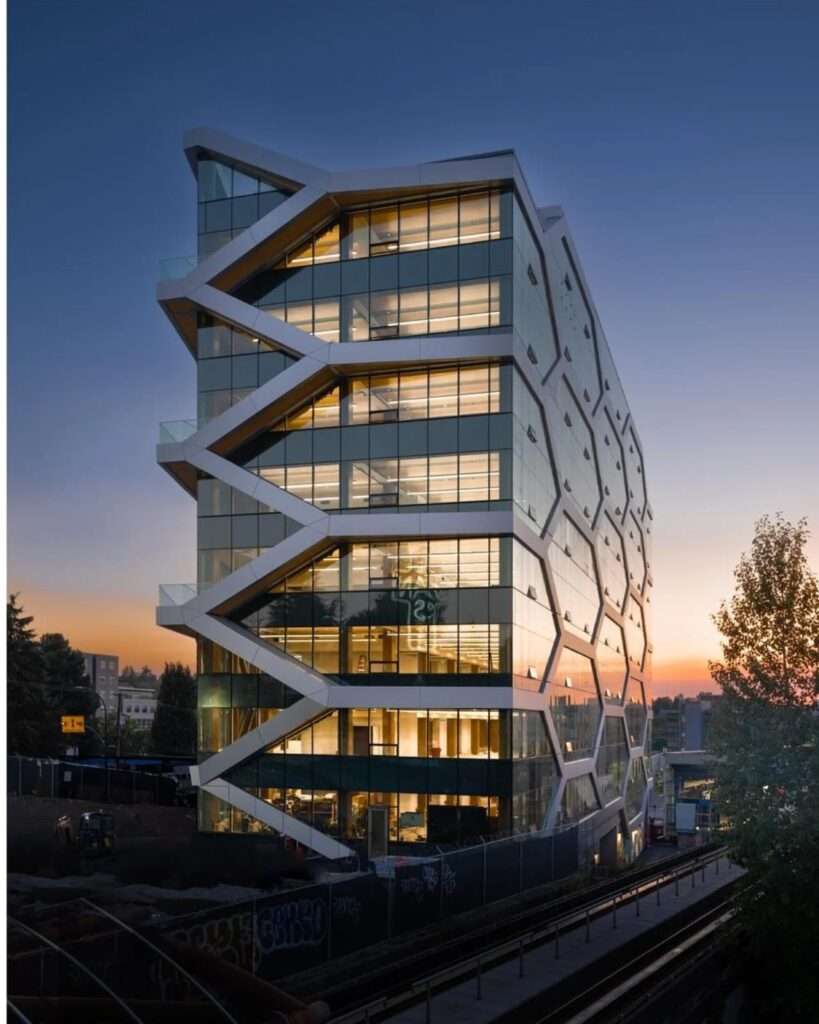
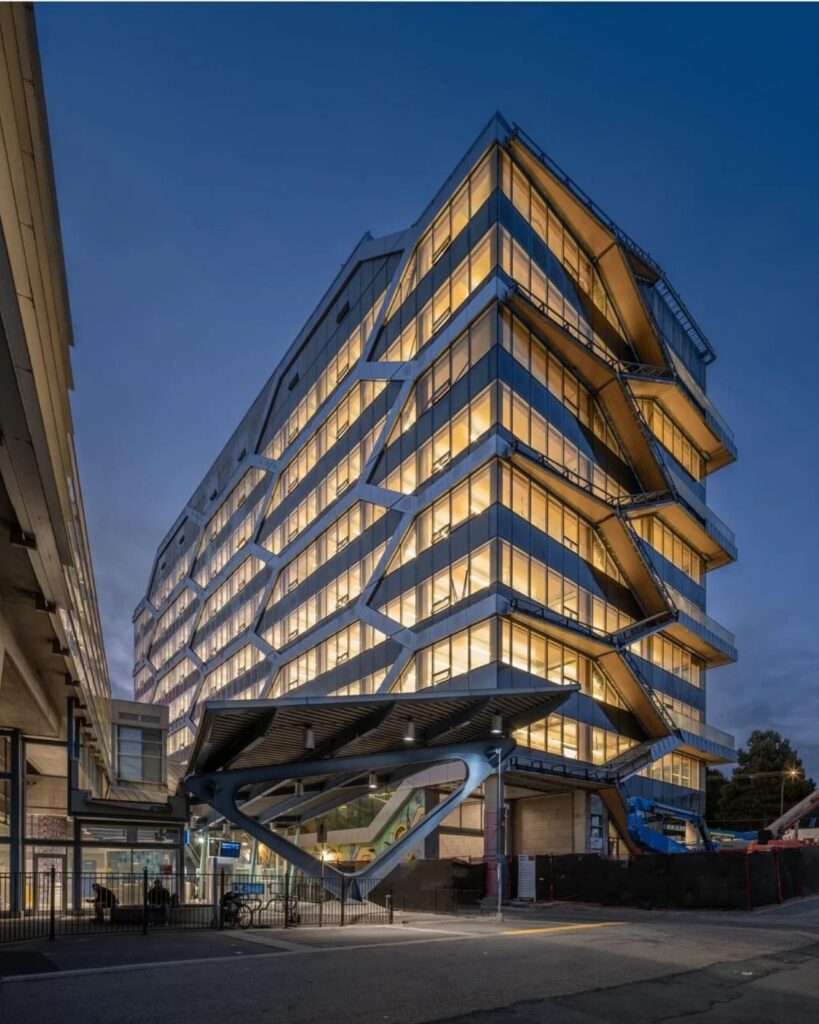
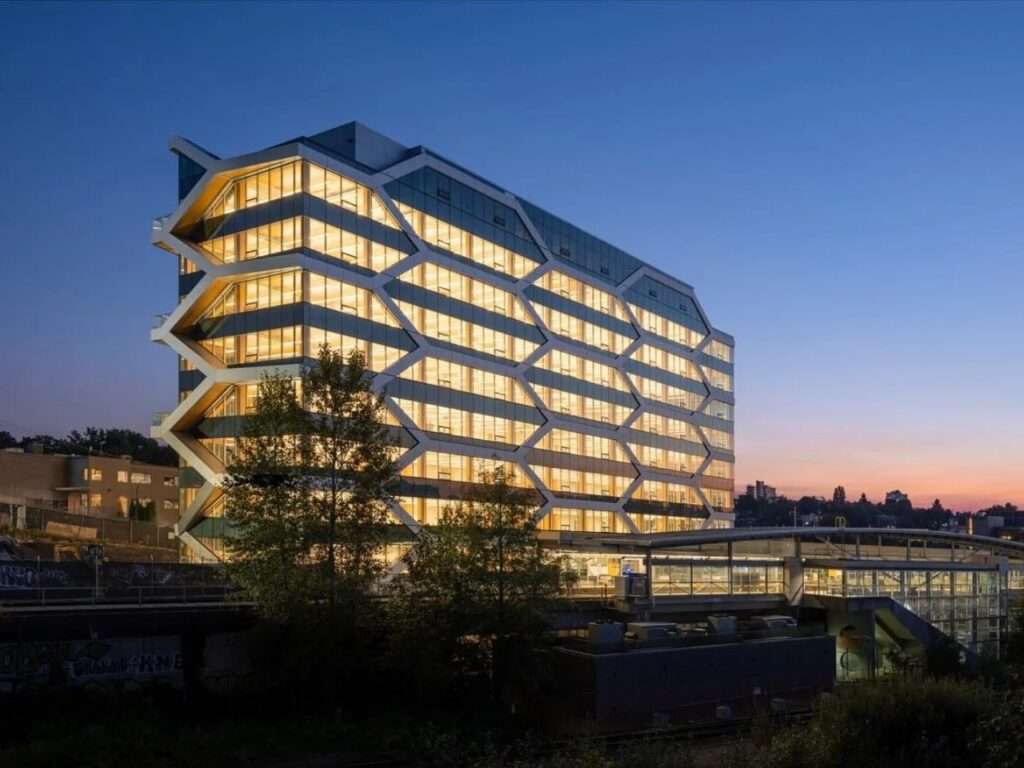
The building is located in the False Creek Flats district in Vancouver and consists of ten stories that rely on inclined glulam timber braces arranged in a honeycomb-like grid pattern. In this configuration, there is no concrete core or hidden steel skeleton; instead, the entire system depends on engineered timber as the primary structural element.
Seismic Performance and Bracing System
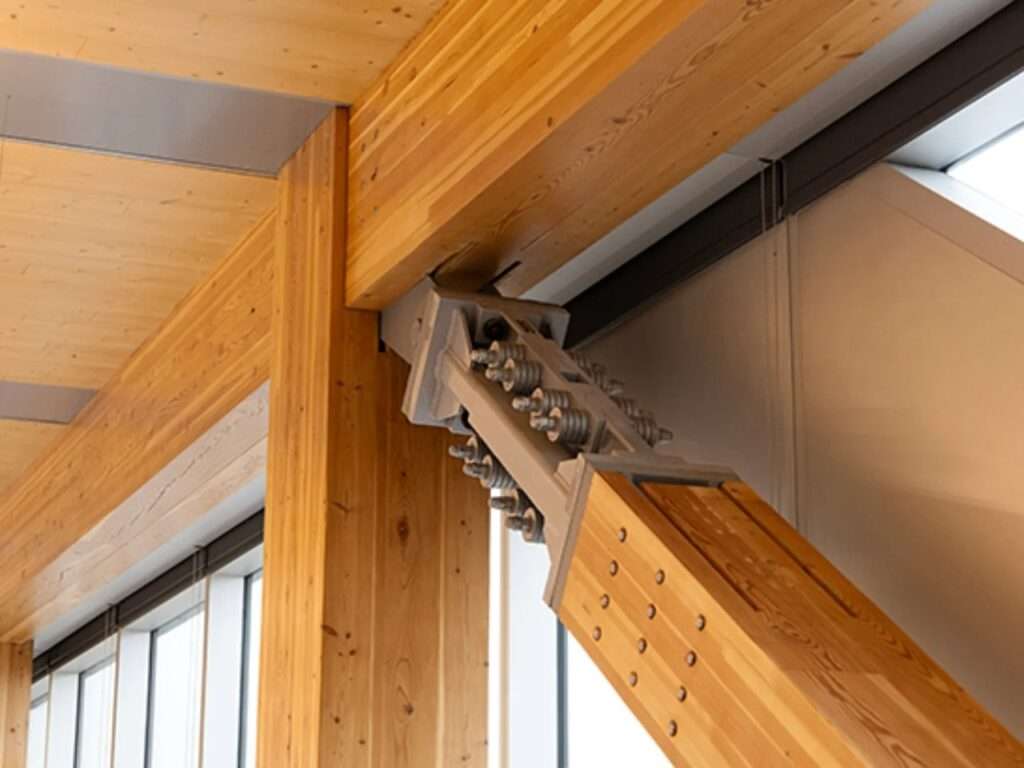
The building relies on 106 seismic dampers integrated into the structural system to regulate its response to ground motion. This solution was developed through a collaboration between Dialog and structural engineers Fast+Epp, with the aim of adapting the timber structure to the requirements of seismic zones while maintaining structural performance stability.
Functional Use and Implications
During its early stages, the project attracted Nature’s Path Foods, before the Insurance Corporation of British Columbia (ICBC) later joined as the main tenant. The selection of a timber building in a seismic context by an insurance entity indicates a functional use that reflects operational confidence in structural performance, rather than a purely visual or formal preference.
Alternative Structural Logic in Seismic Regions
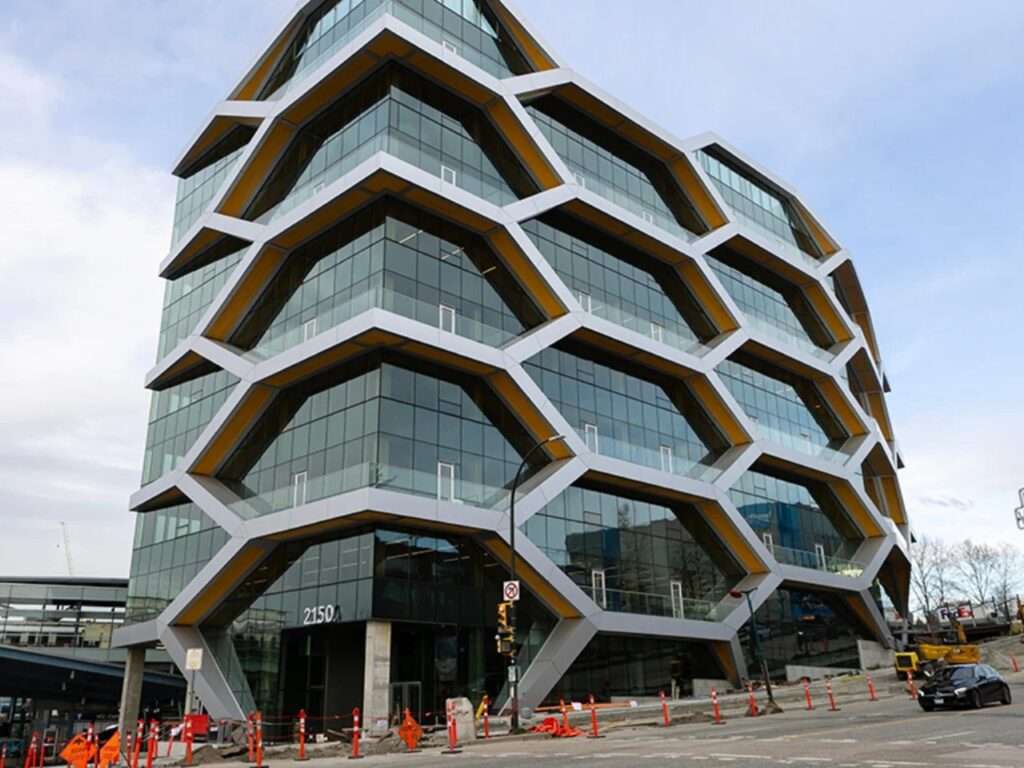
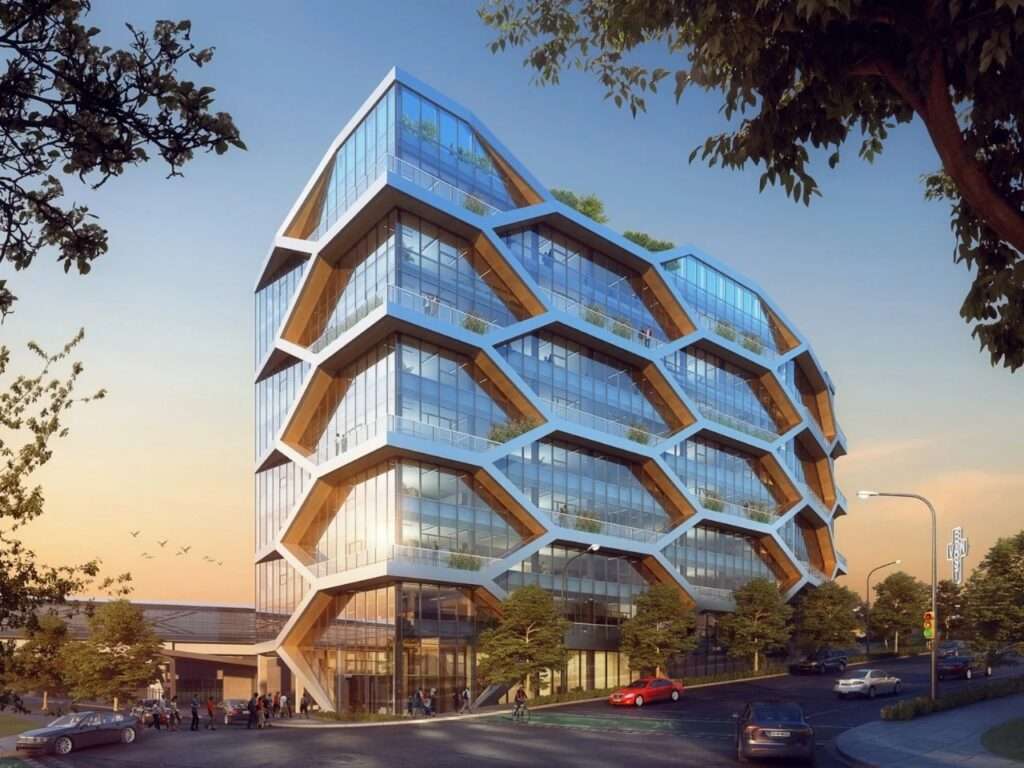
The structural decision in this building departs from the conventional model used in seismic regions, where most projects rely on a concrete core to resist lateral loads. Instead, inclined glulam braces were deployed along the building’s perimeter, forming a regular cellular network. This arrangement does not function as a façade element, but as an exposed structural system that merges form and load transfer, turning the structure itself into a direct architectural expression.
Damping and Motion Response System
In addition to the timber system, 106 Tectonus damping connections were integrated to modulate the building’s response during earthquakes. This system operates on the principle of absorbing energy generated by vibrations and redistributing it in a way that allows the structure to return to equilibrium after motion subsides. Thus, the building does not resist earthquakes rigidly, but interacts with them through a controlled and flexible behavior.
Testing and Structural Verification
Prior to construction, the system underwent extensive laboratory testing at the University of Alberta using large-scale models to verify its performance under seismic loads. This level of testing reflects the scrutiny involved in developing the structural solution and indicates that the adoption of this timber system was not a formal decision, but the result of rigorous engineering evaluation of its feasibility in a real seismic context.
Regulatory Framework and Building Codes
The level of scrutiny in this project is linked to the evolution of building codes in Canada. The National Building Code was updated in 2020 to allow mass timber buildings up to 12 stories, with the changes taking effect in 2022. Vancouver, however, is located in a high seismic-risk zone, which imposed additional requirements beyond the base code. Therefore, obtaining approval was not merely a matter of compliance with new standards, but also involved contributing to the engineering case that justifies this type of construction. This was supported by $4 million in research funding from federal and provincial governments, covering destructive testing, fire resistance testing, and constructability analysis to verify system feasibility.
Comparative Context with Mass Timber Buildings
When compared with other tall timber projects, the structural context difference becomes clear. The Ascent building in Milwaukee, reaching 25 stories, and other projects such as Neutral Edison, have provided important models for using timber in dense urban environments. However, these projects are not located in high seismic-risk zones like Vancouver. In this context, The Hive project is not evaluated solely by its height, but by its ability to operate under more complex seismic conditions, which makes its verification process significantly different in intensity and scope.
Design Logic and the Debate on Timber Buildings
The choice of a perimeter bracing system is based on structural considerations related to the efficiency of lateral load transfer in the absence of a concrete core, rather than formal or aesthetic motivations. However, this decision produces a clear visual composition based on a regular cellular grid. In the broader context, mass timber buildings remain part of an ongoing debate between proponents who highlight carbon storage and biophilic qualities, and critics who raise concerns regarding fire safety, insurance, and seismic performance. This project sits within that debate as a testing case in a complex urban and seismic environment, making it part of the evolution of the discussion rather than a final resolution of it.
✦ ArchUp Editorial Insight
This project emerges from a regulatory transformation in Canadian building codes that allowed the use of mass timber at greater heights, alongside Vancouver’s exposure to seismic risk within its urban system. The real driver is not a purely design decision, but the convergence of public research funding requirements, insurance company standards, and legislative update cycles, which collectively demanded measurable structural validation. Points of friction include elevated seismic risk responsibility and the lack of sufficient precedents for tall timber structures without a concrete core, requiring extensive laboratory testing and multi-level engineering verification. The resulting spatial outcome is a perimeter glulam structural system supported by distributed damping connections, redefining structural load as a negotiated solution between regulatory governance and material performance, where the architect’s role becomes less dominant in favor of institutional system logic.