DELULU Maze: Uncertainty and Digital Culture in Architecture

Digital Terminology Integration within Installation Works
When a colloquial term associated with Gen Z culture is used as the title of an installation work, the initial impression may be linked to fast-paced content or visual impact associated with social media platforms. However, some projects employ these terms as an entry point to a broader idea that goes beyond the superficial use of the word.
The Concept of “Delulu” as a Spatial Experience Framework
The word “delulu” is a shortened form of “delusional,” referring to someone who is “deluded” or “misled.” The term is commonly used in ironic contexts on social media to describe the persistence of hopes or perceptions that do not fully align with reality. However, the term carries a broader meaning related to the experience of young people navigating a complex and constantly shifting reality.
The Maze as a Representation of a Contemporary Condition
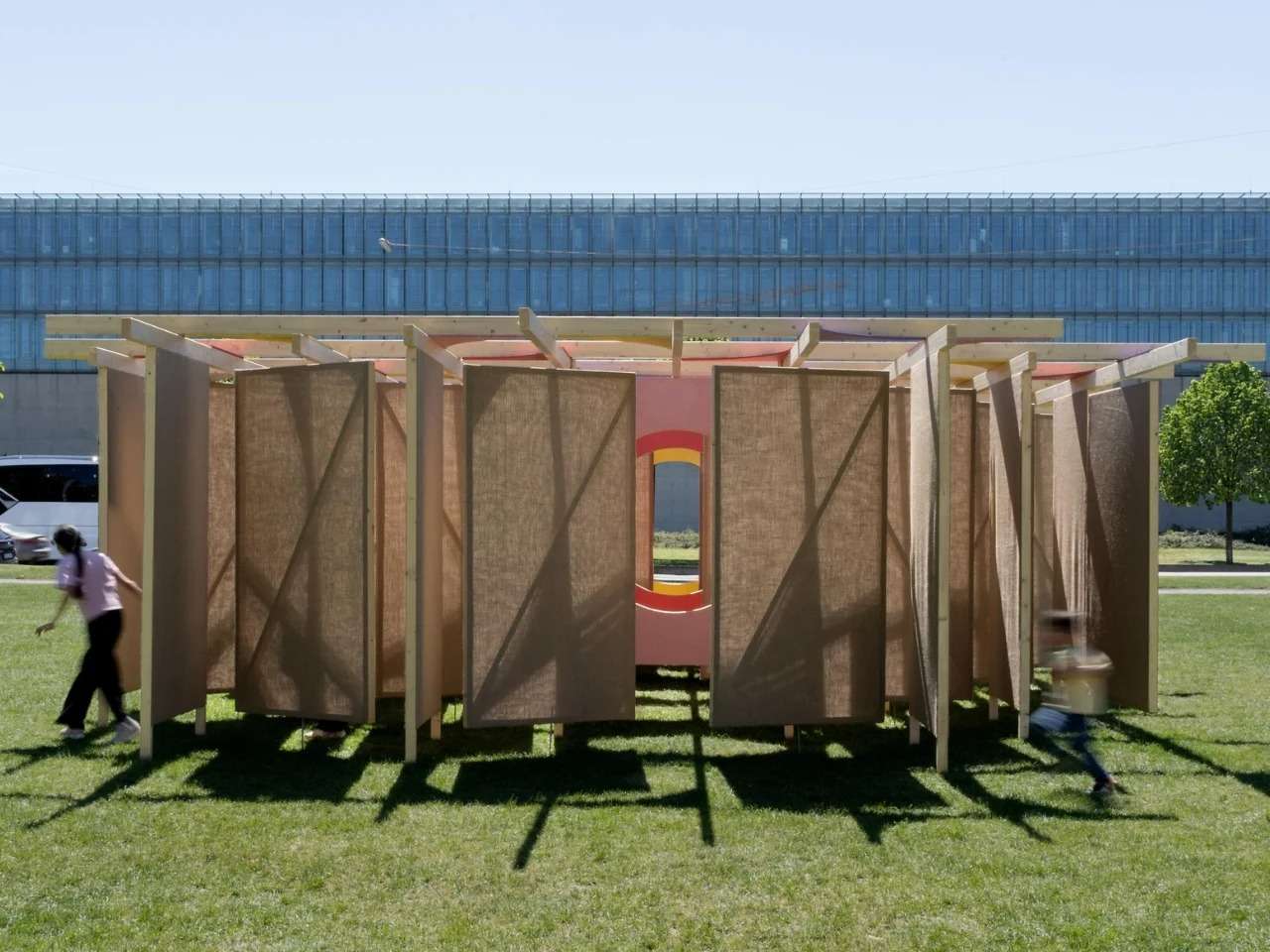
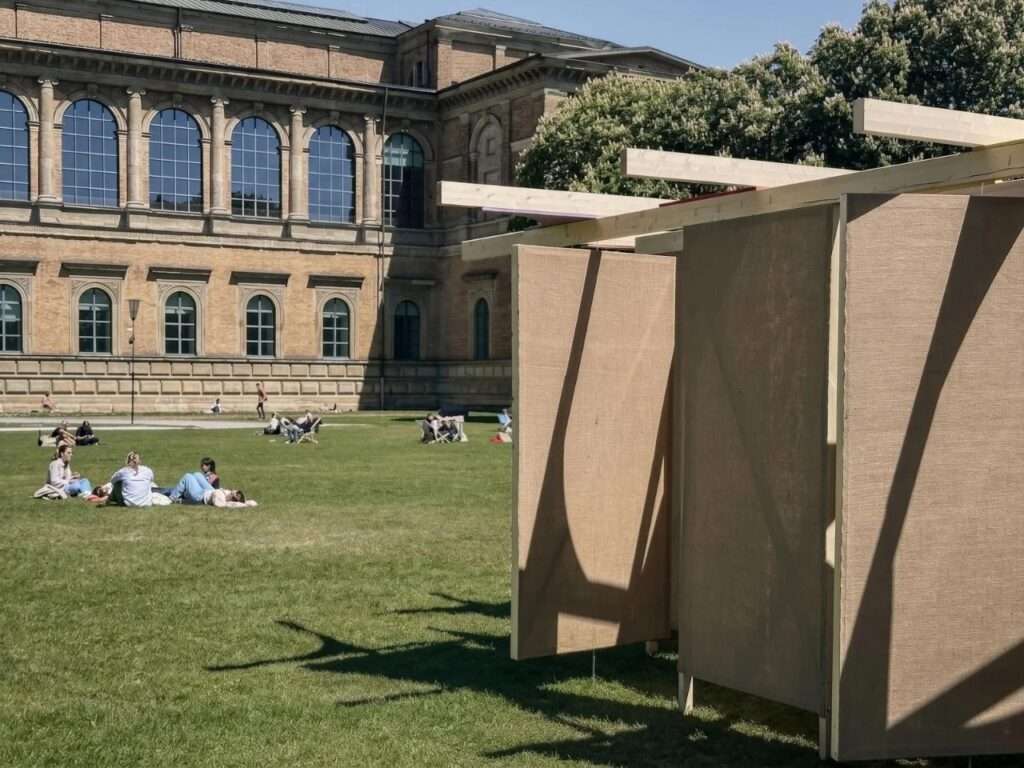
Within a case study such as the DELULU project presented by Studio Carraldo during Munich Creative Business Week 2026, this concept was transformed into a spatial experience based on a jute fabric maze. Rather than presenting the idea as a purely visual element, the spatial structure is used here as a medium to express states of uncertainty and engagement with a reality shaped by climate anxiety, economic pressures, and the continuous flow of digital life.

The Maze as a Tool for Shaping Spatial Experience
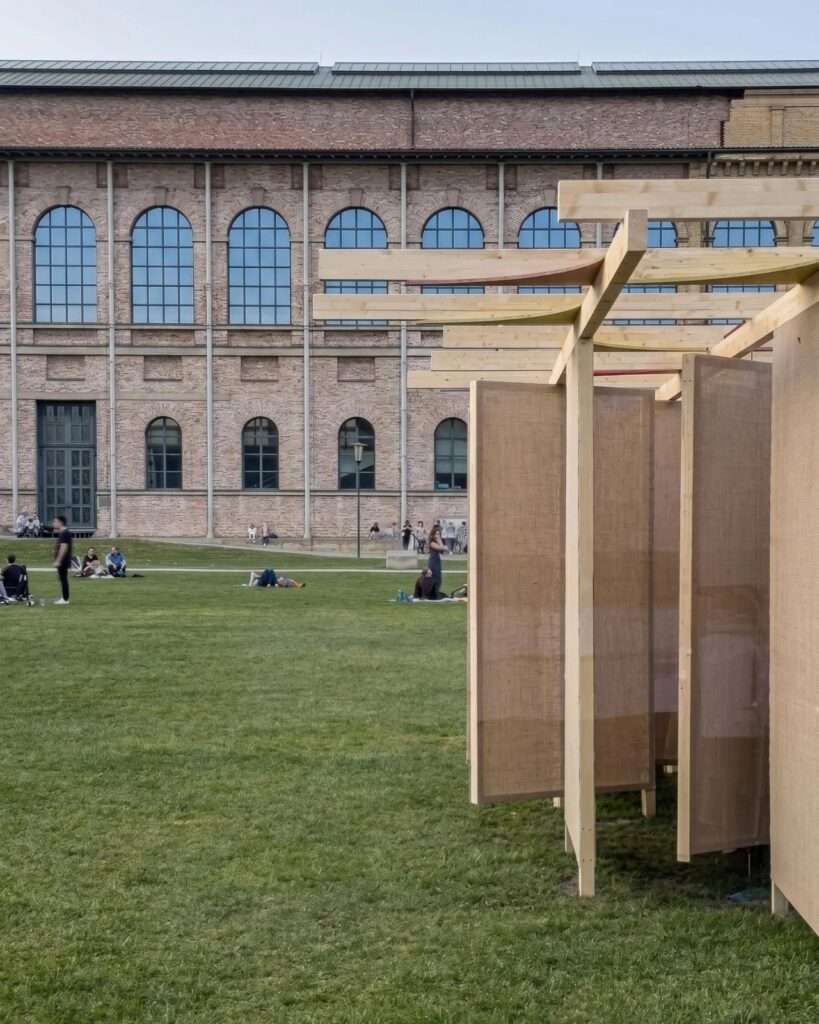
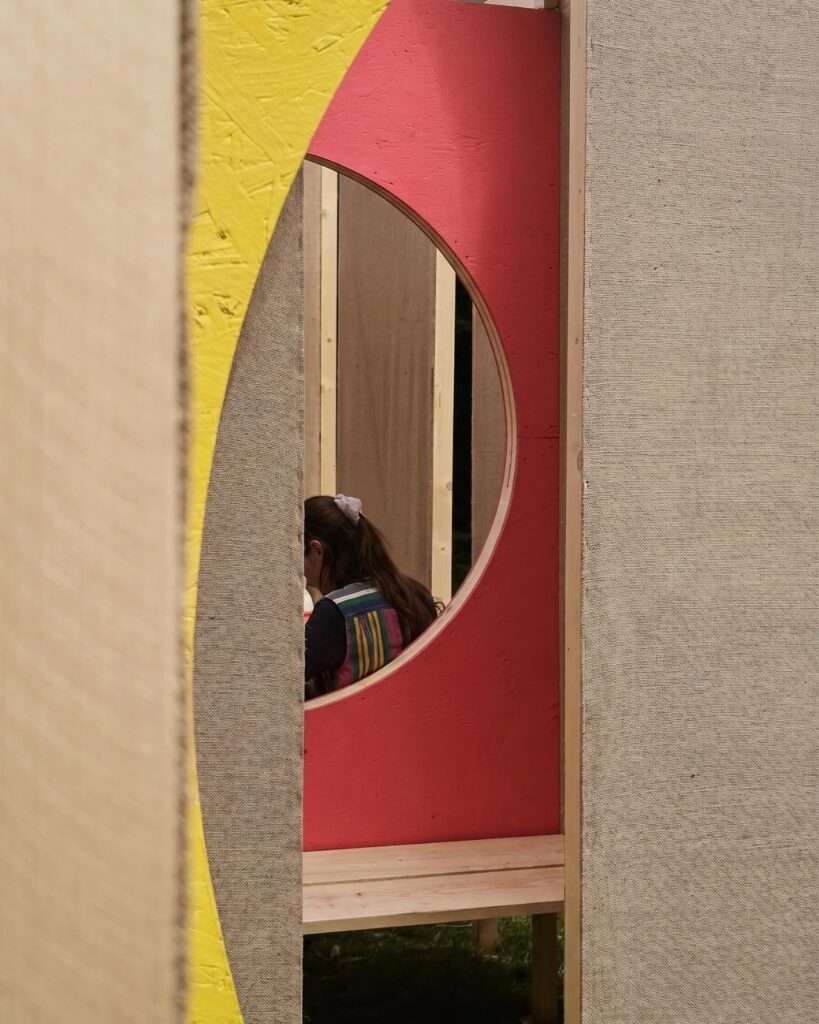
Abstract ideas and emotions can be translated into a tangible architectural experience through a design that allows direct user interaction with space. In the case of DELULU, a walkable maze was created using movable jute fabric walls, where pathways remain in a constant state of flux without full stability. As a result, visitors move through the space without a clear expectation of the next path, transitioning between individual moments and unexpected encounters with others.
Uncertainty as a Design Element
The shifting pathways create a condition that lies between play and uncertainty, turning the experience of movement itself into a core part of the project’s concept. Rather than treating the maze as a problem of reaching a defined exit, the focus shifts to the experience of navigation itself and the range of responses it demands during use. This approach is evident in many contemporary projects that redefine the user-space relationship.
Disorientation as a Cognitive Condition within Space
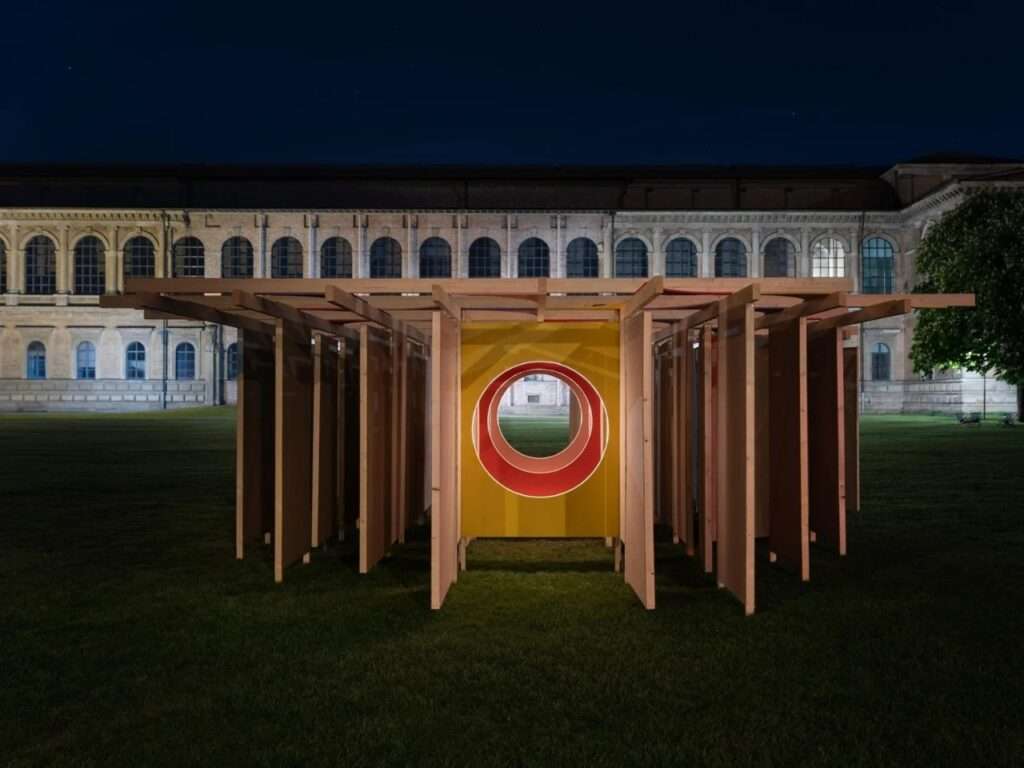
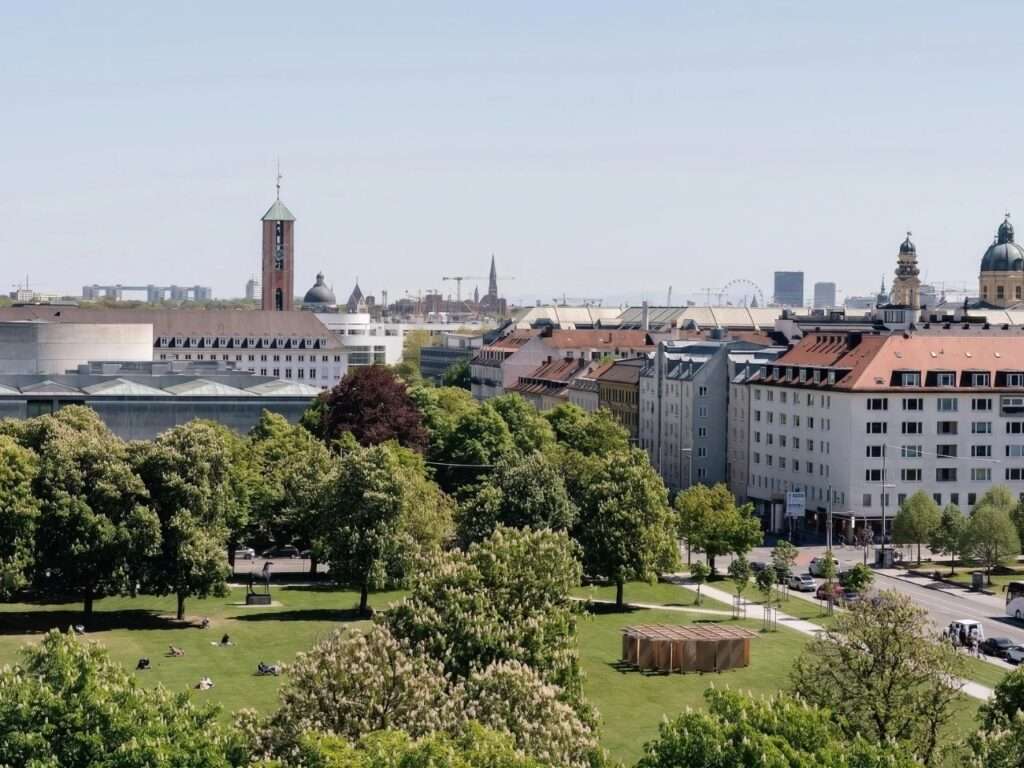
The project was exhibited on the southern lawn of the Alte Pinakothek during Munich Creative Business Week 2026 under the theme “Playground of Possibilities.” In this case study, the feeling of being lost is not treated as a failure of experience but as an intentional design element that encourages users to slow down habitual movement patterns and increase awareness of their surrounding environment. Such innovations in experiential design are frequently discussed in architectural news.
The Concept of “Hyperobjects” and Its Relation to Perception
The conceptual framework of the project is based on the idea of Hyperobjects proposed by Timothy Morton, referring to vast and distributed phenomena that are difficult to fully perceive or comprehend. This idea can include issues such as Climate Change or large-scale digital environments, as well as collective feelings of anxiety related to thinking about the future. From this perspective, the issue becomes how individuals interact with phenomena that exceed their capacity for control or complete understanding.
Play as a Mechanism for Engaging with Complexity
Within this context, the project treats play as a method for engaging with complexity rather than escaping it. Instead of attempting to provide definitive answers or simplify complex phenomena, the spatial experience is used as a way to navigate and directly engage with a state of uncertainty. Those interested in such approaches can follow architecture competitions that encourage innovative thinking.
Reframing a Socially Circulated Concept
The term “delulu” is commonly used to describe the act of holding onto hope despite unstable or contradictory circumstances. In this case study, the term is transformed from a digital slang expression into a concept that can be read as a coping mechanism for contemporary pressures. Rather than being treated as a purely ironic expression, it is presented here as a behavior that reflects awareness of reality alongside an attempt to persist within it.
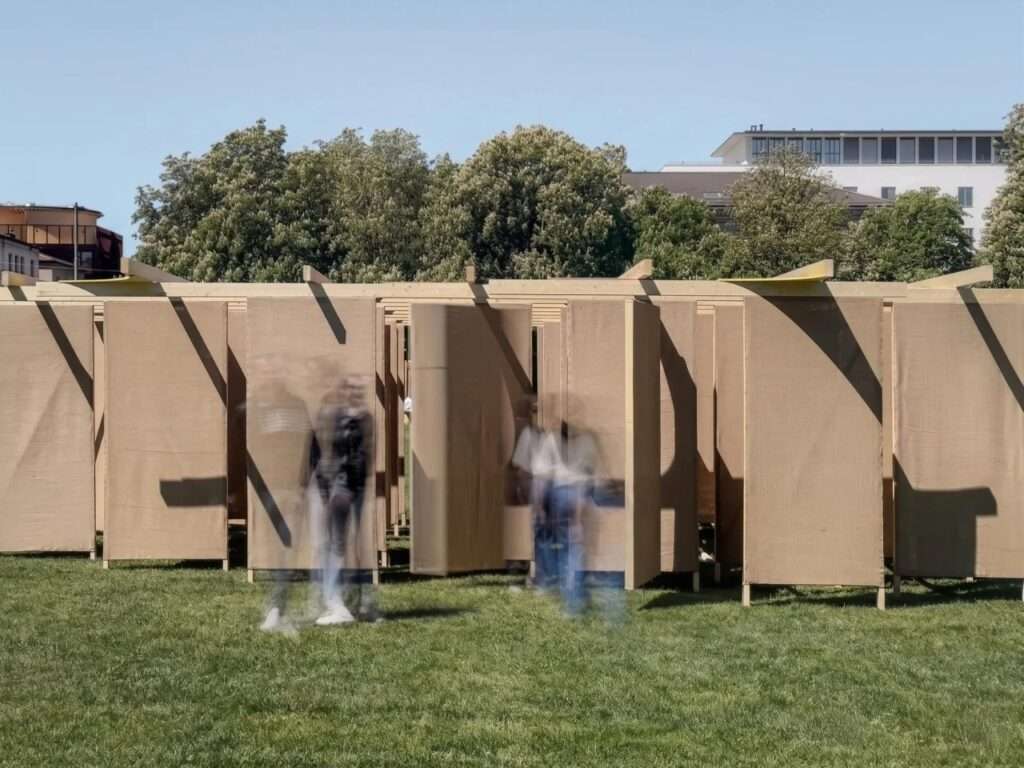
The Role of Material in Shaping Spatial Perception
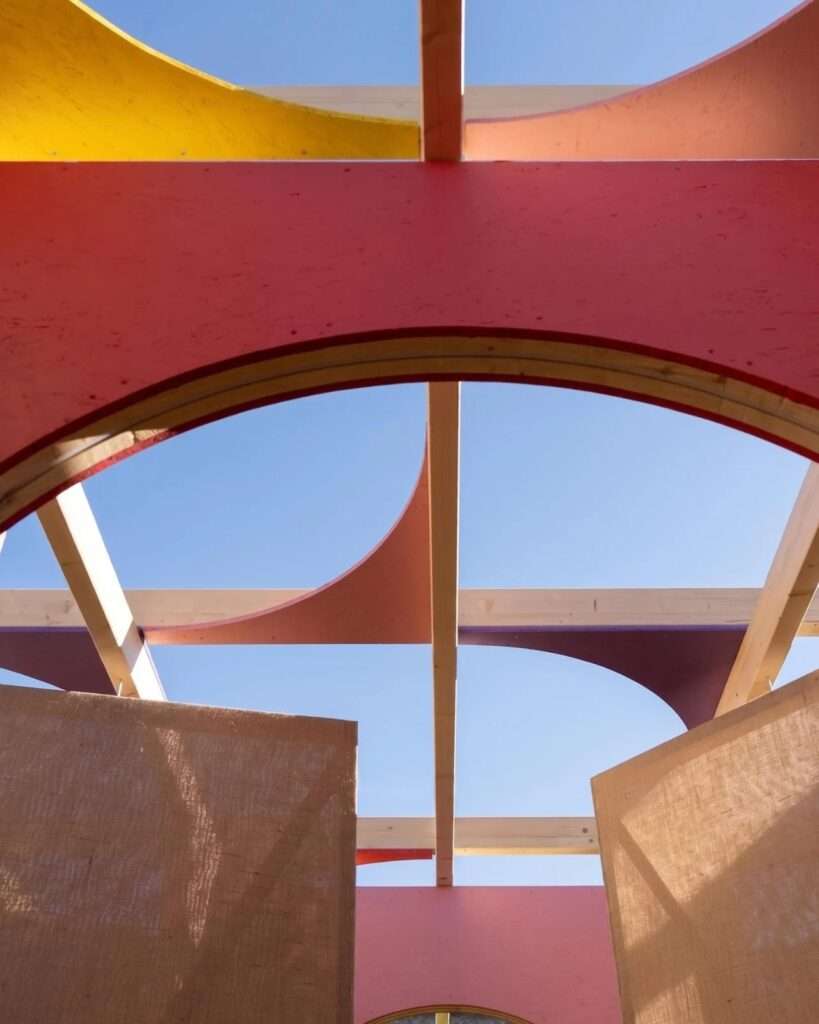
Material selection directly influences how users perceive architectural space. In this case, the use of jute appears to be a decision tied to the nature of the experience itself, as it carries a tactile quality and a simple visual character that avoids technical or futuristic connotations. For a deeper understanding of material properties, refer to material datasheets. As a result, the walls do not appear as rigid separating elements but as physically engaging surfaces, reducing the sense of detachment within the maze experience.
The Relationship Between Material and Psychological Experience
The material used can alter how users perceive space itself. A maze constructed from cold, rigid materials such as steel or glass may generate feelings of confinement or restriction, whereas jute creates a softer and more immediate sense of proximity. Thus, material is not merely a structural or visual choice but a factor that shapes the nature of interaction with space. For more information on material options, see the building materials section.
Design in a Context Defined by Uncertainty
This case study raises a broader question regarding the concept of responsible design within constantly changing environments. Rather than offering a direct answer, the project proposes engaging with uncertainty as part of the experience itself. From this perspective, the question shifts from seeking a final solution to understanding how to interact with and inhabit a changing reality within designed space.
DELULU as a Spatial Outcome
DELULU operates as a spatial output generated within a cultural programming framework linked to Munich Creative Business Week 2026, where institutional funding mechanisms and event frameworks define how temporary urban space is occupied in the vicinity of the Alte Pinakothek museum. The project does not emerge from a direct authorial decision but from the translation of Gen Z-related linguistic shifts into cultural value that can be exhibited within an attention economy. Constraints of temporary construction, jute material supply chains, safety requirements, and visitor circulation form a flexible infrastructural system based on lightweight textile barriers for managing flow. The final form emerges as a negotiation between movement management, visual density, and the organization of groups within space, where disorientation becomes a functional outcome of controlled circulation rather than an independent design objective. Within this context, the role of the architect recedes in favor of the organizational logic of the event structure, while meaning is produced through patterns of population distribution within the experience rather than through a deliberate narrative decision. You can explore architectural jobs and discussions on the evolving role of the architect at the architects lobby.