O-day’min Park Edmonton: Urban Transformation and Public Space

Land Use Transformation in the Warehouse Campus District
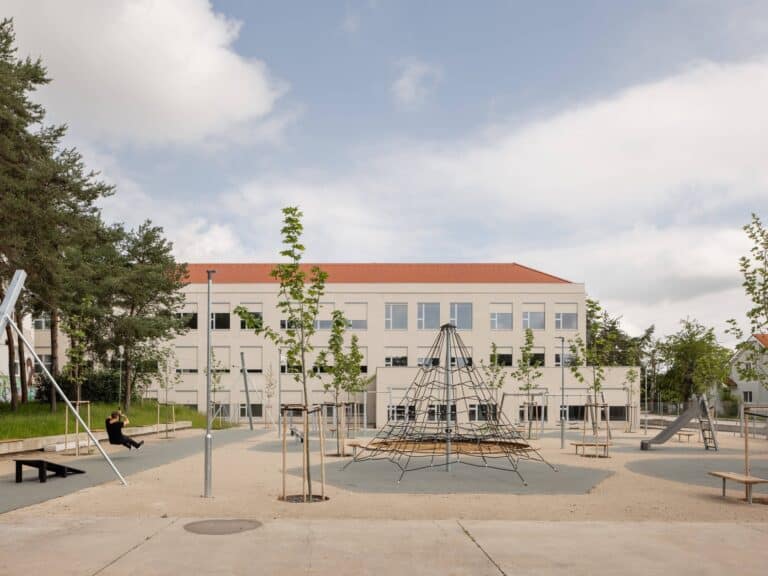
O-day’min Park is located in the Warehouse Campus district in downtown Edmonton, an area undergoing rapid urban development. The site was transformed from a surface parking lot into a new public space, reflecting a shift in land function within the urban context. This transformation aligns with broader trends in Architecture and urban planning.
The Project’s Role in Urban Transformation
The project was commissioned by the City of Edmonton and is part of the district’s transition from a low-density industrial character to a more compact, mixed-use urban environment. Accordingly, the park contributes to supporting this transformation at the level of urban infrastructure. Such shifts are often documented in the Archive of modern urban projects.
Public Investment and Identity Formation
The park and its pavilion represent one of the early highly visible public investments in the area. In addition, the project aims to support downtown vitality and strengthen the identity of the place, while signaling a new direction in public realm design. Many similar Cities worldwide are adopting such public investment strategies.
Architectural Landmark and Formal Significance
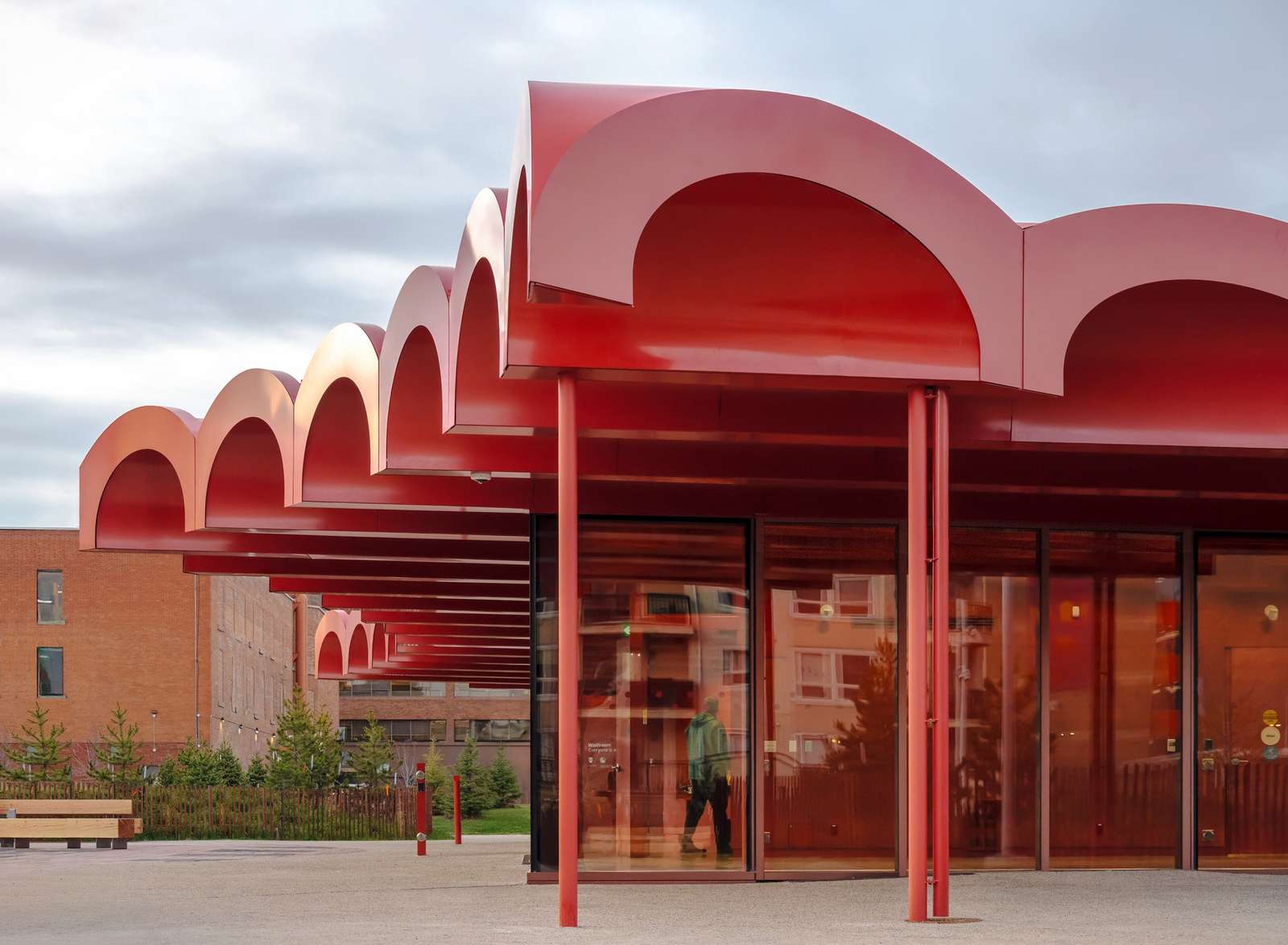
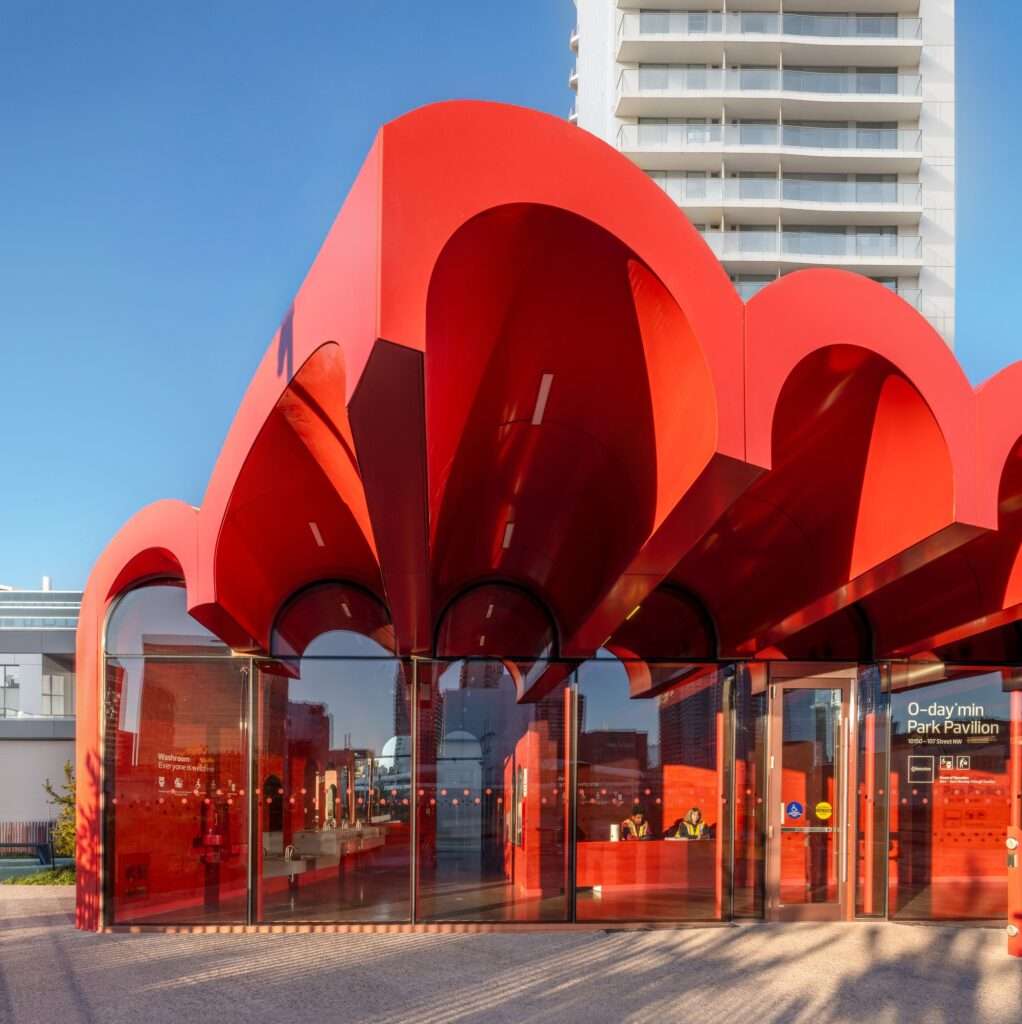
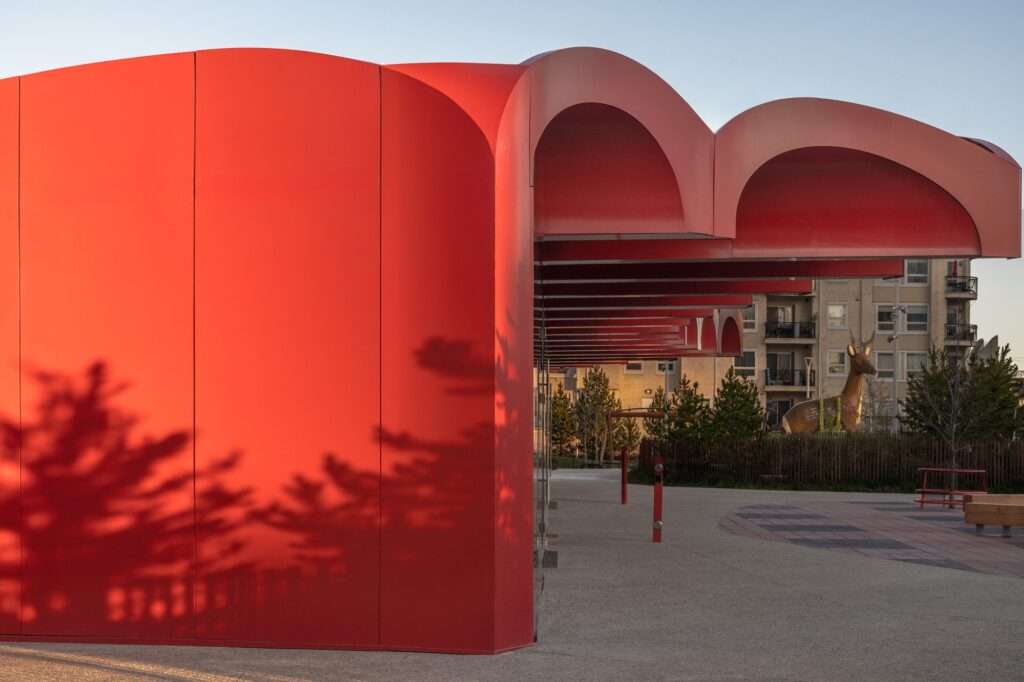
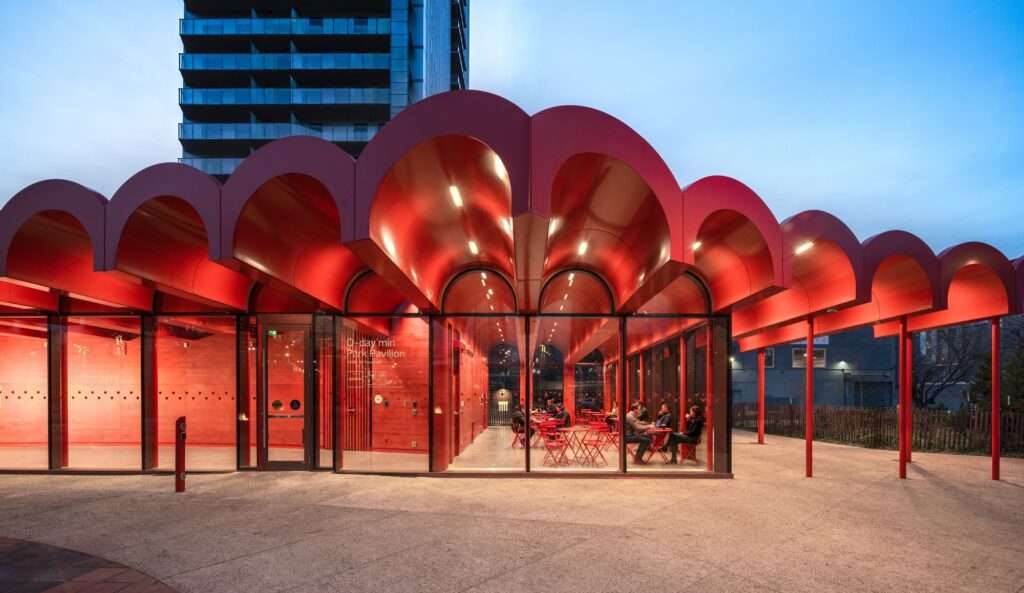
The O-day’min Park pavilion, designed by gh3* as a case study, presents a built structure with a strong visual presence within the park. It is defined by a curved roof and expressive geometry, along with a deep red exterior façade, making it a clear visual landmark in the landscape. The color choice is also linked to the park’s name, O-day’min, which means “strawberry” or “heart berry” in Anishinaabemowin. The name was gifted by local elder Theresa Strawberry and carries connotations of warmth, gathering, and cultural continuity. This approach to Design highlights the importance of cultural references in contemporary projects.
Transparency and Spatial Organization
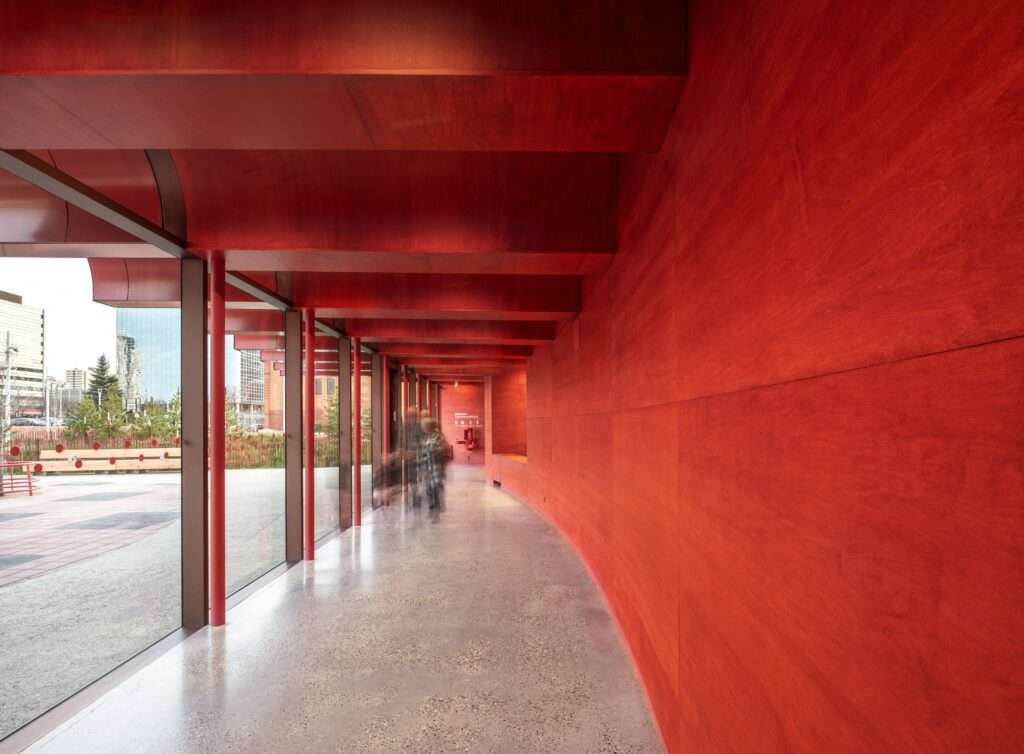
The pavilion is characterized by a high degree of openness and transparency, allowing clear sightlines across the park and enhancing natural surveillance. As a result, a legible and more usable public space is formed. The architectural canopy extends beyond the enclosed volume, providing a sheltered outdoor area that supports gatherings and various activities throughout the year. The principles of Interior Design are evident in the thoughtful layout of the pavilion’s internal spaces.
Daily Transformation of the Building’s Presence
During the day, the pavilion appears as a relatively light element within its natural surroundings. At night, however, it transforms into a luminous civic marker within the site, reinforcing its role as a visual orientation point connected to public life and shared space. This transformation is a key aspect of Research on adaptive public spaces.
Program and Functional Organization
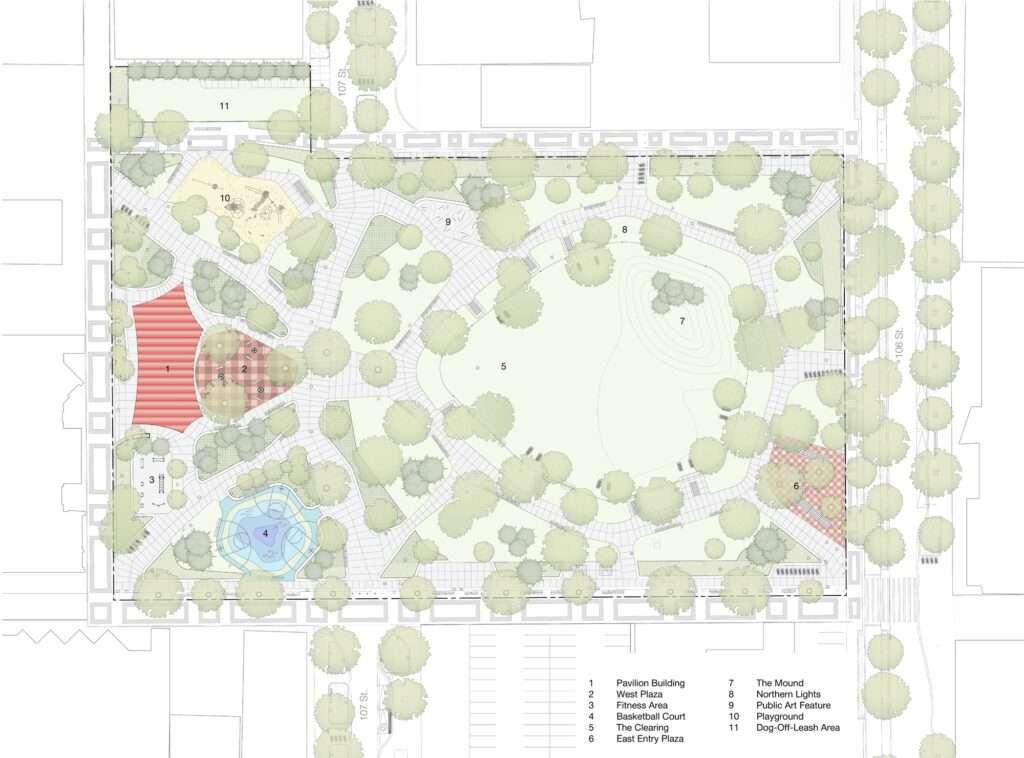
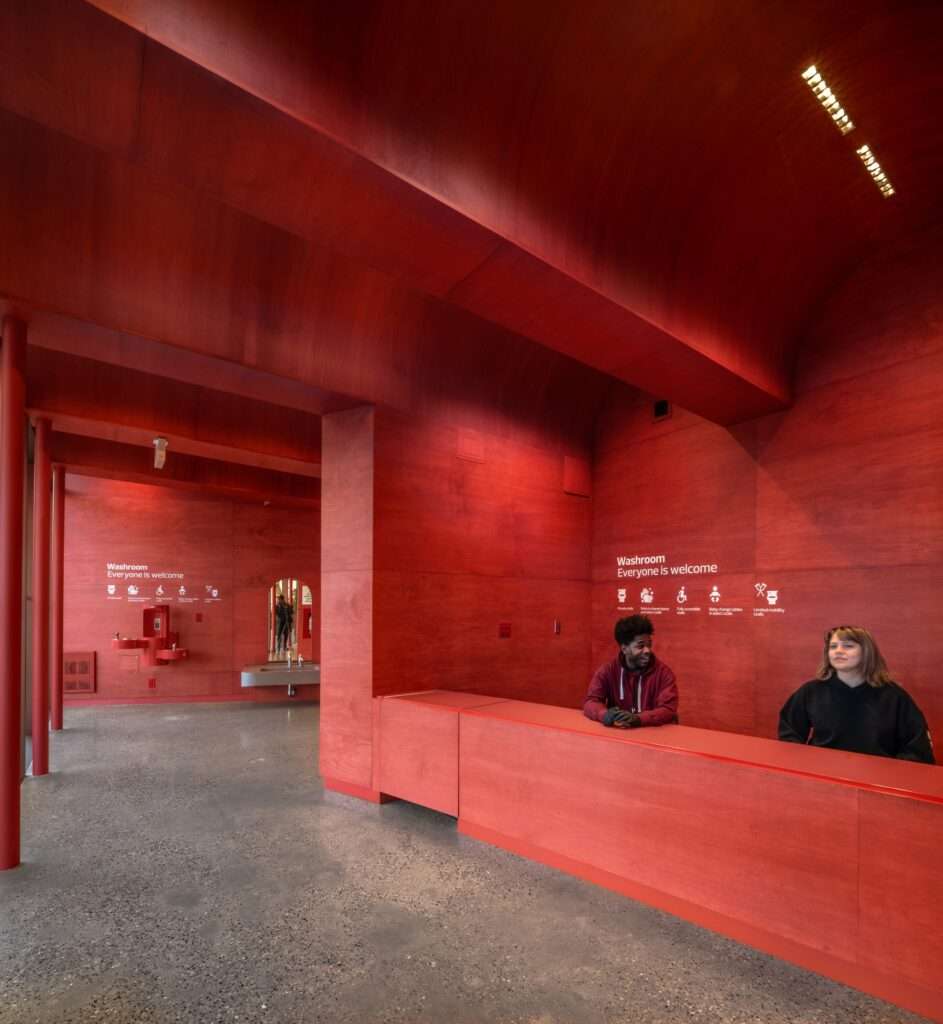
With a compact area of 270 square meters, the pavilion includes a set of essential functions such as universal washrooms, storage space, a maintenance room, and a multipurpose room dedicated to community programming, events, and services. The internal layout is designed in alignment with the spatial logic of the larger O-day’min Park, with the building mass directly connected to the site structure. The entrance and gathering area face the central plaza known as the “warming zone,” enhancing clarity of movement and orientation within the public space. Similar community-focused Projects can be found in various urban contexts.
Structural Logic and Canopy Expansion
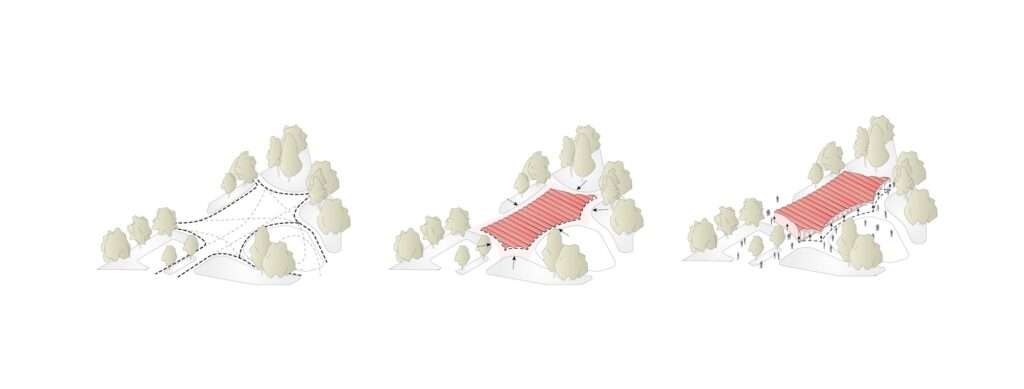
The pavilion is based on a curved roof that expands the spatial and visual coverage, extending its influence to approximately 400 square meters. As a result, the building shifts from a compact object into an urban element that generates a semi-covered usable outdoor space. This configuration recalls the barrel vault in a contemporary interpretation, rethinking the logic of garden pavilions in terms of extension and spatial protection. The choice of Building Materials plays a crucial role in achieving this structural logic.
Design Framework and Architectural Context
This design solution is embedded within the overall project logic as part of an integrated design vision, where the building mass is read as a direct extension of the park’s structure and functions. The project was developed by gh3*, with a focus on integrating architectural form with public use without a clear separation between building and surrounding space. Detailed Material Datasheets provide further insight into the materials used.
Environmental Performance and Sustainability Strategies
Sustainability is embedded in the design through a high-performance building envelope that reduces energy loss, along with deep roof overhangs that minimize solar heat gain. The pavilion also relies on an electric heating system, positioning it for future low-carbon operation. In addition, wood structure is used wherever possible to balance material efficiency with constructability. These strategies are part of a larger trend in sustainable Construction practices.
Relation to Urban Fabric Transformation
The pavilion does not operate as an isolated object but as part of a broader process of urban restructuring at O-day’min Park. The conversion of asphalt-covered land into a multi-use green space strengthens the relationship between people and land, marking a clear transition in site use and function. This process is often discussed in relation to various Buildings and their adaptation over time.
Cultural References and Public Function
Cultural references to Indigenous communities are distributed throughout the park, from the strawberry-inspired central lawn composition to the red color of the pavilion’s exterior façade. In the same context, the highly transparent and barrier-free pavilion functions as an inclusive civic space, enabling year-round public use and supporting patterns of gathering and shared urban life, as designed by gh3*. Such inclusive spaces are frequently highlighted in Discussion forums on public architecture.
✦ ArchUp Editorial Insight
O-day’min Park in Edmonton’s Warehouse Campus district operates as a land-use transformation from surface parking into programmed public land, initiated through municipal policies aimed at intensifying use and repurposing low-yield assets within the city core. The project emerges less as a design gesture and more as a reorientation driven by urban planning requirements and downtown revitalization funding mechanisms. Regulatory constraints are shaped by safety requirements, legal liability for year-round public use, accessibility standards, and thermal performance criteria in a cold climate, which collectively define the logic of enclosure and architectural cover. The pavilion operates as a spatial solution that integrates essential services within a compact mass while extending its roof canopy in response to operational demands. The incorporation of Indigenous cultural naming functions as a policy signal within public realm frameworks, while the final built form is governed more by circulation, heating, and visibility requirements than by purely formal considerations.