Ocean Vortex marine waste floating architecture

Transforming Marine Waste into an Architectural Material
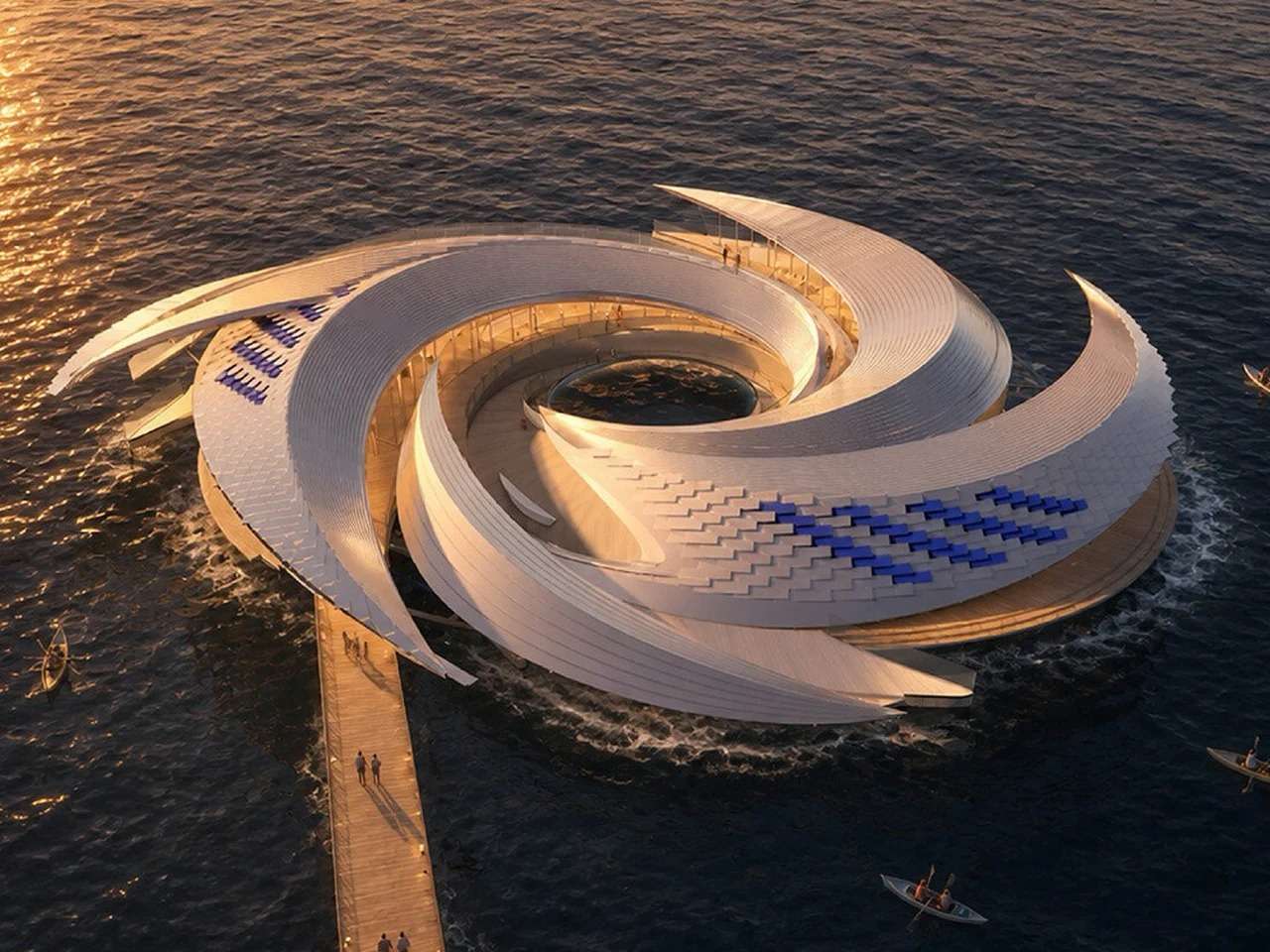
The Ocean Vortex project proposes a different approach to addressing plastic pollution in the oceans by treating this waste as a resource that can be integrated into the Architecture process. Rather than considering marine plastic as an environmental problem separate from Design, the project links the polluted material directly to the Construction structure itself.
Architecture as a Direct Response to the Environmental Crisis
The project was presented as a finalist case study in the YAC Ocean Parliament 2026 competition, responding to the phenomenon of plastic waste accumulation in the oceans, particularly in the large garbage patches of the Pacific Ocean. In this context, the Architecture proposal does not merely observe or comment on the issue, but positions the Buildings within the affected environment as part of the proposed response.
Redefining the Role of Civic Architecture
The project reflects an approach that explores the possibility of making environmental crises part of the primary material from which civic projects are built. Accordingly, architecture shifts from being a tool of representation or awareness to a material means of engaging with environmental challenges within a unified design framework.
Structural System and the Reuse of Marine Waste
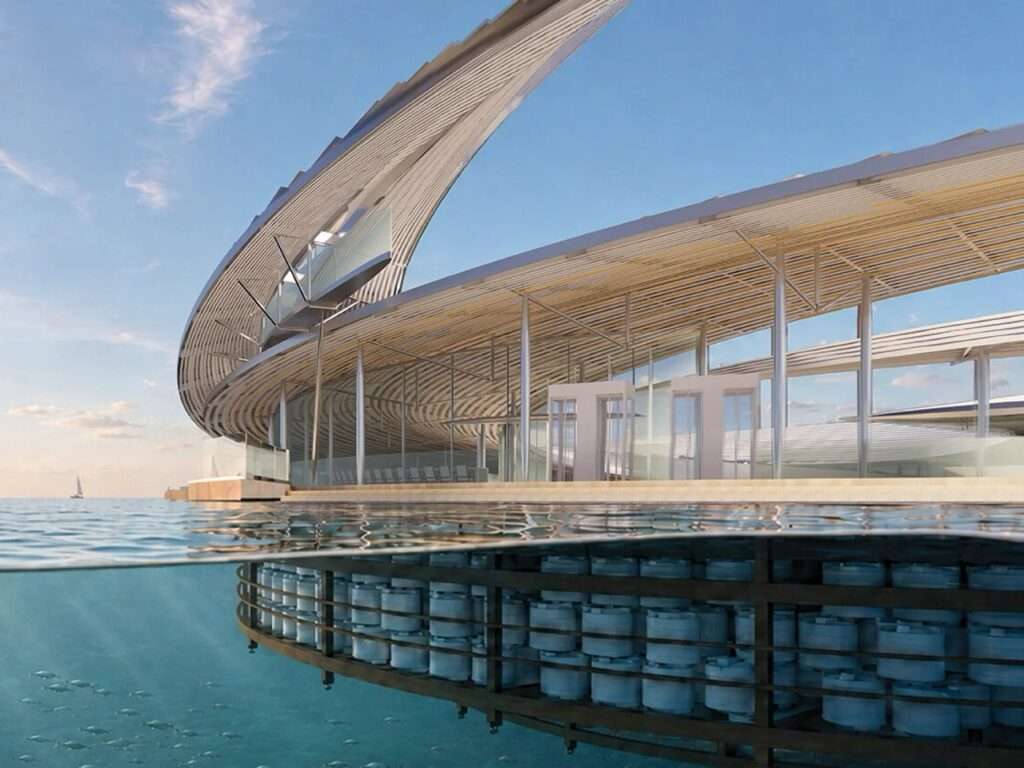
The Ocean Vortex project relies on a structural system that combines a steel framework with recycled marine plastic elements. Discarded barrels and plastic containers are repurposed as buoyancy components, making Building Materials associated with marine pollution an integral part of the project’s functional structure. For technical specifications on recycled polymers, refer to the Material Datasheets section. In this way, the concept of reuse is directly embedded in the structural system rather than being limited to formal or symbolic treatments.
Buoyancy as Part of the Architectural Concept
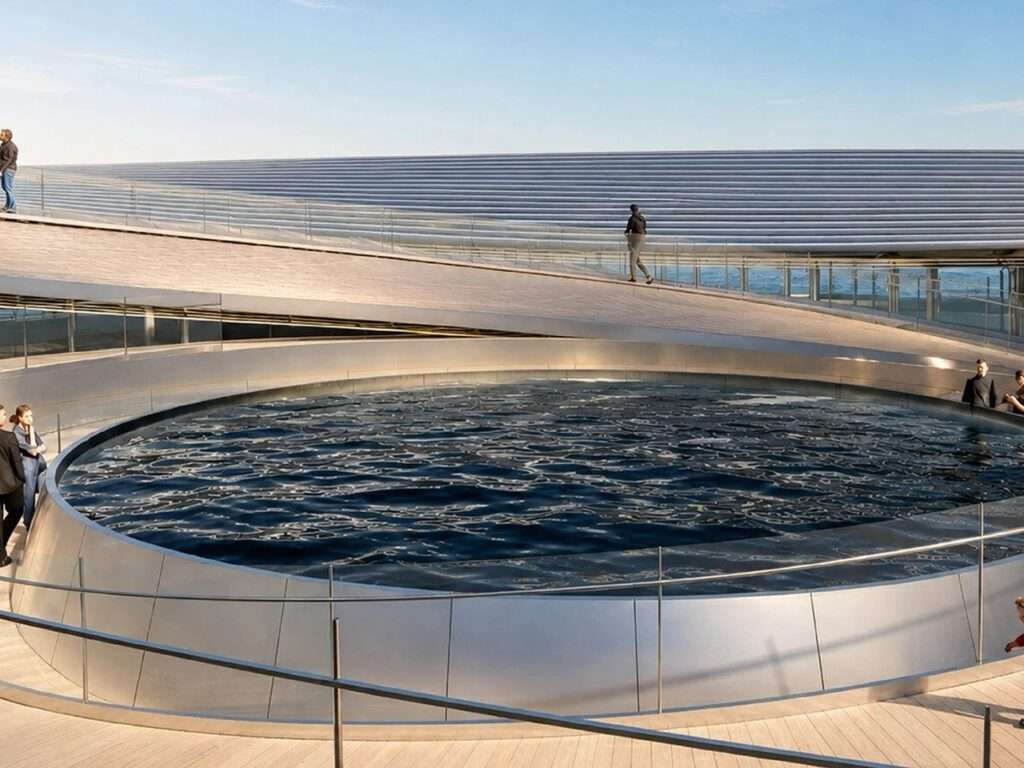
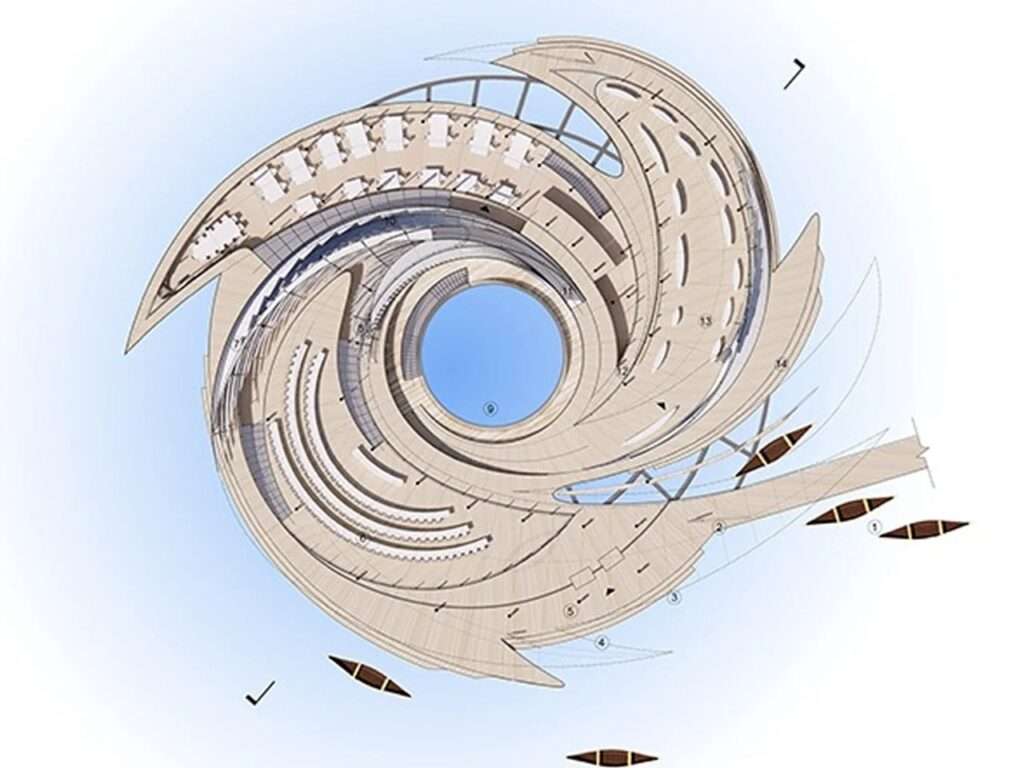
From a distance, the project appears as a floating civic platform with an open composition, while internal circulation reveals a spiral organization that gradually leads toward a central void representing the focal point of the plan. This progressive spatial movement helps guide users through different areas within a clear spatial sequence. Similar approaches can be explored in other Projects dealing with adaptive reuse.
Inspiration from Natural Phenomena in Spatial Organization
The project’s spiral configuration is based on the simulation of vortex patterns generated by ocean currents, the same phenomenon responsible for accumulating large quantities of plastic debris in the oceans. Rather than treating this phenomenon solely as an environmental problem, the project employs it as an organizational principle that defines movement and spatial relationships within the building. For further reading on spatial strategies, see Interior Design approaches in marine contexts.
Integration of Functions within a Unified System
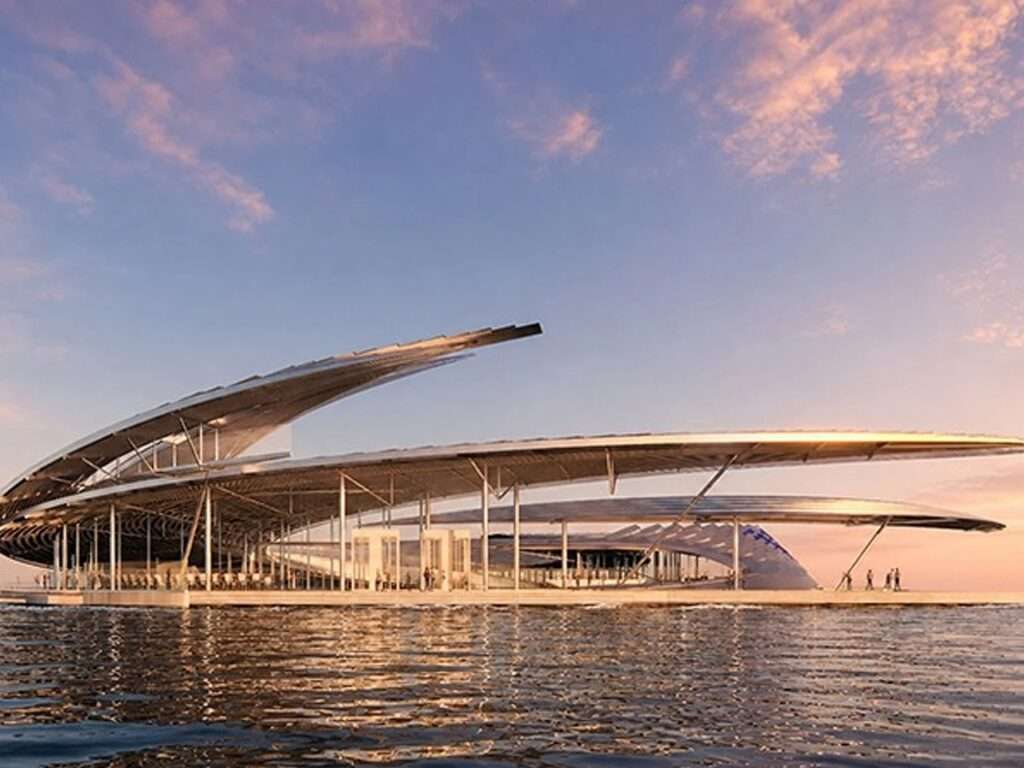
The Ocean Vortex project brings together a diverse range of functions, including parliamentary chambers, a museum, offices, hydroponic cultivation bays, energy conversion systems, and desalination infrastructure. Despite this diversity, all elements are interconnected within a unified operating system. Solar panels contribute to meeting daily energy demands, while submerged levels host processing and production activities, strengthening the operational relationship between the building and its surrounding environment. This integration is documented in the Research archive.
From Symbolic Idea to Integrated System
The project demonstrates an attempt to transform a complex environmental issue into an integrated architectural model that combines functional and ecological dimensions. In this context, Yufeng Tu’s work can be seen as a case study seeking to link governance, environmental infrastructure, and resource management within a single architectural framework, rather than relying on purely symbolic or visual representation. Updates on such innovative models are available in Architectural News.
The Relationship Between Problem and Solution in Architectural Form
The project is based on a logic that incorporates elements of the environmental crisis directly into the proposed solution. The ocean serves both as the site and environmental context of the project, while marine plastic waste becomes part of its material and structural system. In this way, the design attempts to merge the problem and the means of addressing it within a single interconnected architectural system. Similar competitions can be found under Architecture Competitions.
✦ ArchUp Editorial Insight
The Ocean Vortex project functions as an outcome of a systemic recalibration arising from the intersection of environmental regulatory frameworks, research agendas driven by design competitions, and the discourse of the circular economy associated with marine plastic pollution policies. Its primary driver is not formal innovation, but institutional pressure generated by marine pollution metrics that translate environmental crisis into design requirements. The points of friction emerge through constraints of marine engineering, buoyancy safety requirements, and the limitations of integrating recycled plastics within approved structural systems. The final form represents a spatial compromise between environmental governance demands and technical feasibility, where steel and reclaimed plastic are reprogrammed as compliance mechanisms within a unified system that connects energy production, governance, and function, ultimately transforming the project into an operational device for redistributing waste within the logic of marine infrastructure. For more context, visit the Archive section.