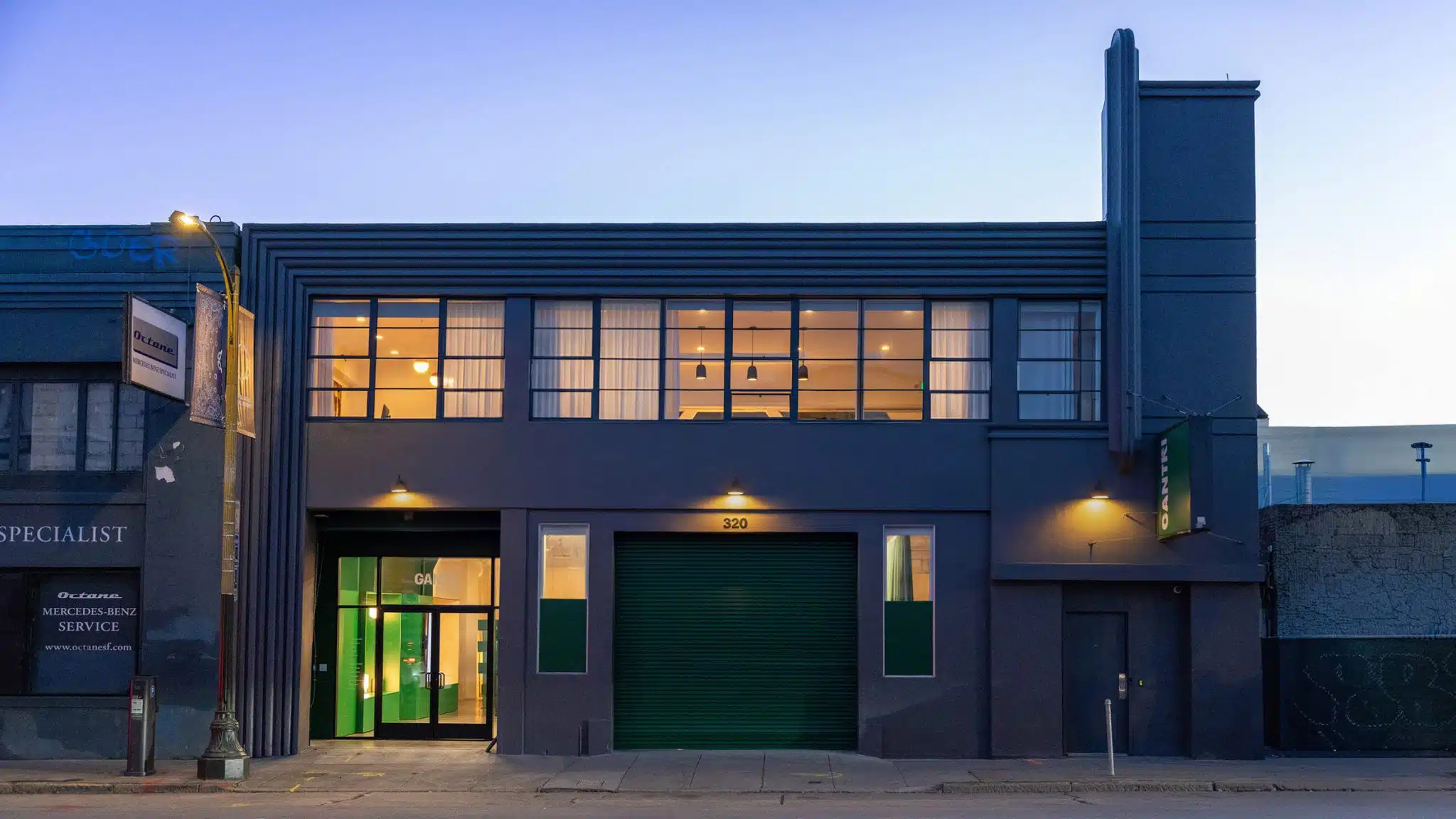
Zomuzi Transforms Historic Auto Body Shop into Gantri Lighting Showroom in San Francisco

New York studio Zomuzi has completed the Gantri showroom in San Francisco’s SoMa district, housed in a 1930s former auto body shop. The design merges the building’s original architectural character with the city’s counter-cultural heritage.

The 1,600-square-foot (148 sqm) space is drenched in Gantri green, spanning materials and textures, including long muslin curtains and a 3D-printed tile screen, with light plywood display cases lining the perimeter.
References to Art and Local Identity
Founder Mzwakhe ‘Muzi’ Ndlovu drew inspiration from Art Deco and Streamline Moderne aesthetics and SoMa’s LGBTQ+ subculture. The tall curtains reference theaters like the Castro Theatre, display units evoke go-go platforms, and the ceiling lighting recalls Art Deco lobby ceilings.

Ndlovu explains: “All these elements create a space that serves Gantri’s functions while supporting the LGBTQ+ community, reinforcing SoMa as a safe and inclusive urban space.”
Urban Fabric Interaction and Flexible Use
The design also references the auto shop itself, incorporating jacks, mobile platforms, and steel pegboards to allow flexible reconfiguration. The showroom functions as an interactive space where customers can customize products, preserving the feel of the original workshop.

Digital Manufacturing and Future Lighting Design
The showroom opening coincides with Gantri’s ten-year anniversary. The company integrates digital manufacturing and 3D printing, enabling independent designers to create affordable, innovative lighting.
For architects and designers, this project highlights the potential of embedding digital fabrication techniques in commercial and cultural spaces, while honoring architectural heritage and community identity, pointing toward a future of flexible, experimental urban design.
✦ ArchUp Editorial Insight
The Gantri showroom in San Francisco, completed by Zomuzi, exemplifies Adaptive Reuse by transforming a 1930s auto body shop into a 1,600-square-foot cultural and commercial space, blending Streamline Moderne and Art Deco references with SoMa’s countercultural and LGBTQ+ heritage. Using a material palette of muslin, plywood, and 3D-printed tiles, the design negotiates Material Expression and spatial flexibility, allowing the building to operate both as a showroom and interactive workshop. However, while the playful reconfigurable elements respect the original structure, questions remain about the scalability of such intimate, identity-driven spaces in dense urban contexts and their long-term functional resilience. Ultimately, Gantri demonstrates how heritage, community engagement, and digital fabrication can converge to inform experimental and socially responsive urban architecture.