
Gardiner Ground Floor: Cultural Reconfiguration

Principles of Ground Floor Rehabilitation
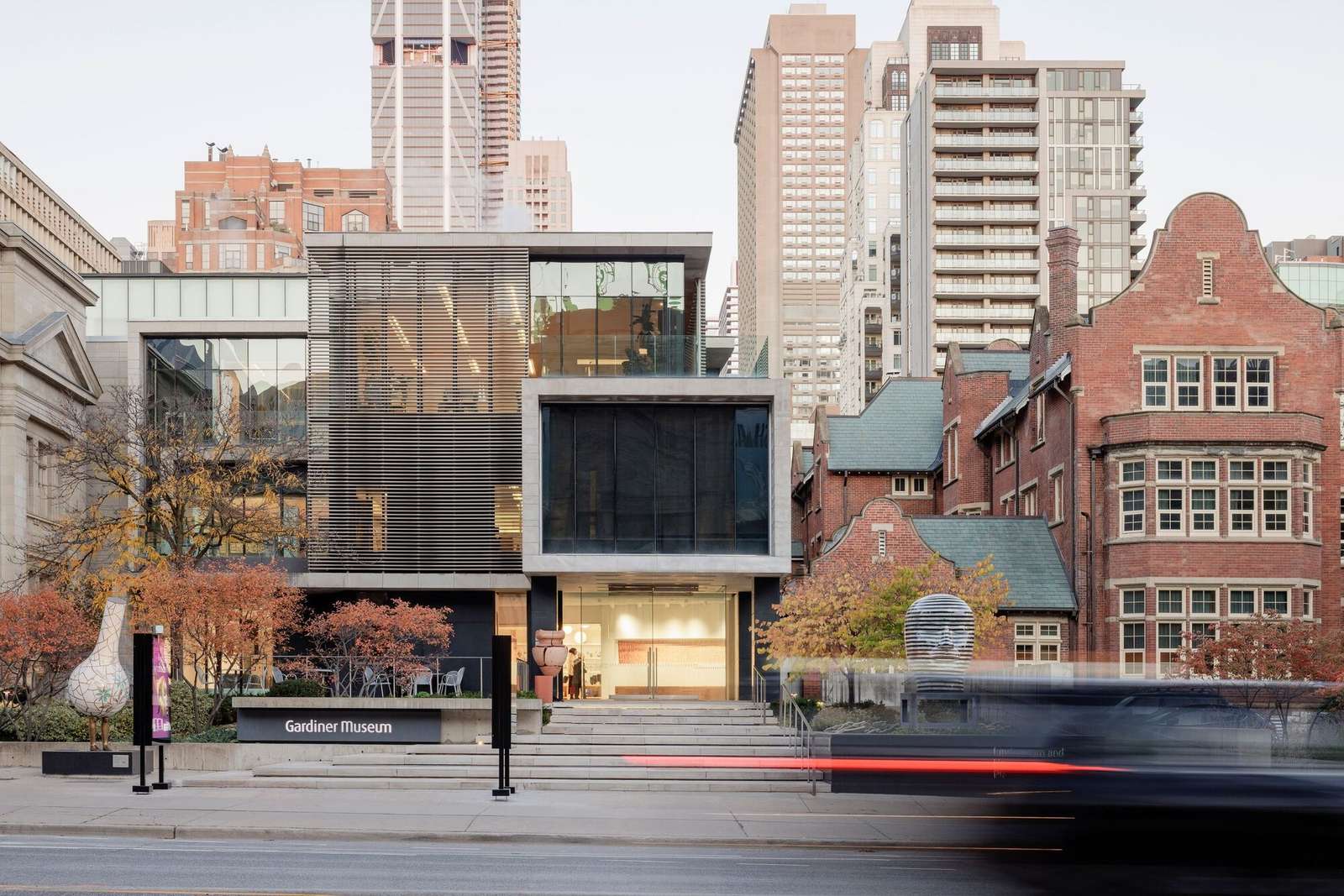
The renovation works of the ground floor in the Gardiner Museum were based on three main pillars: accessibility, connectivity, and the recognition of the cultural identity of Indigenous peoples. The Design was directed toward creating a flexible and welcoming environment, while enhancing the presence of the museum’s ceramics collection as an organizing element within the spatial layout.
Integration with the Existing Architectural Structure
The introduction of contemporary design elements within the original limestone building (1983) and the 2006 expansion required a careful approach that preserves the existing character. Therefore, the Architecture intervention was based on a balance between functional modernization and respect for the original structure, while improving internal circulation and strengthening both visual and physical connections between spaces.
| Field | Details |
|---|---|
| Architects | Andrew Jones Design, Montgomery Sisam Architects |
| Area | 800 m² |
| Year | 2025 |
| Photographs | Salina Kassam |
| Category | Cultural Architecture, Museums & Exhibit |
| Architecture Offices | Montgomery Sisam Architects, Andrew Jones Design, studio:indigenous |
| City | Toronto |
| Country | Canada |
Cultural Representation and Circulation Organization
The project incorporated Indigenous perspectives within the exhibition galleries through direct collaboration with artists, consultants, and curators from the same cultural backgrounds, ensuring accuracy of representation. At the same time, visitor circulation was organized according to clear functional considerations, which required iterative design solutions and continuous coordination between cultural and operational requirements.
Spatial Organization and Movement Pathway
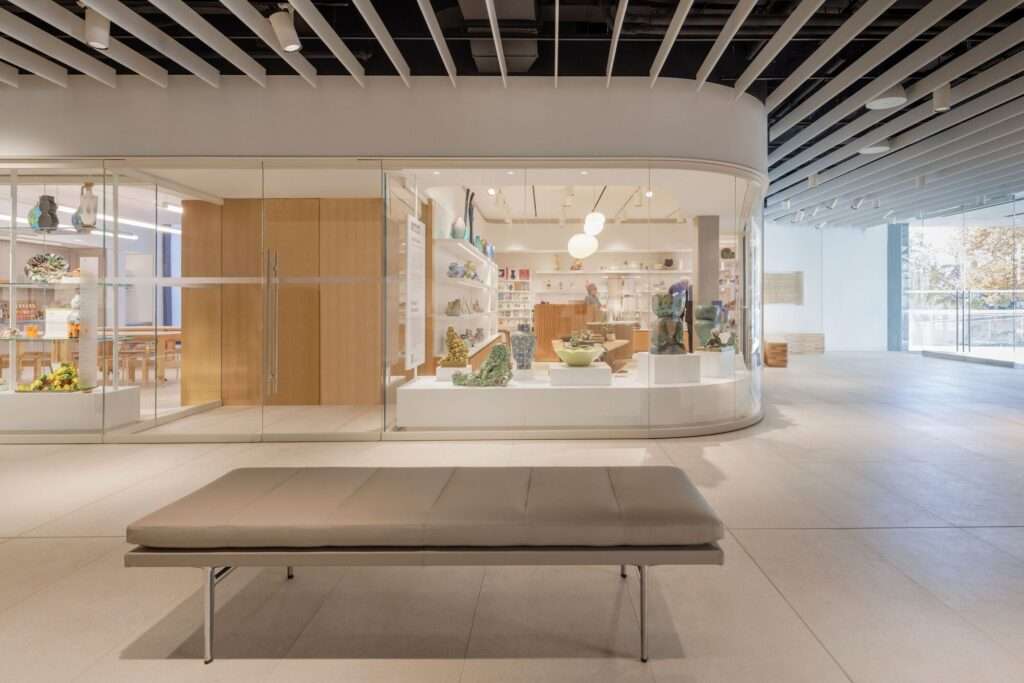
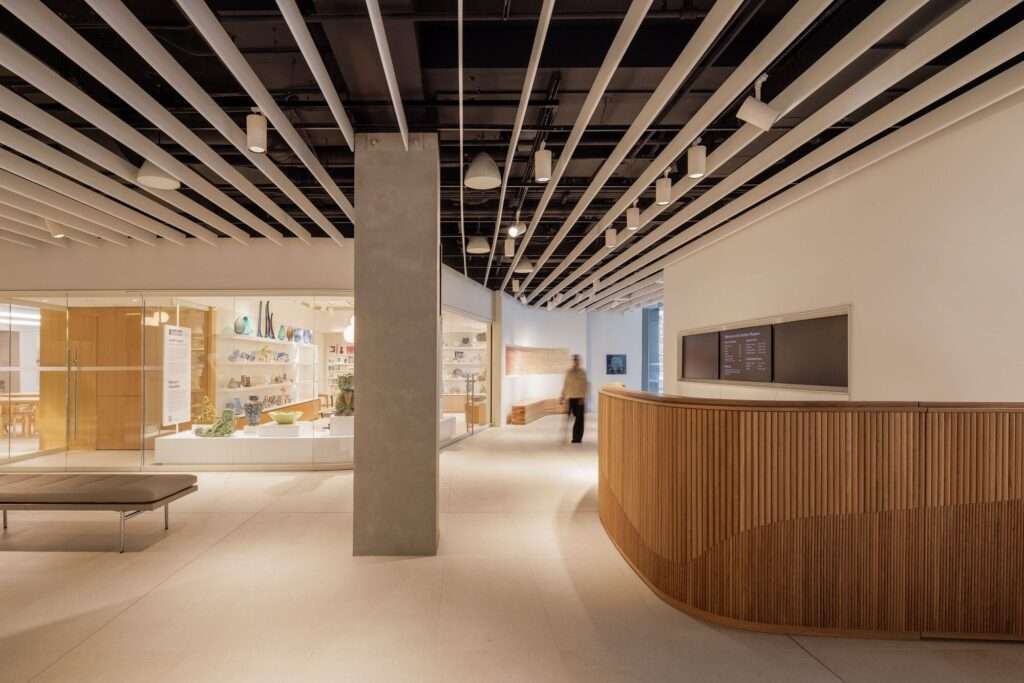
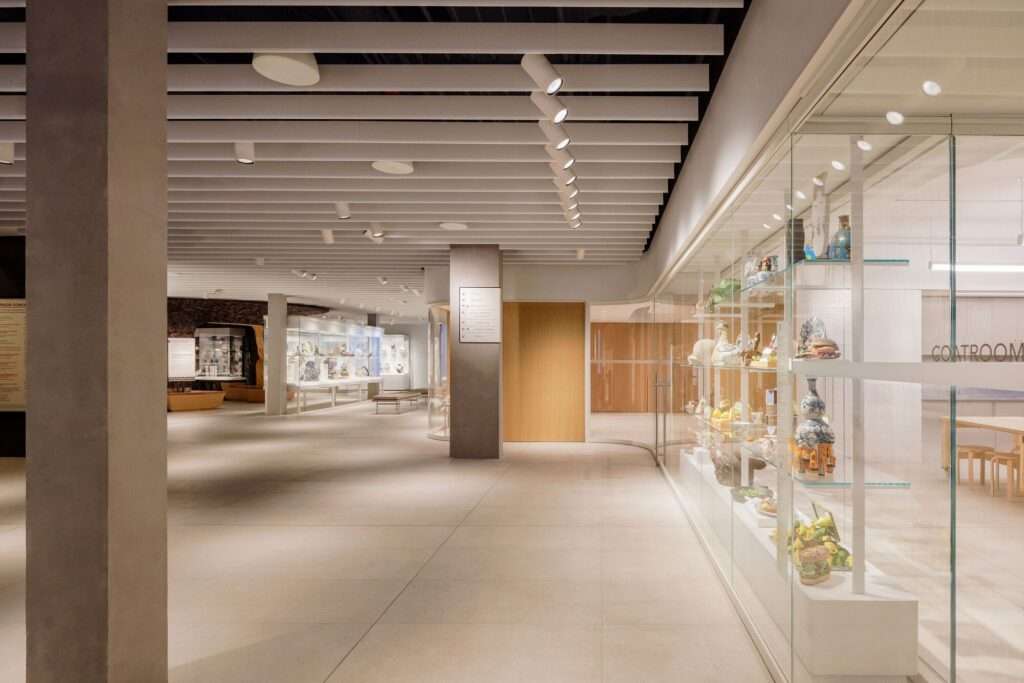
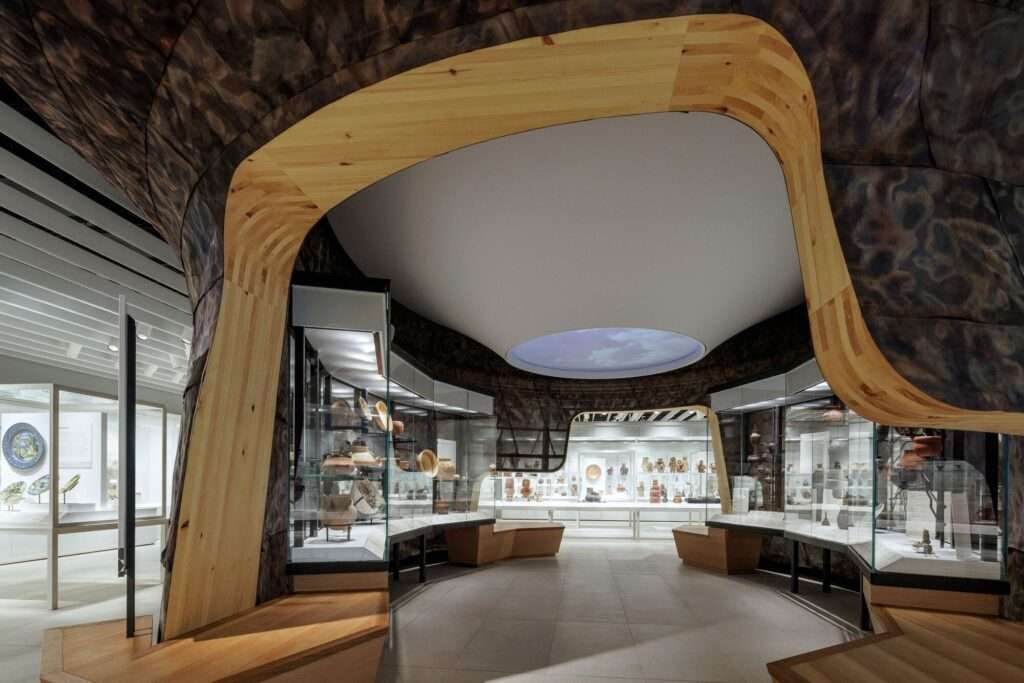
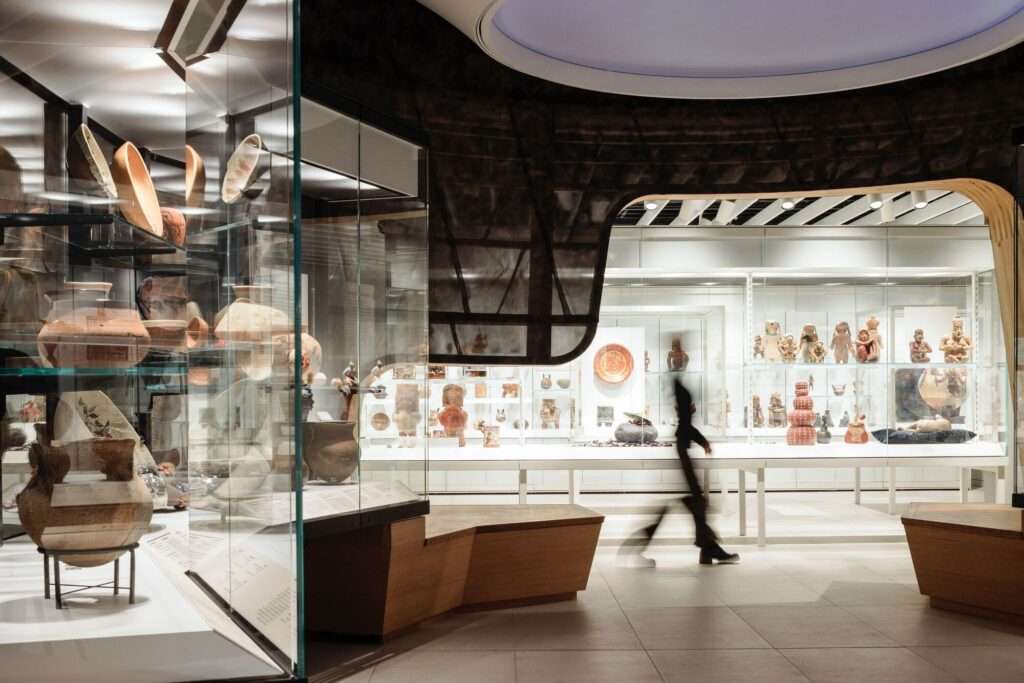
Construction works focused on improving the visitor experience by organizing circulation within the ground floor and enhancing its functional performance. A continuous glazed ribbon wall guides visitor movement from the entrance toward the Collections Gallery, while simultaneously functioning as integrated display vitrines embedded along the circulation path.
Materials and Interior Finishes
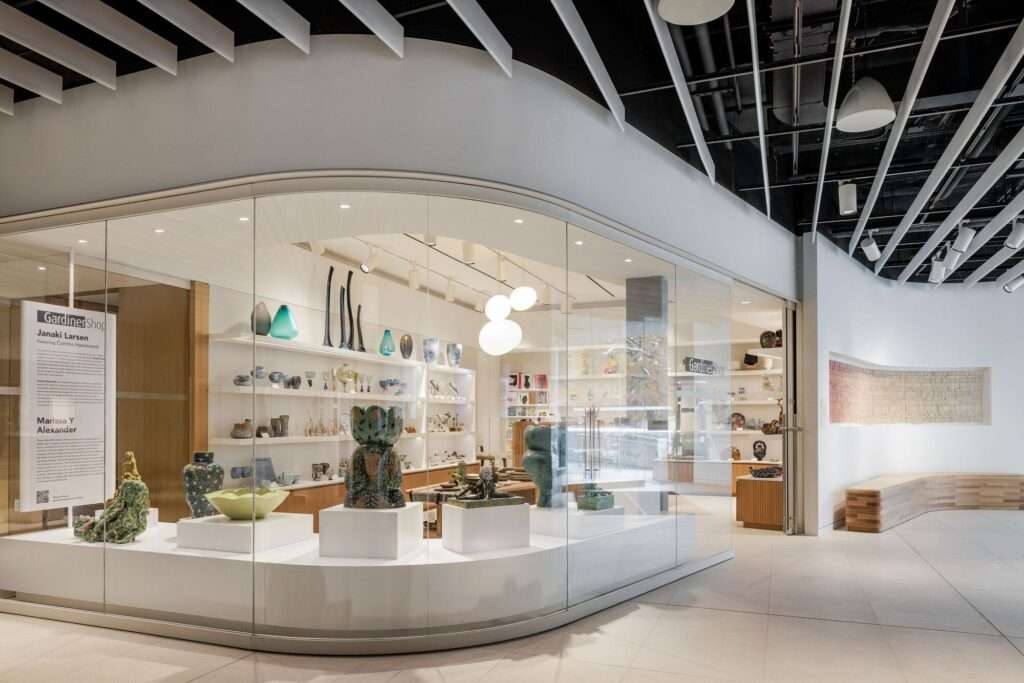
The finishes are based on Building Materials such as white oak, natural stone, and high-durability laminated cladding panels. These materials were selected to achieve a balance between tactile warmth, durability, and long-term operational performance. Surfaces in areas such as the Maker Space, the Community Learning Centre, and retail zones were designed to support accessibility, functional requirements, and the display of objects and collections.
Spatial and Functional Connectivity
The spatial configuration was organized to enhance visual continuity and flexibility of use. The entrance flows into a continuous lobby that leads toward the Collections Gallery through the glazed wall, with the Indigenous ceramics gallery positioned as a cultural and visual focal point. A new opening in the eastern façade was introduced to create a movement axis connecting the galleries with the public realm, while the western areas accommodate temporary exhibitions and programming. Learning and maker spaces provide interactive environments that support community engagement. For more similar case studies, visit our Archive.
✦ ArchUp Editorial Insight
The renovation of the ground floor of the Gardiner Museum operates as a reconfiguration driven by institutional compliance logic, where accessibility standards, Indigenous representation protocols, and collection-display metrics become primary catalysts for spatial reorganization. Within the constraints of a regulated limestone heritage building and a prior expansion, conservation requirements and public safety regulations exert pressure that reduces spatial flexibility, producing a circulation system centered on a continuous glazed ribbon that directs user flow and transforms display surfaces into functional interfaces. You can find more technical details on Material Datasheets for similar finishes.
The inclusion of the Indigenous ceramics gallery reflects a redistribution of curatorial authority through consultation-based mechanisms rather than direct authorship. Programs such as workshops, learning spaces, and retail are distributed as interchangeable occupancy cells, while the eastern opening reconnects the building to the urban network. Meanwhile, the western zones absorb fluctuations in temporary programming within an operational framework characterized by institutional stability. For more insights on urban integration, explore our Cities section, and for related professional opportunities, check Architectural Jobs. Stay updated with the latest via Architectural News.

★ ArchUp Technical Analysis
Technical and Documentary Analysis of the Ground Floor Renewal Project – Gardiner Museum, Toronto, Canada:
This article presents an architectural analysis of the Gardiner Museum’s ground floor renewal project as a case study in the reorganization of circulation and cultural representation. To enhance its archival value, we would like to present the following key technical and design data.
The renewed ground floor spans 800 square meters and was completed in 2025, designed by Andrew Jones Design and Montgomery Sisam Architects in collaboration with studio:indigenous. The project focused on three main pillars: accessibility, interconnectedness, and recognition of Indigenous cultural identity, integrating Indigenous perspectives within the gallery spaces through direct collaboration with artists, consultants, and curators.
A continuous ribbon glass wall directs visitor movement from the entrance toward the collections gallery and functions as integrated display cases along the path. A new opening was added to the eastern facade to create a circulation axis connecting the galleries with the public realm. Finishes feature white oak, natural stone, and high-pressure laminate cladding panels.
The spatial distribution includes: a continuous lobby, the collections gallery, the Indigenous Ceramics Gallery as a visual and cultural focal point, western areas for temporary programs and exhibitions, the makerspace, the community learning centre, and retail areas.
Related Insight: Please refer to this article to understand the context of modern architectural preservation:
Museum Rehabilitation: Strategies for Circulation Organization and Cultural Representation.





✅ Official ArchUp Technical Review completed for this article.