The Statue Survived. Who Made It the Standard?

Research prepared by the ArchUp research team.
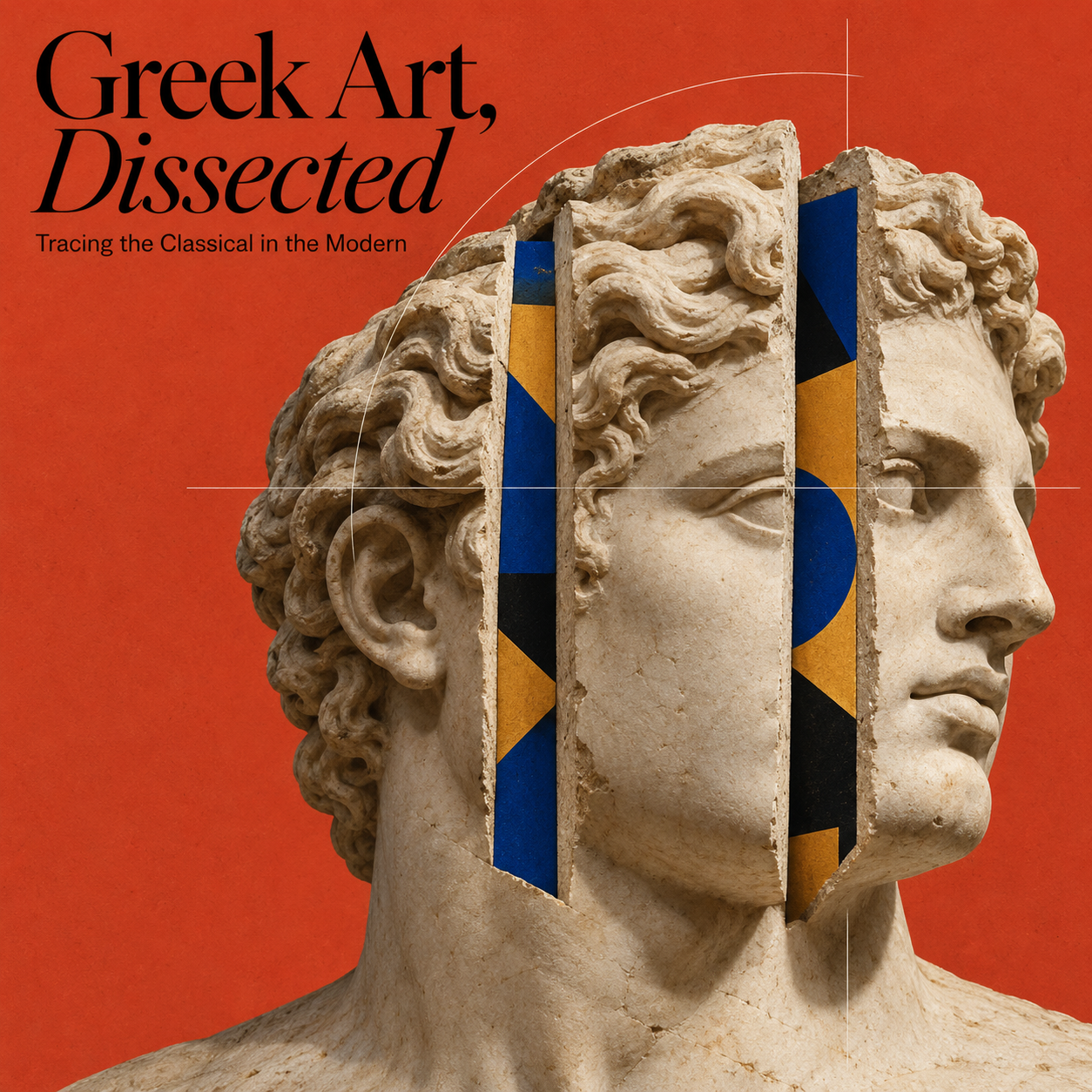
Imagine a gallery with a single sculpture at its centre. One leg supports the body. The other relaxes. The shoulders answer the displacement of the hips, and the figure seems composed rather than immobilised. Nothing moves, yet the stone suggests the possibility of movement. We may call the result natural before asking a more difficult question: who taught us to recognise this particular arrangement as the standard?
This imagined encounter opens a problem larger than the history of sculpture. Classical Greek art has repeatedly been presented as an origin from which later art develops. Its achievement is real, but the language of origins can conceal the work of selection. A statue must be made before it can be admired. It must also be preserved, copied, interpreted, displayed and taught before it can become an enduring authority. These are different processes, with different participants.
The useful question is therefore not whether Greece invented all subsequent art. It is how particular Greek approaches to the body and representation became exceptionally influential within later European traditions, and how that influence was repeatedly reconstructed. For architects, designers and curators, the issue remains immediate: when does a successful solution become a reference, and when does the reference begin to exclude other ways of seeing?
An achievement is not a universal beginning
The supplied research synthesis concentrates on Classical Greek art, conventionally situated between the early fifth century and the late fourth century BCE. It links sculptural innovations to later reception in Rome, the Renaissance, Neoclassicism and modern art. That is a substantial historical argument. It does not establish a single starting point for the arts of the world, nor a continuous route from one Greek workshop to every modern practice. Its geographic and conceptual boundaries matter.
Even within that narrower history, influence is different from invention. A later artist may borrow a posture, dispute an ideal, prefer an earlier period or reinterpret a fragment for an entirely new purpose. Such actions all involve a relationship with antiquity, but they do not reproduce the same relationship. Treating them as a single inheritance makes the later participants seem passive and the ancient object seem more stable than its changing reception allows.
The central thesis of this essay is that Greek art became authoritative through the interaction of formal achievement and cultural transmission. Neither half is sufficient alone. An account concerned only with institutions neglects the force of the works. An account concerned only with artistic excellence cannot explain why particular works, versions and interpretations came to represent excellence itself. The literature described in the supplied synthesis offers material for examining both halves. [1, 2, 3]
The body becomes a relationship
Contrapposto is often introduced as a change in posture: weight settles on one leg, and the rest of the body adjusts. Its analytical importance goes beyond the identification of a bent knee. The parts become mutually dependent. A hip, shoulder or supporting foot cannot be fully understood in isolation because each participates in a whole organised around balance. A body can appear at rest while retaining the prospect of action.
The synthesis uses the Kritios Boy as an early reference in this development. This essay does not treat it as a securely established first instance, or convert a historical transformation into the invention of one person at one moment. The more useful distinction concerns what the viewer is asked to understand. A figure may communicate a stable identity through frontal arrangement; another may make bodily adjustment a central part of that communication. Neither task should be mistaken for the only possible purpose of sculpture.
It is also misleading to describe an earlier representational system as merely a failed attempt at a later one. The discussion of Classical style associated with C. H. Hallett is useful precisely because it complicates a simple advance towards naturalism. The problem was also how to retain monumentality and symbolic force as bodily representation changed. The resulting balance is a constructed artistic solution, not nature arriving in stone without mediation. [4]
Proportion offers a method, not a final measurement of beauty
Polykleitos provides the clearest entry into the relationship between a work and a transferable rule. The Doryphoros, or spear bearer, is associated with the lost treatise known as the Canon. In the supplied account, the underlying concern is symmetria: the commensurability of parts within a whole. The importance of this idea lies in the possibility of explaining relationships, comparing decisions and teaching a method rather than relying only on admiration.
The source material also describes Richard Tobin’s proposed mathematical reconstruction of that canon. It would be an error to print the proposed geometric sequence as a fully recovered ancient specification. A reconstruction drawn from surviving evidence and later testimony has a different status from a complete contemporary instruction book. This essay therefore retains the question of proportional organisation without presenting a particular ratio as an uncontested formula for Greek beauty. [6]
For architectural practice, the distinction is productive. A module can coordinate decisions across scales, but coordination does not prove that one module is universally appropriate. A proportional system may be internally coherent while leaving questions of use, access, material and context unresolved. This is an architectural interpretation of the historical discussion, not a claim that an ancient sculptural canon directly supplies contemporary design standards.
Naturalism and idealisation can coexist
A convincing body is not necessarily an ordinary body. The synthesis describes Classical sculpture as combining observed bodily relations with selection, restraint and idealisation. What looks natural may have been carefully organised to remove distraction, stabilise expression or intensify a desired quality. The achievement lies partly in making that organisation seem inevitable. A viewer encounters coherence without necessarily seeing the decisions through which it was produced. [4, 5]
This matters when an aesthetic becomes an ethical claim. The discussion of athletic beauty associated with Heather Reid connects bodily excellence to Greek philosophical questions about virtue and self control. Such connections help explain why a body could carry meanings beyond physical appearance. They should not be converted into the proposition that a beautiful body proves moral worth, or that one historically valued form represents a universal human ideal. [7]
The architectural parallel concerns the movement from visual order to claims about social order. Symmetry may communicate composure, but it does not demonstrate fairness. Monumental scale may communicate significance, but it does not establish public benefit. These are interpretive cautions for contemporary readers. They allow us to learn from the persuasive power of Classical form without allowing that persuasion to substitute for an evaluation of what a building actually does.
Eight names are a reading route, not a census
The supplied material asks how many important artists there were. No reliable total follows from that question without a definition of importance, a period and a type of evidence. A compact group of six sculptors and two painters is useful for organising the discussion. It is an editorial selection, not a statistical finding about the number of significant practitioners, and certainly not a boundary around the work of unnamed makers and workshops.
Pheidias introduces the problem of collective and monumental authority. The Athena Parthenos and Zeus at Olympia are central works associated with him in the supplied account, alongside his relationship to the Parthenon sculptural programme. The distinction between association with a programme and personal execution of every surviving element must remain visible. His place in this essay concerns how divine and civic significance can be given a persuasive formal presence, rather than a claim that a large production system reduces to a single hand. [4, 5]
Polykleitos makes the body a problem of relationships that can be discussed and transmitted. The Doryphoros and Diadumenos are useful reference points, but the essential question is not which pose to copy. It is how a rule operates across a whole, and how later observers reconstruct that rule from incomplete evidence. A canon becomes especially influential when it can be presented as a method rather than an isolated masterpiece. [6]
Myron, through the Diskobolos, introduces the organisation of an instant. The figure is associated with the moment around the preparation for a discus throw, yet the composition is not simply a neutral recording of sporting motion. The synthesis emphasises rhythmos, or the arrangement of the figure, and the role of a controlled viewing relationship. This is movement made legible through composition. It is not sufficient evidence for a claim about the most efficient athletic technique. [5, 9]
Praxiteles brings attention to softness, curvature and psychological character. The Aphrodite of Knidos is a major reference in the supplied discussion. The Hermes carrying the infant Dionysos at Olympia is equally important here for a different reason: its attribution and date have been debated. Rather than hiding that uncertainty behind a confident label, the debate can show readers how art history works through competing interpretations of technique, support, finish and context. [10, 11]
Skopas represents the question of emotional intensity. The material associates him with works at Tegea and with expressive features described through pathos. The educational value of the comparison with Praxiteles lies in distinguishing different ways of making an interior state visible. It does not justify assigning every intense face or turbulent surface to one sculptor. A stylistic tendency can guide a question without settling an attribution. [11]
Lysippos introduces revision within the canon itself. The Apoxyomenos and representations associated with Alexander provide entry points into the discussion of altered proportions and appearance. The supplied account draws on the ancient distinction between representing people as they are and as they appear. This is best approached as a critical proposition transmitted through testimony, not a literal measurement of one artist’s superior realism. The important point is that authority could be contested from within the tradition. [6, 9]
Zeuxis and Parrhasius change the kind of evidence. Their famous contest, in which painted grapes deceive birds and a painted curtain deceives a painter, reaches us as an anecdote discussed in the supplied literature. It illustrates an argument about illusion, judgment and the viewer. It is not an experiment we can reproduce from surviving paintings by those artists. The distinction between an influential story and a securely observable object is essential to an honest account. [5]
Representation is more than deceiving the eye
The painters’ anecdote opens another question: should representation be judged by its ability to conceal that it is a representation? The supplied account of Gabriel Zoran’s study distinguishes appropriation from representation within a reading of imitation in Greek thought. This essay does not resolve that philosophical debate. It draws a narrower lesson from the question: an image can offer knowledge, organisation or a position even when viewers do not mistake it for the thing depicted. [8]
An architectural drawing, accordingly, need not resemble a photograph to be effective. Its purpose may be to explain a relationship, route or arrangement. This is the research team’s application of the question, not a definition attributed to an ancient author. It gives us a reason to assess representation by the work it performs, rather than reduce artistic development to increasing resemblance.
The copy is part of the history
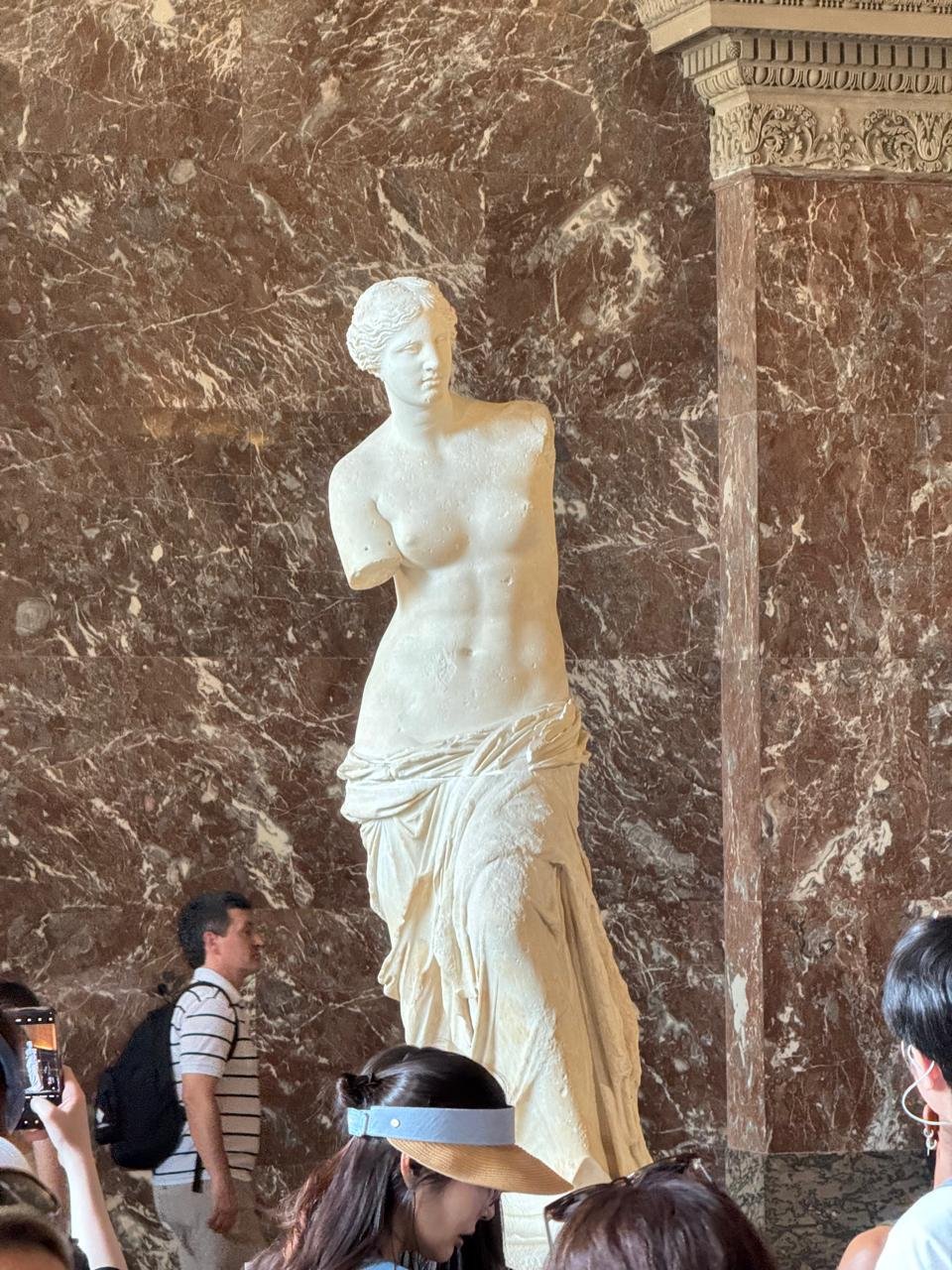
Many familiar Greek sculptural types are encountered through later versions, including Roman marble works associated with lost Greek models. That fact should neither be concealed nor used to dismiss the later object as a useless substitute. It changes the question. What is preserved through repetition, and what might depend on material, workshop decisions, setting or the purposes of a later patron? The history of reception begins inside the object we encounter, not only in the interpretation placed beside it. [2, 5]
A simplified chain from original to copy to textbook can create a false impression of transparency. Each stage allows some qualities to travel more readily than others. Pose may remain recognisable while context changes. A named type may become more familiar than the circumstances of its production. A reader who knows which stage of the chain is being discussed can make a more precise judgment about what the evidence actually supports.
The same discipline applies to architectural references. A photograph, a measured drawing and a reconstructed fragment offer different kinds of access to a building. None should silently stand for the complete experience of the original. The lesson from Greek reception is not that mediated knowledge is worthless. It is that mediation belongs in the account of knowledge.
Who makes a reference authoritative?
The supplied literature places Johann Joachim Winckelmann at a decisive point in the later interpretation of antiquity, particularly through writings dated 1755 and 1764. His importance here is not that he merely discovered an already universal rule. It is that interpretation helped organise an ideal: particular works and qualities became evidence for what art should seek. Michael Fried’s discussion of imitation and David Lowenthal’s account of heritage, as presented in the synthesis, help frame this process. [1, 2]
Once a selection becomes teachable, repeatable and institutionally visible, its authority can appear to arise entirely from the objects themselves. Yet there is a difference between the compelling quality of a sculpture and the mechanism that repeatedly places that sculpture before students. A curriculum, collection or display does not have to falsify an object in order to favour one account of its importance. Repetition can make a preference feel like the starting condition of judgment.
This is not a proposal to replace aesthetic evaluation with suspicion. It is a proposal to enlarge evaluation. We can ask why a composition is powerful and why that composition became representative. The first question concerns the work’s organisation. The second concerns its cultural career. An adequate account needs room for both.
The white statue is also an interpretation
The synthesis identifies the later preference for white sculpture as part of the construction of the Classical ideal. Its account of lost colour and subsequent expectations is important because it separates an object’s present appearance from every earlier state it may have had. A pale surviving surface should not, by itself, be taken as proof that purity of whiteness was the maker’s governing intention. [2]
That caution does not authorise an equally confident reconstruction of every colour on every sculpture. Specific reconstructions require evidence specific to the object. For this essay, the defensible argument is narrower: later viewers can elevate a condition of survival into an aesthetic principle. A material change becomes a philosophical preference when the distinction between those two things disappears.
Architecture offers a related interpretive risk. Weathering, missing finishes or the selective restoration of an older building can influence what later observers call authentic. The lesson is to explain the state being shown. It does not require denying the visual force of a fragment or the legitimacy of enjoying its present appearance.
Modern artists did not inherit one Greece
J. E. Barton’s 1931 discussion, as summarised in the source material, describes changing valuations within Greek art itself. Later observers did not consistently admire the same objects or qualities. Interest could shift towards structural force, monumentality or forms read as more implicit. The historical importance of this argument is that reception remained selective. A new artistic agenda could rearrange the hierarchy of antiquity rather than simply accept or reject it. [3]
Consequently, saying that modern art conversed with Greek art is more defensible than saying that Greek art founded modern art in a complete and exclusive sense. A conversation can include disagreement and substantial transformation. It can also coexist with other traditions, encounters and social conditions that the supplied material does not investigate. The limits of this essay’s sources should not be mistaken for the limits of art history.
A gallery could make the argument visible
Consider a hypothetical exhibition about a single sculptural type. One label identifies the surviving object and the limits of its attribution. Another explains the lost or disputed model with which it is associated. A third presents a later interpretation that helped make the type canonical. The visitor is not asked to choose between beauty and scholarship. The display makes it possible to appreciate the object while distinguishing different levels of certainty.
The architectural task in that scenario is not exhausted by a dignified pedestal and dramatic light. Sequence, sightlines and the relationship between objects and explanations can make mediation visible or conceal it. A room that isolates a body as a timeless ideal offers a different reading from a room that lets visitors compare versions and interpretations. This is a proposed curatorial scenario, not a report of an evaluated exhibition or a claim about measured visitor behaviour.
The standard should remain open to examination
Classical Greek art matters because it developed influential ways of organising bodies, relationships, appearances and ideas. Its later authority also matters because authority is made through preservation, copying, argument and institutional choice. Appreciating the first achievement does not require overlooking the second process. A standard can be powerful without being natural, and historically decisive without being universally complete.
For architectural culture, the lasting lesson is therefore not a command to recover one ideal body or one proportional rule. It is a discipline of examining how a reference acquired its force, what it allows us to perceive and what it encourages us to overlook. The statue survived through particular histories. Making it the standard was another act of design.
Method and limits of the reading
This essay is an original editorial analysis of a supplied secondary research synthesis and its bibliography. It does not claim independent reading of the complete cited papers, direct examination of the artworks or verification of every bibliographic record. The numbered sources below identify the literature discussed by that synthesis. Historical interpretations, disputed attributions and proposed reconstructions have been kept distinct from secure claims of direct observation. The architectural comparisons and hypothetical exhibition are the research team’s interpretations. No experimental neuroscience claim, definitive count of important artists or exact recovered formula for beauty is advanced here.
Sources
Bibliographic details are reproduced from the supplied research synthesis. These references do not indicate independent access to the complete texts.
- Fried, Michael. “Antiquity Now: Reading Winckelmann on Imitation.” October, vol. 37, 1986, p. 87. DOI: 10.2307/778521.
- Lowenthal, David. “Classical Antiquities as National and Global Heritage.” Antiquity, vol. 62, no. 237, 1988, pp. 726–735. DOI: 10.1017/s0003598x00075177.
- Barton, J. E. “New Valuations in Greek Art.” Greece and Rome, vol. 1, no. 1, 1931, pp. 13–23. DOI: 10.1017/s0017383500000668.
- Hallett, C. H. “The Origins of the Classical Style in Sculpture.” The Journal of Hellenic Studies, vol. 106, 1986, pp. 71–84. DOI: 10.2307/629643.
- Childs, William A. P. “The Classic as Realism in Greek Art.” Art Journal, vol. 47, no. 1, 1988, pp. 10–14. DOI: 10.1080/00043249.1988.10792386.
- Tobin, Richard. “The Canon of Polykleitos.” American Journal of Archaeology, vol. 79, no. 4, 1975, pp. 307–321. DOI: 10.2307/503064.
- Reid, Heather. “Athletic Beauty in Classical Greece: A Philosophical View.” Journal of the Philosophy of Sport, vol. 39, no. 2, 2012, pp. 281–297. DOI: 10.1080/00948705.2012.725900.
- Zoran, Gabriel. “Between Appropriation and Representation: Aristotle and the Concept of Imitation in Greek Thought.” Philosophy and Literature, vol. 39, no. 2, 2015, pp. 468–486. DOI: 10.1353/phl.2015.0044.
- Stewart, A. F. “Lysippan Studies. 1. The Only Creator of Beauty.” American Journal of Archaeology, vol. 82, no. 2, 1978, pp. 163–171. DOI: 10.2307/504491.
- Cuttle, W. L. “The Problem of the Hermes of Olympia.” Antiquity, vol. 8, no. 30, 1934, pp. 151–167. DOI: 10.1017/s0003598x0000911x.
- Dickins, Guy. “The Followers of Praxiteles.” The Annual of the British School at Athens, vol. 21, 1916, pp. 1–9. DOI: 10.1017/s0068245400009576.
Image documentation
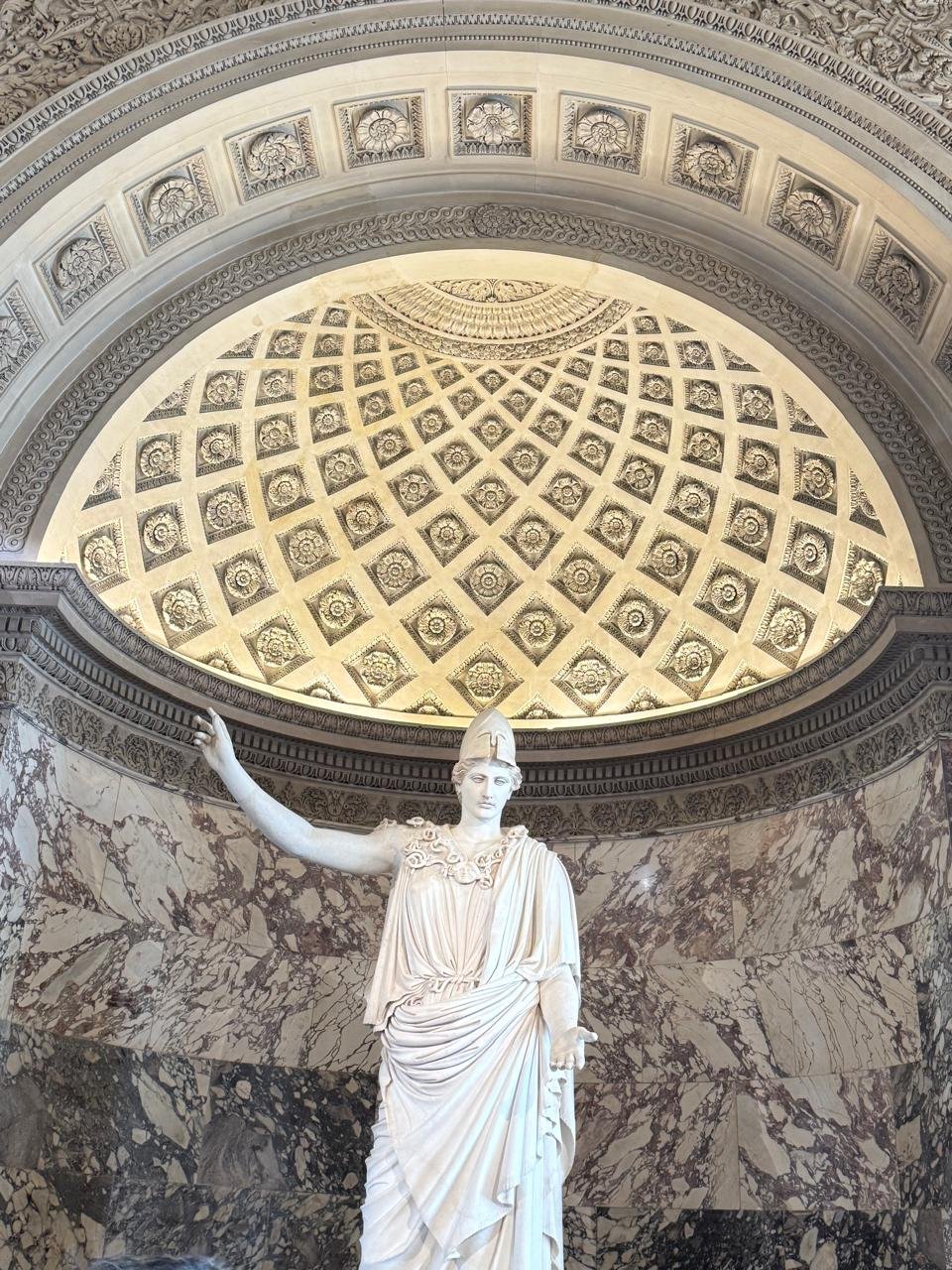
The artwork identifications in the photograph captions were checked separately against the Louvre collection records below. These records were read directly; they do not change the stated limits on reading the research papers.
- Musée du Louvre. Pallas de Velletri. Collection record, Ma 464, identifier cl010278203. Consulted 24 October 2026.
- Musée du Louvre. Vénus de Milo. Collection record, Ma 399, identifier cl010277627. Consulted 24 October 2026.