The Skin That Erodes in Silence

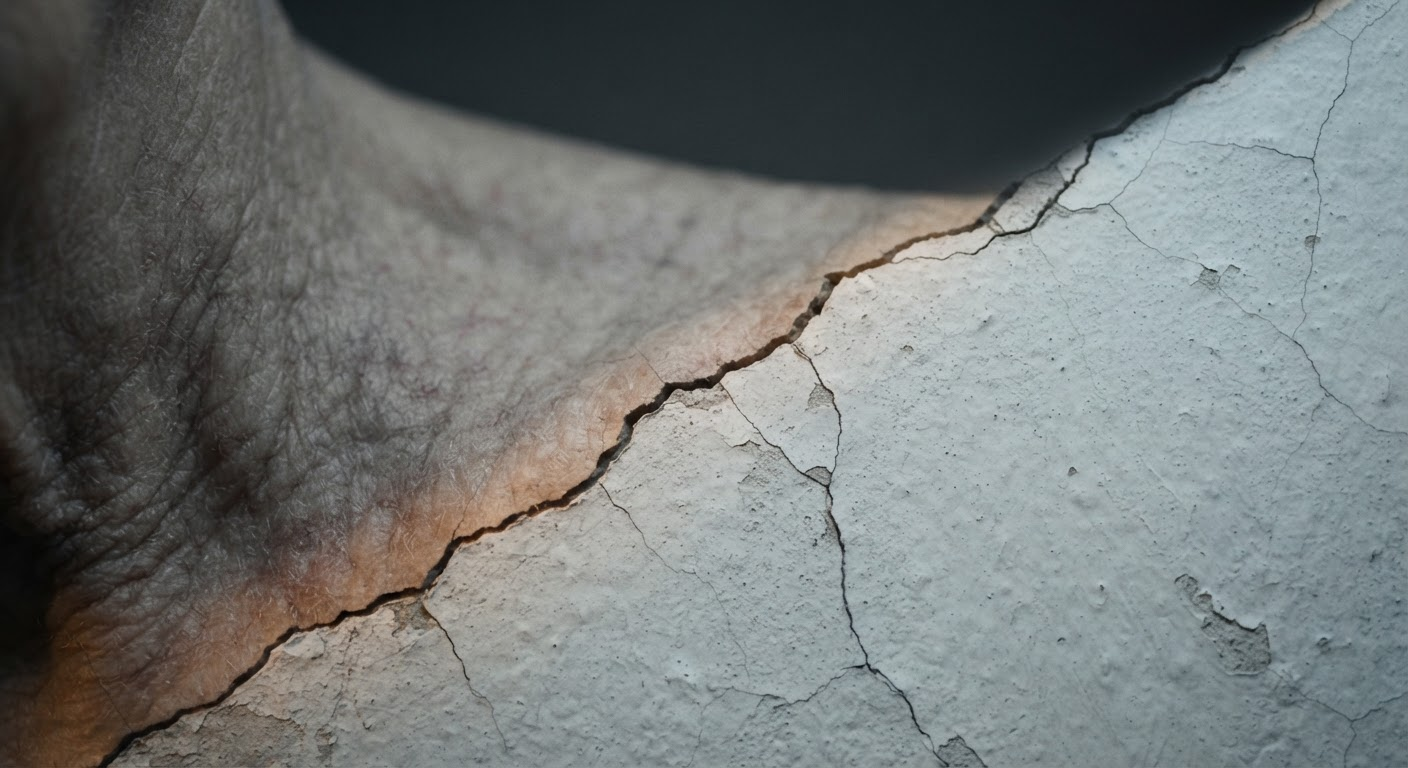
What Research on Skin Acidity Reveals About Our Failure to Design Care Environments for the Elderly
There is a quiet paradox lodged within the corridors of care facilities around the world: the building is carefully designed, its surfaces regularly cleaned, its air precisely conditioned — yet its most vulnerable occupant, the resident past seventy, deteriorates slowly inside this spotless space. Not through any visible neglect, but through design decisions and operational protocols that fail to account for something of extraordinary precision: the chemical acidity of human skin, and what happens to it when a person ages inside a space that was never designed with that aging in mind.
The Acid Mantle: A Biological Infrastructure Designers Have Overlooked
More than a century ago, scientists described what they came to call the Säuremantel — the acid mantle — an invisible film covering the surface of human skin with pH values ranging from 4 to 6, averaging between 4.9 and 5.5. This acidic environment is no anatomical accident. It constitutes an integrated defense system generated by free fatty acids, lactic acid from sweat, and the breakdown products of filaggrin protein within the outer layers of the epidermis, as extensively documented by Ali and Yosipovitch in Acta Dermato-Venereologica.
This mantle performs three parallel functions, none less consequential than the others: it governs the activity of enzymes responsible for building and repairing the skin’s protective barrier; it regulates the balance of beneficial surface bacteria and holds pathogenic organisms in check; and it directs cellular renewal mechanisms within the upper epidermal layers. In other words, it is the skin’s hidden infrastructure — in precisely the same sense that a building’s drainage network and thermal insulation constitute its hidden infrastructure.
When pH Rises: What Happens to the Body Inside the Space
With advancing age, particularly beyond seventy, the surface pH of human skin shifts gradually toward neutral. Schreml and colleagues tracked this phenomenon with notable precision, applying high-resolution luminescence imaging to 97 women between the ages of 20 and 97, and finding that pH increases measurably at the forehead, temple, and volar forearm — independently of chronic sun exposure. Sato, Kitahara, and Fujimura extended the picture further by examining body sites not previously studied, including the back and buttocks, confirming that the pH rise is systemic and that women demonstrate a greater age-related increase, linked to the hormonal transitions of menopause.
The picture, however, is more complex than it first appears. Luebberding, Krueger, and Kerscher followed 150 women across six decades of their lives and found that pH remains stable from the twenties through the fifties, then rises sharply during the menopausal transition between fifty and sixty, before declining again after sixty. This fluctuation reflects the human body not as a fixed mass but as a dynamic, shifting system — a direct challenge to any environmental design that treats the elderly occupant as a single, uniform category.
The Enzymes That Dismantle What They Once Built: The Hidden Physics of Aging Skin
The core of the risk lies in how rising pH affects what might be called the skin’s enzymatic economy. As pH climbs, a class of protein-degrading enzymes known as serine proteases — which specialize in dissolving the bonds between cells of the outer stratum corneum, enabling normal desquamation — become overactive beyond any regulatory control. The structural proteins that bind cells together break down faster than they should, and the protective barrier collapses.
Simultaneously, lipid-processing enzymes — including beta-glucocerebrosidase and acid sphingomyelinase — cease performing their essential function of converting polar lipids into the non-polar lamellar layers that form the protective matrix between skin cells. These enzymes are optimized for acidic conditions more pronounced than those found in aged skin, and they are effectively inhibited at the higher pH values aging produces. The result is skin that is dry, fissured, and poorly responsive to any external exposure — whether tap water, hand sanitizer, or the dry air of a climate-controlled room.
Ramos-e-Silva, Boza, and Cestari documented this functional deterioration with clinical clarity: aged skin requires fewer tape strips to breach its barrier, and takes significantly longer to recover from any chemical or mechanical insult. In some cases, barrier degradation continues to worsen through the first twenty-four hours following injury — a pattern not observed in younger skin.
The Built Environment as a Risk Factor: What Never Appears in the Project Drawings
This is where designers and planners enter — or more precisely, where they should have entered long ago. When these scientific findings are read through an architectural lens, a substantial gap becomes apparent: many standard design decisions in healthcare facilities, hospitals, and care homes actively work against the skin’s acid mantle, without any awareness on the part of the designers responsible.
Hygiene protocols mandated by health ministries — requiring high frequencies of handwashing and bodily cleansing — expose elderly skin to alkaline soaps and cleansers with pH values between 9 and 12, neutralizing the acid mantle for extended periods with each application. Temperature and humidity specifications for bedrooms and shared spaces rarely account for the elderly skin’s requirement for relative humidity no lower than 50 percent to prevent accelerated drying. Interior finish materials — including flooring adhesives and high-pH wall paints — occasionally introduce unquantified chemical variables into the operational environment.
A 2023 longitudinal study published in the Journal of Investigative Dermatology, led by Kim, An, Zukley, and colleagues, added a dimension that demands serious attention: impaired skin barrier function — measured by transepidermal water loss — was associated with faster ten-year decline in verbal memory among older adults. A built environment that mistreats the skin of its occupants does not harm only the skin; its consequences may extend to cognitive health itself.
The Skin Microbiome and the Environmental Design Equation
Human skin is not an inert surface but a living habitat, home to an estimated trillion microorganisms. Under normal conditions and within a healthy acidic environment, coagulase-negative staphylococci and beneficial corynebacteria dominate this ecosystem, forming the first line of biological defense. When the surface pH of aged skin rises toward neutral, however, the environment becomes hospitable to Staphylococcus aureus and to Candida albicans in its pathogenic mycelial form, which targets skin folds.
Sato, Kitahara, and Fujimura documented this microbial disruption directly, finding that total bacterial counts were significantly higher on the forearm and back of elderly subjects compared with middle-aged ones. In the care facility context, Seyfarth, Schliemann, Antonov, and Elsner noted that incontinence-associated dermatitis — a prevalent problem in nursing homes — is driven in part by the sharp rise in skin pH that occurs when bacteria decompose urine, pushing surface pH toward 8 and thereby disrupting lipid synthesis and blocking all barrier repair mechanisms.
This scenario presents the designer with a pointed question: does the layout of bathroom facilities in care homes — in terms of number, accessibility, and fixture specification — account for reducing excessive exposure to alkaline water? And are incontinence management protocols, developed jointly by the design team and health administrators, embedded within the building’s operational framework?
From the Laboratory to the Floor Plan: Recommendations That Can Be Built
What distinguishes this body of research within the medical literature is that it does not stop at describing the problem. It advances measurable, applicable solutions — and in doing so, it opens a productive dialogue with the design community.
Blaak and colleagues demonstrated in a randomized, double-blind, seven-week trial conducted in care homes housing residents between the ages of 80 and 97 that body care products formulated at pH 4.0 — compared with otherwise identical products at pH 6.0 — produced significant reductions in skin surface pH, improvements in stratum corneum hydration, and accelerated barrier recovery following perturbation. The study’s recommendation was unambiguous: care product formulations in elderly residential facilities should be set to pH 4.0.
Angelova-Fischer, Fischer, Abels, and Zillikens confirmed this finding in an independent trial involving volunteers between 60 and 85 years of age, demonstrating that a pH 4 water-in-oil emulsion accelerated barrier recovery following chemical damage and improved barrier integrity after four weeks of regular use. Critically, both studies indicated that this benefit is specific to aged skin — younger skin, with its intact endogenous acidification mechanisms, derives comparatively little advantage from external pH intervention.
At the level of design and operations, these findings translate directly into project specifications: defining the cleansing products permitted in healthcare facility bathrooms as part of the operational project document; requiring the replacement of alkaline soap with synthetic detergent cleansers carrying pH values between 4.5 and 6.5; and designing personal care areas to allow water temperature control and reduce duration of exposure. These are not medical details beyond the architect’s purview — they are, in the most precise sense, building specifications.
What this body of research communicates, taken as a whole, is that the aging human body carries its own defensive infrastructure, and that this infrastructure is vulnerable to collapse when it encounters a built environment not designed in alignment with its biochemical nature. Skin is not merely a covering — it is a biological interface shaped as much by the architect’s decisions as by the physician’s prescription. In care environments housing the most physiologically vulnerable populations, failing to account for this equation is, by any precise definition of the term, a design error.
✦ ArchUp Editorial Insight
The deterioration described here is not a design failure in the conventional sense but the predictable output of institutional risk allocation. Hygiene protocols are set by health regulators optimizing for infection liability, not dermal chemistry; procurement departments select cleaning products and finishes based on cost and compliance certification, not pH compatibility with aging skin; and facility operators standardize washing frequency to satisfy inspection regimes rather than physiological need. Architects inherit these parameters as fixed constraints, arriving after the governing logic — legal exposure, procurement contracts, staffing ratios — has already been settled. The building’s material specifications, bathroom layouts, and humidity controls are therefore downstream artifacts of a liability-driven care economy that has never been required to price biological cost. What appears as an architectural oversight is, in fact, the visible residue of a system that never assigned skin barrier integrity to any accountable party in the first place.
References
Ramos-e-Silva, M., Boza, J.C., and Cestari, T.F. “Effects of Age (Neonates and Elderly) on Skin Barrier Function.” Clinics in Dermatology, 2012.
Blaak, J., Kaup, O., Hoppe, W., et al. “A Long-Term Study to Evaluate Acidic Skin Care Treatment in Nursing Home Residents: Impact on Epidermal Barrier Function and Microflora in Aged Skin.” Skin Pharmacology and Physiology, 2015.
Luebberding, S., Krueger, N., and Kerscher, M. “Age-Related Changes in Skin Barrier Function — Quantitative Evaluation of 150 Female Subjects.” International Journal of Cosmetic Science, 2012.
Angelova-Fischer, I., Fischer, T.W., Abels, C., and Zillikens, D. “Accelerated Barrier Recovery and Enhancement of Barrier Integrity and Properties by Topical Application of a pH 4 vs. a pH 5.8 Water-in-Oil Emulsion in Aged Skin.” British Journal of Dermatology, 2018.
Kim, R.W., An, Y., Zukley, L., et al. “Skin Barrier Function and Cognition among Older Adults.” Journal of Investigative Dermatology, 2023.
Seyfarth, F., Schliemann, S., Antonov, D., and Elsner, P. “Dry Skin, Barrier Function, and Irritant Contact Dermatitis in the Elderly.” Clinics in Dermatology, 2011.
Schreml, S., Zeller, V., Meier, R.J., et al. “Impact of Age and Body Site on Adult Female Skin Surface pH.” Dermatology, 2012.
Sato, N., Kitahara, T., and Fujimura, T. “Age-Related Changes of Stratum Corneum Functions of Skin on the Trunk and the Limbs.” Skin Pharmacology and Physiology, 2014.
Ali, S., and Yosipovitch, G. “Skin pH: From Basic Science to Basic Skin Care.” Acta Dermato-Venereologica, 2013.
Tončić, R.J., Kezić, S., Hadžavdić, S.L., and Marinović, B. “Skin Barrier and Dry Skin in the Mature Patient.” Clinics in Dermatology, 2018.