Green Nano Architecture The Future of Sustainable Building Starts at the Atom

Imagine walls that can purify the air on their own, glass smart enough to control heat and light, or even buildings that repair their own cracks not as science fiction, but as reality brought to life by Green Nano Architecture.
This is the future we’re stepping into: Green Nano Architecture .

What Exactly Is Green Nano Architecture?
It’s the fusion of nanotechnology working with materials at the atomic level and green building principles , which focus on creating structures that are energy-efficient, environmentally friendly, and sustainable.
This isn’t just about using new materials it’s about redefining how we build , so that our buildings become smarter, more efficient, and better integrated with the environment around them.
How Did It Start?
The idea of applying nanotechnology to construction began about 20 years ago, but now it’s entering a phase of real-world application thanks to major advances in material science and architectural design.
Engineers and designers started asking bold questions:
- What if concrete could be lighter and stronger?
- What if windows could double as solar panels?
- What if paints could clean themselves?
- What if walls could act as living air filters?
These questions changed the way we think about building from the ground up.

Real-World Applications That Are Already Changing the Game
| Application | Description | Benefit |
|---|---|---|
| Nano-insulating Paints | Coatings that prevent heat loss or gain | Reduce energy use by up to 40% |
| Smart Glass | Windows that adjust to sunlight and heat | Lower cooling and heating needs |
| Self-Healing Concrete | Micro-particles or bacteria that seal cracks | Extend building lifespan and reduce maintenance |
| Nano Solar Panels | Thin, flexible solar films embedded in surfaces | Generate renewable energy directly from the building |
| Nano Air Filters | Installed in ventilation systems | Improve indoor air quality |
| Self-Cleaning Coatings | Use nanomaterials like titanium dioxide | Reduce water use and maintenance costs |

Why Does This Matter Now More Than Ever?
We live in a time of rising pressure on natural resources and growing environmental challenges. Cities are expanding, energy is getting more expensive, and the climate is changing faster than ever.
In this context, simply reducing electricity consumption or recycling waste isn’t enough anymore. We need radical solutions that redefine the very nature of construction.
And here’s where nanotechnology steps in , offering advanced yet practical solutions that will clearly shape the future of architecture.

Real-Life Examples from Around the World
One World Trade Center New York
Though not specifically designed with nano-materials, it uses nano glass in its observation deck, improving thermal insulation and reducing cooling demands.
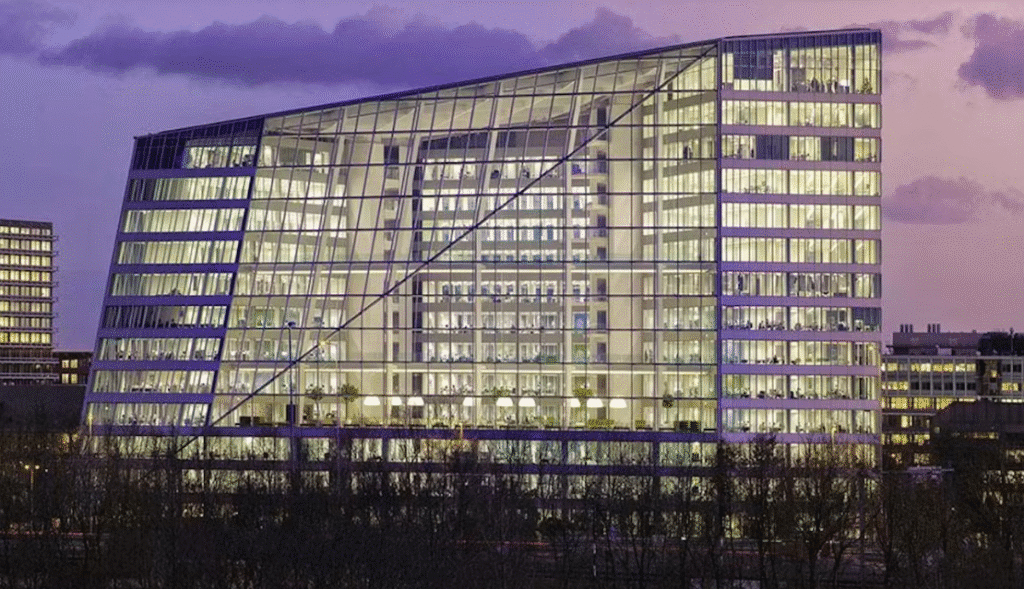
The Edge Amsterdam
One of the world’s smartest buildings and a perfect candidate to integrate nano-tech features for even greater efficiency and sustainability.
NEOM Saudi Arabia
A futuristic city project that could serve as a leading platform for testing and integrating nano-based building technologies into urban infrastructure.
Challenges Standing in the Way
Despite its huge potential, there are hurdles to overcome before nano tech becomes part of everyday construction:
| Challenge | Explanation | Suggested Solution |
|---|---|---|
| High Cost | Nanomaterials are still expensive | Increase production and invest in R&D |
| Health Safety | Some nanoparticles may be harmful if inhaled | Establish clear safety guidelines |
| Lack of Expertise | Few professionals trained in handling these materials | Launch specialized training programs |
| Compatibility Issues | Difficulty integrating with traditional systems | Develop fully compatible building systems |
The Future of Construction Small Really Small
Nanotechnology isn’t just a luxury it’s becoming a necessity to meet today’s environmental and economic challenges in urban development.
Architects and developers worldwide are already moving forward, integrating these technologies into their designs.
For us in the Arab world, there’s a golden opportunity to invest in this field especially with mega projects like NEOM, Masdar City, and Mohammed bin Zayed City , which focus on innovation and sustainability.
But to make this happen, we need:
- Regulations that support the use of these materials
- Investment in research and development
- Training of local talent
- Awareness campaigns for decision makers and the public
Are We Ready for This Shift?
The answer is: Yes but we must start now.
The world is changing fast, and buildings we start constructing today will last for more than 50 years. We can’t keep relying on old materials and outdated methods.
It’s time to think differently, to build smarter, and to create spaces that are more sustainable, efficient, and connected with the environment.
Did you enjoy this article?
Share it with your colleagues, architects, and developers, and follow ArchUp to stay updated on the latest trends in architecture and construction.
Have a project or idea you’d like to highlight?
Get in touch let’s share your story with the global building community.