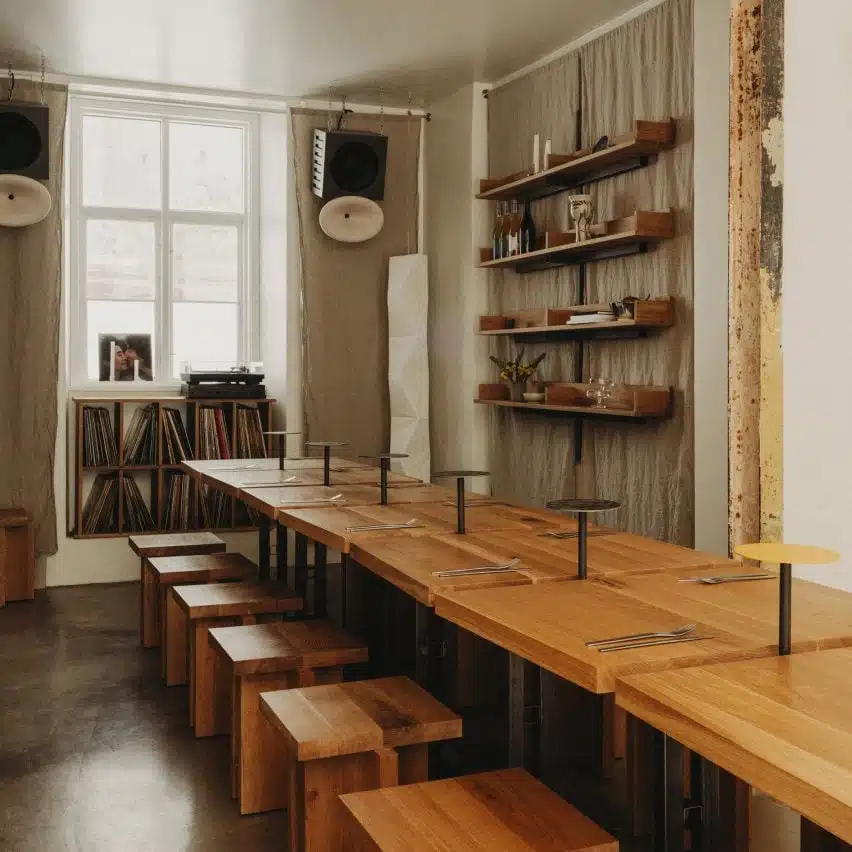
GRID: When Music Becomes the Heart of Home Design

GRID: Redefining the Concept of the Sound System
GRID emerges as an innovative concept that rethinks what a home sound system can be. It is not just a technical device added to the room, but a central piece of furniture that carries both aesthetic and functional value.
From Past to Present
GRID draws inspiration from mid-20th-century classic stereo systems, which were more than tools for listening to music, they stood proudly in living rooms as essential décor elements. Those systems combined sound, storage, and elegance, a legacy that GRID revives with a contemporary spirit.
A Core Question Driving the Design
Designer Asaf Beiman’s vision began with a simple yet profound question:
Why settle for a desk speaker when we can design a speaker that is, in itself, a bookshelf?
This question reflects a desire to break away from the traditional mold of sound systems, transforming them into personal platforms that can be reshaped according to each individual’s needs.
Music as a Tangible Identity
With the renewed interest in vinyl records, many now see music as a tangible reflection of identity. While endless digital streaming libraries lack material presence, vinyl collections remain a testimony to personal taste, offering a sense of intimacy and ownership.
Bridging Nostalgia and Modernity
In this light, GRID appears as a bridge between nostalgia for the past and the modern era’s desire for customization. It offers an integrated platform that combines listening, storage, and design, making it a unique choice that mirrors its owner’s personality, just like the vinyl collection itself.

Modular Design: Deconstructing and Reassembling Classicism
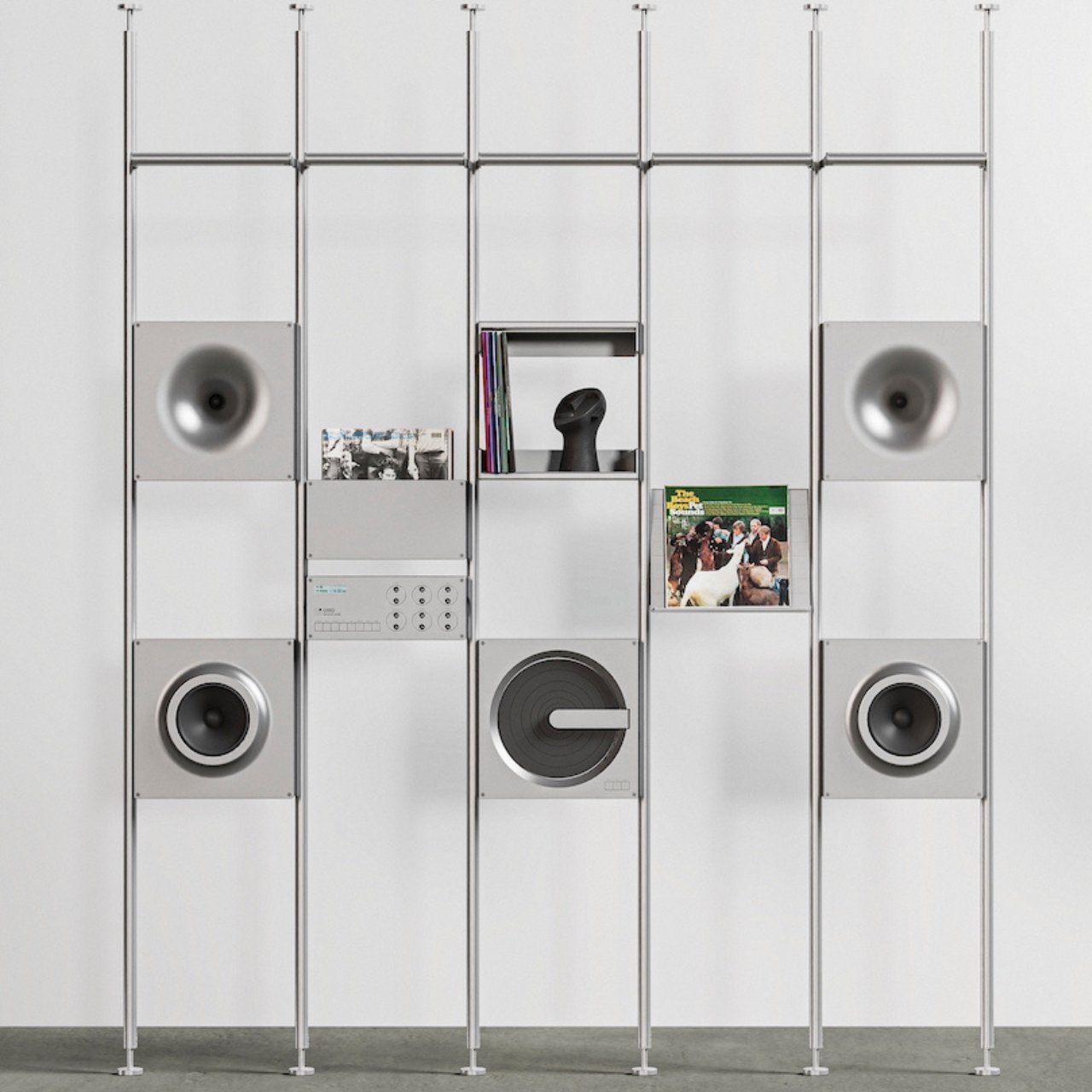
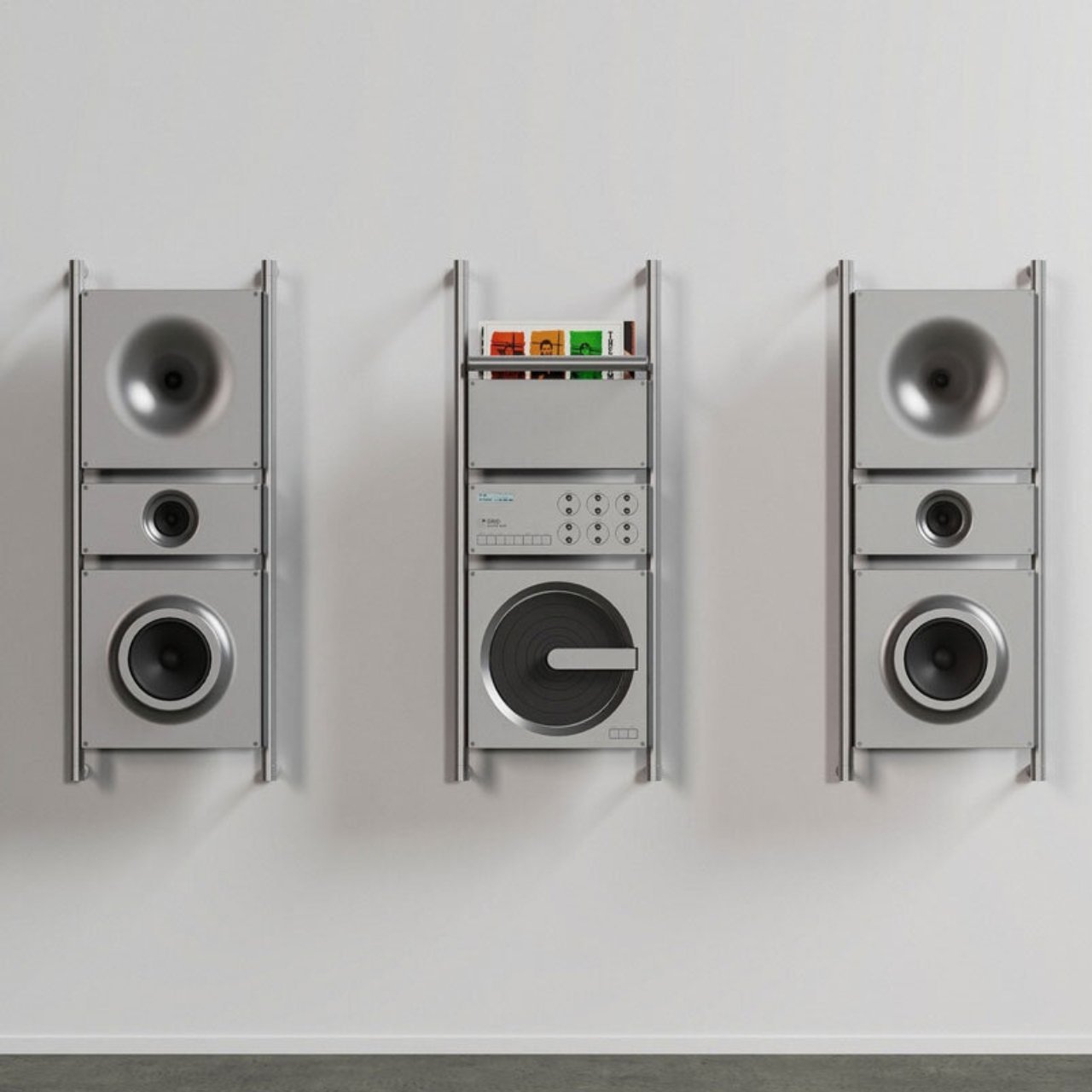
GRID is built on the idea of breaking down the classic stereo system and transforming it into independent modular units. Each unit is crafted from sleek aluminum panels, connected by vertical columns that can extend from floor to ceiling or be mounted directly on the wall. This flexibility allows GRID to adapt seamlessly to different spaces, whether compact or expansive.
A Visual Language Bridging Past and Future
This construction results in a bold geometric structure that blends the elegance of mid-century design with a vision inspired by futuristic space sculptures. As such, GRID becomes more than just a listening device, it stands as a striking piece of art with a powerful visual presence in any setting.
Aluminum: Aesthetic and Functional in Equal Measure
The brilliance of the design lies not only in its form but also in its integrated functionality. The aluminum panels serve a dual purpose:
- Acting as sound wave guides to enhance the listening experience.
- Creating a carefully designed internal volume that ensures high-quality acoustic performance.
Why Aluminum?
The choice of aluminum was far from random. This material is renowned for its superior acoustic properties, alongside its modern and durable appearance. For this reason, it is widely used in high-end sound systems, striking a balance between strength and elegance while maintaining a refined, minimalist design.

Merging Sound, Storage, and Style
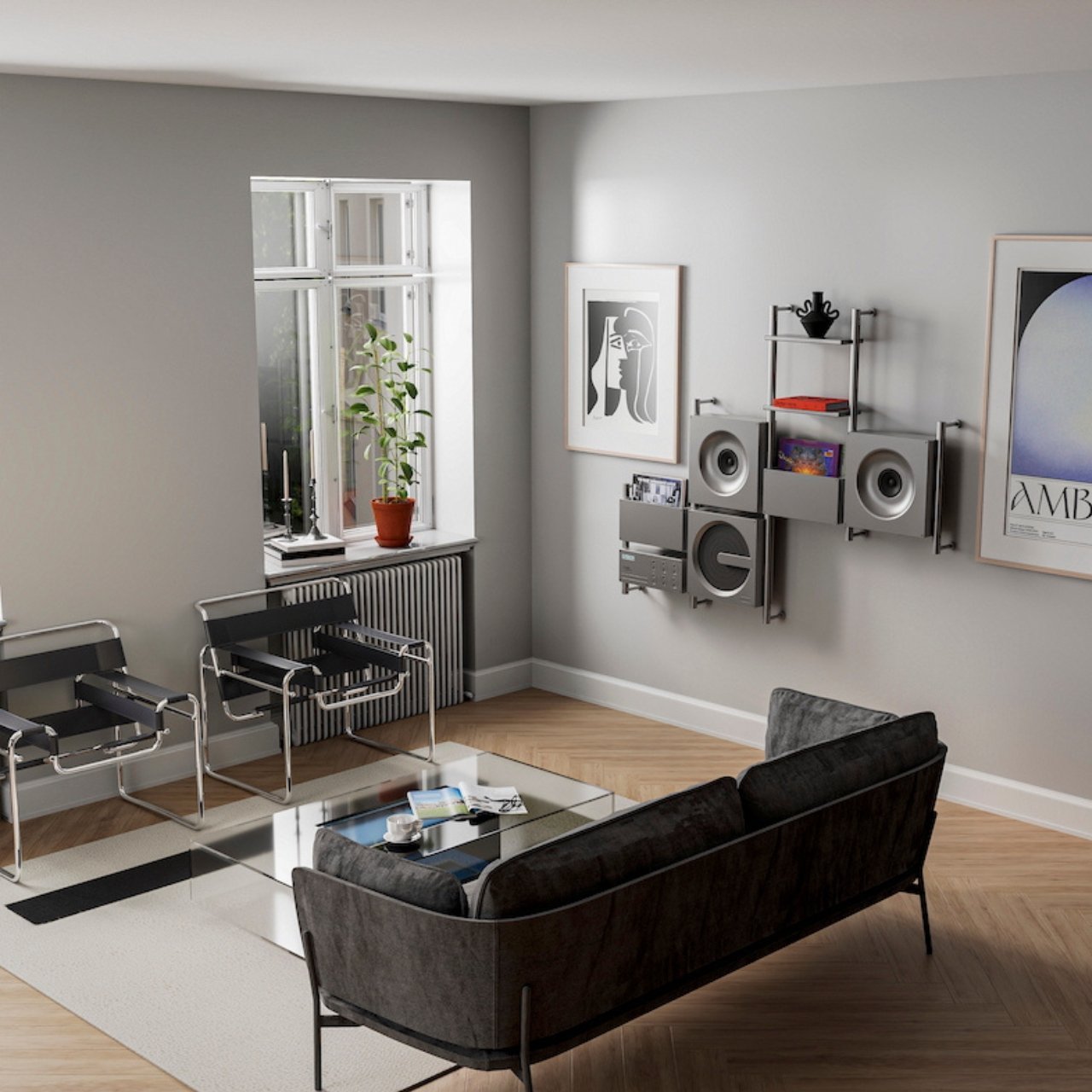
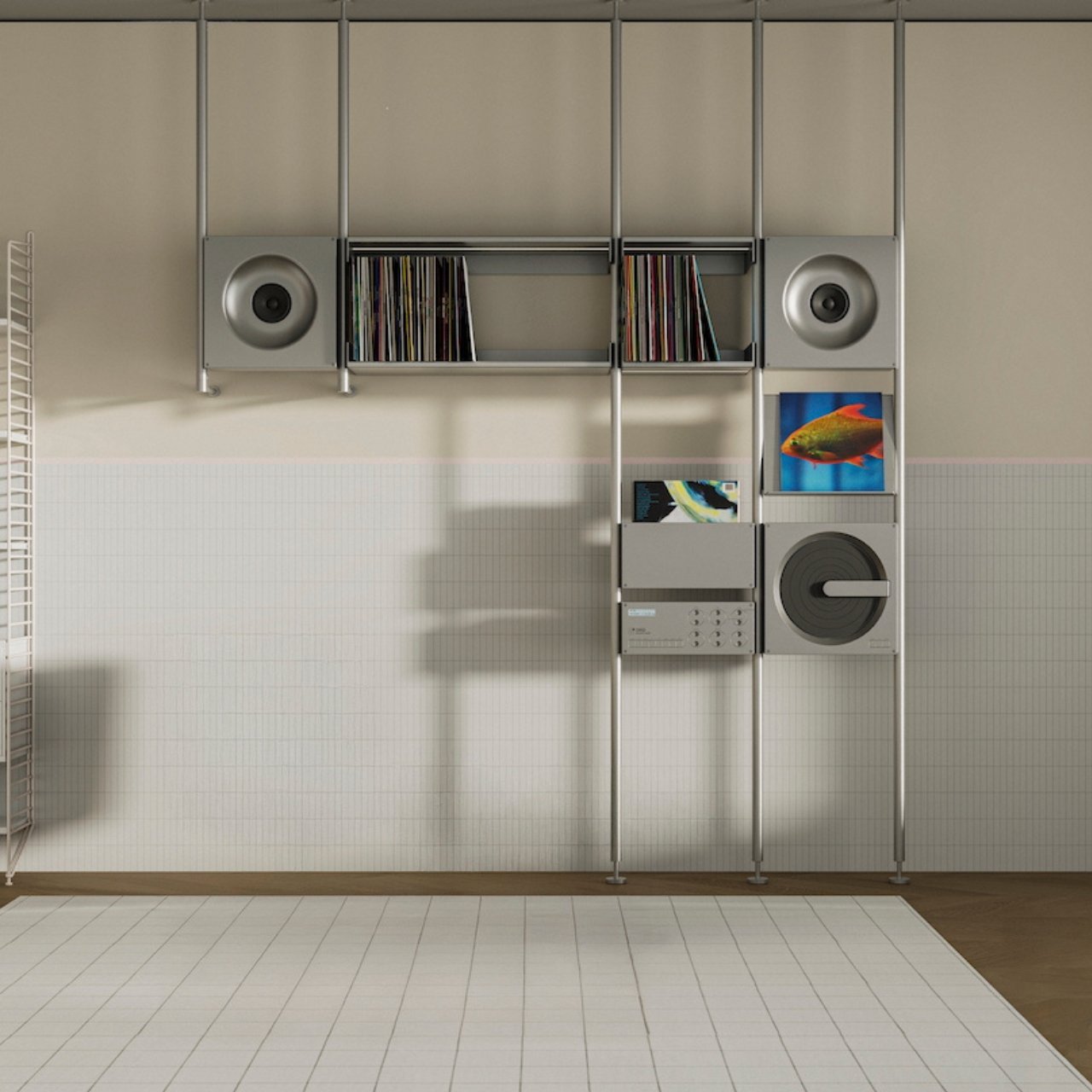
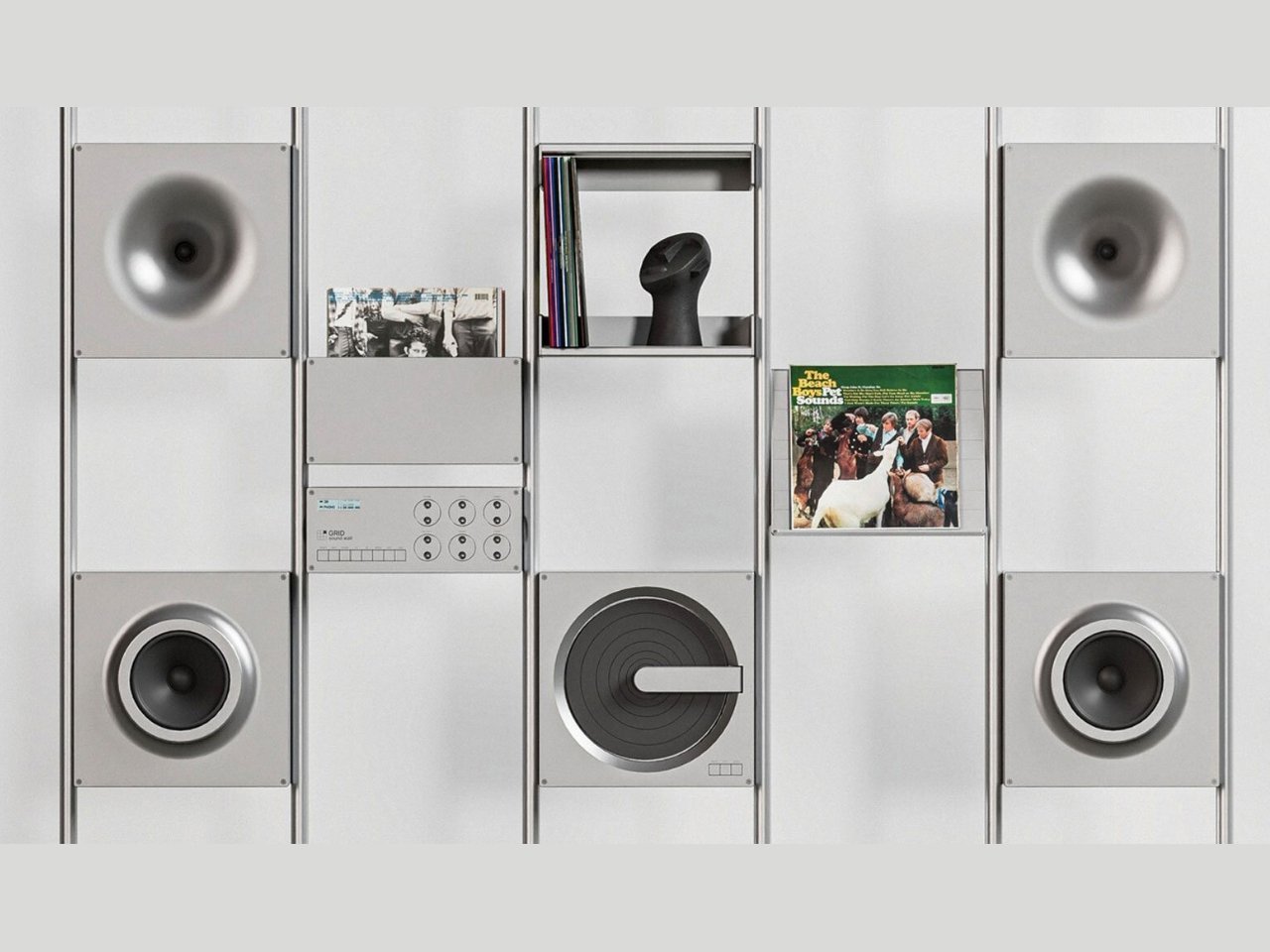
One of GRID’s most distinctive qualities is its ability to unite multiple elements into a single, cohesive system. The modules are not limited to being speakers, they can also serve as storage for vinyl records or even platforms to display favorite objects. The result is a living wall that blends music with memories, transforming into a visual feature that reshapes the atmosphere of any space.
Versatile Forms for Every Space
GRID’s flexibility shines through in the various ways it can be arranged:
- A sleek vertical column.
- A horizontal row extending across the wall.
- An expansive grid that grows over time.
This versatility allows the system to evolve and adapt in line with the user’s changing needs and personal taste.
A Sculptural Presence Beyond Functionality
Regardless of its form or placement, GRID always maintains its distinctive sculptural character. It can be a full wall installation, a compact solution tucked into a corner, or even an elegant room divider. In every case, it continues to reflect the personality of its owner, making it an ideal choice for both music lovers and collectors alike.

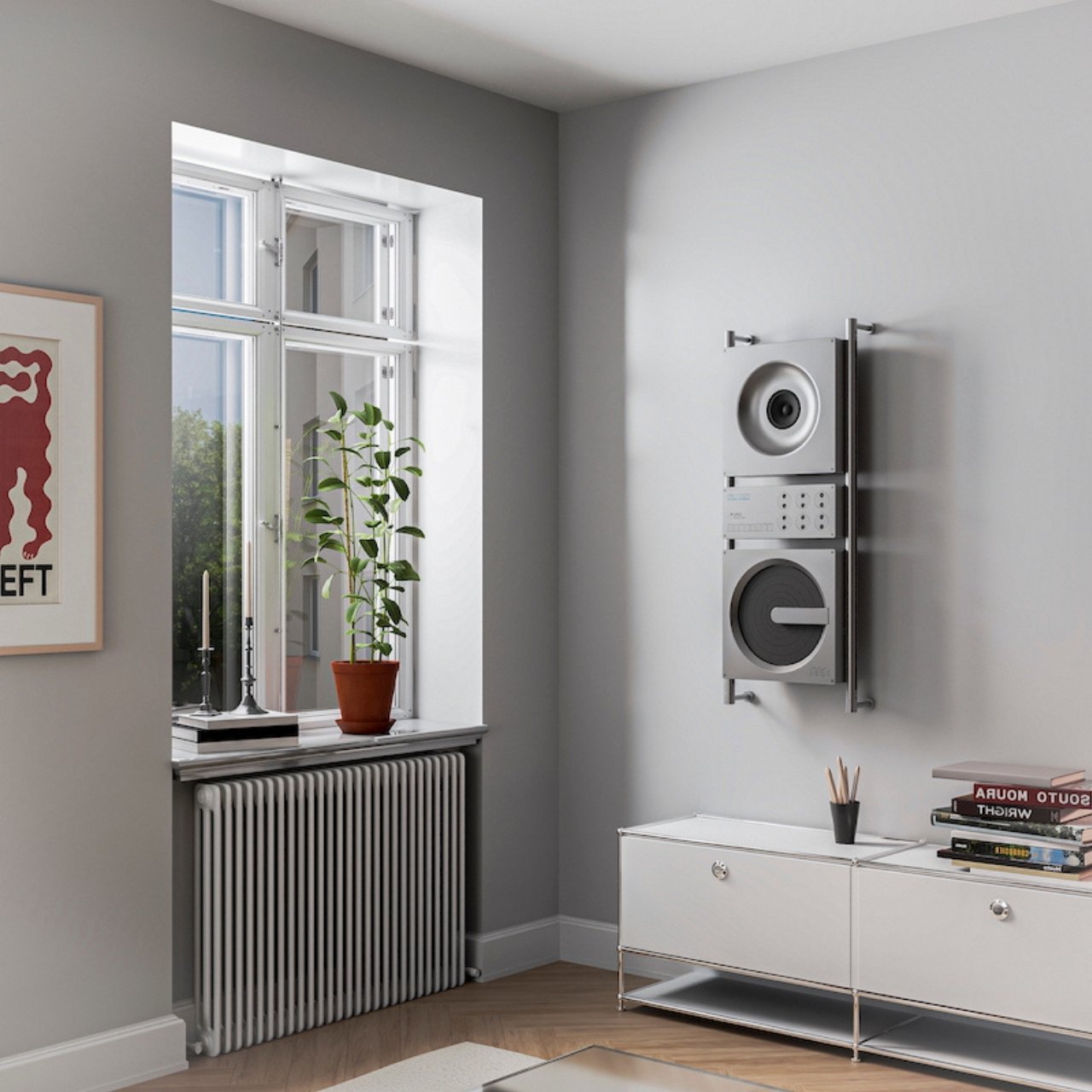

Music as the Beating Heart of the Home
GRID is more than just a sound system, it revives the idea of music as a central element of daily life. By merging the auditory with the visual, it transforms listening into a holistic experience that reflects its owner’s taste.
Beyond Design
The project embodies a vision that fuses refined design with personal expression, ensuring that music is not merely a background presence but a tangible force that shapes the atmosphere of the home.
✦ ArchUp Editorial Insight
From an architectural standpoint, GRID can be viewed as a model that expands the concept of functional furniture, transforming the sound system into an architectural/interior element that redefines the relationship between space and function. Its modular concept gives it the ability to adapt to diverse environments, allowing designers to employ it as a partition wall, a display unit, or even a visual centerpiece within a room.
On the other hand, GRID presents certain challenges. Despite its flexibility, designers may find it difficult to integrate into highly minimal or understated architectural settings, where its strong visual presence could feel overwhelming. Similarly, its heavy reliance on aluminum lends it a distinctly modern look, but this may not easily harmonize with natural materials like wood or stone without careful design treatment.
Ultimately, GRID offers an exciting opportunity to rethink “audiovisual furniture” as part of the language of interior architecture. At the same time, it demands critical awareness of how it is integrated into spatial identity, ensuring it complements rather than dominates the environment.
Prepared by the ArchUp Editorial Team
Don’t miss the chance to explore more from Architecture in fields like Design and Projects on the ArchUp website.