
Hazel Hare Center for Plant Science Phase II Opens in Phoenix

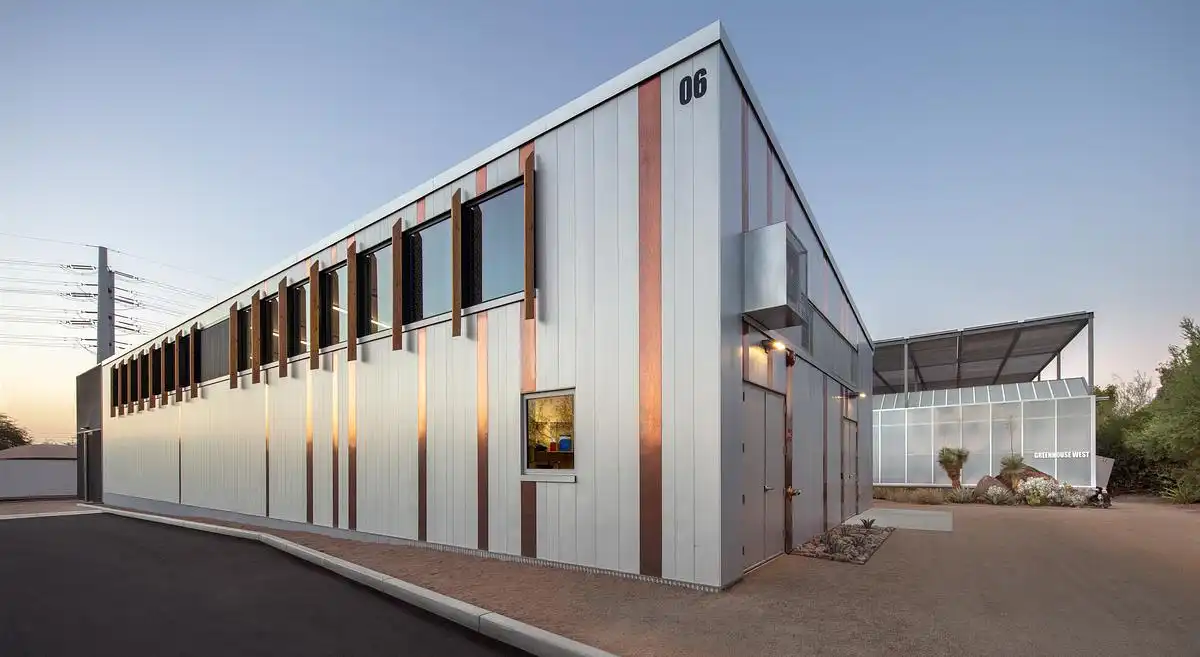
The Hazel Hare Center for Plant Science Phase II advances plant research through three function specific buildings in Phoenix, Arizona. This extension integrates horticultural operations, exhibition space, and conservation infrastructure. The Hazel Hare Center for Plant Science supports desert plant resilience in extreme climates. The Hazel Hare Center for Plant Science now includes climate responsive facilities for scientific and ecological missions.
Design Concept
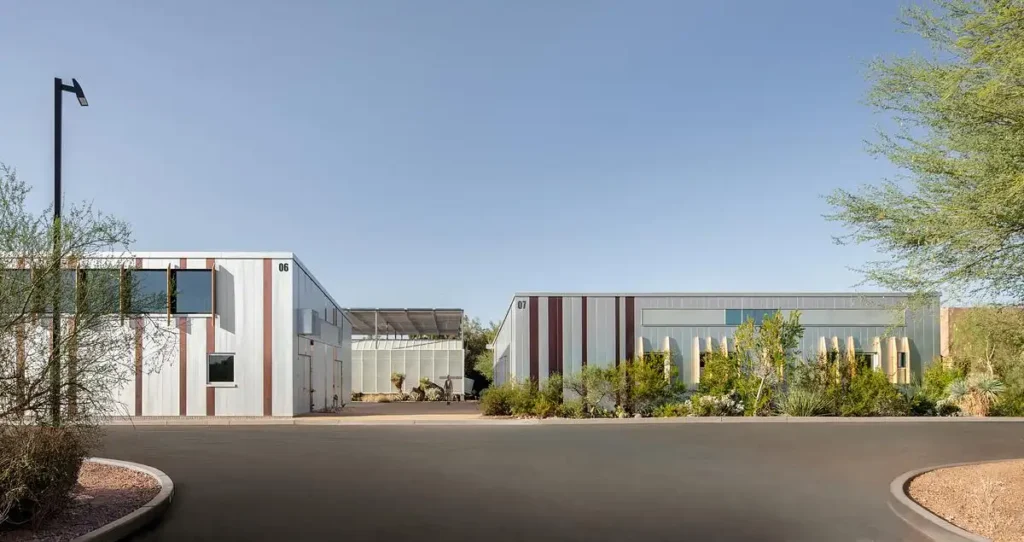
The Ahearn Horticulture Center covers 4,500 square feet. It serves as the logistical backbone of the Desert Botanical Garden. It houses tools, irrigation supplies, lockers, and management offices. The RAF Exhibit Building spans 2,000 square feet. It offers a flexible gallery built to Passive House standards. The 12,000 square foot Shade Pavilion shelters rare desert flora. These structures reflect a shift in architectural design toward programmatic specificity. They prioritize function over symbolic form in research-oriented buildings.
Materials & Construction
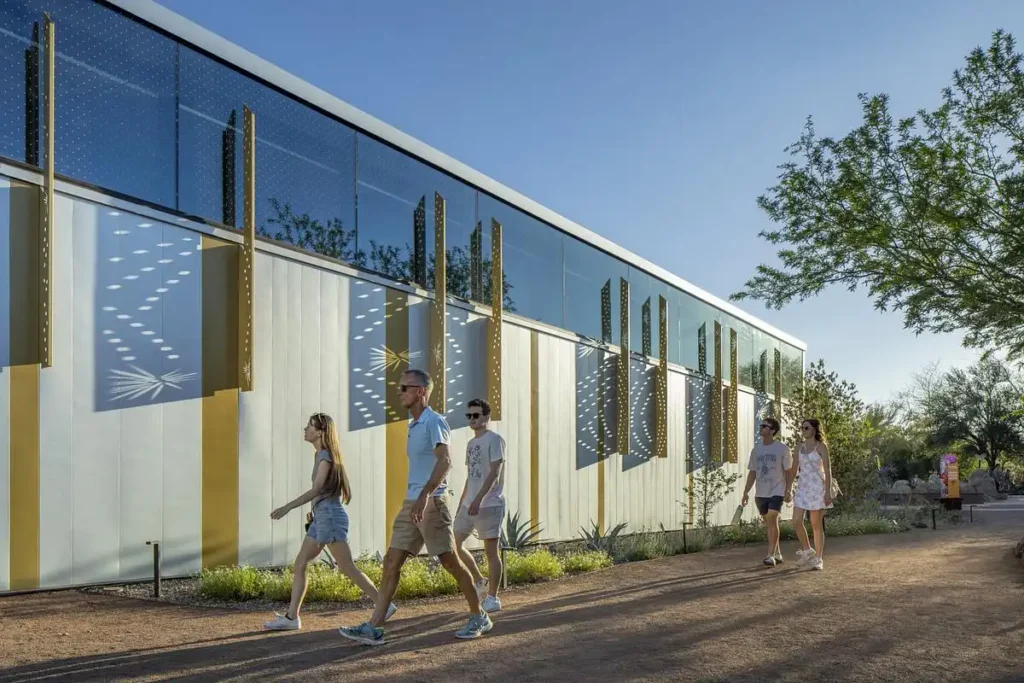
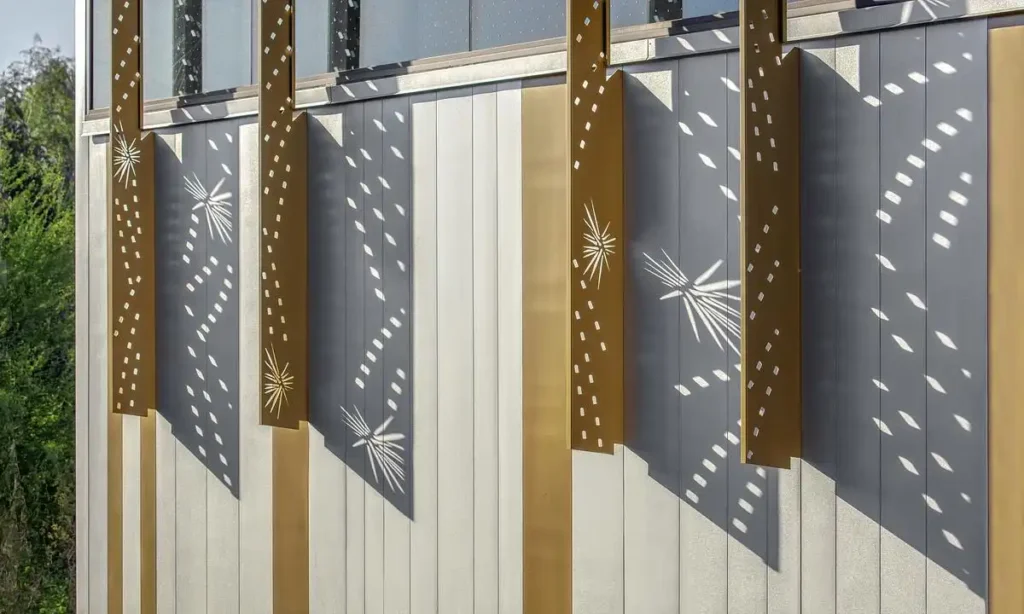
All three buildings use vertically vented cladding. This deflects solar radiation in Phoenix’s harsh desert climate. The RAF Exhibit Building uses wood framing and natural insulation. Its mineral wool and wood fiber boards reduce cooling loads. Construction relied on prefabrication and modular assembly. This minimized on-site waste and accelerated progress. These methods align with arid-region practices covered in global construction news.
Sustainability
Sustainability here is operational, not symbolic. The Shade Pavilion uses automated louvers to adjust shading and airflow. These respond in real time to sunlight and temperature. The exhibit building’s Passive House envelope cuts HVAC demand significantly. These strategies follow measurable benchmarks in sustainability frameworks. They avoid performative gestures in favor of energy reduction documented in recent research.
Urban/City Impact
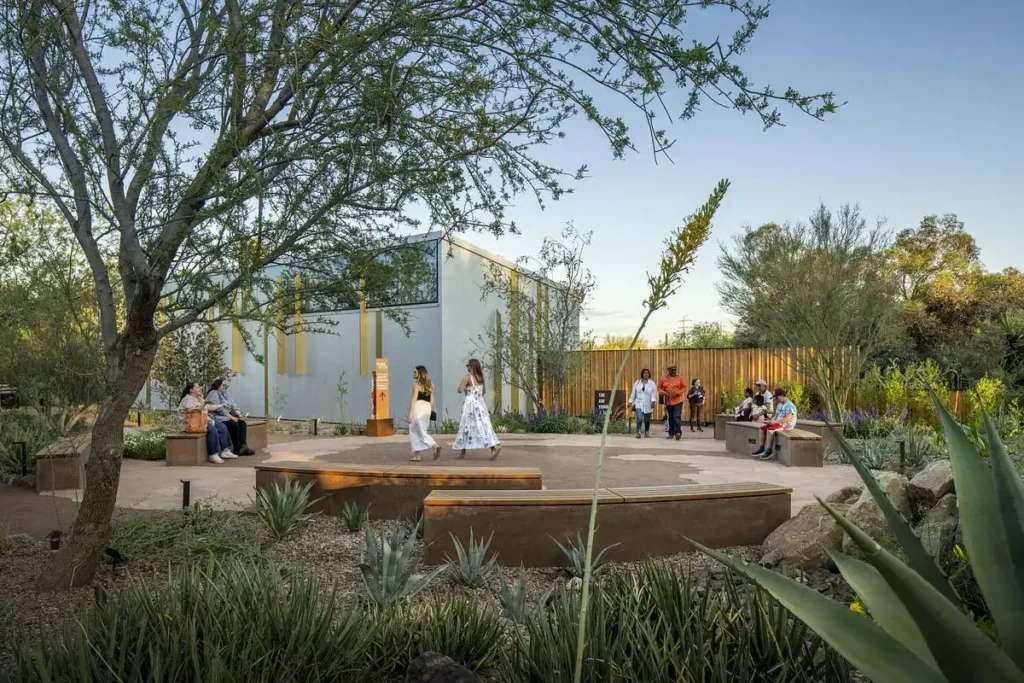
The project sits within the Desert Botanical Garden. It does not reshape Phoenix’s urban fabric directly. But it reinforces the city’s role as a desert ecology laboratory. It merges back-of-house utility with public engagement. This approach echoes other scientific cities projects in the global archive. It challenges the divide between infrastructure and public space.
As desert urbanization accelerates, can such specialized facilities offer scalable models for conserving biodiversity?
Architectural Snapshot: Three function-driven structures in Phoenix employ passive cooling, automated shading, and natural insulation to support desert plant conservation and horticultural operations.
✦ ArchUp Editorial Insight
The Hazel Hare Center Phase II deploys three functional structures under the banner of botanical research, yet its narrative leans heavily on technical jargon over spatial critique. While the Shade Pavilion’s automation and the Passive House exhibit reflect measurable environmental strategy, the framing still echoes institutional self promotion rather than independent architectural assessment. Credit is due for avoiding desert ornamental clichés, a rare discipline in arid-region projects. Yet as climate-responsive architecture becomes standard, such examples risk fading into technical footnotes unless they challenge broader design ethics.




ArchUp: Technical Analysis of Phase II of the Hazel Hare Center for Plant Science
This article provides a technical analysis of Phase II of the Hazel Hare Center for Plant Science in Phoenix, Arizona, as a case study in research-oriented functional architecture adapted to a harsh desert climate. To enhance archival value, we present the following key technical and design data:
The project is based on three specialized buildings: the 4,500-square-foot Ahren Horticulture Building serving as a logistical hub; the 2,000-square-foot RAF Exhibition Building designed to Passivhaus standards; and a 12,000-square-foot Shade Pavilion for protecting rare plants. The structure is characterized by the use of vertical ventilated metal panel facade systems, designed to block over 85% of direct solar radiation in a climate where temperatures can reach 45°C (113°F).
The environmental system features advanced passive cooling strategies. The Shade Pavilion employs intelligent automated louvers that control light and ventilation based on real-time weather data. Building insulation utilizes a combination of mineral wool and wood fiber, reducing cooling loads by up to 40% compared to traditional buildings in the region. Prefabrication and modular construction accounted for 70% of the build, reducing construction waste and accelerating the construction timeline.
In terms of functional performance, the project achieves an integration of research infrastructure and public space. Thanks to Passivhaus standards, the Exhibition Building is a low-energy space with excellent indoor air quality, serving as a model for educational buildings in hot climates. The ventilated facades and shading structures provide effective protection, allowing for the cultivation of over 200 species of local and rare desert plants in the Shade Pavilion.
Related Link: Please refer to this article for a comparison of passive cooling strategies in other projects:
Cabana 18 in Fun: A Backyard Retreat Redefining the Relationship with the Land
https://archup.net/what-is-passive-solar-design-and-how-does-it-reduce-energy-consumption/