Historic Brussels Porcelain Factory Hits Market at €3.5 Million

The Demeuldre-Coché porcelain factory in Brussels is now for sale. This 3,000-square-meter building combines Art Nouveau design with industrial heritage. The asking price stands at €3.5 million for the Ixelles property.
A Factory Born with Belgian Independence
The site traces its origins to 1830, the year of the Belgian Revolution. French porcelain maker Charles-Christophe Windisch established the factory during this pivotal moment. Therefore, the architecture carries deep historical significance beyond its aesthetic value.
Located at Chaussée de Wavre 141-143, the property sits on a 1,000-square-meter plot. The factory became a symbol of national pride and economic independence. Moreover, it produced fine porcelain, crystal, and decorative ceramics throughout its golden age.
Two Distinct Architectural Components Define the Structure
The complex features two primary structural elements from different eras. The 1905 retail facade draws inspiration from Italian Neo-Renaissance design. Meanwhile, the 1874 exhibition hall showcases industrial-era construction techniques.

The street-facing facade functions as an architectural advertisement for the factory. Expansive bay windows reveal interiors with original wood paneling. Polychromatic ceramic friezes above the ground floor display the factory’s products. However, the black marble base provides visual grounding for the decorative elements above.
Industrial Materials Meet Artistic Expression
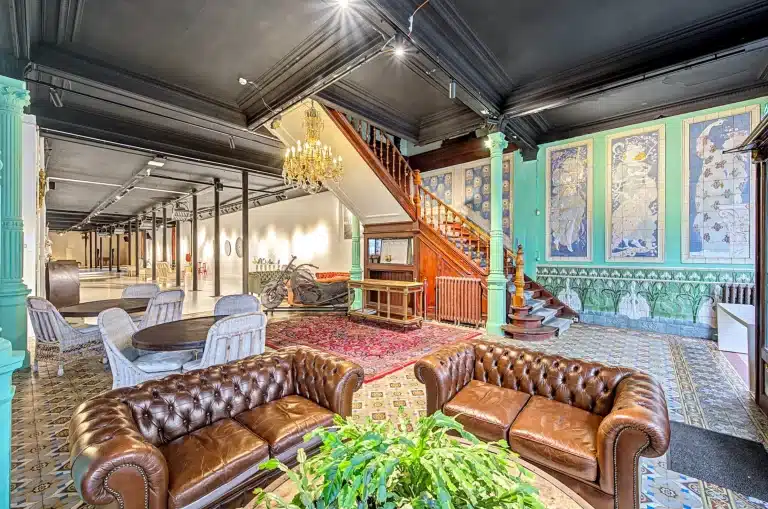
The exhibition hall demonstrates the aesthetic potential of building materials from the industrial age. A metal framework supports delicate floral ironwork throughout the space. The vast skylight roof floods the interior with natural light. Furthermore, these features highlight how functional elements can achieve artistic expression.
The factory integrated significant artworks into its architectural fabric. Collaborations with sculptors added cultural depth to the industrial space. This approach blurred boundaries between manufacturing and artistic production.
From Production Site to Cultural Hub
The building has undergone transformation in recent years. It now operates as a cultural venue hosting international art projects. In September 2021, forty artists created immersive installations throughout the space. These works explored themes of culture, humanism, and sustainability.

The sale represents a significant moment for Brussels urban planning. The property demonstrates how adaptive reuse preserves architectural integrity. Its future use will determine how this industrial landmark continues evolving.
A Quick Architectural Snapshot
This factory embodies the intersection of industry, art, and national identity. The 1874 exhibition hall and 1905 facade create architectural dialogue across eras. Natural light, metalwork, and ceramic elements define the spatial experience. The property awaits its next chapter in Brussels architectural news.
✦ ArchUp Editorial Insight
English Version
The sale of Demeuldre-Coché reflects broader patterns in European heritage real estate markets. Owners of industrial monuments face mounting pressure from maintenance costs and regulatory requirements. Meanwhile, cultural programming alone rarely generates sufficient revenue to sustain such properties.
The €3.5 million asking price positions this asset between institutional acquisition and private development. Municipal governments across Belgium lack budgets for heritage preservation at this scale. Therefore, private buyers become the default solution for adaptive reuse challenges.
The property’s transformation from factory to cultural hub to real estate listing follows a predictable trajectory. Art installations and temporary exhibitions often serve as holding patterns before permanent conversion. Brussels faces increasing demand for unique residential and commercial spaces in central districts.
This project is the logical outcome of heritage maintenance economics plus declining public preservation funding plus rising demand for character properties in European capitals.